• Skip to main content
  • Skip to footer

Digital Ducats Inc.

SEO Consulting & Services

  • Home
  • About
    • SEO Consulting
  • Services
    • SEO
    • Local SEO
  • Contact
    • Pricing
    • Write For Us
  • Blog
You are here: Home / Archives for On-page optimization

On-page optimization

Apr 10 2020

50 Ways To Improve On-Page SEO [Infographic]

Almost everything we do on a daily basis is somehow integrated with a website, an app or Google search. For most companies, generating leads from Google is a major source for new clients. This article will show you how to improve on-page SEO on any website for any keywords in order to drive more traffic from Google search results.

The biggest ranking factors that dominate the search results are the content you publish and the quality of the backlinks that point to your website. Luckily for website owners, content is one of the things you have direct control over.

On-page optimization ensures your page targets the right keywords to attract the right type of traffic. You can enhance the ranking signals your site demonstrates for a specific keyword to maximize the potential your website has for generating leads.

The following infographic lists 50 different ways that your typical SEO company will improve your on-page SEO.

This infographic lists 50 different ways to improve on-page seo

Title optimization

Your title is the first thing that most people will look at in a search result. Include your keyword near the beginning of your title. Keep the length of your title at 60 characters to avoid it being cut off in the search results.

The title is the most important heading of your page and therefore should be wrapped in h1 tags. Most CMS software will automatically tag the title so you don’t need to worry about it if you’re using WordPress, Joomla, Wix or Squarespace.

Optimize your URL

The extension you give your page is an important descriptive detail for users and search engines. Use the postname option in your permalink settings and make sure your URL contains your keyword.

Users should get a sense of what your page is about by reading the URL. Limit the URL to five words to maximize the potency of your keyword description. Ideally, your URL should be kept under 90 characters to improve on-page SEO.

Use descriptive subtitles

Use your subtitles to segment your content into the most important parts of your page. Use h2, h3, h4 tags to signal to search engines the level of importance each heading represents.

When users scan through the page they should get an accurate summary of the content contained. What’s good for users is good for search engines.

Include your keyword and variations of your keyword at least once or more depending on the length of your article.

Publish keyword-rich content for users

Updates such as Hummingbird and BERT have allowed search engines to accurately extract the meaning from text. There is no substitute for descriptive, high-quality content. Despite this fact, it is still good practice to include your keyword in the first paragraph.

It would make sense that your target keyword would be repeated in a natural, conversational tone throughout your content. Your keyword should appear at least several times throughout the body of content.

Avoid over-optimizing your content by keyword stuffing. Any unnatural and forced use of a target keyword could trigger an adverse effect on the optimization of your page.

Content that satisfies search intent will rank highly. This means that when you target a specific keyword make sure you are covering the most obvious and most searched topics and subtopics that would satisfy the user’s query.

The goal is to make your website the last destination of a user’s search because you have adequately answered their query.

Images

Despite the giant leaps forward in a search engine’s ability to extract meaning, search engines still rely on your input to determine the meaning of an image.

Use keyword-rich descriptions in the image alt tags to give search engines the intended meaning your image represents and improve your on-page SEO.

Include your keyword in the filename.

Fill out captions and give your image an appropriate title to enhance optimization. This gives more information for search engines to properly categorize your image.

Outbound links

There is much evidence to support that linking out to authority sites improves the optimization of your page. Linking to a page that helps to enhance the user’s understanding of a particular topic adds credibility and signals relevance to your keyword topic.

Inbound links

The links that point to your page have a major influence on your optimization. Use descriptive anchor text to influence what keywords your page best represents for contextual links.

Guest posting is a popular method for optimizing the external anchor text links that point to your page.

Although keyword anchor text will enhance the optimization of your page, the overuse of keyword-optimized anchor text links will have an adverse effect on your ranking.

Webmasters should implement an internal linking strategy to achieve optimal on-page SEO. Use pillar page best practices for creating clustered content and an effective internal linking strategy.

Page speed

We are well into an era where page speed can mean the difference in making a sale-or even holding a user’s attention. Do you remember the last time you waited a minute for a page to load? Neither do I. No one waits for slow websites anymore.

If your page isn’t loading in under 3 seconds you are losing a percentage of the traffic that lands on your site.

If your site is super slow, then you’re facing a problem that is affecting your ranking because it contributes to poor user experience.

Keep your images compressed, reduce the number of HTML requests, inline JavaScript and CSS, use plugins and CDN’s to maintain an acceptable page load time.

Proper use of redirections

Whenever deleting or merging content it is advisable to use a 301 redirect to forward traffic from the old URL to the new. Avoid using 302 redirects as well as using redirect chains. Your redirections should take a user from one URL directly to the new page.

Broken links

When a user clicks a link and is taken to an error message it reduces their user experience. The accumulation of broken links will adversely affect rank. All links should take a user to a destination that enhances their user experience rather than undermines it.

Make site audits a regular routine to identify and repair broken links. Check both inbound and outbound links using software such as Ahrefs and Screaming Frog.

Use 301 redirects for the internal links that are broken. Replace all broken outbound links with new URLs to authority sites.

Accessible to search engines

Every page on your site should be accessed in less than 4 clicks from anywhere on the site. Your page should be able to be indexed by search engines, which can be impeded by the robots.txt file.

Site audits will identify what pages are indexed as well as those that are not indexable. You can also find this information on Google Search Console under the errors tab.

Incorporate schema

Use schema to make your page eligible for rich snippets. Using Schema better describes what your page is about to search engines and allows for a better understanding of the content.

Using JSON-LD is Google’s recommended script language and accounts for faster processing.

Responsive & made for mobile

Your pages should be made for mobile users-especially since the mobile version is now the first version that is indexed by Google.

Users should experience the same functionality on different screen sizes Your content should be easy to read and reformat its layout according to screen size.

Check your sites mobile score on Google’s Mobile Friendly Test and make any necessary changes listed in the report.

High-quality & shareable content

The term “high-quality” is a term we use a lot to describe how content should be written. The truth is that content should provide unique value and be compelling enough for users to want to share it with others.

We derive value from content that is entertaining, educational and informational. The use of images, video, audio and interactive media all contribute to a high-quality piece of content.

A high-quality web page is easily read by users at an 8th to 9th-grade reading level. The Fleischman scoring system scores content based on how difficult the page is to read.

In order for content to be shared easily, there should be social sharing icons that allow users to post to the appropriate social media platform.

Improve your on-page SEO

There’s no doubt that on-page SEO is necessary to rank your website on the first page of Google. As search engines continue to expand their capabilities, every aspect of optimizing your web page becomes less negotiable in order to maintain high rankings.

Incorporate each element of on-page optimization in your content creation. Create highly competitive, targeted pages that are built to last on the first page of search results.

Subscribe To Receive The Latest SEO Trends & Strategies

* indicates required


Christian Carere
Christian Carere

Christian Carere is the owner and founder of Digital Ducats Inc. in Toronto and heads the SEO team at Austin Bryant Consulting in Plano, TX.  Christian has been published on publications such as Search Engine Watch, Venngage, Small Biz Daily, Grasshopper, Data Box, Socialnomics, and Mention.
old.digitalducats.com/

Written by Christian Carere · Categorized: On-page optimization, Web development

Sep 07 2019

What Are Google SERP Features?

The first page of results is often referred to as a SERP (Search Engine Result Page). It’s the most important page of search results because 95% of the total search volume will end up clicking on a result on the first page but less than 5% will venture past to the second page. (~Forbes 2017)

The goal for all websites has traditionally been the number one spot on the first page, however, the emergence of Google SERP features has changed the value that a number one position holds. More traffic is being drawn from the organic listings and absorbed by various SERP features. It’s necessary to survey and assess the first page of results to determine what features you will need to optimize your website to produce the most traffic. 

What is a Google SERP feature?

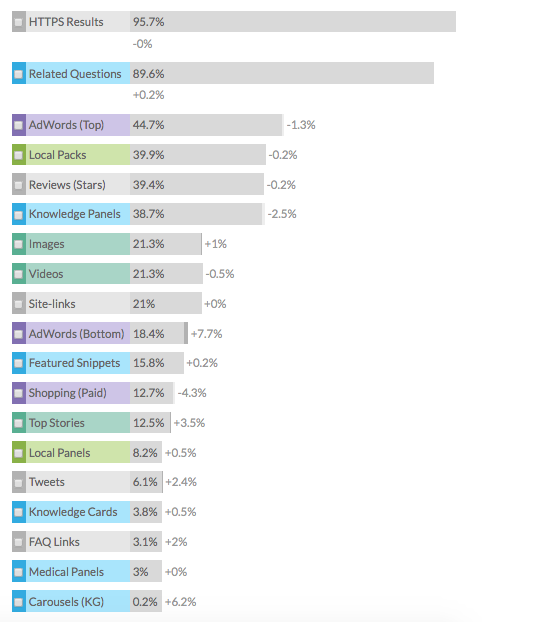
A Google SERP feature is a Google product that is displayed in order to enhance the user experience. The type of features can range in appearance. Each feature can provide additional traffic to your website. Different features present more traffic opportunities than others. Here is a list of the types of features and the frequency they’ve appeared in a search query in the last 30 days.

List of Google SERP Features

People Also Ask Box (PAA)

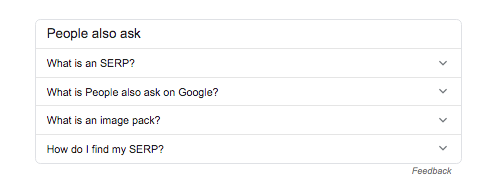
The first SERP feature on the list is Related Questions, or PAA boxes (People Also Ask). This feature has been appearing in 89% of total searches (as seen in the above chart). 

People also ask box

PAA boxes are triggered mostly by questions asked in a search. Each question within the box can lead a user to a different website.

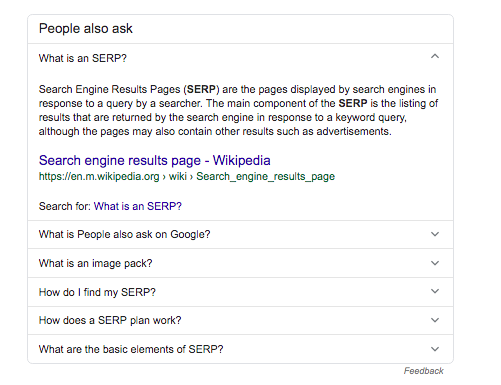
PAA box opened up

The box is interactive meaning that when you click on one question another few lines of questions will appear related to the question you clicked on. This could go on indefinitely and has been one of the reasons for a decline in the number of visitors that make it past the PAA box to the organic listing. 

Google Ads (Formerly AdWords)

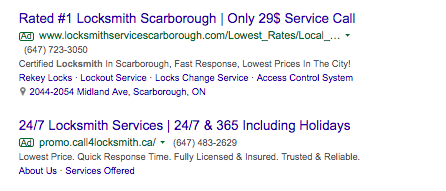
Pay-per-click ads, also known as Google Ads have sponsored placements at the top of the organic results. The highest bidder gets the highest position on the page. Paid ads are only distinguishable by the small green “Ad” posted to the left of the domain.

Google Ads

The advantage of running an Ad campaign is that your website is placed at the top of the SERP if you’re the highest bidder. This gives your website a priority position for being the first listing seen when a user searches a term. Google Ads are performing considerably better on mobile searches than they do on desktop based on this fact alone. 

A disadvantage to a paid ad is that when you stop paying, so does the traffic. Your website disappears from the first page when your campaign ends which makes paid ads relatively expensive. Organic search results provide a better ROI over the long run because of the difference in traffic dispersion to the organic listings. Once your website is optimized to receive traffic organically it will continue to produce unless you lose position to a competitor.

Local Packs

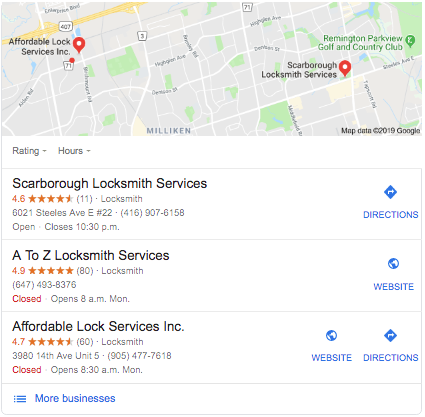
local pack example

The three websites that are ranked at the top of the local finder are displayed as the local pack on the first page of results. The websites selected for the local pack are businesses that can show relevance, prominence and proximity. 

Local packs can generate a substantial amount of local traffic that is typically comprised of high converting visitors. 

Reviews (stars)

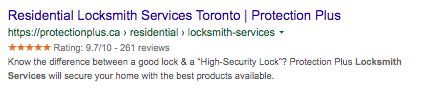
A rich snippet is any feature that shows up to enhance a search result. More companies are including reviews in the meta descriptions to encourage higher click-through rates. 

reviews (star rating)

Knowledge Panels

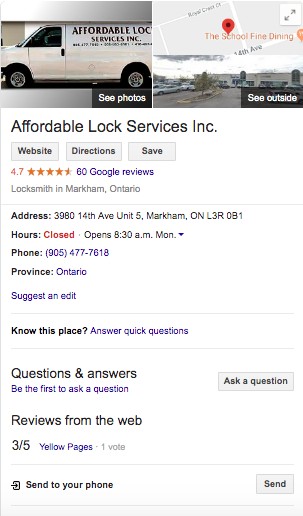
The Knowledge Graph is Google’s own database for collecting and categorizing information on people and places. A knowledge panel will appear whenever a search for your company is directly made. The knowledge panels will display information about your company mainly extracted from your Google My Business profile.

Knowledge panel

Images

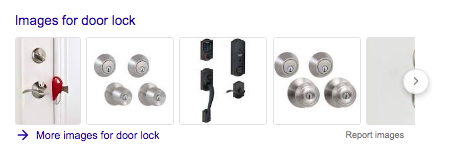
It isn’t uncommon for images to be displayed as the best response to a query. Images are selected as features according to how well they’re optimized for a specific query.

Images on SERP features

Videos

As videos gain more relevance as solutions to search intent they will continue to grow in the frequency of appearance. This SERP position can be won and used to drive traffic at all stages of the buyer phase.

video Google SERP features

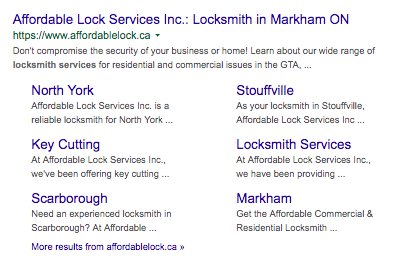
Site-links

Websites with excellent organizational structure will generate relevant links in a search listing.

site-links example

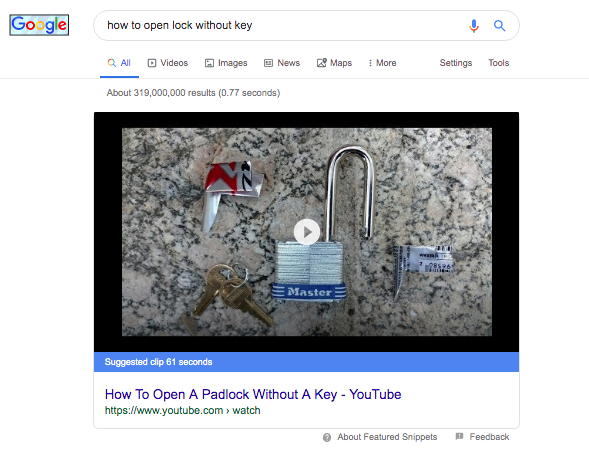
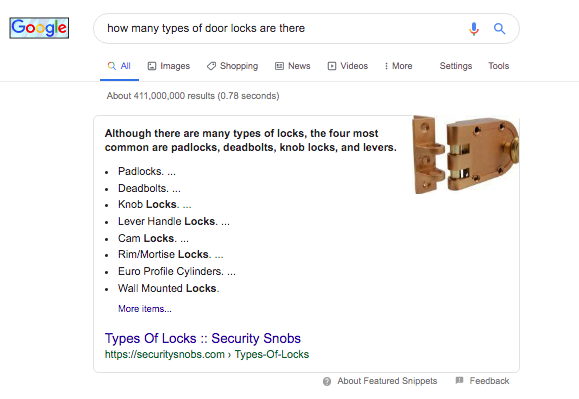
Featured snippets

This SERP feature can come in a variety of forms such as the list, paragraph, chart, or graph. Featured snippets are displayed to provide the user with the quickest answer to a search query.

The featured snippet is an example of one of the most popular Google SERP features

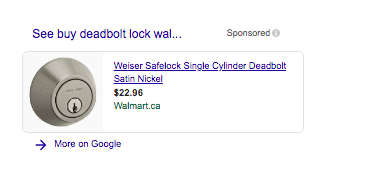
Shopping (Paid)

Often times you will see a carousel of products appear in a search result. These are images of sponsored ads that can be bid on in a Google Shopping Campaign.

Google shopping SERP features

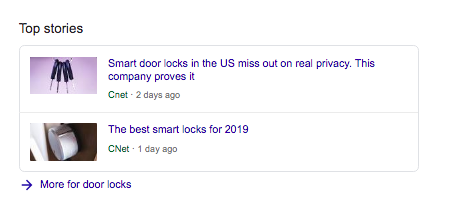
Top Stories

Featured stories are displayed by Google and extracted from news aggregators and websites.

top stories

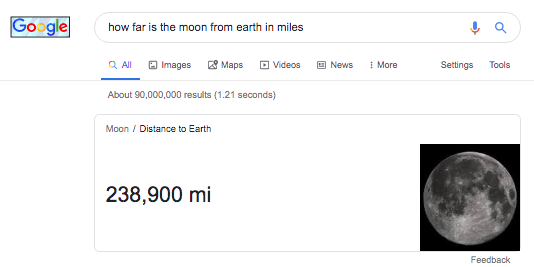
Knowledge Cards

This feature answers generic questions. The information is generated from high authority sources such as Wikipedia and Wikidata.

knowledge card example

Despite the numerous SERP features that have continued to appear more frequently, organic traffic represents a large part of a successful inbound marketing campaign. 

When building content it has become absolutely mandatory to take into account the SERP features that appear in a keyword search because of the percentage of clicks that may be absorbed. 

In order to maximize the number of visitors to your website consider the features that present the opportunity for additional traffic.

Christian Carere
Christian Carere

Christian Carere is the owner and founder of Digital Ducats Inc. in Toronto and heads the SEO team at Austin Bryant Consulting in Plano, TX.  Christian has been published on publications such as Search Engine Watch, Venngage, Small Biz Daily, Grasshopper, Data Box, Socialnomics, and Mention.
old.digitalducats.com/

Written by Christian Carere · Categorized: On-page optimization, Web development

Jan 03 2019

10 Amazing Headline Strategies To Improve CTR

Following a few good headline strategies can completely change the appeal of your content. Your headline is the most important component of your article. The success of your article hinges upon having an interesting headline that makes people want to know more.

Making a headline that captures the attention of readers involves creativity but there’s definitely a science behind it that can be used to make winners each and every time. Start with a working title and make a list of at least 10-20 headlines in order to choose the best one from the bunch. Incorporate as many of the strategies below to boost your click-through rate and drive more traffic to your website.

#1-Place point-value at the front

Describe the value your article is offering the reader at the beginning of the headline. In a study conducted by Dr. Flint McGlaughlin, Managing Director, MECLABS studies 10 headlines to prove that adding the value points at the beginning of the headlines doubled the conversions of those that carried the value points towards the end.

#2-Use numbers

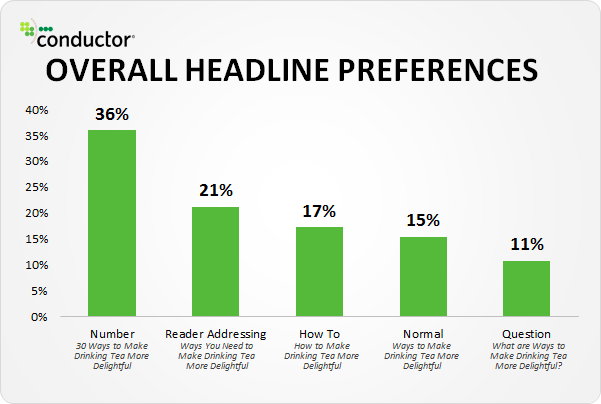
Conductor performed a study that proved the use of numbers in your title will increase CTR by 36% as opposed to without. In an article published on Buffer, Courtney Siter explains “Numbers work well in headlines because humans like predictability and dislike uncertainty.”

She backs this psychological tendency up with a study from Columbia University on “The psychology of waiting in line” that shows how people deal with expectations. When people know what to expect they are able to manage time differently-such as being in a waiting room waiting for their doctor. If they are told exactly how long the doctor will be they handle their expectations differently.

Conductor charted the results of a study that showed overall headline preferences

#3-Use the word “who”

The use of the word “who” increases CTR by 22% according to a study done by Hubspot and Outbrain. Rather than focus on the ”why” people prefer to focus on the “who.”

#4-Use your keyword in your title

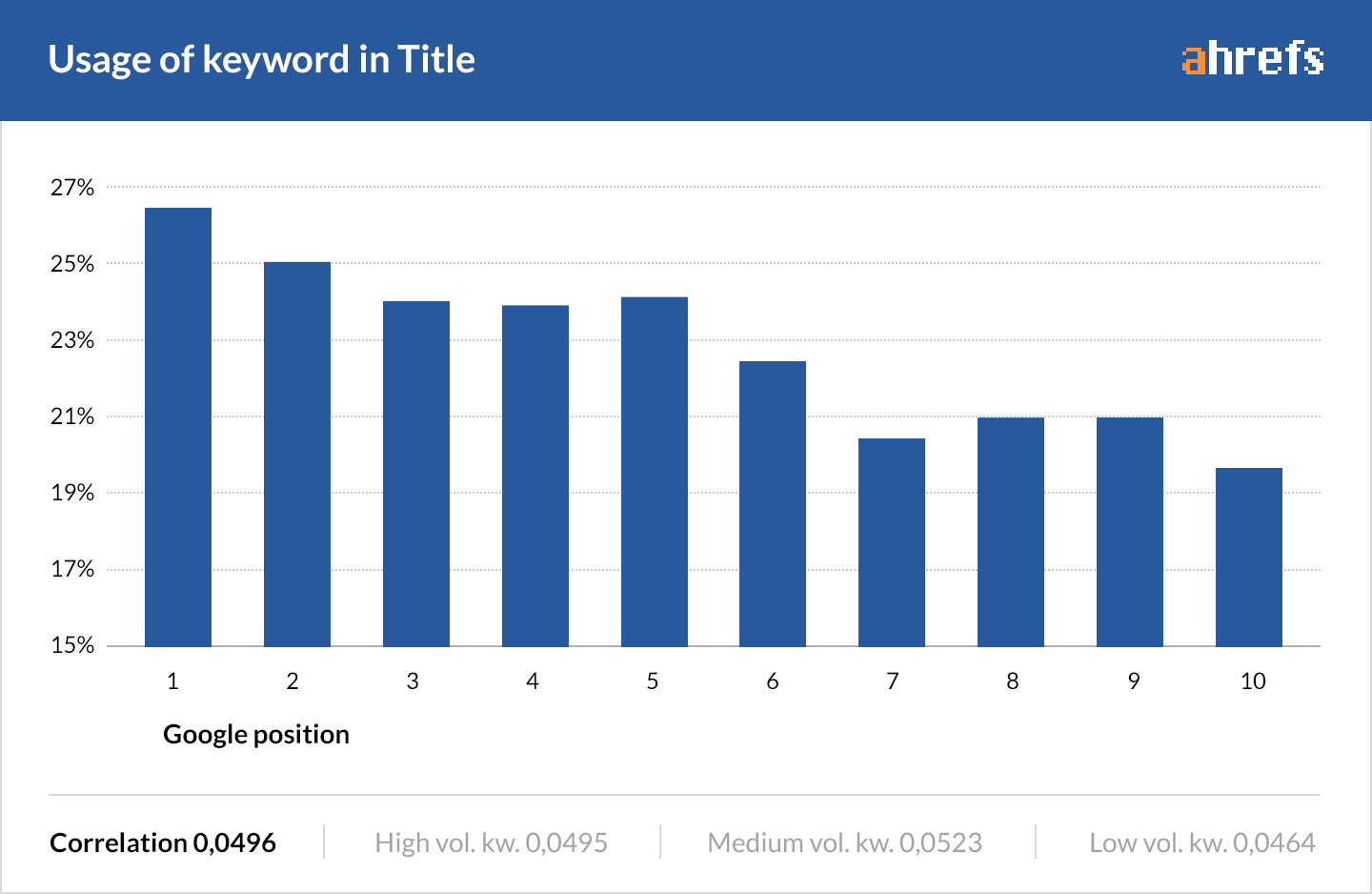
Although there was a small relationship proven, it still stands to reason that using a keyword in your title benefits your ranking. Ahrefs concluded that there was a 0.049% correlation between using your title and 26% of websites that included the keyword in the title were also in the first position in a Google search result.

Position your keywords in front of your title to make sure they are the first thing the reader reads. The first three words are the most important in your headline and if your title is cut off in the search results you want to make the highest impact when appealing to the readers’ interest.

This chart demonstrates a small correlation between keywords used in the title and the first position in the search results

#5- Use power words

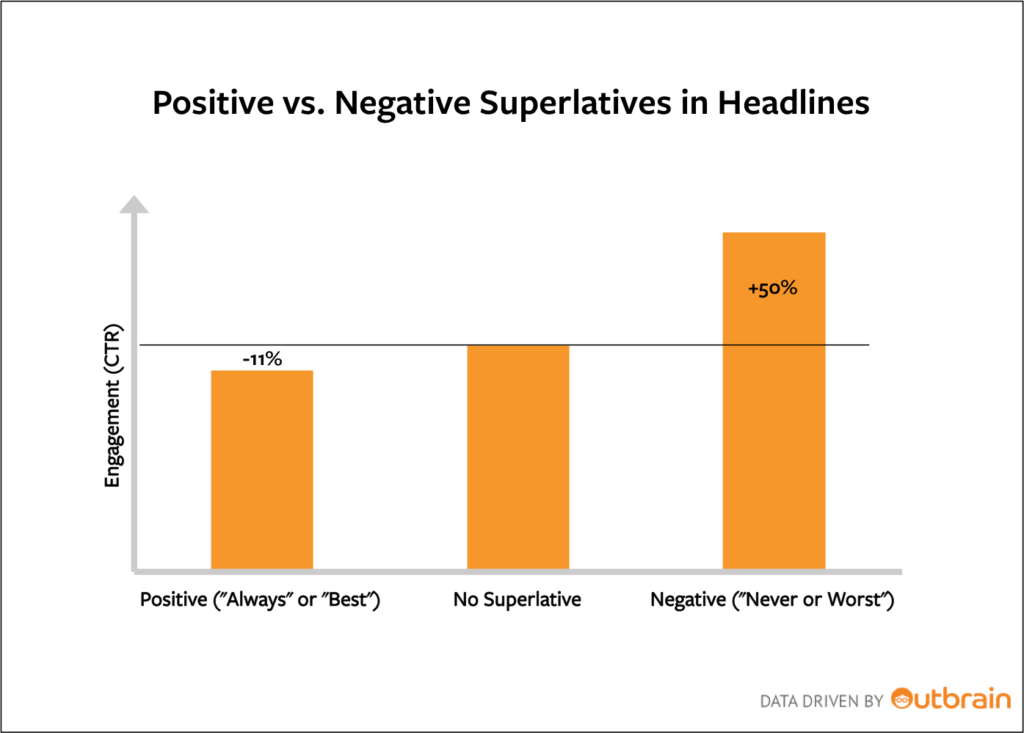
Use power words in your title. According to Optinmonster, the use of power words can increase your conversions by 12.7 % Keep in mind that negative superlatives get 50% more clicks than positive superlatives.

This chart proves negative superlatives boost click-through rate and positive superlatives perform considerably lower.

#6-Accurately describe what your readers are getting

Be descriptive with what the reader is getting or in other words provide more clarity to improve CTR. Dan and Chip Heath are two brothers who wrote a book  Made to Stick: Why Some Ideas Survive and Others Die detailing 6 principles of which the third principle named was the idea that when something is concrete, it brings to mind a strong visual.

#7-Use top performing numbers in your listicles

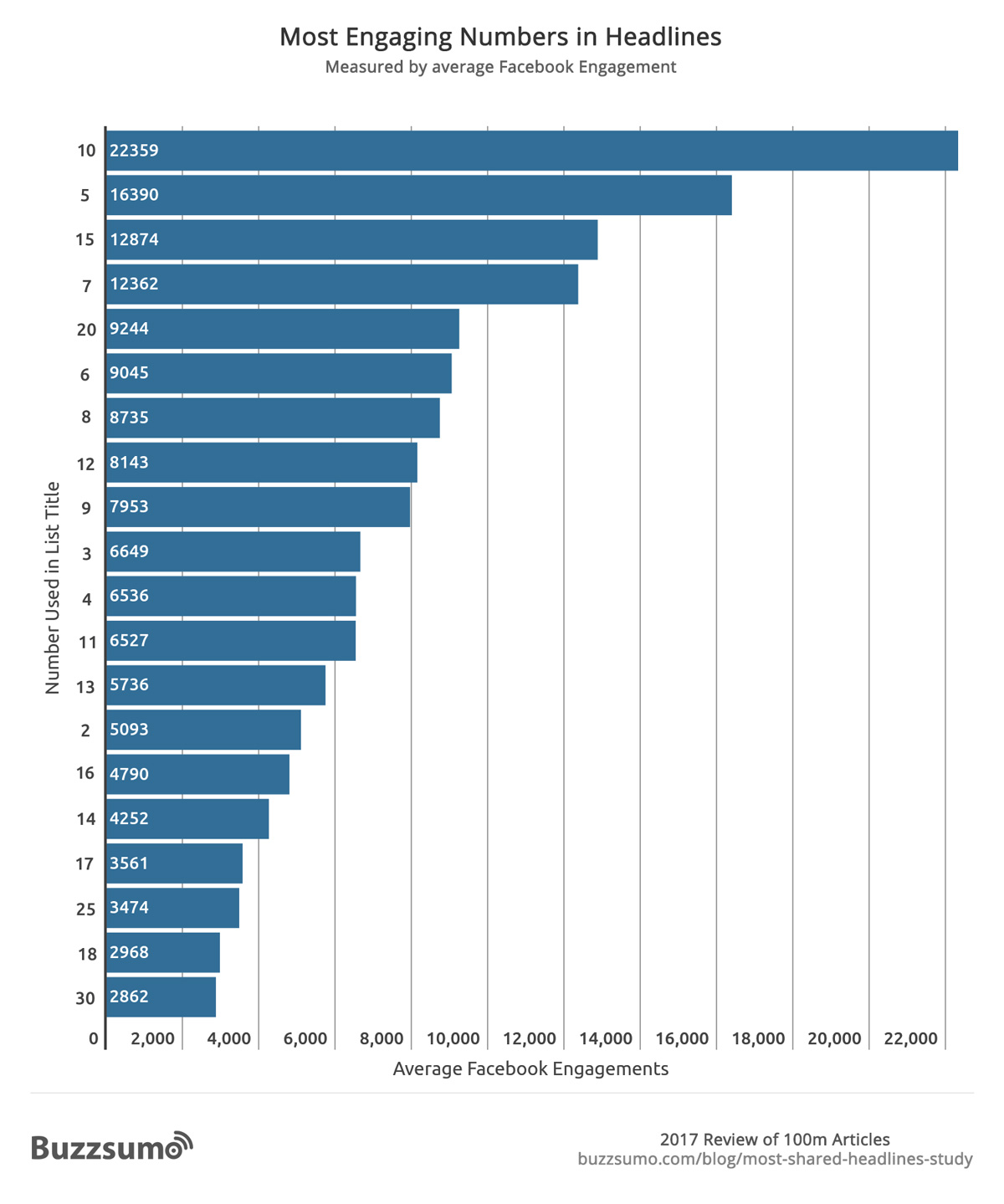
Odd-numbered listicle headlines outperform even ones by 20% (Source: CMI) and yet the number 10 has the most engagement in Facebook headlines. Buzzsumo conducted a study and found that the number 10 in a headline was the most popular number in article engagement.

A chart showing the most engaging numbers in headlines

#8-Use brackets

Brackets add clarity and give the reader a summary of what the article is about. People are drawn to brackets because they represent “reading between the lines” and are perceived to be more straightforward with communicating the contents of an article. Hubspot’s study of over 3 million websites concluded that using brackets in your title improve click-through rate by 38%.

#9-Optimize the length of your headline

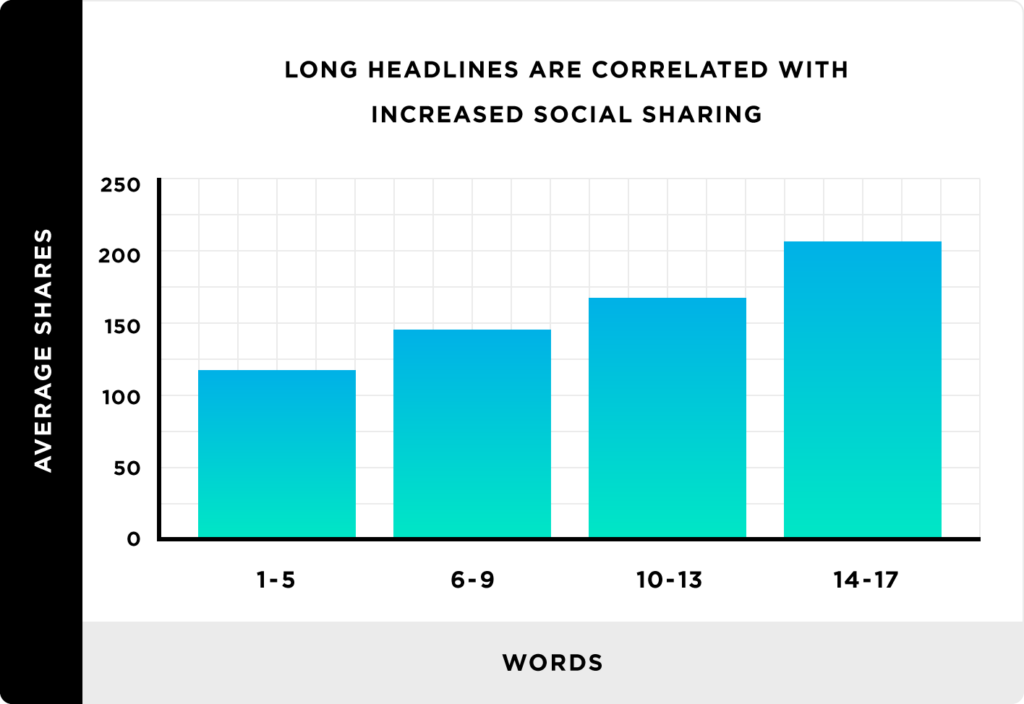
Headlines with (14-17 words in length) get 76.7% more social shares than short headlines. Use less than 70 characters so your title doesn’t get cut off and it can be retweeted.

Chart showing how long headlines are related with increased social sharing

#10-Appeal to an emotion

People are moved by emotions and will respond with more energy when you can trigger an emotional response. The shock and awe effect creates curiosity, amazement, surprise and intrigue. Being original will earn you the extra clicks and increase your click-through rate. When you can surprise a reader your words make a greater impact on their intrigue.

Related reading: What Are The Benefits Of SEO For A Small Business?

Interesting statistics

In June 2019, Digital Ducats conducted a survey consisting of 384 blog posts on 29 top SEO blogs. The following statistics represent blog posts on the first page of the website:

  • 20.37% of the total blog posts used numbers within their title
  • 19.31% of blogs had numbers posted within their first 5 blog posts
  • 13.93% of blog posts used brackets in their headline

Data was pulled from the following sites:

  • Backlinko
  •  Ahrefs
  •  Moz
  •  Search Engine Watch
  •  Hobo‐web
  •  SEMRush
  •  Matthew Woodward
  •  Search Engine Land
  •  Search Engine Journal
  •  Yoast
  •  Cognitive SEO
  •  GotchSEO
  •  Builtvisible
  •  Lion Zeal
  •  Distilled
  •  SEO by the Sea
  •  SEER Interactive
  •  Search Engine Roundtable
  •  Kaiser the Sage
  •  I’m From The Future
  •  Marie Haynes
  •  Buzzstream
  •  Diggity Marketing
  •  Evolving SEO
  •  Web Marketing School
  •  Dejan SEO
  •  Greenlane Marketing
  •  Robbie Richards
  •  Merj

Subscribe To Receive The Latest SEO Trends & Strategies

* indicates required


Christian Carere
Christian Carere

Christian Carere is the owner and founder of Digital Ducats Inc. in Toronto and heads the SEO team at Austin Bryant Consulting in Plano, TX.  Christian has been published on publications such as Search Engine Watch, Venngage, Small Biz Daily, Grasshopper, Data Box, Socialnomics, and Mention.
old.digitalducats.com/

Written by Christian Carere · Categorized: Content strategy, On-page optimization

  • « Go to Previous Page
  • Go to page 1
  • Go to page 2

Footer

Need professional SEO advice?

Give us a call to learn more about how we can help your business

Call for a consultation Request a proposal

Request a free website analysis and proposal for your company by filling out the ” Request a Proposal” form.

  • Privacy Policy
  • Terms Of Service
  • Cities we’ve served

© 2026 · Digital Ducats Inc.