• Skip to main content
  • Skip to footer

Digital Ducats Inc.

SEO Consulting & Services

  • Home
  • About
    • SEO Consulting
  • Services
    • SEO
    • Local SEO
  • Contact
    • Pricing
    • Write For Us
  • Blog
You are here: Home / Blog

Jul 12 2020

Local SEO Content: Improve Your Local Presence

Want to rank for searches within a specific city? The solution is simple; Be city-specific with the content you publish. Local SEO content is an excellent way to get search engines to recognize the city in which you want to improve your local search presence.

What is local SEO content?

Local SEO content is content that is optimized for a city-specific keyword. The content within your page will identify unique elements that relate the content to a specific city.

By identifying popular landmarks, places, addresses or anything unique to the locality, your page and your website become more closely associated with searches that originate from your target location.

There are a few different types of content that work well to optimize for your city, county, state or province. Here are seven of the more popular types that you’re most likely to see used on a website.

Expert round up from professionals in your city

An expert roundup is a form of evergreen content where you combine the quotes from a group of professionals. Confining the area in which you collect your quotes will make your content local to your city.

You can generate a lot of good local backlinks from different local experts that will in turn boost the competitive ability of your website within your city. People will link to your content when they are featured in it.

This type of content can be combined with an infographic to really improve the likelihood of your project being shared within your industry. An example of this is 12 Web Design Trends In 2020 By Toronto Experts.

In this example, 18 experts shared their opinions on the top web design trends for 2020. The infographic was shared and used on a few of the participant’s sites, which accounted for a boost in local traffic.

You can read the details in a local SEO strategy case study.

Local client surveys

Create a survey for your clients that will help you understand how to serve them better as well as create extremely targeted content. Original data is one of the most valuable assets you can obtain in terms of content creation. Focus your survey on your local clientele to create highly optimized content.

One of the benefits of generating your own data is that you can promote your content to other companies in your niche. When you have something no one else it becomes a linkable asset. Other websites will be much more likely to use your data as a resource when the information is coming straight from your own research.

Host a local event

If you’re planning on hosting an event, no matter how small or large, you should be writing about it on your blog. Include the name, address and times of the event and use structured data mark up on your page.

Hosting your own local event creates an opportunity to publish highly optimized content to your city. As search engines index your site, the amount of local content you’ve published contributes to a stronger local presence.

Sponsor a local event

If your business covers service areas or you simply don’t have the resources to host an event, there are plenty of opportunities to sponsor a local event.

Simply getting a link to your website on the sites that are promoting the local event is worth the local optimization points. These events should take place in the city you’re optimizing for and you can write about the event on your blog to promote awareness.

Here’s an example of a Meetup group in Toronto that has six sponsors listed on their Meetup page.
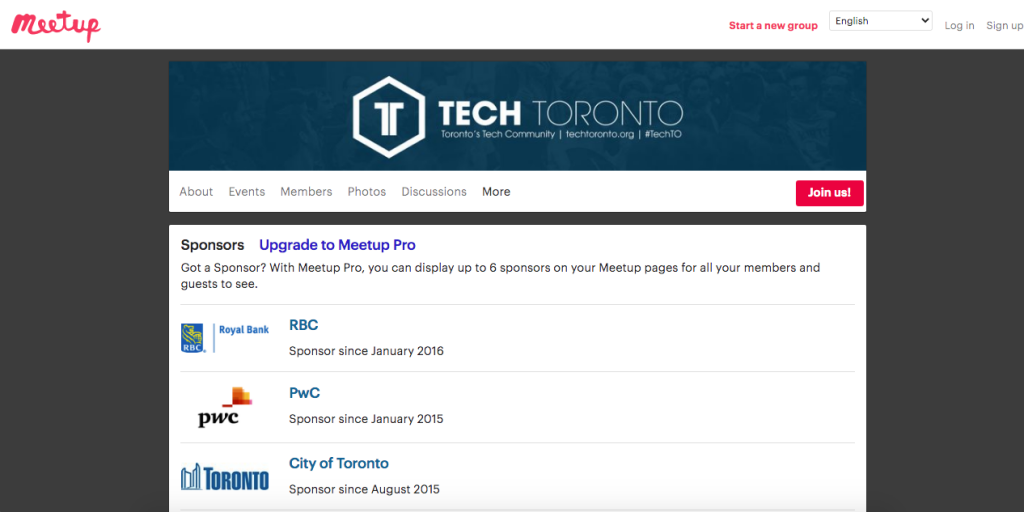
This Toronto Meetup group has sponsors that can use this material for local SEO content

You can look for opportunities to sponsor events on sites like Meetup, Eventbrite and your local chamber of commerce.

Location pages

If your website operates in multiple locations, a location page for that city will give you the best opportunity to rank highly for city-specific search terms.

Location pages can be optimized to provide more relevance to the target location. With a page dedicated to a specific city, you can optimize for the city in the metadata as well as include city-specific references within your content.

Here’s an example of the Toronto location page for Roto-Rooter. You can see the URL includes the province and city. The title (h1 tag) is also Toronto, On.
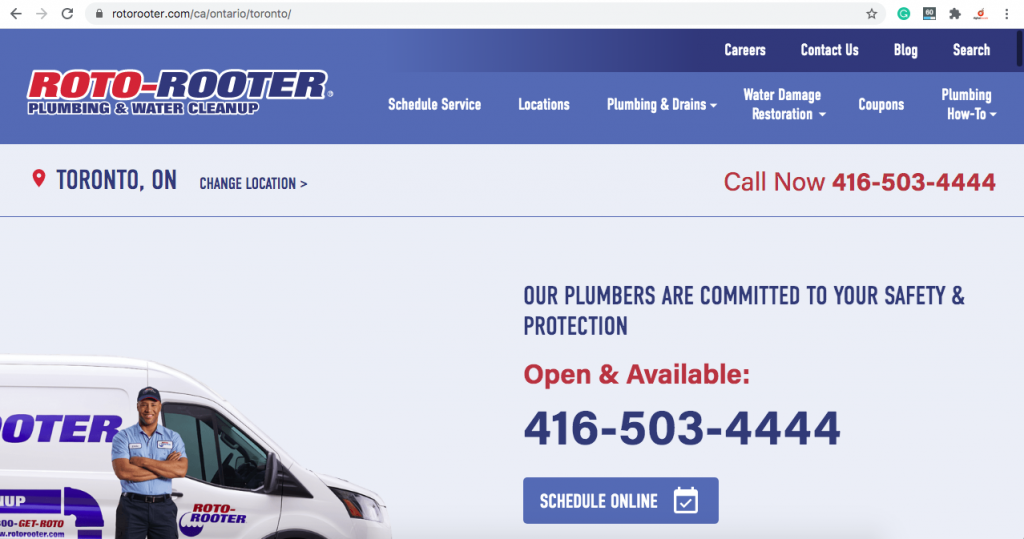
Roto-Rooter Toronto location page as an example of local SEO content

If you have an address located within that city, your NAP details should be included in your on-page optimization. Including structured data mark up will ensure search engines know your page is dedicated to a specific city.

Write about local events and activities

Publish content on local events and activities that relate to your business. Give your audience updates on current events that affect your locality and how it relates to your business. 

Content that makes city-specific references and links builds your local notoriety for both users and search engines.  

FAQ page and/or section

Publish a frequently asked questions page to win positions on the SERP (search engine results page) and drive more traffic to your site.

You can use a FAQ page to target featured snippets and PAA boxes. The sweet spot to appear in these SERP features are answers to commonly asked questions that fall within the 40-60-word count.

Use h-tags to mark up your questions.

You can even add FAQ sections to location pages or any page where it makes sense. Use structured data to mark up your content. This will make your page eligible for rich results when it ranks on the first page of Google.

Create a local SEO content strategy

Every business will have different opportunities available for working out an effective local content strategy. Identify the best traffic opportunities as well as the best link building opportunities to harmonize your efforts.

Develop a strong local presence to capitalize on some of the highest converting traffic available. Make sure your content includes a local element to build your brand recognition in your locality.
Written by Christian Carere · Categorized: Content strategy, Local SEO, Web development

Jul 11 2020

How To Get More Google Reviews

Defining a simple review strategy can help you get more Google reviews. To get the most positive reviews of your business it comes down to two major factors; the service you provide your clients and the review strategy you implement for encouraging reviews.

Google reviews promote strong ranking signals for localized search results.

The truth is people typically leave reviews if their experience was either extremely pleasant or utterly horrible. A mediocre experience is quickly forgotten and the urge to share is somewhat non-existent.

Not every customer interaction will hot one extreme or the other so it becomes necessary to implement a review strategy to encourage reviews.

To get more reviews on Google you will need to:

  • Provide outstanding service
  • Ask your clients for reviews
  • Make it easy for them through reminders and review links.
  • Respond to all of your reviews

Provide the best customer service possible

Outstanding service is the best way to get the most positive reviews of your company. The level of effort your business puts forth in this department will be your customers’ testament to the quality you provide.

This aspect sets your company up for each and every other way to encourage customers to leave a review.

Ask the client in person

Asking in person is an effective way to gently guide your customer to leave a review. The timing can be more strategic where at the end of a transaction you or your employees can suggest that they leave a review if they were satisfied with the way things went.

Asking in-person applies to both in-store experiences as well as over the phone customer service calls.

Send a review link via email

Make it a point to thank your clients by sending an email letting them know you appreciate their business. At the end of the email, ask them to kindly leave a review.

Provide a link to make things easy and take them directly to your review page.

How to create a link for customers to review your business on Google

Time needed: 3 minutes

How to create a Google review link using a desktop computer

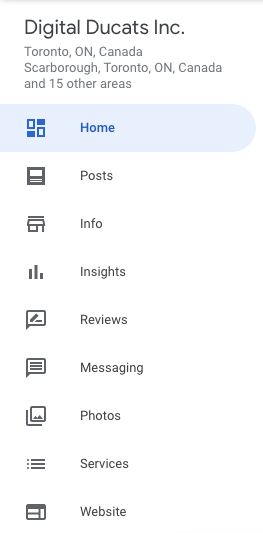
  1. Go to your Google My Business profile

    Click Home on the left side of your navigation menu.home screen for GMB profile

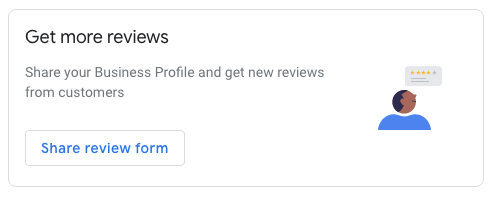
  2. Find the box that says Get more reviews

    Click on the button that says Share review formShare review form

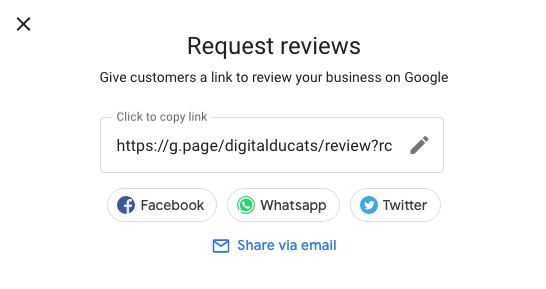
  3. Copy the link generated with your short URL

    If you haven’t created a short URL you may be prompted to do so before getting your link to review your business on Google.LInk to review Digital Ducats on Google

Respond to each type of review

Think of reviews as additional ways to promote your business. Reviews are simply another way that people can learn about your business. Build. your brand and your reputation by responding to as many reviews as possible.

Reviews are a powerful marketing tool that highly influence purchase decisions. Make the most of them by putting your best foot forward for future clients and customer loyalty.

Treat negative reviews as marketing opportunities

It’s imperative to respond quickly to negative reviews. It’s bound to happen from time to time that someone will not get what he or she wanted from your product or service.

Never ignore a negative review as it is best remedied by a timely response.

Responding to a negative review will give you an opportunity to show people how you deal with an unsatisfied customer.

You can take the venom out of a bad review, by stating your side of the story and offering a solution (or apology if it’s required).

People are much more forgiving of a negative review when they see your side of the incident and how you handle a disgruntled customer.

Show your appreciation for positive reviews

When a client leaves your positive review they are helping your business. Show them appreciation by responding to their review. Not only does this make them feel appreciated but it shows other people that you value their business.

There are some people who might feel they should be thanked when they leave a positive review for your business. Cater to your existing clients to promote customer loyalty and keep them coming back time and time again.

Things to avoid when collecting reviews

There are a few guidelines that Google has specifically stated for how you go about asking for reviews. If there is a violation of those guidelines, your reviews may be ignored or your profile suspended.

Never set up a review station to get more Google reviews

Setting up a station for reviews is strictly prohibited. If you are accumulating reviews from the same IP address there is a good chance that Google will begin to ignore reviews that originate from the same IP address.

Never mass email clients to leave a review

Reviews are one of the few things in SEO that you can take your time building. Google expects reviews to trickle in naturally. Any spikes in the number of reviews that you receive will raise suspicion and may result in those reviews being ignored.

Never pay a service to review your company

There are companies that offer services to increase the number of reviews you have on your business. Your reviews should be directly from your clients for an accurate representation of your company.

Never offer incentives to review your company

If a client leaves a review of your business it should be for the right reasons. An incentive creates false reviews since clients are writing the review for the wrong reasons.

Learn more about local SEO services and how your business can benefit.

Written by Christian Carere · Categorized: Local SEO

Jul 05 2020

Create A Custom SEO Strategy For Long-term Growth

Establishing an effective, custom SEO strategy for your business is more important now than it ever has been. The global pandemic has created a strong awareness of the options that exist to people in a contactless environment.

Many people will continue to explore those options long after the pandemic is over. As online searches continue to surge, companies are experiencing a large increase in the demand for their products.

The benefits of SEO have never been greater. A top-ranking in the search results for important keywords can contribute to the largest source of leads and new clients your business acquires.

Many companies relying on the in-store experience have felt the impact, while those positioned at the top of the search results have experienced a boost in brand recognition and overall sales.

The bottom line is that your business needs to be prepared for more digital solutions in a contactless environment. A custom SEO strategy is one of your best solutions to ensuring long-term growth.

Why is SEO important in 2020?

Despite the inevitable end of a global pandemic, the behavioural patterns of the typical consumer has been changed forever. Online searches have surged creating massive traffic opportunities for companies to capitalize on to increase revenue.

So many have turned to online shopping for the first time. As people become more accustomed to researching and making purchases online the trend in online sales will continue to skyrocket.

Ecommerce is booming and will continue its rapid expansion of total sales. The numbers this year will break all records and extend past initial projections.

ecommerce predictions suggest increased importance of a custom SEO strategy
image source: https://www.emarketer.com/content/us-ecommerce-2020

How can you position your company to benefit from the inevitable shift in the way we do business?

Position your website to receive increased search traffic to capture more leads and new clients. Execute a custom SEO campaign designed to drive traffic from keywords that are important to your business.

What is an SEO campaign?

An SEO campaign is a process that improves your website’s search visibility through improved rankings in keyword searches. It results in attracting visitors who are a match to what your business offers in products and services.

An SEO campaign provides the blueprint for developing your site in the major keyword topics that surround the inner workings of your business. As you build content that answers questions and educates visitors, your site becomes increasingly relevant to keyword searches.

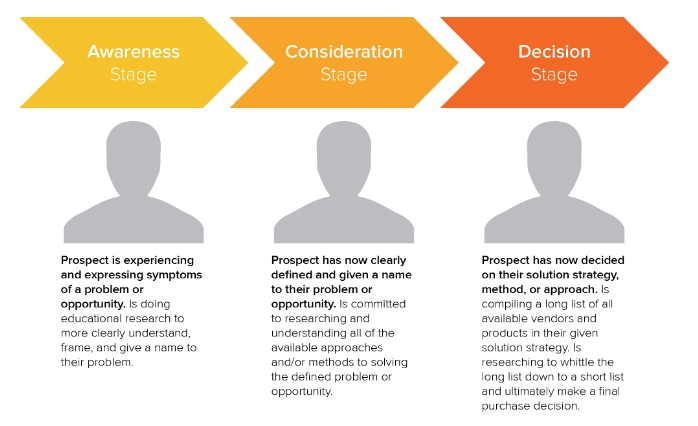
As a result, your website appears in keyword-related searches from users at different stages of the buyer journey.

The buyer journey details the different types of content that need to be created in an SEO strategy
image source: https://blog.hubspot.com/sales/what-is-the-buyers-journey

The goal is to create a website that has the ability to drive traffic, educate prospects and convert visitors to clients.

How to customize your SEO strategy and build an effective SEO campaign

The main focus of an SEO campaign is on the keywords you target and the content you publish. The largest ranking factor is being the best result to a search query. An SEO campaign builds the relevance of your page to the keyword topics and targets.

Understand your audience by researching your target keyword

Establishing search intent is crucial to understanding what it is that Google is using to rank pages highly in a search result. Keyword research is the first area that establishes the foundation of an effective SEO strategy.

What is the user truly expecting to find when they type in a search query?

Whenever you’re considering a keyword to target, the first action is to use that keyword in a search. The SERP (search engine result page) contains a lot of information that will point to what is needed to rank for the search term.

Reverse engineer the way other pages have achieved a top ranking to provide clues on how your site will outperform your competition.

Perform a SERP analysis

For every keyword search you will find the following on the SERP:

  • The level of competition that competes for the first page
  • The type of content that is being used to rank
  • How pages are optimized to perform
  • How many links are pointing to the ranking pages
  • How Google displays the search result
  • The commercial value of the search term

Establish intent

The first assessment is whether this term is a perfect fit for your company. If the pages that rank are all competitors that are offering the same product or service it confirms the relevance of the keyword to your business.

If there is a mix of results, consider a more specific search term to avoid unwanted traffic that wouldn’t be interested in your content.

Assess the competition

Using software and keyword tools becomes necessary in order to establish the authority competing pages have built. By identifying the number of links each page has pointing to it, where those links came from and whether they will benefit your site is the first indication of how realistic your keyword is to rank.

Build a list of alternative keywords

A search result can display many different features that are clues to what users are searching for when they search for your keyword. Establish commonly used phrases and keyword alternatives to build a better understanding of what the bigger picture is to the user’s true intent.

Read more on how to choose the perfect keywords for your site

Prioritize your target keywords

Keyword research will result in a large list of keywords, keyword synonyms and related search phrases. Prioritize your list in order of importance. Group your keywords based on search intent.

The result should be a keyword strategy that addresses the most important aspects of your keyword topic. This is the initial blueprint of a keyword strategy that lays the foundation for your content strategy.

Develop your Content Strategy

The approach you take on building content should be to provide as much information about your business by building a resource of information. The content you publish should answer common questions, provide insight and educate based on satisfying the intent of the keywords you target.

As your site becomes more successful in ranking for these terms, it increases the trust search engines place on your website for keyword related searches.

Map your content to match your keyword strategy

A visual representation of a keyword strategy is known as a topic cluster. Google ranks pages based on topical relevance. Connecting the ideas and concepts of your main keyword topic builds more relevance to your site and to the pages that are interlinked.

topic clusters concept to structure your content in an SEO campaign
Image source: https://www.impactbnd.com/blog/what-are-topic-clusters

The pillar pages of your site will target the most important keywords. The clustered content will target more specific searches that serve connect visitors to your business by addressing the various details surrounding your keyword topic.

Read about how to implement pillar pages

Publish content that performs

The content you publish needs to serve the user’s purpose. If there are massive guides that are published on the first page of results for your keyword, it indicates the level of detail that’s required.

The Skyscraper method is a common approach to making sure your content is 10 times better than anything that ranks.

Using this approach ensures you cover the topics and subtopics necessary to address the intent of a search.

Read about how to write SEO content that ranks highly

As a local business, publishing local SEO content is a strategy that enhances your local search appearance.

Optimize for traffic opportunities

When your page ranks at the top of a result, it ranks for a number of different keywords. People use a number of different terms in a search-even though they are searching for the same content. Part of your content strategy includes optimizing for additional terms as well as traffic opportunities that exist in Google features.

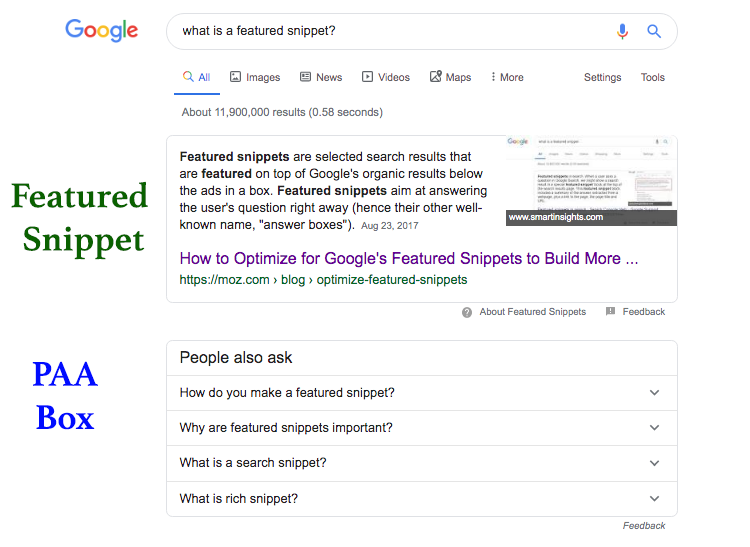
Featured snippets and PAA boxes, for example, are considered and traffic opportunities because they are features that attract a percentage of clicks on the search engine result page.

featured snippet and PAA box are traffic opportunities in your content strategy

Optimize to appear in these features for additional traffic to the same page for multiple related search terms.

Link building strategy

Link building is necessary to get votes of confidence in the quality of your content. Well-placed links to your content build credibility and authority in your niche and industry.

There are a number of different link building methods you can employ, but regardless of what you choose the strategy should appear as natural as possible.

A common tactic employed is to assess your competitor’s links. By identifying where their links come from, you can pick up on a few links for your site.

Not every link on a competing page will be good for your ranking. In fact, there may be links pointing to their site that don’t help them and are hurting their ranking potential.

Choose to pursue links from websites that have traffic and whose visitors will be genuinely interested in your content. This approach helps to identify the sites that have a strong relation to yours and also get more people on your site that has a strong possibility to become clients.

Reach out to similar niche and authority sites

Most SEO campaigns require some level of outreach. In order to get links in the most natural way, it’s common to reach out to website owners who publish similar content.

The success of your link building depends largely on the quality of your content. When you have good content worth sharing people won’t mind linking to it.

Achieve goals and benchmark your success with your SEO strategy

Every SEO campaign should end with the goal of driving traffic to your site from keyword searches that serve a role in your overall keyword strategy.

Creating content that ranks is a primary function of traffic generation. With the right keyword strategy, your website will thrive from the flow of visitors that convert to clients.

Customize your SEO campaign to achieve keyword related goals and drive traffic that converts.

Written by Christian Carere · Categorized: Content strategy, Link building, On-page optimization, Web development

  • « Go to Previous Page
  • Go to page 1
  • Interim pages omitted …
  • Go to page 19
  • Go to page 20
  • Go to page 21
  • Go to page 22
  • Go to page 23
  • Interim pages omitted …
  • Go to page 32
  • Go to Next Page »

Footer

Need professional SEO advice?

Give us a call to learn more about how we can help your business

Call for a consultation Request a proposal

Request a free website analysis and proposal for your company by filling out the ” Request a Proposal” form.

  • Privacy Policy
  • Terms Of Service
  • Cities we’ve served

© 2026 · Digital Ducats Inc.