• Skip to main content
  • Skip to footer

Digital Ducats Inc.

SEO Consulting & Services

  • Home
  • About
    • SEO Consulting
  • Services
    • SEO
    • Local SEO
  • Contact
    • Pricing
    • Write For Us
  • Blog
You are here: Home / Archives for keyword research

keyword research

Apr 01 2023

5 Reasons Keyword Research Is Important to Every SEO Campaign

You may have read it a million times, or you may just be reading it now but keyword research is important. In fact, it’s considered one of the most crucial stages of a successful SEO campaign. Search engine optimization is based on optimizing pages for keyword searches. If there are any misinterpretations about what a user is looking for when they type in a search, it can completely throw off your entire campaign.

In order to understand what your SEO company does for you, it helps to understand why the research stage of an SEO campaign is vital to generating a return on your investment. Here are 5 reasons SEO companies put so much effort into keyword research.

Hero image for article "5 reasons keywords research is important for every SEO campaign"

Understanding search intent

Search engines are evolving at a rate much faster than ever before. The use of artificial intelligence and machine learning has allowed search engines to pinpoint search intent with extremely accurate precision. This advancement in search engine technology has also led to the ability to determine whether any given web page can answer the intent of a search.

According to Market.us, the Artificial Intelligence Market was valued at USD 129.28 billion in 2022. It is projected to grow at a compound annual growth rate (CAGR) of 36.8% from 2023 to 2032, reaching a value of USD 2745 billion.

Think about it. Google now has statistics on billions of searches where they assess what a user has searched, what they have clicked on and how much time that user has spent on the pages they clicked on. This information is extremely valuable for formulating the most accurate idea of what “the best answer” is to a search query.

To understand search intent is to understand what a user is truly looking for when they type in a specific keyword search. If you know what they want and need to see to completely satisfy that search, you can provide content that addresses their needs at all levels.

Keyword research is the process of identifying the topics, the keywords and the level of credibility required to be the best answer to a search result.

Benchmark the strength of your competition

A large part of determining the true intent of a search query is analyzing the pages that are already ranking for that search term. You can extract similarities from the top-ranking pages and pinpoint characteristics that are contributing to being displayed in the top-ranking positions.

For example, if the keyword you’re trying to rank for results in 10 web pages that are massive white paper essays, it’s safe to say that you’ll need extremely long-form content to rank on the first page.

If the first page of search results were all in the form of list-styled content, it would make sense to write a page that’s in the same format.

The competitive analysis goes beyond just analyzing the type of content but also means comparing the backlink profiles. In order to determine the strength of the competition, you need to consider the domain authority and the backlinks pointing to each page.
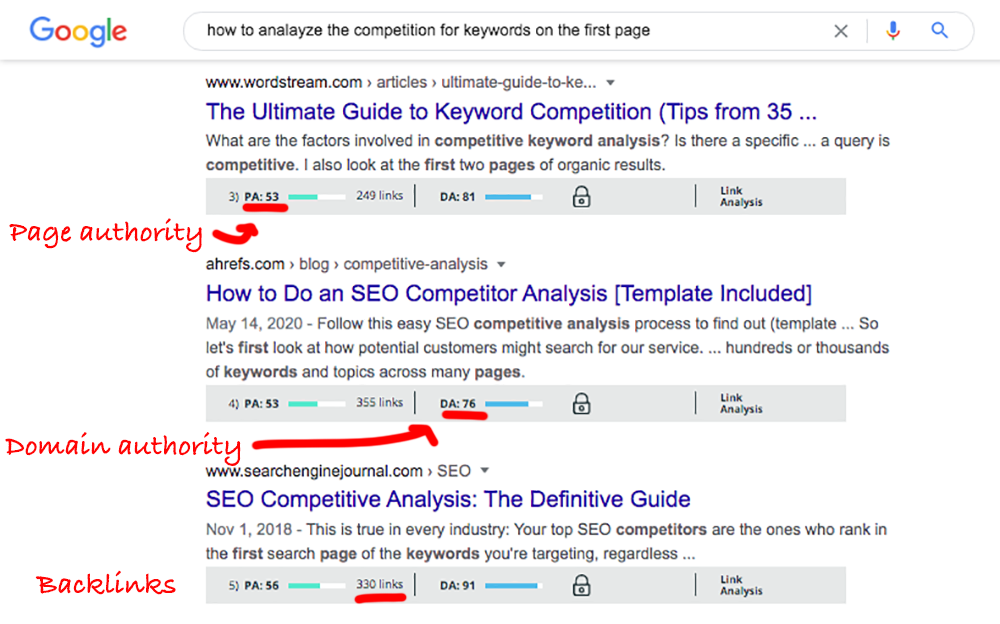
Keep in mind that domain authority and the number of backlinks have become arbitrary in terms of achieving rank. We are seeing more and more websites being given the chance to appear on the first page of results IF the content is outstanding and optimized to answer the true intent of a search.

If users respond and engage in the content on a lower domain authority website, that website may hold it’s ranking long enough to acquire the backlinks needed to maintain its position. If the content is not engaging, the website is shipped off the first page of results to allow other websites a chance at being “the best answer to search intent.” This process can be attributed to one of the many functions of Rankbrain, Google’s artificial intelligence that plays a large role in first-page rankings.

Nevertheless, the backlinks and domain authority of the top-ranking pages are still major considerations on how to prioritize the keywords in your strategy. There are some keywords that will take longer than others to achieve a first-page appearance. The backlink profile and domain authority of your competition give you insight into how strong your competition actually is for that specific keyword.

Develop keyword options

Google reports that there are close to 17% of total searches have never been seen before. This means that the way people are typing in their searches is constantly changing and are, for the most part, long-tail keywords.
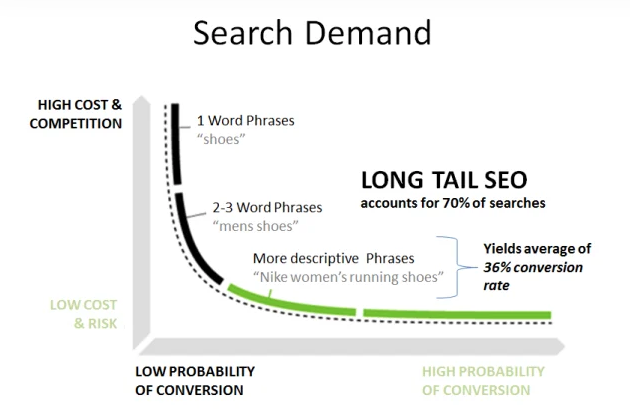
long tail keywords vs head terms vs chunky middle

Long tail keywords are typically considered three or four keywords strung together in a search. Since the advent of voice search, long-tail keywords are becoming longer with searches becoming more conversational in nature.

In order to come up with the best keyword strategy, you need options. 

Although Google ranks according to keyword topic, optimizing for specific target keywords will help your website rank in a top position. Keyword research includes finding the most commonly searched terms as well as a list of the options that serve the same intent. Balancing the strength of competition, the volume of traffic and your current website status is part of the process of establishing a keyword strategy.

Establish a keyword strategy

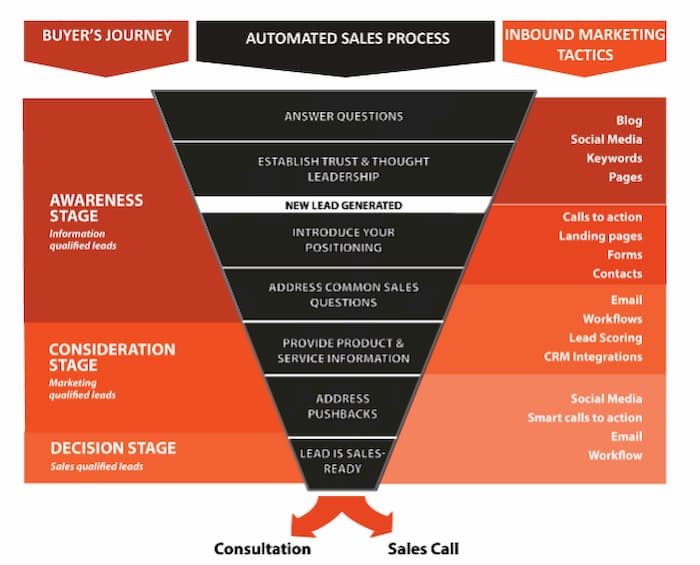
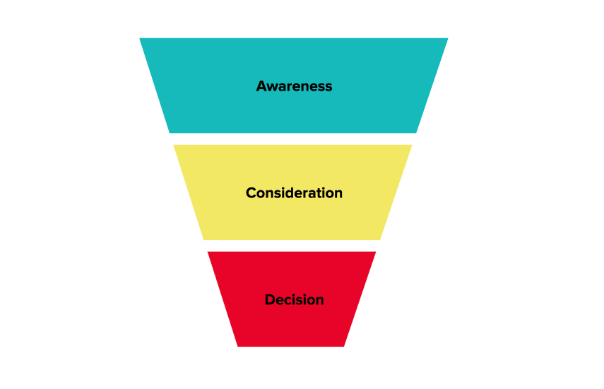
The goal of search engine optimization is to create content that ranks and sends visitors to your site at each stage of the buyer journey. As a lead-generating asset, your website should target keywords that drive traffic at the awareness stage, the consideration stage as well as the decision stage.
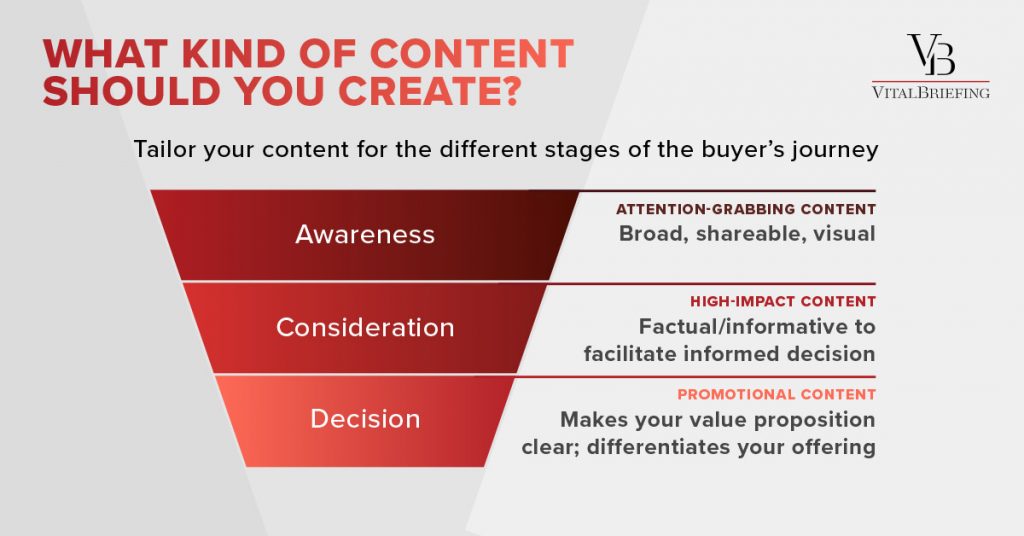
buyer journey

Keyword research leads to the discovery of keywords your site currently ranks for which present traffic opportunities. Keywords in “striking distance” are considered to be those in positions 11-20 (which is on the second page of search results). There is much less work to be done on these pages than starting from scratch, so they become short-term goals in your keyword strategy.

Moving a page ranking from the second to the first page can be done by enhancing the content, enhancing the optimization, and building internal and/or external links. Discovering traffic opportunities such as this is typically found during keyword research.

Keywords that require new content or developing a topic cluster fall under the long-term strategy. Since content needs to be published, optimized and have links built to it, it’s a long process to move it to the first page of results.

Ideally, your SEO campaign will include both short-term and long terms goals for driving traffic.

Develop content that drives traffic

The content strategy you implement will closely follow your keyword strategy. You can enhance the content your site publishes by focusing on what users want to know and what they need to know.

A large part of optimizing for ideal keywords is answering commonly asked questions. The process involves breaking down major keyword topics into more focused subtopics that form topic clusters.

A topic cluster consists of pillared content and clustered content. Pillared content covers a broad range of your major keywords. These pages create the “pillars” of your website and are most often service pages, product categories or major themes that can be broken down into many different subtopics.

Clustered content is the articles and posts that solve problems, provide education and are narrowly focused on answering a very specific aspect of search intent. Here is an example of a topic cluster on cakes:
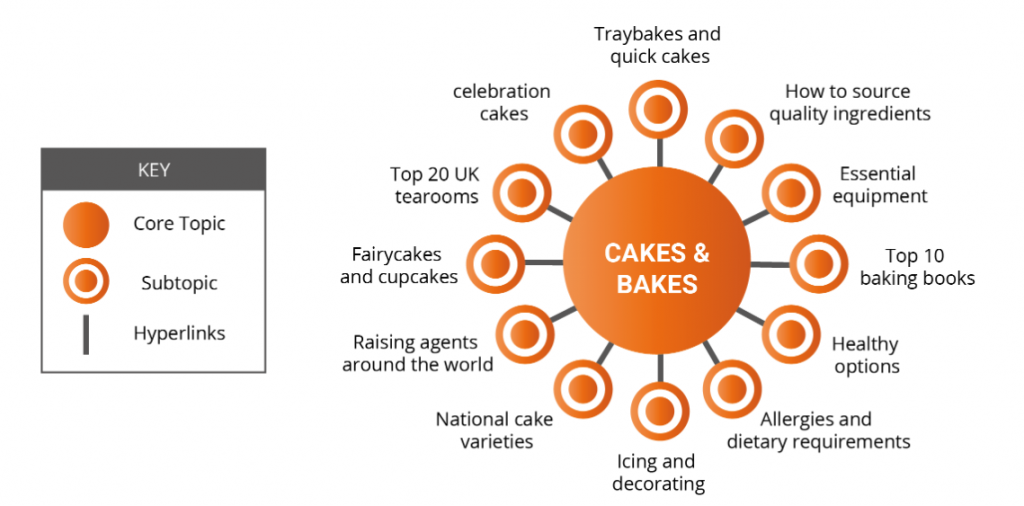
By implementing this type of content structure, your site develops depth and demonstrates expertise in your niche and industry. Keep in mind that Google loves websites that can satisfy search intent. If your site has content that consists of dozens of articles that answer commonly asked questions in detailed articles, you become a strong candidate for keyword-related searches.

As you build valuable content assets within a keyword topic, your site builds credibility and authority and most importantly the ability to satisfy search intent.

Don’t underestimate keyword research

It should be much clearer why keyword research is considered a major foundational practice in developing an SEO campaign. It helps to understand your audience as well as understand search engines in order to create content that performs well in the search results.

Don’t underestimate the power of keyword research. When done correctly, it results in the discovery of the best solutions for driving the most traffic with the least amount of effort.

Christian Carere
Christian Carere

Christian Carere is the owner and founder of Digital Ducats Inc. in Toronto and heads the SEO team at Austin Bryant Consulting in Plano, TX.  Christian has been published on publications such as Search Engine Watch, Venngage, Small Biz Daily, Grasshopper, Data Box, Socialnomics, and Mention.
old.digitalducats.com/

Written by Christian Carere · Categorized: keyword research, Web development

Jan 27 2021

7 Advanced SEO Strategies To Grow Website Traffic

Everyone has a website these days, but not everyone is ranking on the first page. How do you send droves of traffic to your website when thousands of others are competing for the same keywords? Here are some well-known advanced SEO strategies that are proven to increase website traffic for more leads and new clients.

  1. Repurpose content
  2. Re-evaluate your keyword strategy
  3. Build high-quality links
  4. Update, Merge, Delete
  5. Invest in video marketing
  6. Optimize, optimize, optimize…
  7. Optimize for local traffic
Reasons to repurpose content as an expert SEO tactic

Repurpose content

Choose one of your top-performing pages and repurpose the content into another form to take advantage of existing interest and the traffic already flowing to the page.

What does this mean exactly?

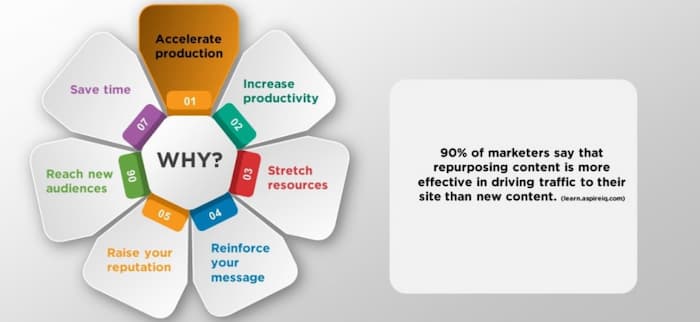
Let’s say you have a blog post on 7Advances SEO Strategies that get a high volume of search traffic. Use the content from that post and turn it into a video, podcast, infographic, slideshow or anything you believe will get a good response from your audience.

Why does repurposing content generate more traffic?

Using an alternative form of content gives you another way to deliver your content. Users all have different preferences on how they choose to consume content and so by providing multiple versions you open up new channels of interest.

Those that may have skipped through or skipped your blog post entirely may choose to watch a video or listen to an audio version.

The bonus of repurposing content that it’s not as hard to do as producing content from scratch. A good deal of the work is already done since you have a finished product. The content is already there it’s just a matter of putting it together in a way that users can consume.

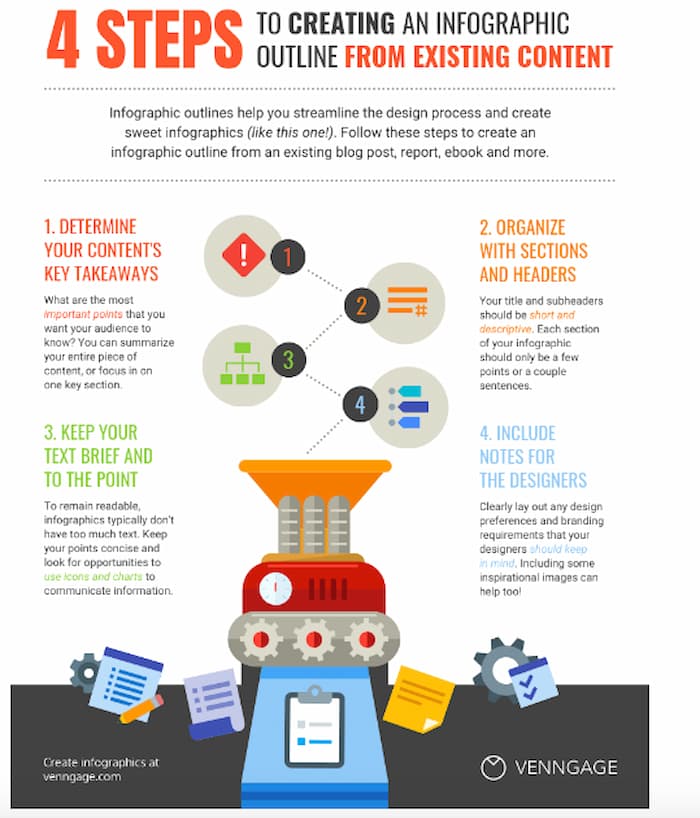
Repurpose your blog post into a new infographic

Turning a blog post into an infographic is a popular method of repurposing content. Visualized data has a much higher retention rate for people because it is a combination of images and facts. Images help visitors retain the most important points of a blog post.

Step one: The first step is to determine your key data points. 

What do you want readers to remember when they see your blog post? This will form the skeleton of your infographic.

Step two: Organize your infographic with sections and headers. 

The key to a good looking infographic is to make it look extremely organized. If everything is balanced and aesthetical it will make more sense to users when they read through the content.

Step three: Keep your text brief and to the point. 

The idea behind making the infographic is to give your audience the most important data points. Don’t try to transpose the entire blog post onto your image. Otherwise, they could just read the blog post.

Step four: Include notes for the designers. 

Be as descriptive as possible when making notes for the designers. You want your ideas to materialize as close to your vision as possible. Tell designers exactly what to do when it comes to branding, colours and images.

Here is an infographic from Venngage that walks you through these exact steps:

Infographic on how to repurpose content which is considered one of the advanced SEO strategies

Publish a video

Hey, have you heard about that new website called YouTube?! It should be obvious by now that if you’re going to publish a video, you’ll want to do it on YouTube. Not only is it the second-largest search engine in the world, but also, videos rank on Google all the time for high volume keywords. 

(Click here to learn about video trends in 2021)

Add YouTube traffic to your monthly search volume

Drive traffic from both Google and YouTube by publishing a video optimized for an important keyword that will drive traffic. YouTube is not as competitive as Google when it comes to ranking for keywords, which is something, you can capitalize on.

If you’re shy about being on camera, use the images from your infographic to make a video/infographic. You’ll need to be the narrator and be super engaging if you’re not going to show your face on the video.

Tips for optimizing your video

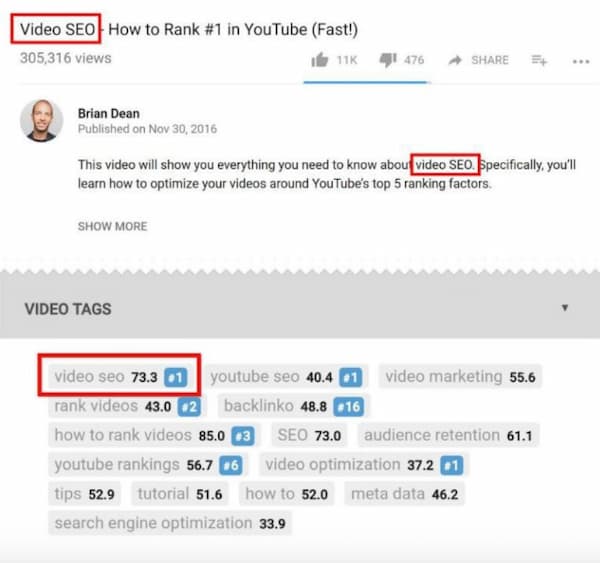
Make sure your main keyword is in the title, filename and tags. Take your video optimization to the next level by including a keyword-rich video transcript in the description. Add Chapters within your description to break up your video into segments. Take note of the top ranking videos and duplicate the tags they use since it also plays a big role in how YouTube sees your video.

This image highlights where keywords are located in YouTube video optimization. This is an advanced SEO tactics that will earn you a lot of traffic

Keep in mind that if people get bored and leave your video before it finishes, it will sink your YouTube ranking. Make sure there are no flat and boring segments. If you can’t help but be super boring then make your videos into short clips. Engagement is the key here.

Publish a slideshow

Slideshows are. away to repurpose content
Slideshare logo

If you’re going to go as far as publishing a video, you can easily import it to Slideshare to publish a slideshow. That’s not the only option for creating a slideshow. PowerPoint presentations convert perfectly and you can always make a slideshow from scratch.

Slideshows allow you to separate your content from the masses by providing a form of multimedia that isn’t as common as infographics and videos. They require user interaction which entices visitors to stay on your page longer and boosts engagement statistics.

Slideshare also has an average of about 80 million unique visitors a month with approximately 38 million registered users. This option can serve as an excellent source of traffic for B2B marketing.

Create bite-sized information for social media marketing

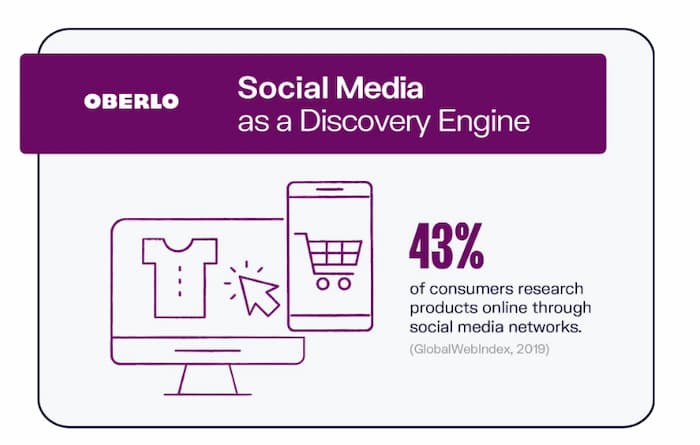
Divide your blog post into the most important points and post pieces of it on your social media one piece at a time. This can give your posts a longer lifespan for capturing interest and driving traffic to the blog post on your website. Oberlo does this really well with its infographics like this stat that was cut from their social media marketing infographic.

Example of making bite sized info for social media. Another advanced SEO tactis

Rather than one post of your entire blog article, you can use multiple posts that are more like teasers to get people to visit your page to read the whole thing. Not to sound like a broken record, but infographics are perfect for this type of social media marketing.

If you’ve turned your blog post into an infographic already you can use each segment as a social media post. Each post will be one of the main data points you’ve chosen for your infographic. With this already done you already have images and the most important messages ready to post.

Save time, resources and boost traffic with repurposed content

If you’re producing content regularly, repurposing content should be a regular part of your routine. It’s not easy to go through years of producing content regularly without experiencing overlap in topic and ideation.

Why not improve the quality of existing content and expand the reach it has by using multiple sources of traffic?

Re-evaluate your keyword strategy

There’s a common misconception that your keyword strategy is a “one and done” type of task. This couldn’t be further from the truth. Your keyword strategy should be re-evaluated periodically to expand on areas that are working to improve your bottom line.

Re-optimize for keyword variations

If there are keywords that are bringing in high converting visitors, you’ll need to pay closer attention to those phrases to build more content surrounding those issues and topics.

Why settle for one high-converting keyword when you can optimize for four or five similar phrases that work to produce the same results? There are many cases where you can get the same page to rank for more keyword variations by making small adjustments to optimize the page. To capitalize on those opportunities, you have to be aware of the keywords that are working to boost your business.

Publish relevant content

The content you publish is heavily influenced by the topics that are important to your audience as well as weighing in the business value the target keywords represent to your company. What you decided were the most popular keywords 5 years ago, heck, even one year ago may have changed in priority and almost most definitely in volume.

It’s important to stay updated on what is being searched the most to continue producing relevant content for your audience. Refreshing your keyword strategy is a way to ensure you’re up to date and delivering fresh and relevant content that drives traffic.

Steal ideas from your competition

An effective keyword strategy is not complete without doing a competitive analysis. Just as you may review popular terms being searched by your audience, you also want to check in on your competition to what terms they’re driving traffic from as well.

You can get ideas by running a competing URL through analytic software to see the both paid and organic traffic that is flowing through their site.

SEMRush software screenshot

If they’re executing an optimized PPC campaign, then paid traffic can speak volumes about what terms are making money for their company. Why else would they be paying for traffic if they weren’t making money from it?

The organic traffic that’s being driven is an indication of the content that’s being produced. If there are keywords they rank for that you don’t, take a closer look at the pages that rank to analyze the content and see if it’s a good fit for your audience.

If there’s business value in the search terms, you have new keywords and fresh content ideas to add to your keyword/content strategy.

A keyword strategy is a living entity

Think of your keyword strategy as something that is constantly evolving. Just as your rose bush needs priming and pruning, your keyword is also in need of fine-tuning to get the best results. Don’t stop adding keywords that work and taking some away those that don’t from your overall strategy. As your website develops over the years, re-evaluating your keyword strategy maintains relevant content and boosts traffic.

Build high-quality links

There’s no doubt that one of the advanced SEO strategies, high-quality backlinks increases the traffic to your website. Consider what makes a high-quality link and it’s a guaranteed fact that if you’re acquiring high-quality backlinks, you’re increasing search visibility.

If the link is on a highly relevant website that receives a lot of traffic, you’ll receive referral traffic with highly engaged visitors.

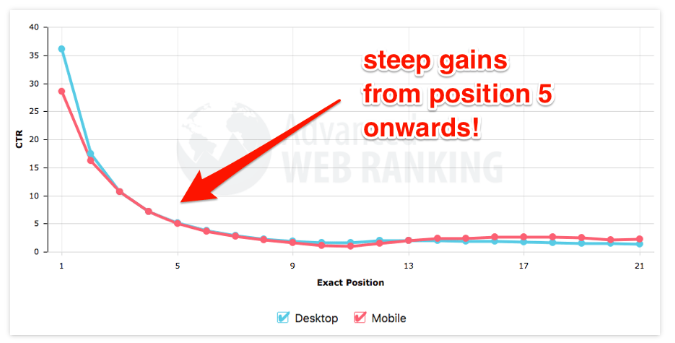
If the website has massive domain authority then that domain authority is transferred to your website, thereby raising your ranking ability. With improved rankings, the click-through rate from the SERP skyrockets.

IMage showing the CTR for SERP positions

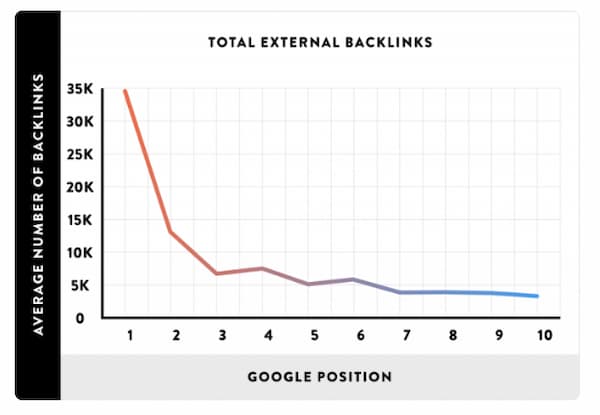
To be in the top 5 (top 3 positions are the bulk of the traffic) you need backlinks. The argument of what comes first, the chicken or the egg can be applied to this situation. Some debate that being in the top 3 ranked position leads to more backlinks, whereas others might say you need to acquire the backlinks to get to the top 3 positions.

Chart showing the relationship between backlinks and Google Ranking

Regardless of how you see it, it’s important to make high-quality link building a part of your routine for developing websites that rank at the top of the search results.

What’s the best way to build high-quality backlinks?

In an ideal world, the content on your website would naturally attract high-quality backlinks. Producing good content is a non-negotiable requirement to compete in the top 3 spots, but it’s not enough to acquire backlinks in a reasonable amount of time.

For a page to accumulate a high number of backlinks naturally, people have to know about it. It needs to be promoted through the proper channels and (ironically) have links built to it to get traffic flowing. Here are a few ways to build links to your pages to get your content in front of the right audience.

Outreach campaigns

This is one of the few methods reproducing natural link building at an accelerated rate. The concept of natural link building is people find your page, they like it so much that they link to it from their web properties.

In its simplest form, outreach campaigns are you reaching out to other website owners and telling them about your content and hope they like it enough to link to it. The major problem with this tactic is that it gets an abysmal conversion rate. Most simple outreach campaigns average an 8% conversion rate.

Here are a few themed outreach campaigns that boost your conversion rates to result in more links built to your page.

Broken link building

Broken link building is identifying broken links on your prospects page, contacting them to inform them of it and offering your link as a substitute for that link.

This tends to get a higher conversion rate because website owners care about the user experience of their pages. If there is a link that leads a user to a deleted page then it’s considered the link is contributing to a bad user experience.

By offering a page with content that is similar to what used to be there, you have more leverage by offering more value in linking to your website.

Read more on how to execute a broken link building campaign here.

Unlinked mentions

This form of outreach is themed to contacting website owners or authors who have mentioned your brand without linking to it. This receives a higher conversion rate on average because if your brand was worth mentioning, to begin with, most website owners won’t have a problem linking to your website.

Read more on how to execute an Unlinked Mentions link building campaign here.

Link reclamation

This type of campaign targets website owners that have linked to your website, but for some reason, your link was deleted. Links are deleted all the time, whether it by mistake, through updates or moved pages-it happens.

You can save a high percentage of lost links by simply reaching out to owners and asking them to replace your link.

Guest posting

This form of link building is probably among one of the top choices for business owners and SEO companies because it allows the opportunity for branding. Publishing an article on a popular website allows a company to demonstrate their expertise to an outside audience as well as a link back to their website.

Guest posting can land some high-quality backlinks when the websites you link from are highly relevant and have high domain authority.

Editorial links are also considered the crème de la crème of all the types of links you can get.

Read more on how to Guest Post here.

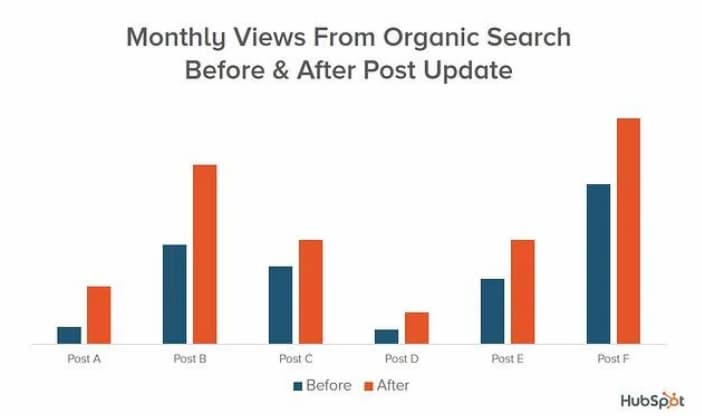
Update, merge, delete old blog posts

As a way to keep your blog content fresh, relevant and ranking highly, it’s important to update, merge and delete underperforming content. This is one of the advanced SEO strategies to add to a periodic routine for improved search visibility and high volumes of traffic.

Chart showing the impact of one of the advanced SEO strategies Hubspot used which was updating old blog posts

First off, Google prefers fresh content to stale content. There are some niches where fresh content is a ranking factor because of the continuous changes that can occur in the niche.

SEO is a prime example of a niche where things can change dramatically over a year. In many cases, there’s content that becomes irrelevant and out-dated making it completely obsolete.

Update old blog posts

Look for opportunities to update older blog posts that have slowly lost the traffic it once generated. The chances are that newer posts have been published that cover more information, cover new information, are more updated or just have more multimedia and value-added features.

Merge underwhelming blog posts

There are often situations where you’ve published blog posts that target similar keywords and answer similar search intent. If these blog posts are not ranking in the top 5 spots on the first page, you merge the two to create a monster blog post with more capability of ranking highly.

Combine the content of both pages to make your article a more comprehensive version. You will need to choose which page to keep and which one to delete based on the keywords within the URL and the backlinks that point to each page. It’s necessary to use a 301 redirect to tell search engines that content has moved from the deleted page to the merged page.

Google has made 301 redirects very clean in terms of transferring power from one URL to another, however, err on the cautious side and consider keeping the page that has more backlinks pointing to it. You can also use the volume of traffic and the keywords in the URL as part of choosing which page to delete.

Delete old posts with no traffic

It’s been proven that deleting pages that do not receive traffic can help increase your overall website rankings. Find pages that don’t rank well, or don’t drive traffic and delete the ones that aren’t contributing to your business.

The reasons to delete pages from your blog should match the following criteria:

  • The page has not received traffic within 90 days.
  • No backlinks are pointing to the page.
  • It’s a low-quality blog post.
  • There’s no business value associated with the post.

Use a 301 direct redirect to send users to new pages in case external links are pointing to those pages. You also want to save the link juice and send it to a similar page on your website.

Invest in video marketing

Video marketing boasts a slew of statistics that are pretty hard to ignore. One reason that stands out is that videos increase conversions by 80% when you add them to a landing page. This is backed by the fact that almost 90% of marketers are using video marketing in their digital marketing strategy.

Capitalize on social media traffic

Videos have been the preferred form of content for some time now by over 70% of people. The beauty of publishing a video is that once it’s on YouTube not only can you benefit from YouTube traffic but you can use it across multiple social media websites as well.

Facebook reports that video is the most shared form of content. Facebook stories, Insta stories are proving to be some of the most popular ways to get users’ attention.

Incorporate “Stories” for high engagement rates

The FOMO effect (Fear Of Missing Out) seems to be strong with most social media users. The idea of losing out on the opportunity to view a video (as such is the case with Stories) has proven effective for generating higher engagement rates.

Increase ranking on Google search

There’s evidence to support that incorporating video on your ranking pages can help push your ranking higher. Higher engagement statistics create a positive ranking signal and if you’re already ranking on the first page, it could be the added boost that pushes your website towards the first position.

Rankbrain image of the AI assessing user engagement and assigning rank

Rankbrain factors in the user engagement statistics of a page to help determine what page satisfies search intent at the highest level. The most noticeable engagement statistic that increases is the average time spent on a page after adding a video. With more users spending more time on your page, the message is being sent that they are enjoying the content you’ve created, making your page more popular.

Increase traffic from Google SERP features

Your video can also appear in video carousels, the video tab on Google search, featured snippets, and the PAA box. As long as you have a link from your video to your web page, your video provides additional traffic to your website.

Optimize, optimize, optimize…

There’s always room to enhance optimization and get your page to generate more traffic. Optimization can occur in a few different areas both on-page content and building off-page.

Target featured snippets

Featured snippets are continuously appearing more frequently on Google, which is creating more opportunities for traffic and branding. Optimizing your content to appear in this feature is an absolute must when it receives the highest CTR. The fact that Google displays your website as the featured result contributes to the excellent branding of your company as industry leaders.

To learn more about optimizing for featured snippets click here.

Target PAA boxes

People Also Ask Boxes can also add a substantial number of visitors to your monthly volume of search traffic. If you rank for one of the questions in the PAA box, there’s a good chance you rank for several variations of that question.

You can optimize for the PAA box by answering popular questions that appear in the box. Tag your question using an h2 or h3 tag and use short, succinctly summarized answers directly after the question.

Optimize for search intent

Optimizing for search intent is a continual process. Make sure your content adequately covers the same topics as any of the competing pages in the top 10 results.

You can create a better page by expanding your topic coverage or improving your multimedia.

Optimize using anchor text links

The number of optimized anchor text links pointing to a page affects the page’s optimization. You can enhance the overall optimization of a page for a specific keyword by concentrating or diluting the anchor text ratio of the keyword you’re targeting.

(Read more on anchor text optimization here.)

Optimize for local traffic

Capitalize on high converting local traffic by optimizing your website with a local SEO strategy. Whether you have a brick and mortar business or not, it makes sense to pick up on searches being made within your area that can land you some extra business.

Creating a Google My Business profile is non-negotiable. It’s one of the easiest things to do-although optimizing your profile can be a little more involved.

Local SEO strategy includes Google My Business (image is the logo)

How to optimize your GMB profile

The first order of business is to fill out the basic information about your business. Make sure you enter data on every single field that’s available. The more information you provide to Google, the more searches your listing can appear for.

Small details count

Some businesses fail to enter their store hours. Let’s say that your store is open late yet if someone searches “X type of stores open late” you won’t appear because you didn’t enter store hours. Make the effort to include the small and simple details since they can land you more traffic.

Categories

Choose the categories that most applicable to your business. Search for important keywords you want your website to rank on the first page. Double-check what categories the companies listed in the local pack have declared. The difference between being a men’s tailor and a men’s clothing store can have an impact on how high your listing is ranked for specific keywords.

Add citations

To rank as a local business you need to have links from local websites and local directories. List your business in the top directories that are well known, such as Bing. You can transfer your GMB profile directly to a Bing account.

Use other websites like Yelp, Yellow Pages, Foursquare to get local traction in the search results. See more on the local link building here.

Increase traffic systematically using expert SEO tactics

The traffic generation ideas mentioned above are considered advanced SEO strategies and can be used to increase the volume of traffic your website receives regularly.

If you don’t have time to implement these SEO strategies yourself, feel free to send us a message for professional assistance. We’ll give you a full site analysis free of charge and let you know which of these tactics will help you generate the most traffic to your website.

Christian Carere
Christian Carere

Christian Carere is the owner and founder of Digital Ducats Inc. in Toronto and heads the SEO team at Austin Bryant Consulting in Plano, TX.  Christian has been published on publications such as Search Engine Watch, Venngage, Small Biz Daily, Grasshopper, Data Box, Socialnomics, and Mention.
old.digitalducats.com/

Written by Christian Carere · Categorized: Content strategy, keyword research, Link building, Local SEO, On-page optimization, SEO strategy, Technical SEO

Dec 30 2020

14 SEO Myths To Eliminate For 2021

When you look at the bigger picture, the internet is still in its infancy. We’ve seen many drastic changes since Google emerged as the dominant search engine and they continue to make changes to its algorithm daily. Every so often algorithm changes can shake up the entire SEO industry. Constant turnover in what works and what doesn’t can give birth to SEO myths and cause them to circulate.

The truth is that Google’s algorithm is proprietary, making it impossible for anyone other than Google to know with 100% certainty how exactly it operates. Much of what we do know has come from large amounts of data and results in which we have drawn our own conclusions.

To this end, many people are still catching up with the times and are only now learning what search engine optimization entails. With so many years of changes, it makes sense that there are a lot of SEO myths circulating. This article will bust a few of these SEO myths so you can count on creating a reliable SEO strategy for 2021.

  1. Anyone can do SEO.
  2. SEO is primarily about keyword optimization.
  3. More links are better than more content.
  4. Longer content ranks higher.
  5. There’s a secret SEO recipe that ranks your website.
  6. SEO is a “one-time” operation.
  7. A guaranteed #1 position on the first page of Google.
  8. It’s better to hire an SEO company in your city.
  9. Cheap SEO services save you money.
  10. All backlinks are created equal.
  11. More website traffic means more revenue.
  12. You need exact match keywords to rank highly.
  13. Syndicate content gets you penalized.
  14. All SEO companies offer the same product.

#1-“Anyone can do SEO.”

The belief that anyone can do SEO is true in the sense that you could say “Anyone can be a doctor.” Sure, if you work hard, study hard and learn what you need to know, you can become anything you want to become. But if you think that an untrained and inexperienced individual is as capable as an SEO professional, this is a big fat SEO myth. 

Anyone can learn SEO and at a basic level, understand the concepts and even apply the fundamentals of search engine optimization. Like any skill you practice, there is a learning curve to expect where you’re guaranteed to make mistakes and encounter situations that only experience and knowledge can solve.

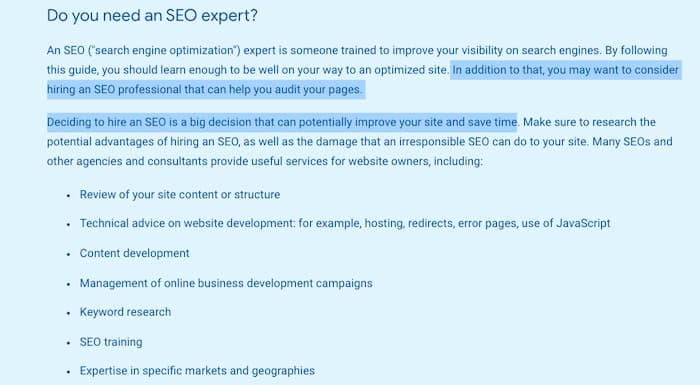
Google recommends using SEO consultants

When you’re working on a website that earns you money, some things are best left to the professionals. Google itself recommends that every website owner at least consult with a professional.

Google start up guide image recommending the hiring of professional SEOs (one of the SEO myths being busted on anyone can do SEO)
Image source: Google SEO Starter Guide

There are mistakes that an inexperienced person can make that will cost your business more than it would to hire a professional in the first place. 

For example, link building can be extremely dangerous if you’re not following Google’s best practices and guidelines. If you’re using the same words as anchor text to link to your pages, you may wind up beyond page 10 of the search results due to an algorithmic filter penalty.

Optimize your earning potential

Navigating around potential disasters is only one side of the equation. The other aspect of hiring an experienced SEO expert is that they know how to get the most out of your website. SEO is a continuous effort where making small adjustments for a few percentages more here and there add up to a lot of extra revenue.

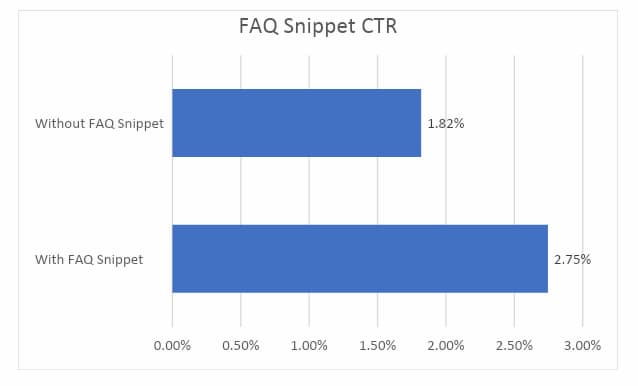
For example, if you knew how to create a rich result you might be able to increase the click-through rate by a few percentage points. If your keyword gets thousands of searches a month, this translates into an enormous amount of additional revenue.

Luca Tagliaferro published his case study on the difference in click-through rate when adding a FAQ rich result to one of his pages. A small snippet resulted in 1.5 times as many clicks.

Graph showing the results of a rich snippet case study on how small improvements can make a big difference which busts the SEO myth that anyone can do SEO.

Hire specialists to get the best results

You wouldn’t ask your local butcher to get rid of a mole on your body just because he’s good with a cleaver. 

via GIPHY

You ask a specialist to remove it. 

In the same way, you wouldn’t ask an IT guy (or web designer for that matter) to come up with an SEO strategy for your business. They may know a thing or two about SEO but when it comes down to getting the most out of SEO,  it is a process best left to the professionals.

#2-“SEO is primarily about keyword optimization.”

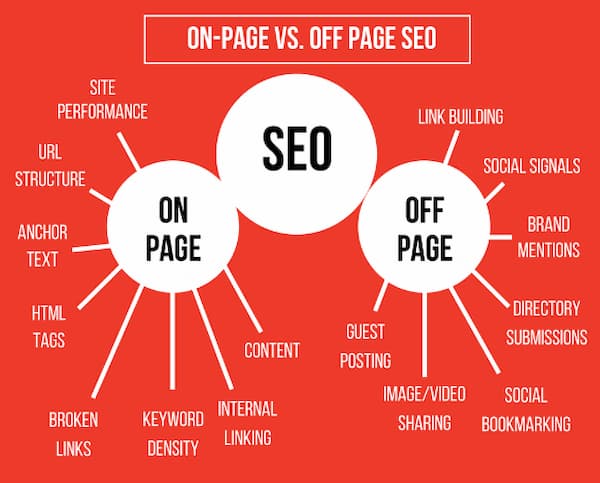
This myth could also be phrased as “SEO is all about ranking” or “SEO is primarily about lead generation.” The truth is SEO encompasses a large segment of digital marketing. Most people don’t realize how far-reaching SEO is when it comes to anything search engines, making this statement a complete and utter SEO myth.

So what exactly is SEO? Search engine optimization is the process of making a web-property more likely to be displayed by a search engine for a specific search query. SEO is not just about ranking, lead generation, or keyword optimization. 

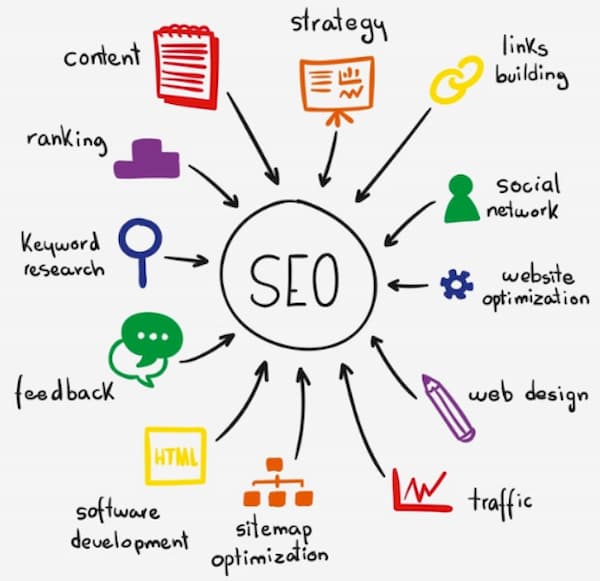
Image showing the many different aspects of SEO

It includes competitive analysis, technical improvements, conversion rate optimization, keyword research, link building, public relations, networking, revenue generation, content creation, on-site and off-site optimization and the list goes on.

SEO plays a role in almost every aspect of generating revenue from your website, social media, content marketing and/or paid advertising.

#3-“More links are better than more content.”

There was a time when the websites that had the most links ranked the highest on Google. Many SEOs reflect on this time as similar to the Wild West era when outlaws were able to get away with breaking the law.

In this period of time, software systems were developed to build thousands of links overnight which made it easy to game the system. 

Image of SEOnukeTNG as an example of automation software

This method of ranking was eliminated by a series of updates (Penguin Update) and technological advances that allowed Google to assess the quality of backlinks. 

The quantity of links is no longer the only variable in the ranking equation.

What is true is that the more quality links you have the more authority your pages gain. 

The key phrase here is quality. 

If there are any unnatural links or irrelevant links, they are ignored. If there is an excess of poor quality links, the authority and trustworthiness of your website is devalued.

This is reflected in your ranking and overall search visibility.

Content is still king

If your content is written for users and gets a good level of engagement, the backlinks will come naturally. If you campaign to acquire backlinks to good content, the process is much easier and faster.

It’s better to have more quality content on your site that users are reading through than it is to have backlinks to poorly written pages. At the end of the day, even if your pages manage to make it to the first page of Google because of your backlinks, it won’t stay there for long if your content doesn’t answer search intent.

#4-“Long-form content ranks higher than short-form content.”

One misconception in how to publish content that outperforms what’s ranking is to make it longer than the competing pages. The truth is that word count is not what makes a piece of content outperform another. In fact, word count isn’t a ranking factor at all.

Why would a search engine use word count as a metric?

— 🍌 John 🍌 (@JohnMu) August 31, 2020

What lends merit to this notion is that in creating a longer piece of content, you are forced to go deeper into detail or cover more topics within the page. Depending on your keyword, the more information you’re able to provide to your audience, the better you’re able to satisfy search intent.

The ability to satisfy search intent is what search engines will value the most when displaying search results. If the search query is an informational search that has multiple levels of depth to the answer, then creating a more detailed article will result in a higher ranking.

On the flip side of the coin, if the search query does not require depth to satisfy search intent, then creating a longer article would be an exercise in futility.

Why this myth is so confusing

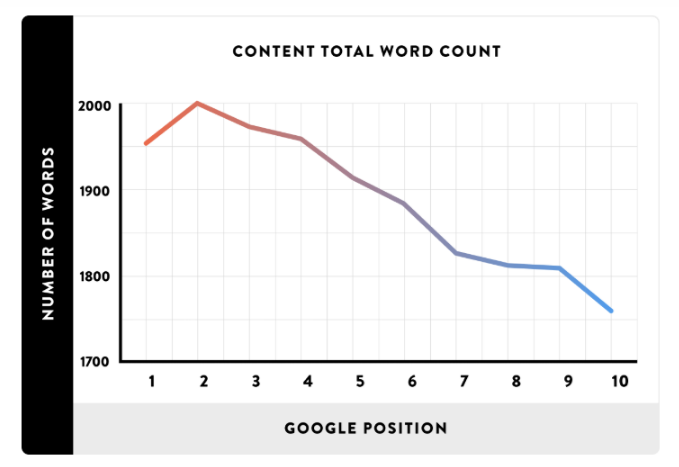
The general trend that has become the norm is that content is becoming longer. The average first page search result is 1890 words.

Average word count of the top 10 ranking pages

There is evidence that Google values depth, but it must be taken in stride with what the intent of the user is when performing the query. It is not word count specifically that determines whether a page is better quality, but the ability to satisfy the users intent of the search.

#5-“There’s a secret recipe to rank a website.”

Many people have the belief that there is a secret sauce or some sort of magic bullet that will rank a website. SEO is quite the opposite in regards to transparency. There are no secrets when it comes to traffic generation or improving search visibility.

Transparency offers the best value

The best SEO consultants can break down an SEO strategy so that it makes sense to the client. The concept of search engine optimization in its simplest form is to create great content that users are searching for and make sure search engines can find that content for specific search terms.

The strategies and tactics that work for long-lasting results are not secrets. Anything that sounds like a magic bullet should be ignored since there is a shelf life for stuff like that-which usually falls into the realm of black hat SEO.

Practice white hat SEO

White hat SEO is the practice of adhering to Google’s best practices when developing a website. Link building is best done through any means that allows a webpage to accumulate natural and high-quality backlinks.

There’s no substitute for producing quality content and natural link building.

Anything else is short lived and could ruin the quality of your website.

#6-“SEO is a “one-time” operation.”

Many people are confused about the process of SEO and what it actually does over time. It’s common to hear someone ask to have their site optimized thinking it will be a one-time job. 

This a complete SEO myth! The SEO process is multilayered and multidimensional.

SEO is a one-time operation is a complete SEO myth because it is multilayered and a long-term process

On-page optimization is one of a few different aspects in developing a website’s content to drive traffic. There are four large groups you can label as part of the SEO process for developing content; keyword research, content creation on-page optimization and link building. 

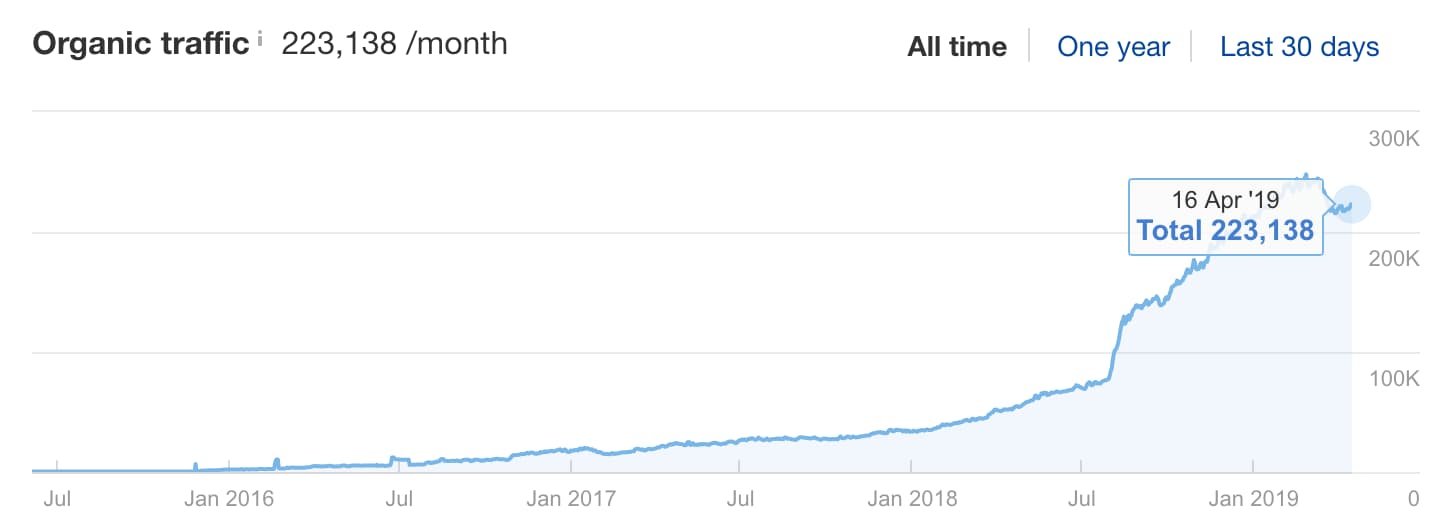
It took Ahrefs four years to build their blog to drive massive traffic. They were able to achieve such huge success in driving traffic by publishing top-notch, evergreen content and then ranking it to the top of the search results.

Ahrefs traffic growth with evergreen content

That doesn’t even touch on the technical side of SEO to produce and maintain a high functioning website.

And we haven’t mentioned the monitoring and tracking side of SEO that incrementally improves search visibility, quality of traffic and conversions. 

SEO is far from a one and done operation and is nothing short of a long term investment.

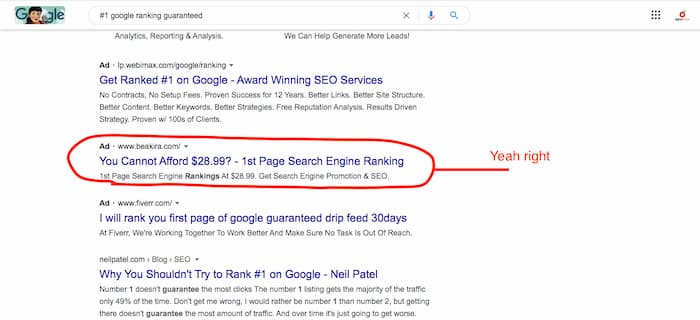
#7-“A 100% guarantee to rank in the #1 position on Google.”

Let’s start by saying that unless you own Google, it’s impossible to guarantee the #1 position with 100% certainty. Search engines are changing all the time and no one but Google can account for changes in the algorithm that could result in the rise or fall of a website’s ranking.

Having said that, it’s possible to estimate rankings based on experience within the industry or experience in ranking the keyword itself. A 100% guarantee on a #1 ranking is impossible for anyone who doesn’t control Google, however, a seasoned professional could speculate ranking to a close degree of accuracy-especially if they’ve done it before.

FYI, it’s much easier to estimate entering the top ten results than to guess how long it will take to make your site first on Google.

#8-“It’s better to hire an SEO company in your city.”

The beauty of SEO is that it can be done from anywhere. Digital properties can be accessed and worked on from anywhere in the world. The location of your SEO Company does not matter if they are experienced and good at what they do.

Choose your SEO company for the right reasons

Choosing the right SEO company should be based on several factors such as experience, referrals, results and reputation. If you’re in Toronto and you had the choice of ABC SEO Company Toronto or. Rand Fishkin, The SEO wizard of Moz (he’s a big deal in SEO but based in Seattle if you didn’t know already), who would you choose?

Let me help you with this one-you choose the legend of SEO, Rand Fishkin. Why? Because Rand Fishkin will turn your website into a monster moneymaker. So what if you pay extra money every month. If you knew your earnings would increase by 30% at the end of the year wouldn’t it make sense to invest the money on a sure thing?

Let go of traditional ways of doing business

Location can be beneficial to some people for peace of mind. It’s nice to know you can run and bang on the door of a company if you need to go looking for them. At the end of the day, you should be deciding to hire an SEO company for the right reasons so you’ll never need to bang on their door.

Settle for zoom meetings if you’re the traditional type who likes to meet in person. If you want your business to grow, you also need to grow with the times. Your website lives in a virtual space so distance has no boundaries when it comes to choosing the right company for your business.

#9-“Cheap SEO services save you money.”

Finding the right people to work on your website for the right price is an important factor in making the best decision for your business. There’s no problem in choosing an SEO company that’s less expensive than another but it’s important to note that SEO services aren’t cheap. Choosing an SEO company because they’re offering cheap SEO services could cost you way more in the long run.

There are no such thing as cheap SEO services-they are one of the SEO myths to avoid falling for when choosing a an SEO company

You get what you pay for. Be wary of cheap SEO services, as they do not include the same benefits of hiring an SEO company that does all the right things for your site. There are thousands of “SEO professionals” that will offer you prices that are too good to be true. Many of these services will submit your site to low-quality directories or link your site to their private blog network, both of which will ruin your website over time.

These companies can reduce your search visibility and cause more harm to your site than good. There’s no substitute for a professional, accurate website assessment and strategy session with an SEO specialist. Why leave the future of your business in the hands of someone who doesn’t have good references or a strong reputation for getting good results?

If you work with the right SEO company, you will make more money than you would without them. It’s the reason you hire a professional for these services. They make you more money through strategic planning and execution.

There are no shortcuts when it comes to SEO. Make sure your provider is up to par when it comes to putting in the work that will ultimately increase the revenue your website generates.

#10-“All backlinks are created equal.”

To the untrained eye this may seem like the case, however, it couldn’t be further from the truth. Some backlinks will help your website, some backlinks do not affect your website and backlinks that will harm your website. Knowing how to tell the difference can make a huge impact on the search visibility of your website.

For example, imagine you’ve started a small business that develops custom POS software for retail stores. Would you prefer a link to your website from Entrepreneur.com

Entrepreneur homepage

or from bargainballoons.ca?

Bargain balloons homepage

First off, Bargain Balloons (yes it’s a real site) isn’t even in your niche. It’s unrelated to your product and therefore a link from them will be ignored. In fact, if you continued to get links from websites like this, your website would start to lose search visibility. Google would downgrade the trustworthiness of your site and push it back in the search results.

A link from Entrepreneur.com however is an incredible link to acquire. Not only is this backlink from a website that specializes in entrepreneurial content, but the audience consists of the exact types of visitors you would want on your site.

A link from Entrepreneur would send other small business owners to your site that in many cases would be interested in your product. 

This is the first huge win. 

The second is the massive volumes of traffic the site generates. Your site would receive a substantial boost in referral traffic for the life of the article your link is on.

The last huge bonus is that Entrepreneur.com has massive domain authority. A link from them would transfer domain authority to your own site, giving you more ranking ability.

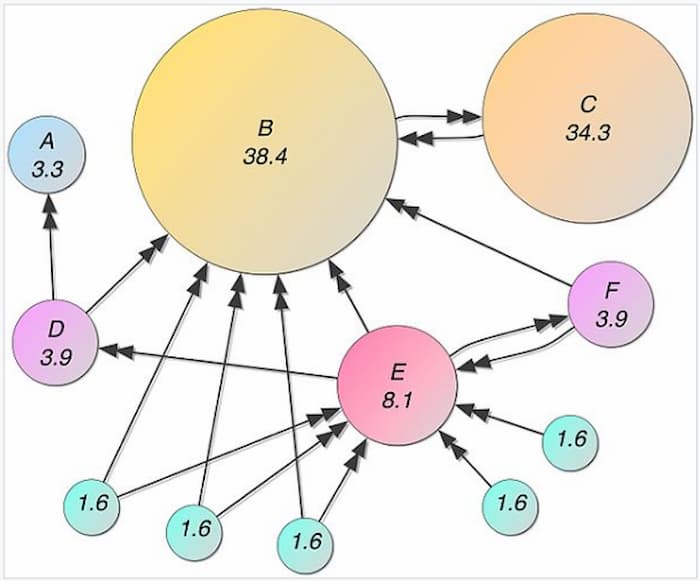
The following image is an visual example of Google’s PageRank theory. It shows how all websites are assigned their own values of PageRank, which Google uses in its ranking algorithm.

All links are definitely not created equal.

Consider the type of website the link is coming from

Another factor to consider is the different types of links that exist. First off, there are followed and nofollow backlinks. A followed link transfers domain authority, a nofollow link does not. 

Besides this very important detail is also the issue of where the links are coming from. 

A link from a directory will not carry the same weight as a link from another business within your industry. There is a value assigned to a link according to the relative ease in which it can be obtained. Anyone can get a link from a directory, but not everyone can get a business to agree to link to their website.  

#11-“More website traffic means more revenue.”

Website traffic alone does not guarantee an increase in revenue. However, more targeted website traffic from high converting keywords will generate more revenue.

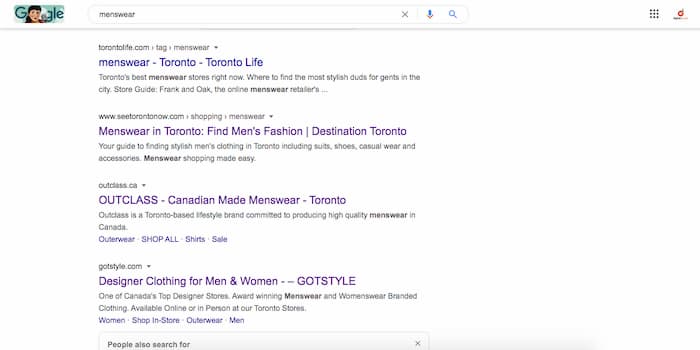
For example, imagine you sell men’s athletic wear on your website. If for some reason your website began ranking for the term menswear, it would have mixed results since this keyword has multiple possibilities of intent. Not all users that type this keyword will be looking for athletic clothing.

In fact, if we look at the SERP, it suggests this is a broad category. The first two results are local websites that list the top menswear stores (none of which are specifically athletic).

SERP for keyword "menswear?

The majority of the results that appear for this keyword are higher quality casual and formal clothing.

Example of a search results for the keyword "menswear" proving the SEO myths that more traffic does not always mean more revenue

Find the true intent of a keyword

Keyword research is one of the first components of SEO because it helps publishers understand whether the user’s intent for the search will result in a desired action on your website.

Some keywords represent mutliple intentions. 

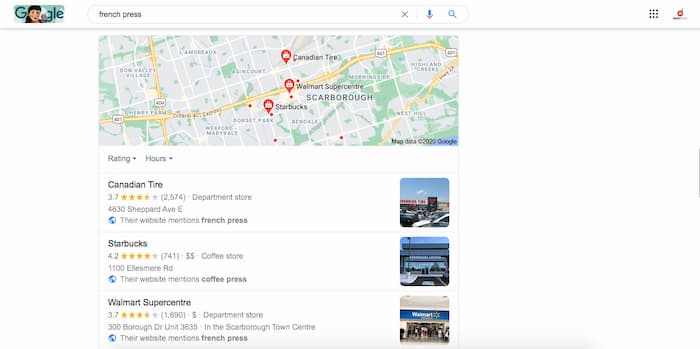
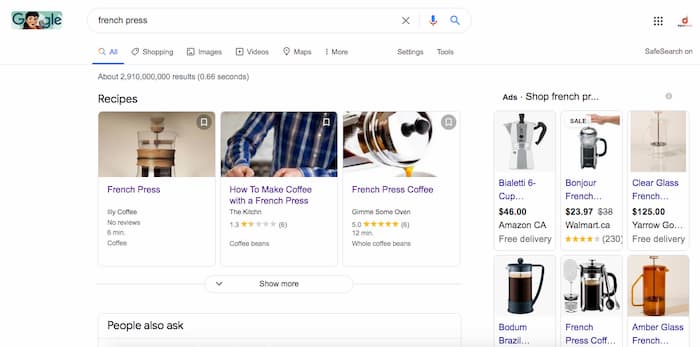
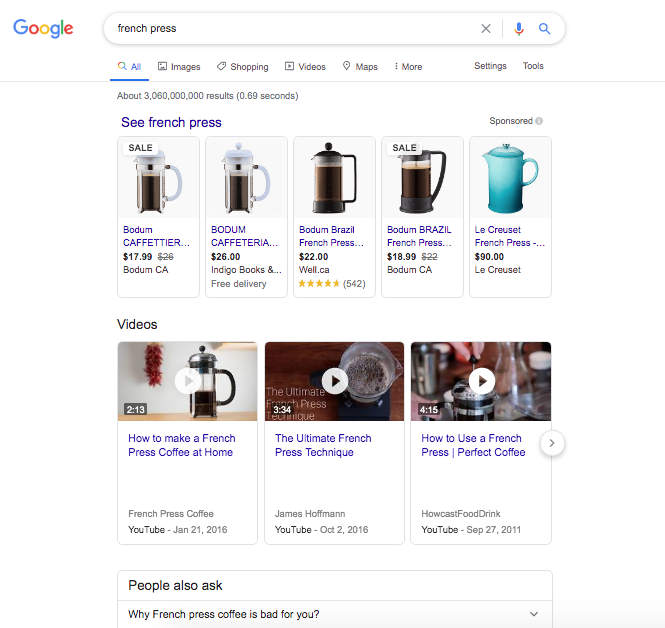
For example, the keyword French press could mean that a user wants to buy a French press, learn how to make coffee using a French press, learn what a french press is exactly and so on.

You can determine a great deal of search intent based on the search engine result page. The Google SERP features indicate intent.

A local pack would mean that people are looking to pick up a French press in their area.

Local pack indicates the keyword "french press" has local search intent

If you see Google Ads appear, it’s an indication that people are making money on this search term because they’re paying to appear in the result.

SEO myth busting session for "More traffic creates more revenue" proving search intent with Google Ads for commercial value

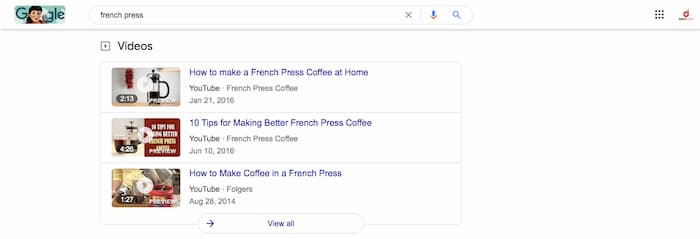
Videos indicate there is a demand to learn more about a brand or how to do something.

A video pack in the SERP indicates that adding a video to your content will increase the optimization and drive more traffic

Not all keywords result in an immediate conversion. 80% of keywords are considered to have informational intent. Not everyone who visits your website will buy something when they get there, however, they may become clients at a later date if you’ve established an effective marketing funnel.

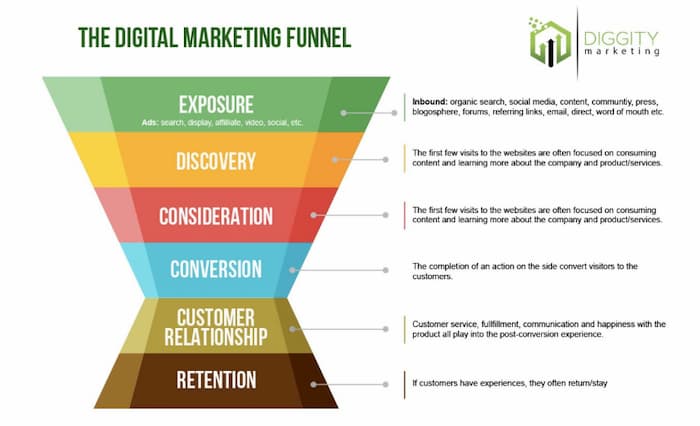
Target different stages in your marketing funnel to move visitors further along the buying process.

When you can optimize your website for keywords that have a specific purpose in your marketing funnel, increasing traffic from those keywords generate more revenue. 

Without testing, measuring and tracking your key performance indicators it’s difficult to know how well your website is performing in converting visitors into clients.

#12-“You need exact match keywords to rank highly.”

There is some truth in optimizing content with exact match keywords; however, it isn’t necessary to rank highly. Google ranks pages by keyword topic, not just whether a page has the keyword posted within its content, which makes this statement an SEO myth.

There are millions of examples where Google has ranked a page in the number one position without the page using an exact match keyword. This is because Google understands context and will rank pages according to how well they answer search intent.

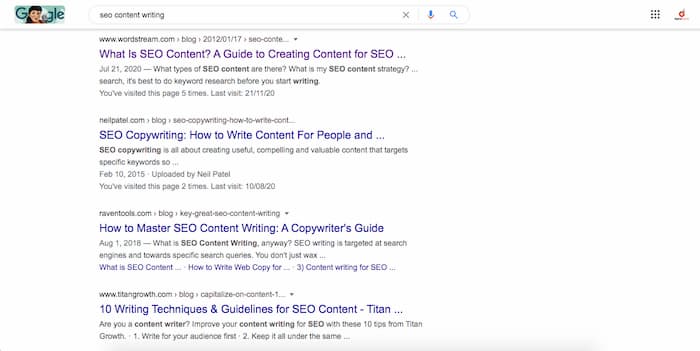
Look at the top websites that rank for the term SEO content writing. Only one title in the top 4 results contain the exact match keyword.

If your target keyword is SEO content writing and your article is an ultimate guide on how to produce SEO content, it’s possible to rank for your target keyword because your page shares the same search intent.

Your title could be “How To Produce SEO Content: The Ultimate Guide.” If it’s the best piece of content and offer the most expert SEO writing tips, you’ll rank for the term. 

Even if other sites have the exact match keyword within all of the expected places, your content will rank the highest of it is the best match to search intent and offers the highest quality of content.

Does adding an exact match keyword help with on-page optimization?

Yes, absolutely. In fact, it’s considered best practice to optimize your pages for a target keyword in which you would include that keyword in the places search engines use to categorize your content.

The requirement for an exact match keyword to rank highly is an SEO myth

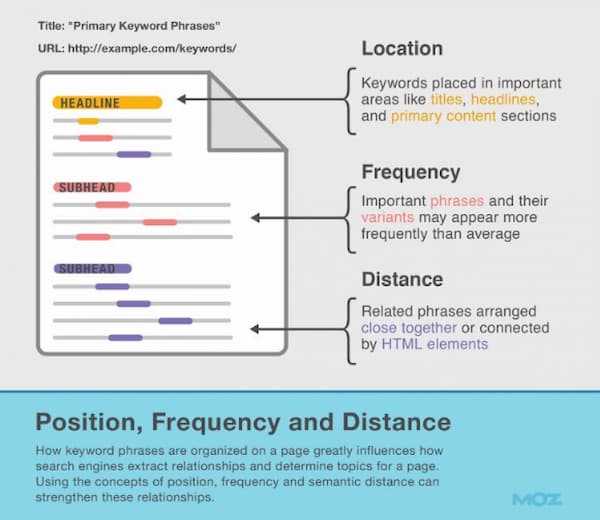
Including your exact keyword in the title, URL, image alt tags and within your content will contribute to a highly optimized page with more probability of ranking higher.

#13-“Syndicate content gets you penalized.”

There is a big difference between syndicate content and duplicate content, the latter being the one that gets you penalized. Syndicate content can actually benefit your site by amplifying good content. If the content you syndicate is being read by a lot of visitors on your site, it improves your user engagement metrics-which is a good thing for your ranking.

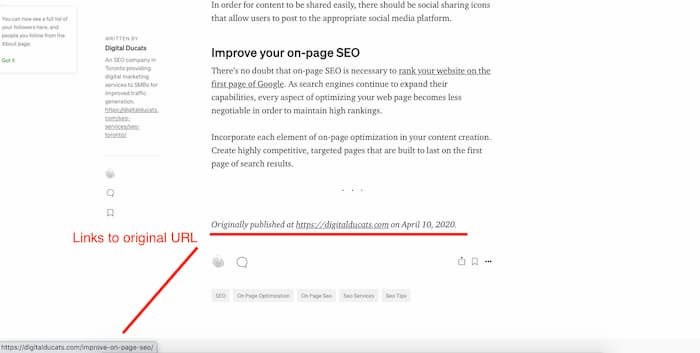
Take Medium for example. There’s so much content on this site that is directly imported from other websites. It still ranks for a lot of top keywords because it uses the correct method of assigning attribution.

SEO myth that syndicate content gets you penalized is officially busted with this screenshot of an article on Medium giving attribution

Absolve yourself from all chances of a penalty by placing the correct canonical tags on the content you produce (WordPress does this automatically for you).

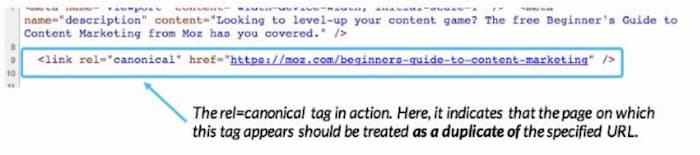
Credit the original website as the author for any content you syndicate. Use the `rel=”canonical”` attribute on the anchor tag that links back to the original article. This tells search engines you aren’t the original author, which means you’re not claiming the content as your own.

Example of the rel=cononical tag in action

Where you get into trouble with duplicate content penalties is when you’ve copied another article and published it as your own. If the content is a match to another page-which would have been indexed before yours, your site will experience an algorithmic filter penalty.

Spun content is just as dangerous as duplicate content

The same algorithmic filter kicks in for spun content. If search engines detect that you’re spinning an article that already exists they will demote your page in terms of trust and authority. This is most obviously reflected in search visibility and ranking.

Always give credit where credit is due. If you’re posting someone else’s content, give them the link to attribute them as the original author and avoid the duplicate content penalty.

Your content will then be considered syndicate content, which is a perfectly acceptable practice when proper attribution is given.

#14-“All SEO companies offer the same product.”

Most SEO companies are capable of addressing the major aspects of search engine optimization, however, not all will offer you the same package. Some companies are better at certain things than others. Almost every company will promote the strategy that they’re good at because they know it will get you results. 

This doesn’t automatically mean it’s the best strategy for your business. Make sure the company you choose offers a strategy that matches your business and industry. An SEO company might be absolute wizards in PPC campaigns. 

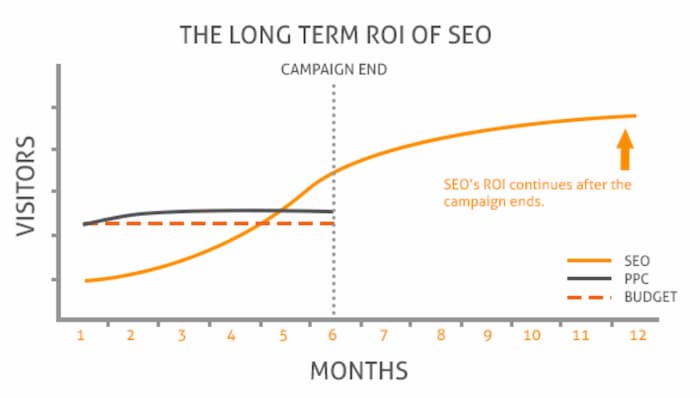
Example of SEO vs PPC

That doesn’t mean it’s the best SEO strategy for your company website even if they get your business turning a profit. You may have bigger opportunities in developing your organic traffic.

It pays to interview three to five different SEO companies before deciding on who to work with.

You will do much better in the long run if you can find an SEO company whose strength lies in a process that is tailored to your operations and offer you the most long term growth.

SEO myths can make or break your strategy

The emergence of SEO myths is an inevitability that should be expected. No one knows what the Google algorithm is with 100% certainty. The truth is it continues to change on a daily basis.

Constant vigilance is required in order to stay on top of the SEO trends that are verified truths as well as the trends that become obsolete. Read industry websites and follow SEO influencers that report major changes to search.

ICYMI: Google is testing people also ask with question mark icons https://t.co/hBXjNAtkkX pic.twitter.com/OlOjspW8Lv

— Barry Schwartz (@rustybrick) December 30, 2020

Being an early adopter to new SEO trends can mean the difference in making thousands of dollars in revenue. 

Identifying obsolete practices before you make the mistake of using them can save you an enormous amount of time and resources.

If you have any questions about the validity of an SEO myth that hasn’t been mentioned yet, feel free to contact us via email. We’re happy to share our thoughts.

Christian Carere
Christian Carere

Christian Carere is the owner and founder of Digital Ducats Inc. in Toronto and heads the SEO team at Austin Bryant Consulting in Plano, TX.  Christian has been published on publications such as Search Engine Watch, Venngage, Small Biz Daily, Grasshopper, Data Box, Socialnomics, and Mention.

old.digitalducats.com/

Written by Christian Carere · Categorized: Content strategy, keyword research, Link building, On-page optimization, Web development

Dec 16 2020

How To Find the True Search Intent Of A Keyword

SEOs talk a lot about search intent as a major factor for achieving search visibility. The significance of search intent is that search engines want users to be able to find what they’re looking for with the least amount of effort. If you know what a user is looking for, you can publish the content that can be displayed as the best result to a search query. This article outlines how to find the true search intent of a keyword to drive more targeted traffic from higher-ranking positions on the SERP.

This function of SEO is critical because if you miss the mark identifying the intent, no matter how good your content is, no matter how many backlinks your page has, you will NEVER maintain a position on the first page of Google. This makes identifying and satisfying search intent a fundamental aspect of developing keyword and content strategies.

Basic forms of intent

At the highest level, you can break down search intent into three major areas; informational, navigational and transactional. Each of these categories represents a basic motivation for initiating a search.

Informational

As it turns out, informational searches account for about 80% of the total searches made on search engines. Providing useful information on your website can accelerate the growth of traffic being driven to the top level of your marketing funnel. 

Marketing funnel concept helps categorize search intent

By making visitors more aware of their problems and the solutions that you offer, you brand your company as an expert in your niche. Publishing SEO content regularly facilitates your ability to reach a larger group of people searching for information about the problems your product or service solves.

Navigational searches

These types of searches are when users already know what they’re looking for and are looking for a way to get there. There are millions of searches for the term “Facebook login” every single day made by people who want to get to Facebook.

Although navigational searches can drum up a significant number of searches, they are typically not keywords you would use in your SEO strategy.

Transactional searches

Users who want to make a purchase will use transactional keywords that represent buyer intent. Transactional searches represent users searching for a way to buy a product that they have already researched and are ready to purchase.

One way to research transactional keywords is to use Google Keyword Planner. Here you can find the level of competition, the average price paid for a click from that keyword (cost per click or CPC) and the approximate volume of the keyword being searched.

Determine general intent with a SERP Analysis

The first step to identifying search intent is to analyze the first page of search results. You can tell a lot from the features that a search engine displays in response to a query.

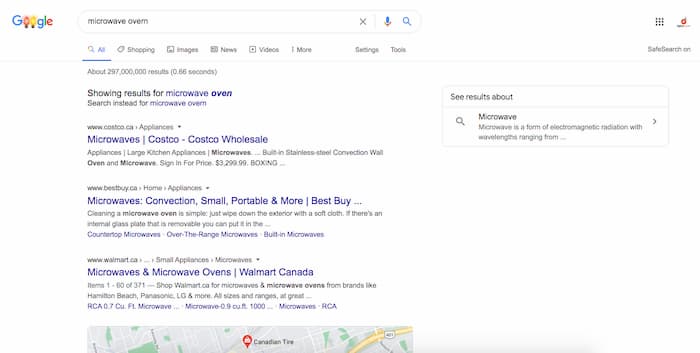
For example, if you were to search the keyword microwave oven you would find a slightly mixed bag of results. Users who search this term could be at the buying stage or they could be in the research stage.

The first three results are category pages for big-box stores selling microwaves.

How to identify the true intent of a keyword by analyzing the organic search results

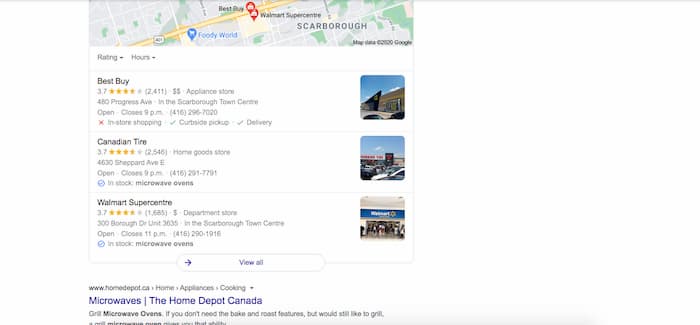
Further down we have a local pack for people who want to visit a store that carries microwaves.

IMage of a local pack indicating the existence of local intent

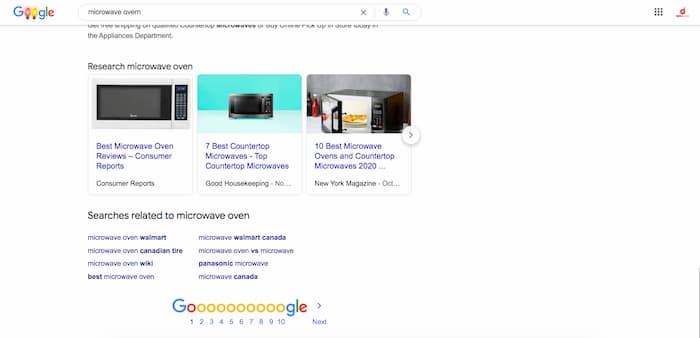
Lastly, we have a section Google titles “Research microwave oven” and displays articles that compare brands and models.

A research section in the search results shows tinformational intent

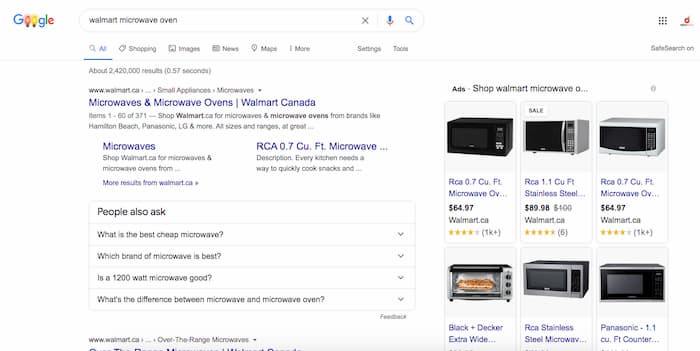
If we were to change the search to Walmart microwave oven, we immediately see the intent of the search switch to mainly transactional. Evidence of this is the Google Ads that immediately pop up above the fold.

Branded search for walmart microwave oven is considered to have transactional search intent

The organic results are primarily Walmart pages because this is a branded search. It’s clear that the user is in the purchase stage and is ready to buy a microwave, making this a transactional search. 

If we type in the keyword best microwave, you can once again see how the intent shifts to an informational search. The articles displayed on the top 10 are all targeting the consideration stage of the marketing funnel. 

Example of informational search intent which is usually the case whenever "best" is in front of a keyword

This is an informational search because users want to research and compare options. Evidence of this is in the fact that the search results are mainly blog posts that compare different microwaves.

The lack of Google Ads is also another indication that the main intent of the user is to gather information and they’re not quite ready to buy yet.

Identify the content type that ranks best

To rank highly for informational search terms, you have to pinpoint the underlying motivation of the user and address their intent better than any other page. The titles of the top 10 organic results are a good indication of the type of content that has the best chances of ranking.

The term best microwaves clue us in to the fact that the user is looking for a) a buyer’s guide on how to choose the best microwave or b) The best features that microwaves offer. Every search listing in the top ten for this term is either a listicle (numbered list of “X of the best microwaves” or a buyers guide.

To publish content that has the best chance at ranking, you would publish an article written in this form.

Account for complete topic coverage

To publish a page that outperforms the competition you need to be able to provide the user with what they need to end their search. The proof is in the pudding and by going through the top three results, you can get an idea of the level of depth and topic coverage required to satisfy the intent.

Example of analyzing the top search result to cover all topics

If you scan through Consumer Reports, the number one search result, they’ve grouped microwaves into two major categories; countertop and over the range.

They compare five microwaves in each category and provide links to buy the microwaves from multiple vendors.

To compete with this page in terms of content, your page would need to cover each of those aspects and provide some sort of value-added aspect. 

An example could be by adding more detailed images, a video that summarizes the content or more products in your comparison.

Create audience-centric content

Search engine optimization is constantly including more ways to measure audience-centric content. User engagement statistics enable search engines to gauge how well a piece of content can hold the attention of visitors and ultimately satisfy the underlying intent of a search.

Identify search intent during part of the keyword research process to optimize to be found by the most accurate audience. Understanding what a user is looking for enables you to publish content that hits the mark and ranks highly in the search results.

Anything less and you can be sure any first page appearances will be short-lived. Content that nails intent creates long-term value and high search visibility that drive streams of highly targeted traffic.

Christian Carere
Christian Carere

Christian Carere is the owner and founder of Digital Ducats Inc. in Toronto and heads the SEO team at Austin Bryant Consulting in Plano, TX.  Christian has been published on publications such as Search Engine Watch, Venngage, Small Biz Daily, Grasshopper, Data Box, Socialnomics, and Mention.
old.digitalducats.com/

Written by Christian Carere · Categorized: Content strategy, keyword research, Web development

May 30 2019

How To Select The Best Keywords For Your Website

Nov 8, 2020 @ 3:56 pm

Learn how to select the best keywords for your website to drive traffic that converts to clients and sales. Qualify keywords through a series of endeavours including but not limited to the following:

  • Identify your main seed keywords
  • Develop keyword options
  • Assess commercial intent
  • Target long-tail keywords
  • Perform a SERP Analysis
  • Assess the competition

The keyword research and strategy you implement can make or break the success you have in converting visitors to clients.

If you want to know how to find the best keywords for your business, this article will walk you through a few of the most common steps in determining a strategy.

Identify your main seed keywords

Make a list of keywords on a spreadsheet describing the major areas of your business. Come up with as many different keywords as if you were a client typing in a search to find information about your product.

Keep in mind that there are different stages of the sales funnel for every keyword you’re thinking of optimizing content to rank for. You will need to target both transactional and informational keywords to help move visitors along the buyer journey.

An image of the 3 stages of the buyer journey to guide you how to select the best keyword for your website

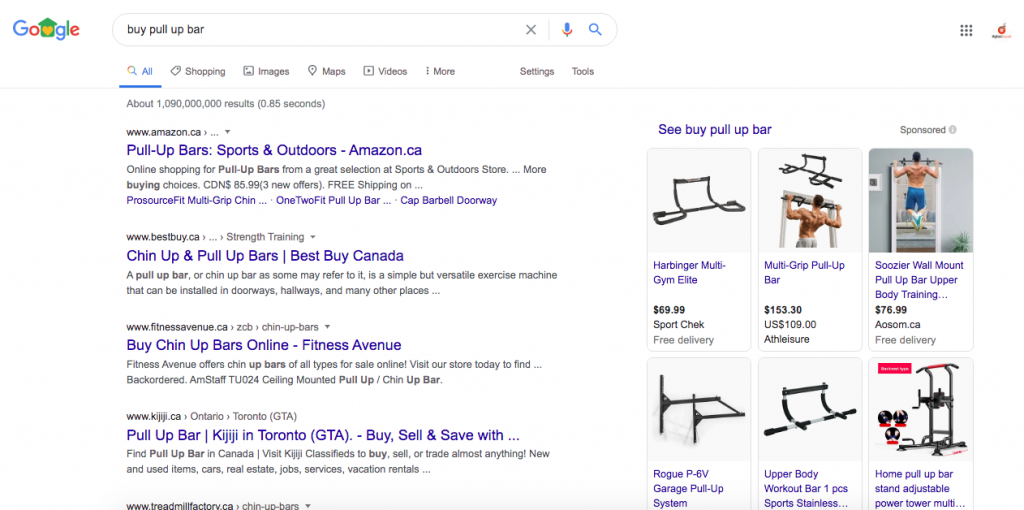
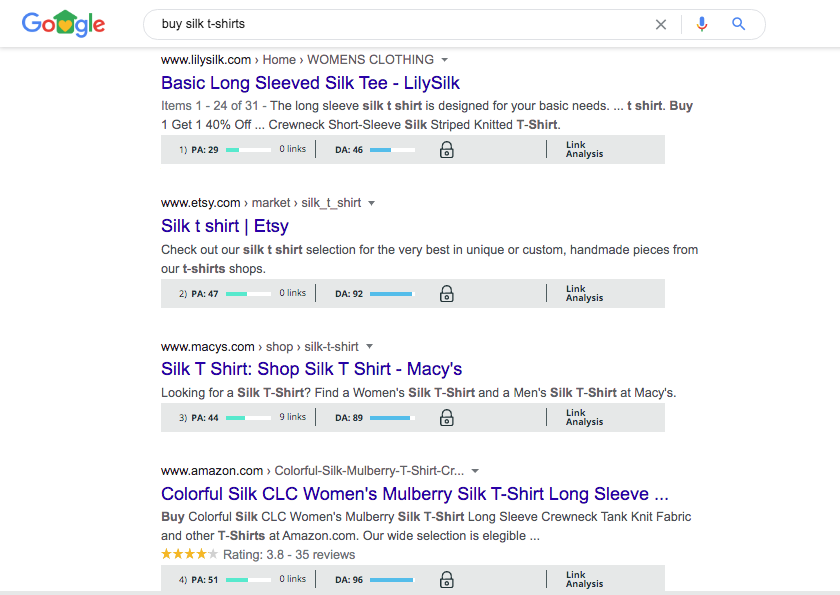
For example, “buy + [your keyword]” is a transactional search term that will trigger a search result that most likely lists ads and product pages.

Transactional keyword search result display

This would be considered at the bottom of the funnel where users have already done their research and are looking to buy a product or service.

Develop keyword options

Some keywords may seem obvious choices, however, you have to consider that not everyone will search like yourself. There are many different ways people search for the same thing. There’s also the possibility that the keyword you’re thinking of may not drive traffic that’s good for your business.

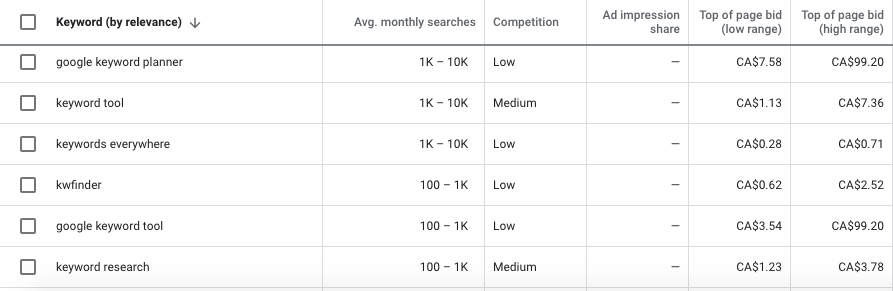
One tool you can use to find popular keywords that convert is the Keyword Planner. This is Google’s tool to use when building an Adwords campaign and can be valuable for generating keyword ideas, estimating traffic and providing clues to commercial intent.

Google Keyword Planner reports the best keywords suggestions for your website along with the metrics for each keyword

The Keyword Planner will generate a list of keyword options along with the volume, competition rating and cost per click. Each value should be considered as an indicator to use in your decision.

Assess volume in relation to conversions

The traffic that is displayed is an approximate value. Keep in mind that volume can sometimes have little bearing on the value of a keyword. It’s one piece of the puzzle that can be used as an indicator of whether your keyword is suitable for your business.

The volume a specific keyword generates should be assessed by the type of traffic drives and how well those visitors are a match to your business.

Assess commercial intent through the CPC bidding system

The commercial intent of a keyword can be inferred by the range of bids that exist for placing ads with Google for that specific keyword.

The low and high bid amount shows you what people are paying per visitor for that keyword on both ends of the spectrum.

The higher the top bid amount, the more inferred value you can assume from the traffic a keyword generates.

Target long-tail keywords

Although seed keywords typically have the most search volume they are not always the ideal keywords to pursue. They are often extremely competitive and convert at lower rate.

Targeting transactional keywords are beneficial however you also need to educate your buyers about your company and product to earn their trust.

Enter long tail keywords.

Long-tail keywords are considered to convert higher because they drive traffic that is a better match to the content you’re producing.

For example, imagine your company sells silk t-shirts.

If you were to optimize for the search term “t-shirts”, it would bring you a lot of irrelevant traffic because of the broad search intent it carries. Your site would be getting visitors looking for cotton, nylon, sports t-shirts, etc.

Many visitors would simply leave your site when they see you only offer silk options. This produces poor metrics (bounce rate, dwell time).

The longer you create a target keyword, the more of a match you can make to the traffic that finds your content.

Optimizing for the term “Silk t-shirts” eliminates a lot of the unwanted traffic your site was generating from the term “t-shirts”

“Silk t-shirts for women” would be an even more specific stream of traffic to target.

Once you’ve identified your seed keyword it’s important to go through the related content that people would be searching. In most cases people are looking to solve a specific problem. Your content should provide as many solutions to problems that people have regarding your keyword topic.

“Silk t-shirts for psoriasis” would target an extremely specific group of people. By publishing a piece of content titled “Why Silk T-shirts Are Good For Psoriasis” you would be driving traffic from a very specific group of people looking exactly for what you’re offering.

Although the traffic is likely to be much lower, the competition will also be lower because of how specific this long-tail search term is.

With a high-quality article making a convincing argument, you can easily move your visitors a step closer to buying your product by targeting a problem and providing the solution.

How to find long tail keywords

Apart from good old-fashioned brainstorming, you can use a few tools to help produce a list of the questions that people ask regarding any keyword topic. One of the first places you should look at is Google Search.

You can get a load of ideas for what people are searching for from Google Autosuggest. This is literally Google telling you “Hey! Here are some popular search terms we’re suggesting will help you find what you’re looking for.”

autosuggest for silk tshorts to find keywords

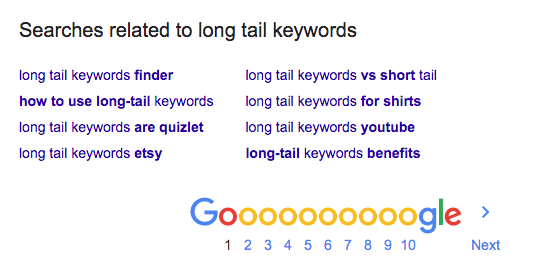
Find related terms in the Searches related to [your keyword] section at the bottom of a search result.

searches related to section of the search engine results page helps to select the best keywords for your page

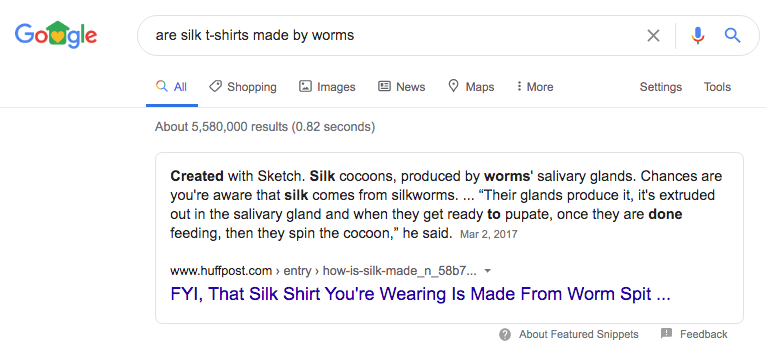
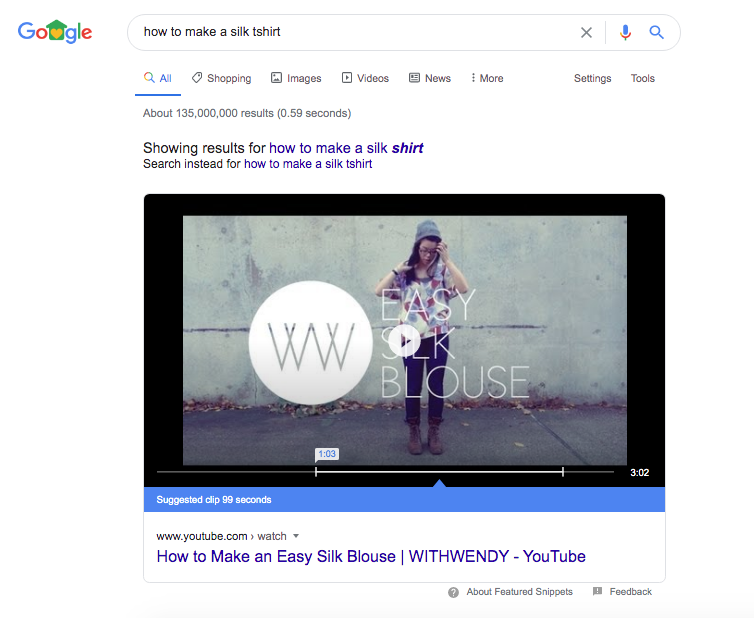
You can get some great long-tail keywords and phrases from Featured Snippets.

Featured snippets can provide the best long-tail keywords for your website

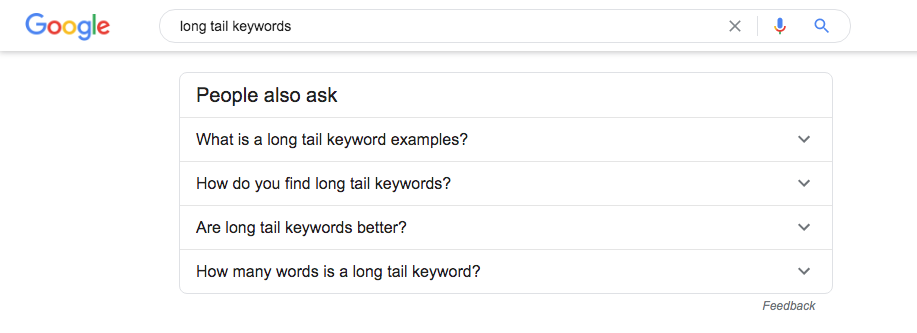
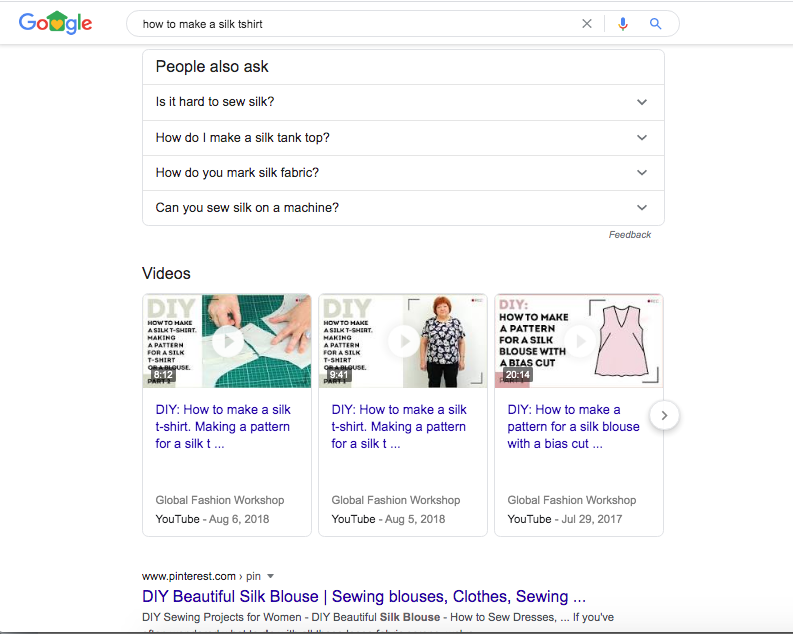
Or PAA Boxes

The PAA box holds important clues for how to select the best keywords for your website.

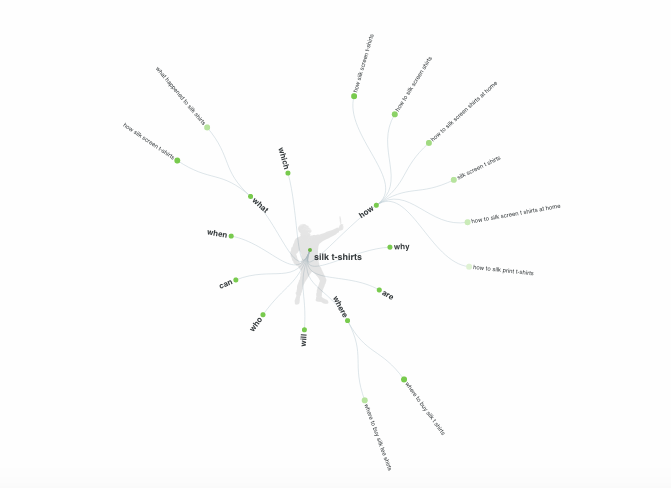
You can use Answer The Public to get a list of questions and phrase matches.

Answer the public keyword result for finding the best keyword related questions for your website

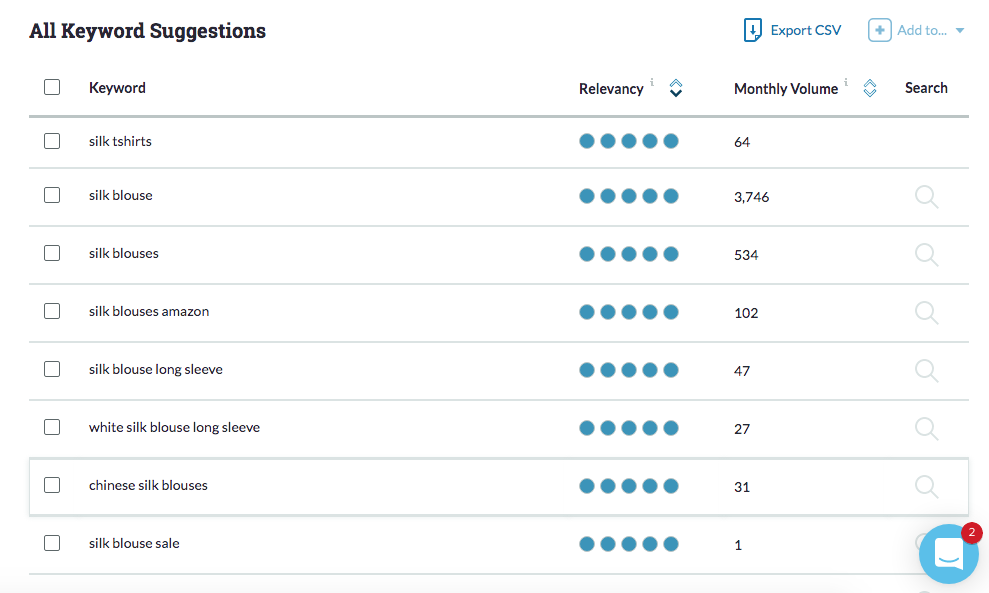
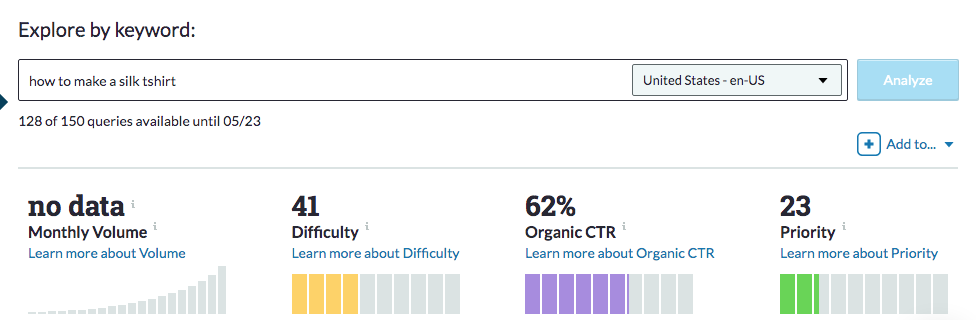
You can use software from the biggest names in the industry such as Ahrefs, SEMRush and Moz. Here is your typical keyword report from Moz.

moz keyword report on silk tshirts

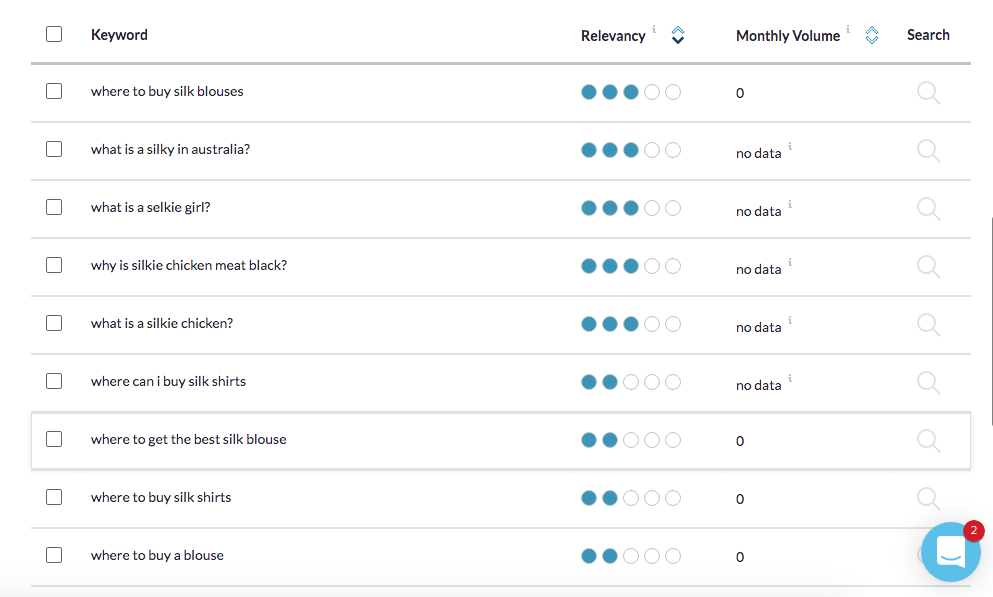
One click on the “questions” tab and your report displays related questions to your keyword.

moz report for keyword questions regarding how to select the best keywords for my website

The process for converting visitors to clients often takes more than just one visit to your site.

This is part of the reason for providing informational content on your blog.

According to a survey by Conductor, educational content makes visitors 131% more likely to purchase from your company.

Being in touch with the problems that are most commonly faced by your audience is critical in your content creation. If you can provide solutions to these problems within your content, you will earn the trust of your audience and move them closer to purchasing from your company.

Perform a SERP analysis

Analyze the SERP (search engine results page) to give you a deeper understanding of what type of search result a keyword generates. The factors you will need to consider are the features Google displays and the competition you will be up against.

Assess the competition

To assess one aspect of your competition you can use Mozbar, a free tool available for download in Chrome. This tool allows you to see the Page Authority, Domain Authority, number of backlinks and the spam score. All metrics are summarized for you right from the search result.

Mozbar helps assess competition to find the perfect keyword for your website

Keep in mind that domain authority is a metric created by Moz and does not reflect the complete picture for how to rank for a keyword. It is merely an indicator to use when determining the strength of your competition. Typically, the higher the DA, the more ranking ability a site possesses.

Account for the SERP features

Take an inventory of the different types of features that are displayed in the SERP. Google has produced over 20 different types of SERP features to better serve the search intent that a user may have for searching a specific query.

For example, if your keyword triggers a carousel of videos at the top of the page, you will need to consider producing a video to compete for the available clicks for that keyword. “How-to” searches are notorious for producing video results.

Video wins the featured snippet for keyword "how to make a silk t-shirt"
First spot is occupied by a video winning the featured snippet position

There are many phrases that will trigger a featured snippet. It’s important to recognize what terms are triggering the display because it will affect how you optimize your content.

Features that diminish your click-through rate for a specific search term

Take note of the different features that are displayed in a search result. Each feature may require a different form of optimization. If you’re not optimized to compete for the position, you may be facing a low organic click-through rate.

Shows the PAA box and Video carousel being placed before the first organic result
The PAA box and video carousel are placed before the first organic result

Consider the organic click-through rate

This is a measure of the total clicks that are made to the organic results as a percentage of the total search volume. If your keyword has a low organic CTR, ranking on first page may not be worth the effort to get there.

How to select the best keywords for your website by assessing the organic click through rate

Many of Google’s SERP features have contributed to low CTR for searches that are easily answered by featured snippets and the knowledge graph (calculators, translators, etc.)

Develop an effective keyword strategy

The keywords you choose to pursue will have a direct impact on the relevance of your traffic. Developing a strategy should include keywords that target every aspect of your business and the problems your product or service solves.

A complete and effective keyword strategy is the blueprint for your content creation. By addressing the different stages of the buyer journey and sales funnel, you create content that educates your audience on the benefits you offer.

Each page you publish should serve a purpose within your overall keyword strategy. Keeping users in mind first before search engines will help keep your content focused on providing insight and useful information. Learn how to select the best keywords for your website and you are one step closer to driving traffic that converts.

Keyword research is one of the many SEO services that benefit a company. Contact us today for a consultation so we can select the best keywords that would benefit your business the most.

Related reading:

  • 10 Expert Tips For Writing SEO Optimized Blog Posts
  • 10 Reasons Your Website Doesn’t Rank On The First Page Of Google [Updated List]
Christian Carere
Christian Carere

Christian Carere is the owner and founder of Digital Ducats Inc. in Toronto and heads the SEO team at Austin Bryant Consulting in Plano, TX.  Christian has been published on publications such as Search Engine Watch, Venngage, Small Biz Daily, Grasshopper, Data Box, Socialnomics, and Mention.
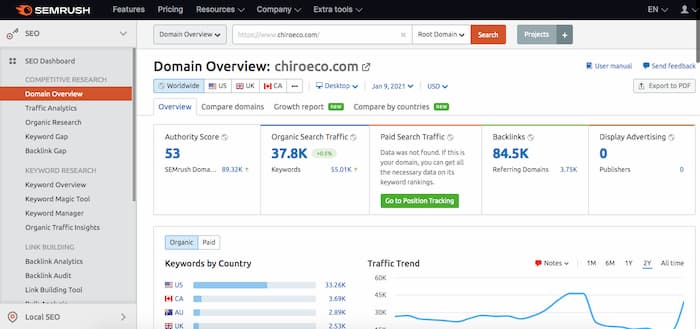
old.digitalducats.com/

Written by Christian Carere · Categorized: Content strategy, keyword research, Web development

Footer

Need professional SEO advice?

Give us a call to learn more about how we can help your business

Call for a consultation Request a proposal

Request a free website analysis and proposal for your company by filling out the ” Request a Proposal” form.
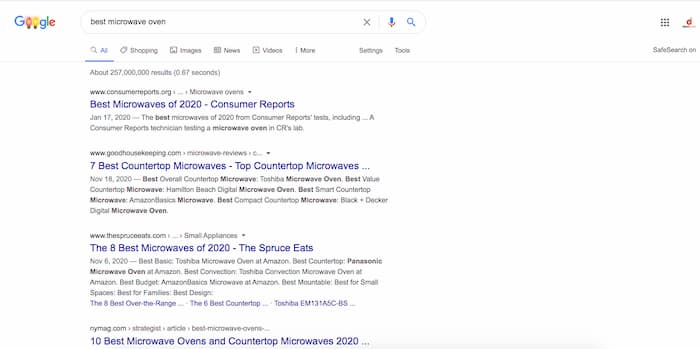
  • Privacy Policy
  • Terms Of Service
  • Cities we’ve served

© 2026 · Digital Ducats Inc.