• Skip to main content
  • Skip to footer

Digital Ducats Inc.

SEO Consulting & Services

  • Home
  • About
    • SEO Consulting
  • Services
    • SEO
    • Local SEO
  • Contact
    • Pricing
    • Write For Us
  • Blog
You are here: Home / Archives for Pay Per Click

Pay Per Click

Dec 23 2020

Organic SEO Vs. PPC: Which Is Better?

It’s impossible to claim whether one form of traffic generation is better than the other. Like so many things in SEO, the truth is, it depends. To debate over organic SEO vs PPC and which is better, you’re going to need to consider a few important factors that go into making the decision on which avenue to pursue.

What is organic traffic generation?

The organic search results are the portion of the search engine result page that is generated based on the websites that have the best answer to a search query. This segment cannot be bought by anyone as the results are generated by the algorithm search engines use to display the best results to a search query. 
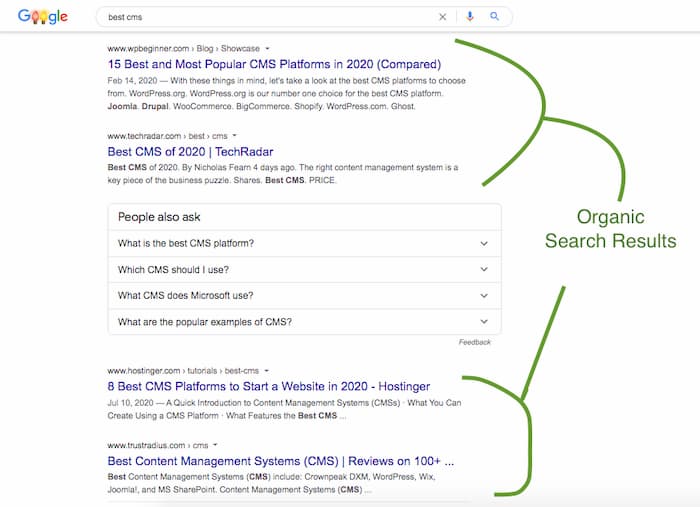
The organic search results are more trusted when comparing organic SEO vs. PPC

For this reason, the organic results tend to instill the most confidence in users and attract the most clicks.

What is paid traffic (PPC campaigns) generation?

The top of Google’s search engine result page is typically reserved for 4 four paid results that are marked with the word “Ad” to indicate they are paid placements. Google Ads uses a Pay Per Click model that has been adopted by social media websites and of course, is used by the other search engines as well.
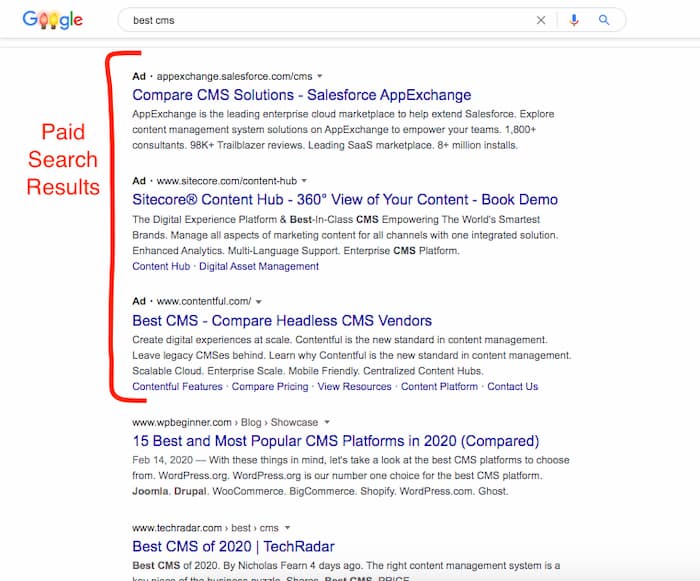
The paid search results on Google are  Google Ads and cost more in the long run when comparing PPC and organic SEO

The concept requires you to pay for every click that a user makes to your website when you’re in a paid position on the SERP. This is your cost per click (CPC).

Advantages of organic search engine optimization

  • More traffic
  • Lower cost
  • Continuous
  • Adds value

Drive more traffic from organic search results

On average, the organic search results take up 40% of the click on mobile and 60% of the clicks on desktop. It is undoubtedly the largest source of traffic that is available.

People tend to avert advertisements, and will naturally skip over them and click on an organic result because it’s the most unbiased result. Of course, it depends on the type of keyword but for the most part, the organic results win the lion’s share of available clicks.

Lower cost alternative

Although there is still a cost to driving organic traffic, it becomes a fraction of the cost of what you would pay Google for the same traffic in the long run. This is because once you have a page that drives traffic, clicks to your site are free. 

The major burden is the cost it takes to rank a page into the top 10 positions. With more traffic flowing abundantly to your website, your cost per acquisition lowers over time.

Provides continuous traffic

Organic traffic is continuous in regards to the fact that once you rank on the first page, you can stay there indefinitely. Even if another website happens to outperform your page, a drop in position does not stop the traffic to your website. 

Holding a position on the SERP means driving organic even after you’ve stopped paying for SEO services, whereas with PPC your traffic stops when you stop paying.

Adds depth and value

Organic traffic generation involves publishing content that is being searched and found by users. As your site continues to target and rank for keywords that are important to your business, your website develops authority and depth. This never disappears.

Top keyword rankings for content that people are looking for is a valuable commodity. Your site becomes a resource the more SEO content that you publish for your audience. Therefore, the process for developing organic traffic raises the value of your website by adding depth to the niche-oriented content you publish.

Disadvantages of organic SEO

  • Takes longer to generate traffic
  • Mostly informational searches

Longer incubation time

There is typically an incubation period for being able to drive organic traffic with new content. The process for keyword research, content creation, optimization and link building can take months before a page begins to drive traffic from the organic results. In a study by Ahrefs of over 2 million websites, they found that the average time for a page to rank in the top 10 positions is over a year.
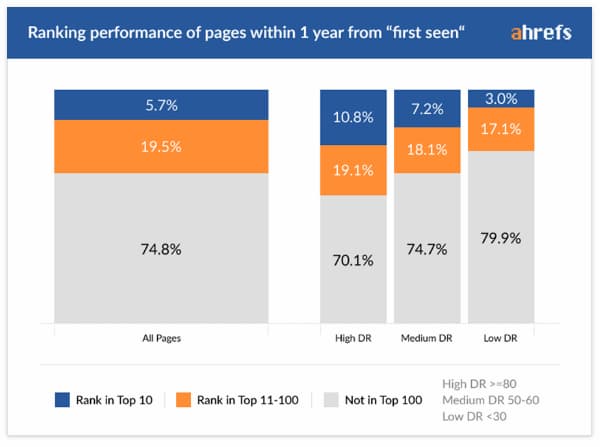
The time it takes a page to rank (over a year by this chart) affects your decision when choosing between organic SEO and PPC

Only 5.8% of the websites they studied were able to rank on the first page in less than a year, and even so-they average over 2-6 months.
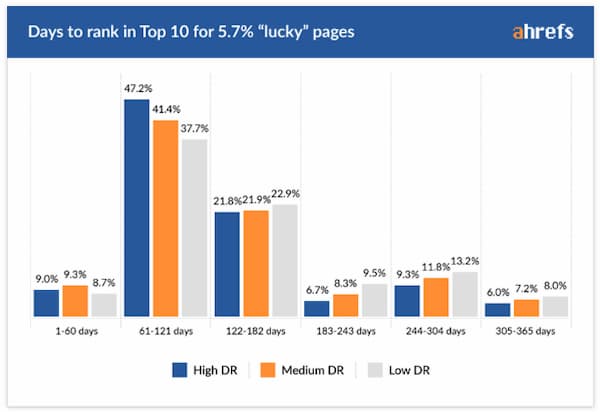
Graph showing the how long it takes the lucky 5.7% to rank on the first page within a year

Bottom line is that driving traffic using organic SEO takes time.

Mostly informational searches

Since 80% of the searches made are informational, many of the keywords that are targeted to drive organic traffic typically attract visitors that are not yet ready to buy. This means there is more educating and nurturing the visitor before they can become a qualified lead and new client.

This means that there is more strategy involved for developing a marketing funnel and addressing the various stages of the buyer journey in order to convert visitors to clients.

When should you opt for organic traffic generation?

If you’re building an authority website, you’ll need to build your organic traffic. The content on your website will need to reflect what users are searching for and be the best solution to search intent.

If you’re a local business, you’ll want to build your organic traffic. Optimize to be found in local searches and the local finder.

When you’re invested in your business for the long run, organic traffic generation is the solution. As the highest source of targeted traffic, it will lead to the most revenue at the lowest cost.

Advantages of PPC

  • Instant traffic
  • Control over audience
  • More insight into converting keywords
  • Search visibility for competitive keywords

Receive instant traffic

Once you’ve created a PPC campaign you receive instant traffic. It’s not always going to make you money immediately as there is some time required to optimize your campaign. But as soon as you activate your campaign you will be getting clicks to your website from instant search visibility.

Control over your audience

You have the option to select the demographics of your ad campaign. You can literally choose who sees your ads by choosing preferred age, city, times, gender and a whole myriad of options to personalize the audience your ad appears in front of.

Insight into converting keywords

PPC campaigns are an excellent way to conclude what keywords are the best-converting terms for your business. You have access to the behavioural patterns of the users that click on your ad for every keyword within your campaign. This allows you to double down on the search terms that work and get rid of the keywords that don’t convert.

Search visibility on competitive terms

PPC allows your business a fair shot at appearing for search terms that would otherwise be difficult to rank for organically. When the first page of search results is littered with titans like eBay and Walmart, you can bid on those terms to get your product on the first page as well.

Disadvantages

  • Higher CPA
  • Traffic stops when you stop paying
  • Less traffic
  • No long term benefits

Higher cost per acquisition

One of the biggest downsides to PPC is it’s considerably more expensive than organic traffic generation. The average cost per acquisition will generally be the same throughout the life of your campaign as opposed to organic traffic which declines over time. 

In fact, the CPA could rise should more competition for your keyword decide to join in bidding for the top position.

PPC is not a cheap solution and in many cases it takes money to make money. There is a learning curve to optimizing your campaigns to reduce the cost and increase the revenue you’re making.

Traffic stops when you stop paying

Unlike organic traffic generation, PPC is a pay to play type of format. You have to pay for your position on Google and when you stop paying, so does your lead generation, sales and new clients.

This presents a problem for businesses if the only way to generate leads is through paid traffic. If the price goes up in their niche, this could spell disaster for a company that solely relies on PPC for sales.

No long term benefits

Unlike SEO, PPC does not provide any long-term benefits to a website. With SEO, intrinsic value is constantly being added to the website through researched SEO content. Over time, a website can develop a strong reputation as an expert and authority within its niche.

PPC does not add value to content or alter your website in any way. It is simply a paid position in the search results to get visitors to your website.

When should you invest in pay per click (PPC)?

PPC is good for short-term or one time promotions. When you need traffic fast, PPC is the way to go. PPC can deliver you the traffic immediately from the audience you select.

This makes PPC a good option for companies that are just starting out and need new clients to get the ball rolling. 

A new website will need time to develop content and strengthen their search visibility. PPC campaigns can supply the traffic required in the meantime to supplement the lack of search visibility.

Organic SEO used in conjunction with PPC

The best-case scenario is to use organic SEO in conjunction with targeted PPC campaigns. As an aggressive marketing strategy, the two working together should be synergistic in the sense that the data obtained from each PPC campaign can be fed into the SEO strategy.

Having more search visibility is never a bad thing. Even if you’re making less money on PPC than organic SEO, using the two together is simply working to increase your total revenue.

When to debate SEO vs. PPC

The choice between SEO and PPC is not one that you can make without exploring options, assessing your current website development in relation to the competitive landscape.

For example, if you’re in a local market or extremely small niche, you may be able to achieve search visibility with simple DIY SEO tactics within a short amount of time. 

In a non-competitive environment, it would make more sense to focus your time and resources on developing your website with targeted SEO content. 

However in a more competitive environment, having your website appear in the paid results as well as the organic results could be the right balance that pushes your website to new heights in search traffic and record-breaking revenue.

For more information on how to develop your online strategy, give us a call and we’ll give you our best advice on how to make your business more profitable.

Christian Carere
Christian Carere

Christian Carere is the owner and founder of Digital Ducats Inc. in Toronto and heads the SEO team at Austin Bryant Consulting in Plano, TX.  Christian has been published on publications such as Search Engine Watch, Venngage, Small Biz Daily, Grasshopper, Data Box, Socialnomics, and Mention.
old.digitalducats.com/

Written by Christian Carere · Categorized: Pay Per Click, SEO strategy, Web development

Dec 22 2020

7 Tactics To Improve Your Pay Per Click Marketing Strategy

If you’ve been paying attention to the profit Google has been turning over the years, you may have noticed a trend: They keep making more money. A large portion of the total revenue Google earns is from paid ads. Why not follow suit and make more money by incorporating better tactics to improve your pay per click marketing strategy?

Even though they can be much more expensive than organic traffic generation, businesses continue to invest in paid ads for one simple fact: They make money.

Whether you’re already running PPC campaigns, or you’re considering your first go at it, here are 7 tactics to improve your pay per click marketing strategy to increase the revenue you’re generating from each campaign.

Bid on your brand and the name of popular competing brands

If you break down the intent of a brand search, it’s highly transactional. When someone is searching for a specific brand, they already have a product in mind and are in the buying frame of mind. Bidding on popular brands can put your website in front of a large group of searchers with buyer intent.

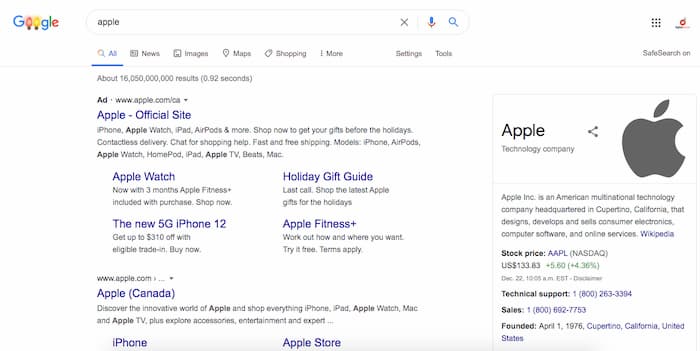
The larger brands have caught on to this pay per click marketing strategy and will protect the hijacking of their brand by bidding on their brand name. Search for any large corporate brand and you’ll see their Google Ad taking up the first spot in the search result.

Example of Apple bidding on their own brand name, which is one of many pay per click strategies

Although this tactic is one of many pay per click strategies that are somewhat well known among the larger brands you can still find loads of opportunities where popular SMBs have failed to capitalize on this knowledge.

Bid on popular competing brands to capitalize on an audience with buyer intent. Don’t forget to bid on your brand and protect the name of your company from being used as a way your competition makes money.

Put 80% of your effort into the headline

The 80/20 rules apply here where your headline counts as the most important part of your advertisement. People are going to click on the headline that captures their attention with the most enticing and relevant message. Use headline tips and strategies to ensure your ad receives a high click-through rate to maximize its potential.

Here are a few to get you started:

Use a number in your headline

The use of a number can attract more attention and interest in your content. People like to know what they’re getting and the use of a number manages expectations-which appeals to most people.

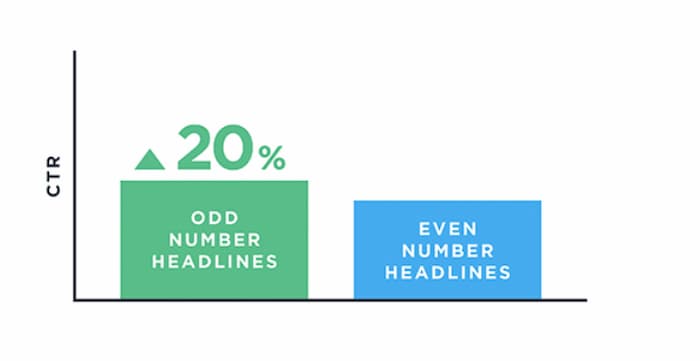
Using an odd number on your headline is one of the pay per click strategies

Using an odd number can increase your CTR by up to 20%

Spark emotion within your headline

There have been thousands of tests and studies on the effectiveness of ads and the bottom line to remember is that if your ad can evoke emotion it becomes much more powerful.

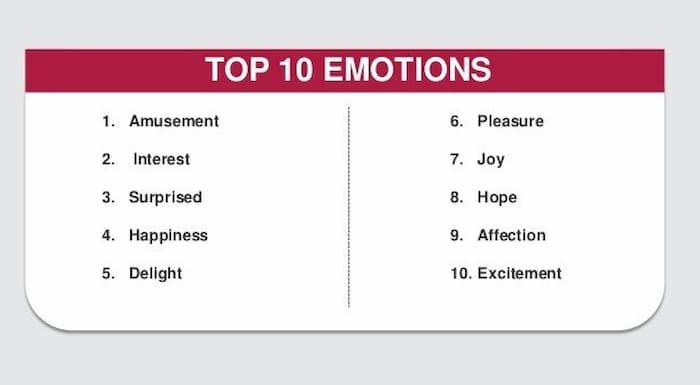
Here is a list of the top emotions that seem to have a positive effect on the way people respond to ads:

Top 10 emotions to incorporate in your pay per click marketing strategy to get the best response from users

The most successful ads that go viral seem to be those that target humour and are amusing to people. They get shared and spark interest. 

Snickers, launched their campaign “You’re not you when you’re hungry” and targeted misspelled words. In just two days they reported over 550k impressions with a CTR of just over 1%. The result was over 5000 people landing on their mini-website in just 48 hours.

Snickers pay per click marketing strategy was to optimize for misspelled words

The type of emotion you evoke depends on the niche that you’re trying to promote. If you’re advertising for a funeral home, there’s going to be a big difference in your tone than if you were promoting a kid’s event space.

Knowing your audience is a crucial aspect in determining the emotion of your target. Keep in mind that people respond with much more energy when you’ve triggered an emotional response.

Dynamic keyword insertion

Google, Yahoo and Microsoft offer this advanced feature to allow your ads more flexibility by inserting related keywords depending on the search.

Dynamic keyword insertion is a PPC marketing strategy

For example, if you sell tennis equipment, you may have an advertisement for tennis racquets. You can initialize dynamic keyword insertion by inserting the code:

{KeyWord: Tennis Racquets}

This will then tell the search engine to insert the most appropriate keywords in your ad according to what the user is searching. 

If a user searches “kids tennis racquets” or “adult tennis racquets” or “club level tennis racquets” those keywords will be inserted into your ad to make it more relevant to the searcher.

If there are no relatable substitutes, your ad will be displayed with your primary keyword, which in this case would be tennis racquets.

Dynamic insertion contributes to higher click-through rates by creating more relevance to the user’s search.

Use retargeting pixels

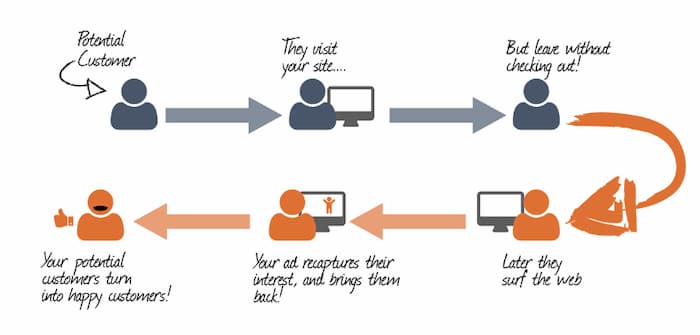
Retargeting is one of the best ways to reduce your cost per click because of its success in increasing conversions. This tactic is highly effective in promoting a higher conversion rate because your ad will reappear in front of users that have shown interest by clicking on your ad and landing on your website.

Image of retargeting model. This has been an effective pay per click marketing tactic to increase conversions
Image source

The retail industry, on average, requires 6-8 touchpoints before making a sale. When you have an ad following a user for an additional 8-12 times it gives your brand more exposure and more opportunities to remind the user about your product or service.

How does it work?

You need to install a pixel on your website that you receive from your ad campaign. Whenever a user lands on your site, a cookie is uploaded into their browser. That cookie reactivates the ad within the display network for however many times you choose to set it for in your campaign.

Use a landing page to personalize your campaign

Always use a landing page to personalize your PPC campaign to increase conversions and address a specific need that your ad is promoting.

Many businesses make the mistake of sending a user to their homepage from an ad and leave it to the visitor to find what they need. Rather than take the risk they don’t find what they need, send them directly to the page that has exactly what they need.

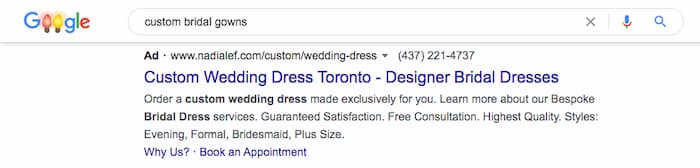
Custom bridal gown search displays an ad for wedding dresses

Always eliminate clicks and unnecessary obstacles that get in the way of a visitor finding what they want and purchasing it. Navigation to your product should already be done for the user so there’s nothing left to chance.

The landing page for a wedding dress ad was one of the wedding dress serice pages

A landing page gives you a way to warm your visitor up with information about your product and guide them to a purchase decision.

Provide social proof in your copy

We live in a time where reviews count for a huge part of the decision making process for many different industries. People will read the reviews on Yelp before picking a new place to eat dinner. There’s value in having social evidence of the value your business represents. 

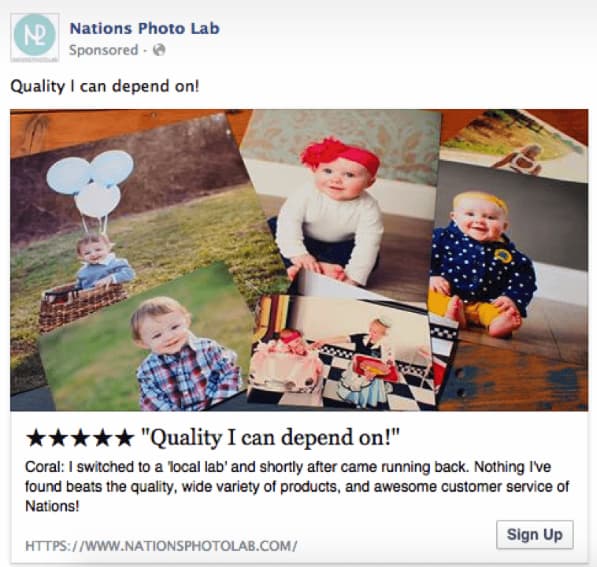
Nations Photo Lab uses a review in their ad as social proof-another effective pay per click marketing strategy

Include social proof in your copy to promote more clicks to your site. People will be more inclined to trust a company that can show how many clients they’ve already helped solve problems with their product. 

Having 5-star reviews with customers raving about how good your food is will bring in more eager customers who want to see what other people are talking about. 

Use Google’s Smart Bidding system

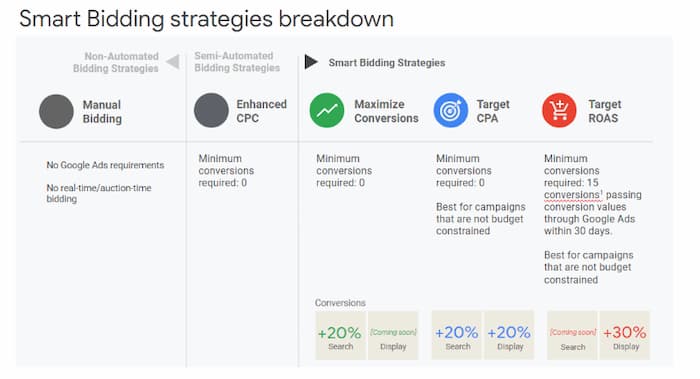
You can automate your bidding strategy by using Google’s Smart Bidding system to increase conversions, ROAS and reduce CPA. The system is a combination of AI and machine learning that is effective at predicting trends and tendencies of users to increase the likelihood of making a conversion.

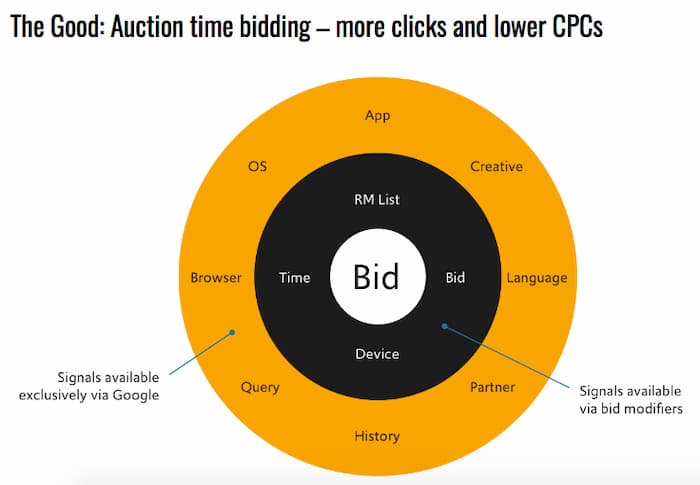
Smart bidding strategies breakdown

Use Smart bidding to get the best times to bid, the amount to bid and other areas that are automated based on machine learning. Automating the way you run your PPC campaigns with Smart Bidding leads to conversion rate optimization as well as reducing the cost per acquisition over time.

Image showing the bid signals available using smart bidding and to users.

Google suggests running a Smart Bidding strategy for at least 30 conversions or one month to get the full benefits of machine learning applied to your campaign.

Incorporate PPC Strategies to Increase Conversions

There are many pros and cons to using a PPC campaign within your digital marketing strategy, but the bottom line is that they make money. There’s no substitute for getting your brand at the top of the page for important keywords.

If you compare organic traffic generation to pay per click campaigns, organic has more potential with less cost in the long run. However, using a combination of both can make your digital marketing campaign even more profitable.

Incorporate proven tactics to improve your pay per click marketing strategy to increase conversions, lower costs and boost your revenue for every campaign you run.

Want to hear more about how we can help your business generate more revenue? Give us a call and let us give you a breakdown of the opportunities available to your website.

Christian Carere
Christian Carere

Christian Carere is the owner and founder of Digital Ducats Inc. in Toronto and heads the SEO team at Austin Bryant Consulting in Plano, TX.  Christian has been published on publications such as Search Engine Watch, Venngage, Small Biz Daily, Grasshopper, Data Box, Socialnomics, and Mention.
old.digitalducats.com/

Written by Christian Carere · Categorized: Pay Per Click, SEO strategy, Web development

Oct 11 2019

What’s The Difference Between SEO and PPC?

The difference between SEO and PPC is that search engine optimization is used to improve your position in the organic search results to receive unlimited free traffic, whereas PPC is paying Google for a designated spot on the first page and you pay for every click made to your website.

There are so many options to advertise your business online that knowing which way to go about it requires having clearly defined goals in order to develop the best strategy for your company. One major decision your company may be considering is whether to use paid advertisements or invest in search engine optimization.

On one hand, you have a paid version that puts you on the first page of Google immediately. On the other hand, you have a major portion of traffic that heads to the organic results. Which one is the right option for your company?

Related reading: 7 Tactics To Improve Your Pay Per Click Marketing Strategy

What are the organic search results?

The organic results are all of the websites listed as Google’s top choices, which they base primarily on a website’s ability to answer search intent. Websites compete with one another trying to earn the highest-ranked position in the organic results.

Investing in SEO improves the quality of your content, website optimization and increases backlinks to improve your website’s ability to rank. The organic results are everything that’s not a paid result or a Google SERP feature (local listings, featured snippet, knowledge panel, etc.)

What are the paid results?

The paid results are usually the first listings in a search result at the top of the page that is labelled “Ad” to the left of the URL. To be placed in this position companies will set up a PPC campaign (pay-per-click) and whenever a user clicks on the listing they pay a fee for a person to visit their site.

How much does PPC cost?

The CPC (cost-per-click) is determined through a bidding system. Your campaign is set up to pay within a certain range for every click made to your site. You determine the maximum amount you are willing to pay for each click.

If the keyword that you’re bidding on is making people money, the CPC will be driven up higher because people are willing to pay more for keywords with high commercial value.

It’s not uncommon to see CPC’s of $80 per click in the bail bonds industry due to the nature of the business. For keywords like “fidget spinners,” you could expect something less than a $1 per click.

PPC campaigns can be capped at a monthly limit of your choice. If your budget only allows $1000 a month then you will as many clicks as $1000 affords. If your keywords are $20/click you will only get 50 clicks to your website for the month.

How much does organic traffic cost?

Optimizing for organic search results represents a different approach to generating traffic. The initial cost per visitor starts higher because of the investment required to rank your site.

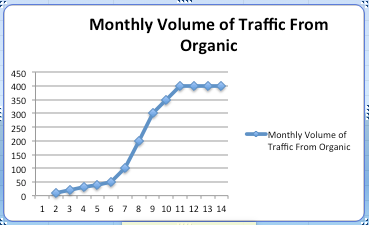
Let’s assume the average cost of SEO is $1000/month for one keyword and the average time it takes to see results in 6 months.

Monthly volume of traffic from organic is a big difference between SEO and PPC

This means that by each month your cost per visitor start to declines as the volume of your site is increasing.

Advantages of organic traffic

  • On average, 1 out of 10 blog posts are compounding posts. That means that the older the post gets the more links, the more shares, the more traffic it builds over time. (~Hubspot)
  • The cost per visitor is constantly being reduced with the increase in traffic
  • Organic traffic accounts for 60% of desktop searches and 40% of mobile searches so there are more available clicks to your site
  • 33% of people will recognize paid ads and purposely skip over the ads to the organic results.
  • Ranking your site organically increases your digital footprint within your industry and improves brand recognition
  • A strong organic presence will influence the frequency of appearances in localized searches.
  • Higher conversion rates from organic results
  • People research companies from the organic results
  • Traffic continues well after you stop SEO services

Advantages of PPC campaigns

  • Puts your site on the first page immediately
  • Places your listing at the top of search results
  • Immune to Google updates
  • Mobile search results have a growing click-through rate
  • Mobile has a growing percentage of conversions

Conclusion

There’s no doubt that both strategies to drive traffic are able to increase the revenue your site produces.

If your strategy demands quick short-term results, a PPC campaign can provide that solution at a higher price than what you would pay for organic traffic.

If you’re interested in making more money in the long term, organic SEO has the potential to drive higher volumes of traffic at a much lower price.

For long-lasting results and high volumes of traffic that continues flow to your site even after you stop paying, choose SEO. Invest in the development of your website to appear in the organic results to receive a higher return on your investment.

Christian Carere
Christian Carere

Christian Carere is the owner and founder of Digital Ducats Inc. in Toronto and heads the SEO team at Austin Bryant Consulting in Plano, TX.  Christian has been published on publications such as Search Engine Watch, Venngage, Small Biz Daily, Grasshopper, Data Box, Socialnomics, and Mention.

old.digitalducats.com/

Written by Christian Carere · Categorized: Pay Per Click, Web development

Footer

Need professional SEO advice?

Give us a call to learn more about how we can help your business

Call for a consultation Request a proposal

Request a free website analysis and proposal for your company by filling out the ” Request a Proposal” form.

  • Privacy Policy
  • Terms Of Service
  • Cities we’ve served

© 2026 · Digital Ducats Inc.