• Skip to main content
  • Skip to footer

Digital Ducats Inc.

SEO Consulting & Services

  • Home
  • About
    • SEO Consulting
  • Services
    • SEO
    • Local SEO
  • Contact
    • Pricing
    • Write For Us
  • Blog
You are here: Home / Blog

Oct 19 2019

Marketing Strategies To Increase Your Customer Base

Of all the marketing strategies to increase your customer base, there’s no doubt that inbound marketing has a major impact on the number of clients you receive from your website. Maximize the traffic your site receives by continually improving your website’s performance and adding additional sources of traffic.

Optimize for performance

There are hundreds of things to consider when you’re trying to rank your website. Running a site audit will uncover errors and performance issues that you can correct to make your site rank higher in the search results.

The ranking algorithm accounts for hundreds of factors in the overall placement of your website. It’s not just the large and blatant errors that will drag your websites ranking down. If your site errors only account for a small percentage of the performance of your site, correcting a large number of them can move the needle in your site’s ranking.

Improve site speed

The significance of the time it takes to load your pages can vary across industries. The retail industry is an example where site speed can play a direct role in the ranking of your website. A faster load time results in a reduced bounce rate, which on the first page of results is a metric that Rankbrain measures as a ranking factor.

The recommended time to load a page is around three seconds to get the first meaningful content on your screen. Many industry averages are still nowhere near the three-second mark. This presents an opportunity for a competitive advantage that results in an improvement in ranking.

Duplicate content

Search engines absolutely hate duplicate content. There are penalties dedicated to reducing ranking for any type of content that is copied or repeated on your site.

The main concern is plagiarism but because the penalty is algorithmic, any canonical errors will trigger a Panda penalty. If one of your articles is being displayed on more than one of your pages without a canonical tag it will count adversely against your website.

Thin content

The Panda update was initiated to address poor quality content. It targeted sites that had duplicate content, spun content and thin content. If your pages fall under any of those three possibilities, Google has penalized your site through an algorithmic filter and you’re suffering a demotion in the ranking.

It would benefit your site to update poor performing pages with more content to boost traffic. If the pages are not salvageable it would make your website more streamlined to delete them altogether.

Make video a regular part of your content

Over 87% of marketers would agree that using video is one of the marketing strategies to increase your customer base. The use of video increases the length of time visitors spend on your site. Increasing the average time on site is considered a ranking factor because it shows the level of engagement between visitors and your content.

Using video allows you to build a channel, subscribers and generate another stream of traffic from YouTube. Since 2017 video has experienced exponential growth in the number of shares, and the number of YouTube users creating a massive traffic opportunity from the number of searches performed daily.

YouTube is officially the second most popular website in the world, recently surpassing Facebook who formerly held the #2 position. People will search YouTube for product reviews and find out how to learn a skill or accomplish a task. By optimizing your videos on YouTube you drive traffic from a completely separate search engine to supplement your overall monthly traffic.

Capitalize on features being displayed on the first page of results

The emergence of SERP features (search engine results page) has been a controversial occurrence that Google has implemented over the years.

These Google products (ads, local listings, featured snippets, etc.) have steadily chipped away at the available traffic to organic search results by absorbing the available clicks. Your company can increase its customer base by optimizing the appropriate feature.

The features that appear in the SERP entirely depend on the search intent behind the keyword being typed. If a user searches for a product, the SERP feature that appears could be a product carousel of ads, a list of Google Ads, local listings and in most cases a People Also Ask Box. If a user types in an informational query it could trigger a featured snippet, knowledge panel and PAA box.

Companies can benefit from the different streams of traffic from each of these Google features, however, each requires a separate method of SEO to be featured in the top positions.

The featured snippet is a Google product in which your website can compete if it currently ranks within the top 10 results on the first page. By optimizing the HTML for the snippet that exists you can win the snippet position as well as be listed in the organic results. The snippet represents approximately an 8% gain in the volume of traffic your site receives.

The Local Finder is an additional source of traffic that can provide high converting visitors to your site. The finder will list the companies that operate within your city and display the company information you provide in your Google My Business profile.

By optimizing your website for localized search results you can not only place your business in the organic results but in the local pack as well. The additional position on the first page of results can make a significant difference in the quality of leads your company receives.

The PAA boxes are also a good source of additional traffic. To appear in the PAA boxes your content should be optimized to answer questions that are currently being displayed in your keyword search.

Increase your client base

A top position on the first page of organic search results is definitely the goal for your company. Improve the performance of your site to continue your upward climb to the top of the first page. No matter how small the improvements, nothing is too insignificant when every jump in ranking will increase the traffic your website receives.

Take advantage of every opportunity to implement effective marketing strategies to increase your customer base and provide more revenue for your company.
Written by Christian Carere · Categorized: Web development

Oct 11 2019

10 Common SEO Mistakes To Avoid

Oct 3, 2020 @ 12:25 pm

SEO requires addressing. many moving parts to get your website to rank on the first page of Google. Not only do you need to account for the most influential ranking factors, but you also have to publish pages to outperform your competition. As you work towards these objectives it’s imperative to avoid these 10 common SEO mistakes that could cost you time and money to correct.

No-indexing a page

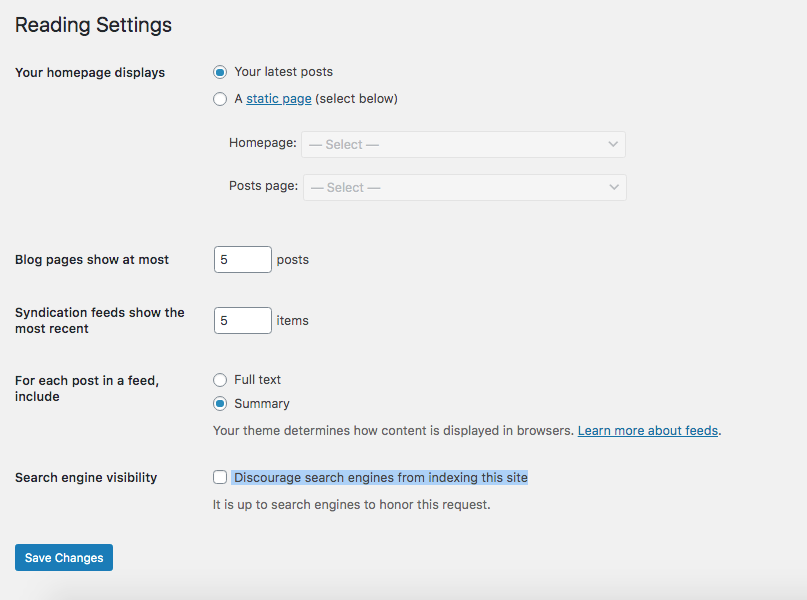
Whenever you publish a page on your site, search engines need to index the page and make it available in a search result. A “noindex” command will tell search engines to ignore the page completely and exclude if from its index.

If you’re publishing content frequently or have granted multiple user access, it’s one of the common SEO mistakes to accidentally mark the page noindex in the settings or in the HTML editor.

Accidentally clicking the noindex setting is one of the common SEO mistakes that could tank your website ranking

You can check to see which pages are marked “noindex” by entering your URL in the dashboard Deepcrawl.com

This tool will crawl your site and report the errors your website is generating as well as report all of your pages marked noindex.

Failing to submit a sitemap

A sitemap is a list of all the pages that have been published on your website. Think of it as a blueprint search engines use to confirm the pages your site has on its index. Without a sitemap, you risk that your pages will not be indexed without any links pointing to the domain.

Search engine spiders find new content through a sitemap or by crawling webpages and following links on the pages to new pages. If you don’t have any internal or external links to your pages, you need to include those pages on a sitemap or they will never appear on Google-or any other search engine index.

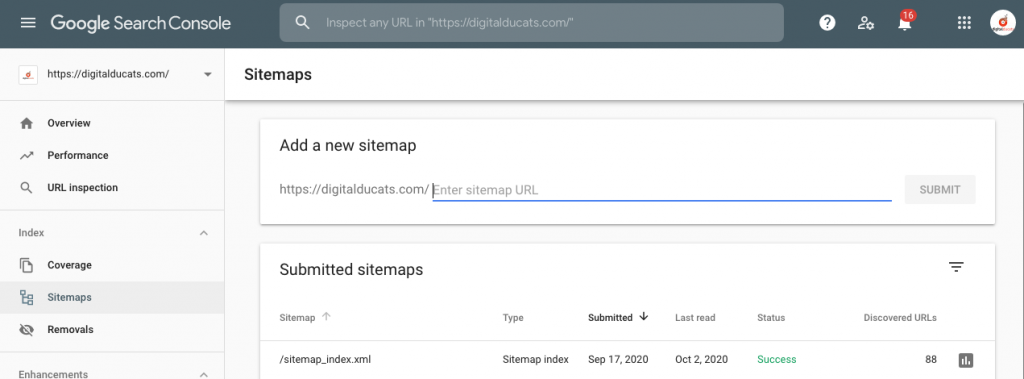
To avoid this potential disaster, go to the Search Console and click on the sitemaps tab. You can submit your sitemap directly to Google to make sure it has all of your pages on their index.

failing to submit a sitemap is a common SEO mistake that could cost your site search visibility

Missing a canonical tag

If there’s one thing that will immediately get your website penalized-it’s duplicate content. This could get your website sandboxed however you can easily correct the situation and recover your ranking by deleting the duplicate pages.

The second option for posting content that isn’t original is to add a canonical tag:

<link rel=”canonical” href=https://originaldomain.com />

Place this tag on the page that would be considered duplicate content and it communicates to search engines where the original document exists.

Paying for links

It is against Google’s best practices to engage in any link-building scheme that manipulates ranking. Any website that is exposed to being in a paid link transaction will suffer a penalty that will reduce ranking, traffic and overall search visibility.

If you make the mistake of buying links from a website that gets exposed for selling links-both the site selling links and everyone linked to it will be penalized. Google has come down hard on sites that sell links and everyone involved.

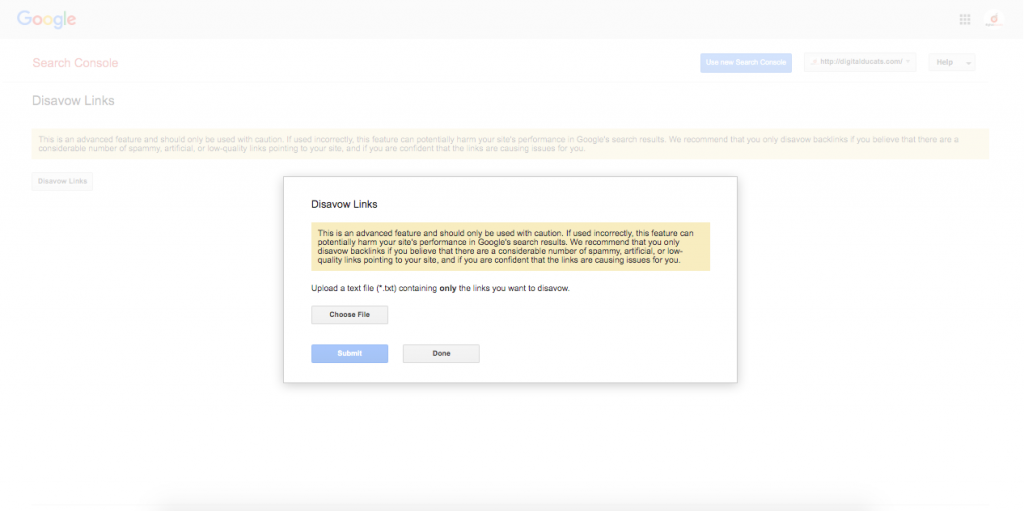
Ask for the links to be removed or nofollowed immediately. If you don’t get the website to respond, your last option is to use the disavow links tool.

A common SEO mistake is to pay for backlinks. If you're penalized this is an image of the disavow links tool you can use to rid yourself of toxic links

Overusing anchor text links

There was a time where your ranking improved by acquiring more backlinks with the keyword as anchor text This practice is no longer effective and when done in excess will trigger an algorithmic filter (commonly referred to as a Google penalty).

Use anchor text sparingly, whether you’re linking from within your site or from a referring domain. Too many anchor text links and your site will be deemed over-optimized and banished to the Google sandbox for that specific keyword. Keep in mind that little to no use of your anchor text may leave your page under-optimized.

Balancing your off-page and on-page optimization is a skilled practice that requires strategy back by analytical research of the what’s working for the top ranking websites for your keyword.

Not targeting a keyword

It shouldn’t come as surprise when your page doesn’t rank if you haven’t optimized for a keyword. When you’re publishing content you should target a keyword by improving your on-page optimization to target specific keywords(s).

Choose a target keyword and place it in the expected places on your page that enhance optimization such as the title, URL, within the first paragraph and in your image alt tags.

Your on-page optimization will help to clue search engines in on the keyword you want your content to appear for in the search results.

Choosing the same keyword on multiple pages

If two pages are optimized for the same keyword they compete with each other and search engines will more often than not rank both pages lower than what they could be ranked. This is known as keyword cannibalization.

Optimize every page on your website for completely different keywords. If you have separate pages that target the same keyword you can opt to consolidate the content from both pages on the top-performing page (the page with more backlinks and more traffic).

If you choose this option, you will need to redirect the URL that you’re deleting to indicate where the content has moved. This change to your website should get you a boost in ranking and an increase in traffic to the existing page.

Unnatural link building

Avoid unnatural link building, such as building too many anchor text links from the same website. Any time links that are deemed unnatural by Google it results in the loss of your ranking. According to Google’s best practice guidelines, links are supposed to be acquired organically, naturally and but without the intent to manipulate ranking.

If a brand new website that has been around for a month suddenly gains 10,000 backlinks, it’s going to raise some red flags.

Keep your link building looking natural to avoid any further scrutiny on your site.

Not sharing your content

If you haven’t built links or ways for people to find your content, your page won’t get any traffic and will never rank highly. When you publish content, get it in front of as many eyes as possible so it can be shared, linked and rise in ranking to drive additional traffic.

Post your content to your social media network for an injection of traffic to your site. The added boost of people can start the ball rolling if people are sharing and linking back to it.

You can also build links to your page to improve the ranking and ultimately the traffic it receives. The additional backlinks will improve the page authority, ass more ranking ability and create more entry points to your website.

Inability to satisfy search intent

Search engines will look for the best websites to display on their first page of results. One of the main reasons a page will rank is found in its ability to satisfy search intent. Failing to do so is one of the worst common SEO mistakes to make.

If you can keep a user on your page and your page ends their search, you have effectively satisfied search intent. If your content is thin and lacking information, your site will not rank highly because of its inability to satisfy search intent.

Identifying the true intent of a user can be logically deduced as well as researched to explore a wide range of options. Keyword research provides many clues to the related topics users will be searching, along with your keyword.

By identifying the topics and subtopics that the user will naturally be interested in you cover a wide base of intent. You can demonstrate this ability by publishing and linking related content on your website to form topic clusters. This is a basic model for creating depth in your topic and ranking highly for your main keyword topic.

Avoid common SEO mistakes to make a first-page appearance

Considering the sophistication of search engines it always helps to get started in the right direction by accounting for the most important ranking factors. Learn from the common SEO mistakes that have been made by many and build your site a permanent residence on the first page of Google.

Written by Christian Carere · Categorized: Web development

Oct 11 2019

What’s The Difference Between SEO and PPC?

The difference between SEO and PPC is that search engine optimization is used to improve your position in the organic search results to receive unlimited free traffic, whereas PPC is paying Google for a designated spot on the first page and you pay for every click made to your website.

There are so many options to advertise your business online that knowing which way to go about it requires having clearly defined goals in order to develop the best strategy for your company. One major decision your company may be considering is whether to use paid advertisements or invest in search engine optimization.

On one hand, you have a paid version that puts you on the first page of Google immediately. On the other hand, you have a major portion of traffic that heads to the organic results. Which one is the right option for your company?

Related reading: 7 Tactics To Improve Your Pay Per Click Marketing Strategy

What are the organic search results?

The organic results are all of the websites listed as Google’s top choices, which they base primarily on a website’s ability to answer search intent. Websites compete with one another trying to earn the highest-ranked position in the organic results.

Investing in SEO improves the quality of your content, website optimization and increases backlinks to improve your website’s ability to rank. The organic results are everything that’s not a paid result or a Google SERP feature (local listings, featured snippet, knowledge panel, etc.)

What are the paid results?

The paid results are usually the first listings in a search result at the top of the page that is labelled “Ad” to the left of the URL. To be placed in this position companies will set up a PPC campaign (pay-per-click) and whenever a user clicks on the listing they pay a fee for a person to visit their site.

How much does PPC cost?

The CPC (cost-per-click) is determined through a bidding system. Your campaign is set up to pay within a certain range for every click made to your site. You determine the maximum amount you are willing to pay for each click.

If the keyword that you’re bidding on is making people money, the CPC will be driven up higher because people are willing to pay more for keywords with high commercial value.

It’s not uncommon to see CPC’s of $80 per click in the bail bonds industry due to the nature of the business. For keywords like “fidget spinners,” you could expect something less than a $1 per click.

PPC campaigns can be capped at a monthly limit of your choice. If your budget only allows $1000 a month then you will as many clicks as $1000 affords. If your keywords are $20/click you will only get 50 clicks to your website for the month.

How much does organic traffic cost?

Optimizing for organic search results represents a different approach to generating traffic. The initial cost per visitor starts higher because of the investment required to rank your site.

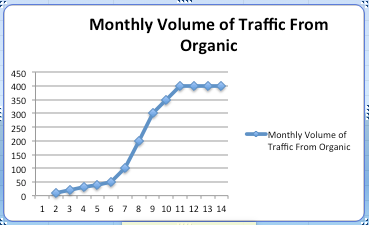
Let’s assume the average cost of SEO is $1000/month for one keyword and the average time it takes to see results in 6 months.

Monthly volume of traffic from organic is a big difference between SEO and PPC

This means that by each month your cost per visitor start to declines as the volume of your site is increasing.

Advantages of organic traffic

  • On average, 1 out of 10 blog posts are compounding posts. That means that the older the post gets the more links, the more shares, the more traffic it builds over time. (~Hubspot)
  • The cost per visitor is constantly being reduced with the increase in traffic
  • Organic traffic accounts for 60% of desktop searches and 40% of mobile searches so there are more available clicks to your site
  • 33% of people will recognize paid ads and purposely skip over the ads to the organic results.
  • Ranking your site organically increases your digital footprint within your industry and improves brand recognition
  • A strong organic presence will influence the frequency of appearances in localized searches.
  • Higher conversion rates from organic results
  • People research companies from the organic results
  • Traffic continues well after you stop SEO services

Advantages of PPC campaigns

  • Puts your site on the first page immediately
  • Places your listing at the top of search results
  • Immune to Google updates
  • Mobile search results have a growing click-through rate
  • Mobile has a growing percentage of conversions

Conclusion

There’s no doubt that both strategies to drive traffic are able to increase the revenue your site produces.

If your strategy demands quick short-term results, a PPC campaign can provide that solution at a higher price than what you would pay for organic traffic.

If you’re interested in making more money in the long term, organic SEO has the potential to drive higher volumes of traffic at a much lower price.

For long-lasting results and high volumes of traffic that continues flow to your site even after you stop paying, choose SEO. Invest in the development of your website to appear in the organic results to receive a higher return on your investment.

Written by Christian Carere · Categorized: Pay Per Click, Web development

  • « Go to Previous Page
  • Go to page 1
  • Interim pages omitted …
  • Go to page 24
  • Go to page 25
  • Go to page 26
  • Go to page 27
  • Go to page 28
  • Interim pages omitted …
  • Go to page 32
  • Go to Next Page »

Footer

Need professional SEO advice?

Give us a call to learn more about how we can help your business

Call for a consultation Request a proposal

Request a free website analysis and proposal for your company by filling out the ” Request a Proposal” form.

  • Privacy Policy
  • Terms Of Service
  • Cities we’ve served

© 2026 · Digital Ducats Inc.