• Skip to main content
  • Skip to footer

Digital Ducats Inc.

SEO Consulting & Services

  • Home
  • About
    • SEO Consulting
  • Services
    • SEO
    • Local SEO
  • Contact
    • Pricing
    • Write For Us
  • Blog
You are here: Home / Archives for Content strategy

Content strategy

Nov 22 2020

How To Develop An SEO Content Marketing Strategy

Content is king. It doesn’t get more cliché than that but it needs to be said because it is a major truism in the SEO industry. Without content, SEO doesn’t exist. Developing an SEO content marketing strategy is your blueprint to communicating, convincing and converting visitors into clients.

What is an SEO content marketing strategy?

An SEO content marketing strategy is a plan that strategizes on how to publish and promote content that guides an audience to take action. It’s not only targeted to the visitors on your website, but to those off-site that you want to educate, convince and convert into clients.

Your SEO content marketing strategy establishes the topics, keywords and content tilt to break through your competition and guide visitors to purchasing from your company.

What are the advantages of an SEO content strategy?

Developing an SEO content strategy establishes a measurable goal and a plan for how to achieve it. Publishing content without an SEO strategy can be compared to the likes of throwing darts with a blindfold on. Your content may be high quality but if it’s aimed at the wrong target, its impact will have a minimal effect on your business.

Developing an SEO content strategy establishes your goals, audience, strengths, opportunities and a way of measuring your success. Use the following as a way to develop an SEO content strategy that has a maximum impact on how you drive traffic to your site and convert those visitors into clients.

Set your goal

There’s no point in randomly producing content without having a specific goal in mind. Establish a specific goal from the onset of your SEO content strategy to define your purpose for publishing content. A goal also allows you to refer back to an overarching purpose to clarify the decisions you need to make when developing your SEO content strategy.

If you know that your goal is to get people to purchase more products on a retail website, the content strategy will be different than getting visitors to leave their contact information or subscribe to a newsletter.

Clearly define the goals you have for your company so you can effectively create content that moves visitors further along the marketing funnel.

Target a specific audience

Take the time to carve out a very defined group that you can confidently point to as your target audience. This can be done effectively by creating a buyer persona. A buyer persona allows you to brainstorm the characteristics of your ideal client with greater accuracy by identifying the pain points that are most common within that group.

Determine the larger divisions of your target audience first such as the primary age group that your product or service is most well-received. You can further break your target audience down by the current characteristics your clients share as well as the general commonalities associated with their generation.

Image showing different segments of age to identify your buyer persona and enhance your SEO content marketing strategy

The more detailed you are in creating your buyer persona, the more information you have on what they find important in their lives.

Your buyer persona will set the tone for how you communicate your message regarding language and content type. 

If your target group is mostly teenagers, your content should be more visual with a lean on images and videos.

If your target group is middle-aged businessmen, your content would be more long-form, in-depth articles that provide insight into the topics that matter most.

Identify your unique selling point

There are millions of businesses and even more websites to compete within every industry. What sets you apart from the competition? Identify the USP of your company in order to highlight what you’re offering to those in need of your services.

Every company is faced with competition that more or less offers the same product or service. What is the expertise your company offers that no other company does? What can you promote that will convince prospective clients that your company is the best choice for their needs?

Pricing, superior customer service and convenience are commonly promoted by businesses. However, having a unique skillset or offering that no other business offers will generate the most revenue.

In Canada, Pizza Pizza was able to promote their brand by offering a 30 min or it’s free policy. No other pizza delivery service (at the time) offered the convenience of such prompt service with a guaranteed delivery time.

The recognition that delivery time is one of the most important aspects of choosing a pizza place for delivery, gave rise to the idea of guaranteeing delivery time. Pizza Pizza addressed the pain point of waiting long periods of time for delivery with a guarantee of 30 min or it’s free. 

This USP contributed to them becoming one of the largest pizza chains in Canada.

Find the sweet spot in your industry

Brainstorm topics that are related to your business but have no competition, which is also referred to as finding your content tilt. These topics represent the sweet spot in your industry since you can create high impact content that cuts through the competition and reaches your audience.

The content tilt your company uses can be found by addressing your target audience’s pain points with your unique selling points and expertise. 

Research keywords

The next step in creating your SEO content marketing strategy is to create a list of keywords your audience uses to find solutions to their pain points. Your research should include prioritizing search terms for landing pages, blog content and any gated content or specialized types you’ll use within your strategy..

You should already have your list of topics that represent your content tilt. Break down each topic into a list of pain points and problems most commonly faced by your target audience.

Establish search intent

A major function of keyword research is to make sure that the keywords you choose to target align with the user’s intent of the search and the topics you’ve outlined in your strategy. A common mistake made by business owners is to focus on the metrics of a keyword rather than target terms that are audience-centric. 

Search engines place a heavy emphasis on the ability of a page/website to adequately satisfy the intent of a search. Establish exactly what the user needs to know in order to become the final destination of their search. If your content doesn’t satisfy the user, it results in them returning to the sea of search results to look for another website that has what they need.

Establish the true intent of a search through comparative and competitive analysis. Make sure the search results are filled with pages similar to your own and the content type is a match for what you have planned.

Compare important metrics 

Run each of your ideas through the keyword tool of your choice to identify the terms that have low competition and high search volume. At this point, most of the keywords you’re researching should represent business value since they are all targeted at addressing the issues that are most important to your audience.

Keep in mind that high search volume doesn’t trump business value. You’ll need to establish that a keyword does in fact generate a minimum number of searches, but apart from that if your topic is important to your audience, the volume is merely a vanity metric.

As you identify keywords and add them to your list, keep them separated in groups of intent. You’ll avoid targeting the most competitive phrases or find alternatives and long-tail versions to get your message to the right audience.

Create a content schedule

It’s important to get a general outline of when you’re publishing the content you’ve chosen. By creating an editorial calendar, you’re not left trying to decide what to publish at the last minute, since it has been scheduled ahead of time.

An editorial calendar allows you to plan the content you need to adequately cover a topic. This gives you a broad perspective on how to layer your content from the bottom of the funnel, middle of the funnel to the top of the funnel.

Cluster your content

The end result should be a topic cluster to establish the importance of your main keyword theme to search engines and users. A topic cluster is composed of a pillar page and cluster content.

topic clusters concept to structure your content in an SEO content marketing strategy

The pillar page covers a broad range of subtopics that represent one major keyword theme. It will touch upon the topic in its entirety, but not go deep into detail on the subtopics, as this will be the purpose for your cluster content.

Pillar pages link out to cluster content in order to give your audience the option of exploring a specific aspect within the broader topic. Cluster content typically targets long-tail keywords because of the narrow focus they have on exploring a specific area.

Cluster content links back to the pillar page as well as related content within the topic cluster.

This structure generates smaller volumes of traffic from the cluster content, which leads visitors to the pillar page and other pages further within your marketing funnel. 
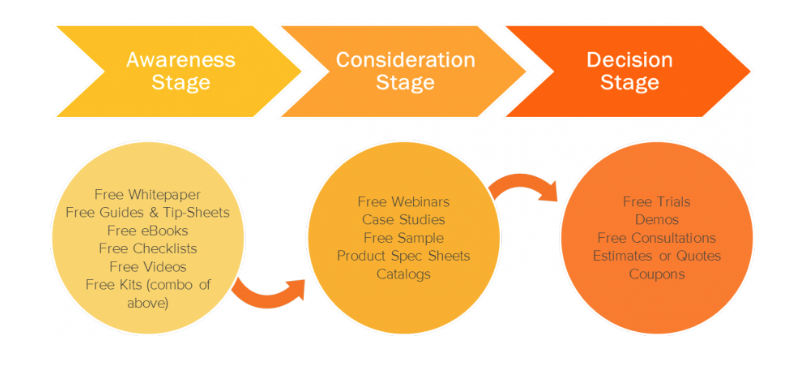
the buyer journey and the content to include when incorporating SEO with web design

As more pages rank within the topic cluster, they transfer authority to the pillar page and your website gains more ranking ability for the keyword topic.

Track, measure, analyze and adapt

Establish a way to measure the success of your SEO content marketing strategy. In order to grow and amplify the efforts that made the most impact, it’s important to know what worked the best and what efforts did not work very well.

If your goal is more sales conversions, you’ll need to track the flow of your visitors from your landing pages. Determine the content that leads visitors to more conversions as well as the content that results in the most exits.

Build more content around the keywords that are converting and try to guide visitors away from the pages that result in a bounce or exit.

Gated content can be used as a way of measuring the interest that your articles are garnering. Have visitors enter their email addresses to receive whitepapers or guides on the topic that they’ve been reading about.

A high number of conversions of visitors accessing your gated content is an easy way to tell whether your content is on target.

Build an email list

If you’ve come this far in building an effective SEO content marketing strategy, you should be building an email list. No matter what your industry, a list of interested people is a welcome asset to have for instant traffic to new content as well as to promote sales and discounts on services.

An email list is an excellent source for finding more out about your prospective clients. Segment your list through a series of questions on what your audience would like to receive in their inbox and then send them the goods!

Use your email list to gain more insight into the interests of your target audience. You can use split-tests that measure the open rates of emails you send to determine catchy subject lines. By seeing which email gets opened the most you identify catchy headlines that will grab the attention of your audience.

Use split tests on the click-through rate from the email to your website to see how engaged your audience is in the content you send. A high click-through rate will indicate the topic is worth exploring and building more content around on your website.

All of these decisions need to be made before you set your plan into effect. When you know exactly what you’re going to need to execute the plan, you’re ready for the last stage of your SEO content strategy.

Publish SEO content

Execute the final stage of your SEO content marketing strategy by publishing the content you need for each area of your plan. Your strategy already details the most important topics, the layered content, your target keywords and an established goal with a method for tracking results.

Approach every content piece with a 10X mentality, where your content will be 10 times better than anything already published. Make sure your content includes every topic and subtopic that is being covered in the top ten search results. Add additional content to make sure your pages outperform the competition through your own additional research.

Your finished product should be a compilation of the best of all worlds. There shouldn’t be a reason that a visitor could leave your page to find something better. SEO content writing accomplishes this task since the process makes sure all bases are covered.

Optimize your page for maximum results

In order to maximize the traffic, your page can receive you want to have all of your basic on-page optimization aspects covered. In addition, explore every opportunity you have to drive traffic from featured snippets, PAA boxes, videos, images and rich results.

Capitalize on every traffic opportunity available by analyzing the SERP for features your content can appear in. Simple formatting and publishing your answers to commonly asked questions can result in being featured in a snippet and PAA box.

It should be clear that the higher up on the SERP the higher your click-through rate will be. The top positions receive the most traffic from any given search term. Place your keyword in the expected places to clearly demonstrate to search engines what search terms your page should appear for.

Rich results will also contribute to a higher click-through rate to your website. Consult with the list of available features your website is eligible to implement the structured data markup required.

Strategize and optimize your content production

The content on your website is a reflection of your business and a tool for educating visitors and moving them closer to making a purchase decision with your company. The content you produce has a major impact on your website’s ability to generate traffic that converts.

In order to maximize the revenue, your company generates, establish an SEO content strategy. It is only when you’ve defined your goals that you’re able to achieve them. Use the strengths of your business to solve your audience’s problems and publish content that educates visitors on how that works.

When people understand what you have to offer that no other company has, they are more likely to side with your cause. Give people a reason to choose your business over the competition.

An effective SEO content marketing strategy is the blueprint for your success in driving traffic that converts and amplifying those results.

Christian Carere
Christian Carere

Christian Carere is the owner and founder of Digital Ducats Inc. in Toronto and heads the SEO team at Austin Bryant Consulting in Plano, TX.  Christian has been published on publications such as Search Engine Watch, Venngage, Small Biz Daily, Grasshopper, Data Box, Socialnomics, and Mention.
old.digitalducats.com/

Written by Christian Carere · Categorized: Content strategy

Nov 19 2020

14 Benefits Of An Infographic

Infographics may have seen the height of their popularity but don’t underestimate the power they have on your SEO content strategy. In head to head comparisons with text articles, there is no doubt that infographics outperform in every category. The benefits of an infographic include more links, increased traffic and higher levels of engagement by incorporating visually appealing forms of content.

What is an infographic?

An infographic is a collection of visualized data that uses charts, images and graphs with minimal text. Infographics can tell a story, explain instructions or act as a resource that summarizes data-driven facts and statistics. Infographics are used to communicate large amounts of information that is more easily understood through the use of visualized data.

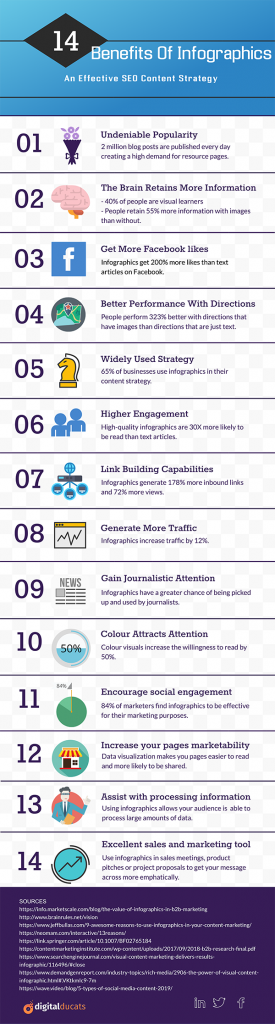
The following infographic lists 14 benefits of an infographic as it pertains to an SEO content strategy.

An infographic of 14 benefits of an infographic

Infographics are an excellent SEO content strategy for creating backlinks and brand awareness. Before the rise of video, infographics were the most widely shared pieces of content. They combine imagery with statistics and facts for a more enhanced and enjoyable learning experience.

Additionally, the benefits of using an infographic are as follows:

Undeniable popularity

One benefit of an infographic that there is a high demand for quotable resources. People are always looking for hard facts to back up an opinion and add credibility to their content. Infographics are ideal as resources since they provide an easy way to navigate through a collection of facts and data points.

With over 2 million blog posts being published a day, there will be no shortage of the demand for statistical resources.

The brain retains more information

According to Brainrules.net after three days of reading a text article a person will retain 10% of what they read. When placing an image in a text article that percentage jumps to allow 65% retention of the same content. This can be attributed to the fact that 40% are visual learners.

Infographics can literally be described as visualized data. Pairing images with the main data points makes up 95% of the entire infographic. They can be used as the ultimate tool for not only getting your message across to an audience but having that message retained for a few days after receiving it.

Get more Facebook likes

Your social network will give you much more traffic and exposure by using infographics over text. Infographics get approximately 200% more likes compared to text articles on Facebook. (~Wave Video)

Better performance with directions

When presented with driving directions that included images, people performed 323% better than those who had directions with text only. It’s a natural tendency for the brain to attach relevant images to text, which would explain the difference in performance.

Consider using infographics for how-to pieces of content. Users will have a higher success ratio for learning and completing a task when there are images to support each instruction. As you are well aware, a picture is worth a thousand words.

Widely used strategy

It’s comforting to know you’re employing a strategy that is proven to be effective. 65% of businesses are using infographics as part of their SEO content strategy because of the benefits gained.

Infographics serve as an excellent tool for B2B marketing because it’s easier to convey large sums of information in a visual display. Using visualized data is also improves the conversion rate to build local links.

Higher user engagement (dwell time)

Engagement is one of the factors that site owners can improve on to boost ranking in the search results. When you know that a high-quality infographic is 30X more likely to be read than a text article, how could you not use infographics?

Now that you know users are much more likely to read visualized data, as opposed to a list of stats and facts., improve the time visitors spend on your page by using engaging images with data-driven facts.

The length of time that visitors spend on your page is an engagement statistic known as dwell time. Increased dwell time contributes to a higher ranking in the SERP.

Enhanced link building capabilities

As a link building strategy, infographics can be a powerful tactic to land you a lot of high-quality backlinks. Infographics generate 178% more inbound links and 72% more views (Hubspot) than content with just text.

Guest posting on high traffic websites can get your image in front of a large audience. It only takes a quality infographic to start the ball rolling for attracting backlinks.

Here at Digital Ducats Inc., we used an infographic on website design trends to generate thousands of backlinks. The project was aimed at acquiring local backlinks from Toronto experts but became one of the most linked pages on the site.

The backlinks we acquired came from a few different sources: Local companies linking to the page, guest posts that linked to the page and were syndicated across hundreds of other websites, and people landing on the page and linking to it after it ranked for a number of keywords. 

We also submitted the image to a few of the most popular infographic directories to get the ball rolling with a few starter links.

Drive more traffic from improved search visibility

One of the three largest ranking factors search engines use is backlinks. It should be no surprise that once your infographic starts accumulating backlinks it’s going to start ranking for a number of different keywords, which drives organic traffic.

More backlinks also equate to more entry points for visitors to find your website. If your article is syndicated across a large number of websites, the backlinks alone will drive significant volumes of traffic.

Optimize your page for phrases that represent business value. Increase the number of keywords your page ranks for by including an explanation of your data point as a text portion within your post. 

Including text on your page (as opposed to only posting the image) provides search engines with the content and context to rank for keyword related phrases.

More engagement, more links, more views lead to more visitors. On average, infographics generate 12% more traffic to your website. (Demand Gen Report)

Gain journalistic attention

Journalists will follow press release sites for interesting stories that they can publish on their blogs. Consider the heightened engagement that infographics generate and it makes sense why journalists are more open to republishing a high-quality infographic.

Colour attracts attention

Use the psychology of colour to your advantage. Colour increases the willingness to read by 50% so make your infographics visually stunning and full of colour. (Neomam)

Increase social engagement

Before video made its big surge in popularity, infographics were the most shared form of content on Facebook. As the second most shared form of content, take advantage of the ability to expand your audience and increase social engagement.

Rather than firing off your entire infographic into your network, use snippets of your image as teasers. Chop your infographic up into multiple pieces of content to create more opportunities to drive traffic and build your audience. 

Using pieces of your infographic also meshes better with the format for Facebook and Instagram. Facebook uses rectangle images and on Instagram, you should try to make each snippet a square so users are able to see the entire image.

Infographics increase your pages marketability

Add value to your content by creating an infographic. Whether you’re engaged in a link building outreach campaign or you’re publishing content on your website for a specific audience, elevate the quality of your content by incorporating data-driven images.

You can improve the success rate of your outreach with infographics by making your value proposition more enticing. Website owners are much more open to sharing an infographic on their website as opposed to publishing an article.

Assist with processing information

Reading straight facts and data can eventually lead to a reader completely tuning out their attention and losing their focus. An infographic helps readers digest data-driven facts and information in bite-sized chunks.

The fact that there’s an image to help break the monotony of numbers and text contributes to an understanding beyond words. Seeing a comparison chart will immediately get the message across as opposed to reading the comparison statistics.

When you want your audience to be able to get through large amounts of data, using infographics makes it easier to accomplish.

Excellent sales and marketing tool

Based on increased data processing and retention, it’s easy to come to the conclusion that infographics are excellent sales and marketing tools. Use infographics in sales meetings, product pitches or project proposals to get your message across more emphatically.

The use of infographics on a sales page within your website works to can keep your company in a prospective client’s mind for a longer period of time. Data-driven images are the perfect tool to help increase sales.

What are the disadvantages of infographics?

Not to be a Debbie downer, but nothing is all rainbows and sunshine. There are always a few clouds that loom on the horizon…

You can’t dive headfirst into creating an infographic without knowing the downside. Here are a few things to consider before deciding on whether you’ll use an infographic or not.

Time consuming to build

Infographics are extremely time-consuming to create when you compare them to publishing your typical blog post with images. The amount of energy and resources that go into creating an infographic can dwarf regular blog content when you consider the research you need or coming up with effective data points.

An infographic isn’t very effective unless it serves a purpose really well. Original research is ideal, which in itself is an entire project. Otherwise, you’ll need to come up with line items in which you can’t take everything from one source. You need to mix up your sources and make sure they get the proper attribution.

The design is also a time-consuming aspect. Original images are preferred which means you’ll need to come up with an image for each data point in your image. Don’t forget to customize the background, the text and header to create something unique.

Not ideal format for social media

Most infographics with a lot of information are long and skinny, which is not ideal for social sharing. Of course you can make infographics specifically for social media, but again, your images won’t be able to pack as much information when you’re limited to a square or rectangle.

Generic templates bore people

There are a few companies that you can turn to for the software to create infographics. What happens when thousands of people are using the same software? You start to see the same generic templates and the same icons and images which devalues the level of professionalism your infographic exudes.

In order to separate yourself from the masses, you need to customize your projects as much as possible. A unique design will be much more appealing to your audience and impressive to prospective clients.

There’s risk associate with your investment in resources

Creating a unique and effective infographic is not something to take lightly. You’ll need to invest the time to make it something that looks professional enough to grab the attention of your audience. There is always an implied risk that your infographic doesn’t live up to expectations.

Suppose you’ve decided to use an infographic as a link building method. After hours of labour-intensive work, you begin a massive outreach to companies and website owners you thought would love your idea. If no one wants to put your infographic on their website or link to yours then you’ve wasted a lot of time in resources on a project with minimal results.

Harder to edit and update

Once your infographic is posted on your website, you already have a URL assigned to it. In order to update your image, you need to go back to the infographic editor, make changes, save, optimize the image, edit the name and upload back to your site with the same URL so you don’t lose any backlinks. It’s a bit of a process….

Enjoy the advantages of using infographics

There’s a lot of publishers that write about the rise and fall of infographics but don’t be fooled into thinking they are an ineffective marketing tool. The truth is that infographics had their golden era and now that they aren’t being glorified, it takes useful data and a well-planned infographic to have the same impact on your website.

If you’ve been in the SEO business since 2013, would know that this was the year the popularity of infographics went absolutely through the charts. If you had an infographic you could get it published on some of the top names in the industry and earn high-quality backlinks.

IN 2016, however, when the industry became saturated with low-quality images, publishers stopped publishing them and journalists stopped sharing them in their columns. That didn’t put an end to infographics, but just made the data that they hosted the main selling point.

The point is that at the end of the day, original data reigns supreme and a well thought out and carefully planned infographic can generate traffic, backlinks and contribute to new sales.

One thing that remains constant is high-quality content translates into more traffic, backlinks and credibility. Incorporate infographics in your content strategy for added value and new sources of backlinks and increased search visibility.

Christian Carere
Christian Carere

Christian Carere is the owner and founder of Digital Ducats Inc. in Toronto and heads the SEO team at Austin Bryant Consulting in Plano, TX.  Christian has been published on publications such as Search Engine Watch, Venngage, Small Biz Daily, Grasshopper, Data Box, Socialnomics, and Mention.
old.digitalducats.com/

Written by Christian Carere · Categorized: Content strategy

Jul 12 2020

Local SEO Content: Improve Your Local Presence

Want to rank for searches within a specific city? The solution is simple; Be city-specific with the content you publish. Local SEO content is an excellent way to get search engines to recognize the city in which you want to improve your local search presence.

What is local SEO content?

Local SEO content is content that is optimized for a city-specific keyword. The content within your page will identify unique elements that relate the content to a specific city.

By identifying popular landmarks, places, addresses or anything unique to the locality, your page and your website become more closely associated with searches that originate from your target location.

There are a few different types of content that work well to optimize for your city, county, state or province. Here are seven of the more popular types that you’re most likely to see used on a website.

Expert round up from professionals in your city

An expert roundup is a form of evergreen content where you combine the quotes from a group of professionals. Confining the area in which you collect your quotes will make your content local to your city.

You can generate a lot of good local backlinks from different local experts that will in turn boost the competitive ability of your website within your city. People will link to your content when they are featured in it.

This type of content can be combined with an infographic to really improve the likelihood of your project being shared within your industry. An example of this is 12 Web Design Trends In 2020 By Toronto Experts.

In this example, 18 experts shared their opinions on the top web design trends for 2020. The infographic was shared and used on a few of the participant’s sites, which accounted for a boost in local traffic.

You can read the details in a local SEO strategy case study.

Local client surveys

Create a survey for your clients that will help you understand how to serve them better as well as create extremely targeted content. Original data is one of the most valuable assets you can obtain in terms of content creation. Focus your survey on your local clientele to create highly optimized content.

One of the benefits of generating your own data is that you can promote your content to other companies in your niche. When you have something no one else it becomes a linkable asset. Other websites will be much more likely to use your data as a resource when the information is coming straight from your own research.

Host a local event

If you’re planning on hosting an event, no matter how small or large, you should be writing about it on your blog. Include the name, address and times of the event and use structured data mark up on your page.

Hosting your own local event creates an opportunity to publish highly optimized content to your city. As search engines index your site, the amount of local content you’ve published contributes to a stronger local presence.

Sponsor a local event

If your business covers service areas or you simply don’t have the resources to host an event, there are plenty of opportunities to sponsor a local event.

Simply getting a link to your website on the sites that are promoting the local event is worth the local optimization points. These events should take place in the city you’re optimizing for and you can write about the event on your blog to promote awareness.

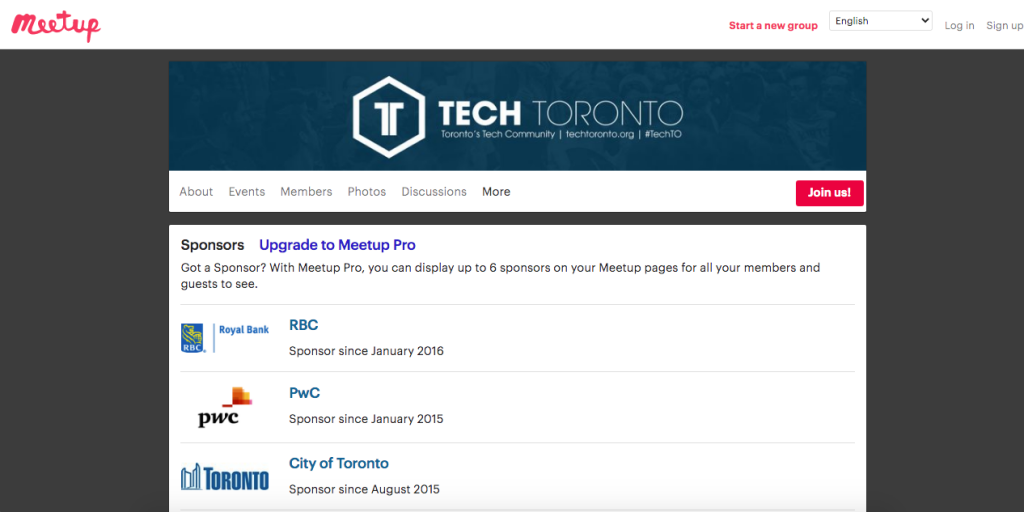
Here’s an example of a Meetup group in Toronto that has six sponsors listed on their Meetup page.

This Toronto Meetup group has sponsors that can use this material for local SEO content

You can look for opportunities to sponsor events on sites like Meetup, Eventbrite and your local chamber of commerce.

Location pages

If your website operates in multiple locations, a location page for that city will give you the best opportunity to rank highly for city-specific search terms.

Location pages can be optimized to provide more relevance to the target location. With a page dedicated to a specific city, you can optimize for the city in the metadata as well as include city-specific references within your content.

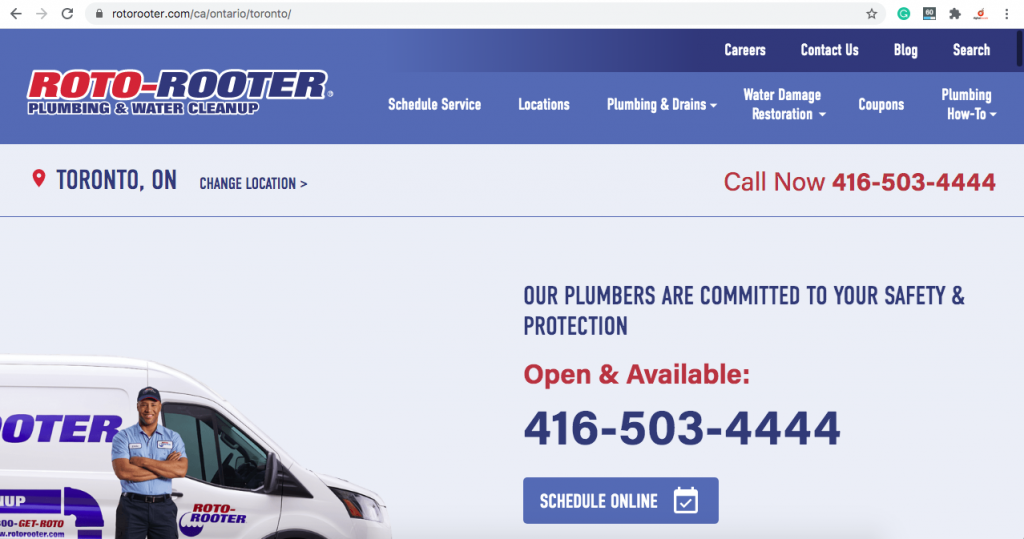
Here’s an example of the Toronto location page for Roto-Rooter. You can see the URL includes the province and city. The title (h1 tag) is also Toronto, On.

Roto-Rooter Toronto location page as an example of local SEO content

If you have an address located within that city, your NAP details should be included in your on-page optimization. Including structured data mark up will ensure search engines know your page is dedicated to a specific city.

Write about local events and activities

Publish content on local events and activities that relate to your business. Give your audience updates on current events that affect your locality and how it relates to your business. 

Content that makes city-specific references and links builds your local notoriety for both users and search engines.  

FAQ page and/or section

Publish a frequently asked questions page to win positions on the SERP (search engine results page) and drive more traffic to your site.

You can use a FAQ page to target featured snippets and PAA boxes. The sweet spot to appear in these SERP features are answers to commonly asked questions that fall within the 40-60-word count.

Use h-tags to mark up your questions.

You can even add FAQ sections to location pages or any page where it makes sense. Use structured data to mark up your content. This will make your page eligible for rich results when it ranks on the first page of Google.

Create a local SEO content strategy

Every business will have different opportunities available for working out an effective local content strategy. Identify the best traffic opportunities as well as the best link building opportunities to harmonize your efforts.

Develop a strong local presence to capitalize on some of the highest converting traffic available. Make sure your content includes a local element to build your brand recognition in your locality.

Christian Carere
Christian Carere

Christian Carere is the owner and founder of Digital Ducats Inc. in Toronto and heads the SEO team at Austin Bryant Consulting in Plano, TX.  Christian has been published on publications such as Search Engine Watch, Venngage, Small Biz Daily, Grasshopper, Data Box, Socialnomics, and Mention.

old.digitalducats.com/

Written by Christian Carere · Categorized: Content strategy, Local SEO, Web development

Jul 05 2020

Create A Custom SEO Strategy For Long-term Growth

Establishing an effective, custom SEO strategy for your business is more important now than it ever has been. The global pandemic has created a strong awareness of the options that exist to people in a contactless environment.

Many people will continue to explore those options long after the pandemic is over. As online searches continue to surge, companies are experiencing a large increase in the demand for their products.

The benefits of SEO have never been greater. A top-ranking in the search results for important keywords can contribute to the largest source of leads and new clients your business acquires.

Many companies relying on the in-store experience have felt the impact, while those positioned at the top of the search results have experienced a boost in brand recognition and overall sales.

The bottom line is that your business needs to be prepared for more digital solutions in a contactless environment. A custom SEO strategy is one of your best solutions to ensuring long-term growth.

Why is SEO important in 2020?

Despite the inevitable end of a global pandemic, the behavioural patterns of the typical consumer has been changed forever. Online searches have surged creating massive traffic opportunities for companies to capitalize on to increase revenue.

So many have turned to online shopping for the first time. As people become more accustomed to researching and making purchases online the trend in online sales will continue to skyrocket.

Ecommerce is booming and will continue its rapid expansion of total sales. The numbers this year will break all records and extend past initial projections.

ecommerce predictions suggest increased importance of a custom SEO strategy
image source: https://www.emarketer.com/content/us-ecommerce-2020

How can you position your company to benefit from the inevitable shift in the way we do business?

Position your website to receive increased search traffic to capture more leads and new clients. Execute a custom SEO campaign designed to drive traffic from keywords that are important to your business.

What is an SEO campaign?

An SEO campaign is a process that improves your website’s search visibility through improved rankings in keyword searches. It results in attracting visitors who are a match to what your business offers in products and services.

An SEO campaign provides the blueprint for developing your site in the major keyword topics that surround the inner workings of your business. As you build content that answers questions and educates visitors, your site becomes increasingly relevant to keyword searches.

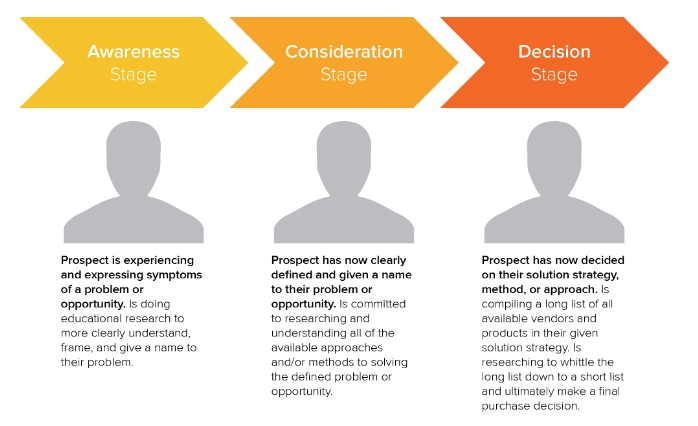
As a result, your website appears in keyword-related searches from users at different stages of the buyer journey.

The buyer journey details the different types of content that need to be created in an SEO strategy
image source: https://blog.hubspot.com/sales/what-is-the-buyers-journey

The goal is to create a website that has the ability to drive traffic, educate prospects and convert visitors to clients.

How to customize your SEO strategy and build an effective SEO campaign

The main focus of an SEO campaign is on the keywords you target and the content you publish. The largest ranking factor is being the best result to a search query. An SEO campaign builds the relevance of your page to the keyword topics and targets.

Understand your audience by researching your target keyword

Establishing search intent is crucial to understanding what it is that Google is using to rank pages highly in a search result. Keyword research is the first area that establishes the foundation of an effective SEO strategy.

What is the user truly expecting to find when they type in a search query?

Whenever you’re considering a keyword to target, the first action is to use that keyword in a search. The SERP (search engine result page) contains a lot of information that will point to what is needed to rank for the search term.

Reverse engineer the way other pages have achieved a top ranking to provide clues on how your site will outperform your competition.

Perform a SERP analysis

For every keyword search you will find the following on the SERP:

  • The level of competition that competes for the first page
  • The type of content that is being used to rank
  • How pages are optimized to perform
  • How many links are pointing to the ranking pages
  • How Google displays the search result
  • The commercial value of the search term

Establish intent

The first assessment is whether this term is a perfect fit for your company. If the pages that rank are all competitors that are offering the same product or service it confirms the relevance of the keyword to your business.

If there is a mix of results, consider a more specific search term to avoid unwanted traffic that wouldn’t be interested in your content.

Assess the competition

Using software and keyword tools becomes necessary in order to establish the authority competing pages have built. By identifying the number of links each page has pointing to it, where those links came from and whether they will benefit your site is the first indication of how realistic your keyword is to rank.

Build a list of alternative keywords

A search result can display many different features that are clues to what users are searching for when they search for your keyword. Establish commonly used phrases and keyword alternatives to build a better understanding of what the bigger picture is to the user’s true intent.

Read more on how to choose the perfect keywords for your site

Prioritize your target keywords

Keyword research will result in a large list of keywords, keyword synonyms and related search phrases. Prioritize your list in order of importance. Group your keywords based on search intent.

The result should be a keyword strategy that addresses the most important aspects of your keyword topic. This is the initial blueprint of a keyword strategy that lays the foundation for your content strategy.

Develop your Content Strategy

The approach you take on building content should be to provide as much information about your business by building a resource of information. The content you publish should answer common questions, provide insight and educate based on satisfying the intent of the keywords you target.

As your site becomes more successful in ranking for these terms, it increases the trust search engines place on your website for keyword related searches.

Map your content to match your keyword strategy

A visual representation of a keyword strategy is known as a topic cluster. Google ranks pages based on topical relevance. Connecting the ideas and concepts of your main keyword topic builds more relevance to your site and to the pages that are interlinked.

topic clusters concept to structure your content in an SEO campaign
Image source: https://www.impactbnd.com/blog/what-are-topic-clusters

The pillar pages of your site will target the most important keywords. The clustered content will target more specific searches that serve connect visitors to your business by addressing the various details surrounding your keyword topic.

Read about how to implement pillar pages

Publish content that performs

The content you publish needs to serve the user’s purpose. If there are massive guides that are published on the first page of results for your keyword, it indicates the level of detail that’s required.

The Skyscraper method is a common approach to making sure your content is 10 times better than anything that ranks.

Using this approach ensures you cover the topics and subtopics necessary to address the intent of a search.

Read about how to write SEO content that ranks highly

As a local business, publishing local SEO content is a strategy that enhances your local search appearance.

Optimize for traffic opportunities

When your page ranks at the top of a result, it ranks for a number of different keywords. People use a number of different terms in a search-even though they are searching for the same content. Part of your content strategy includes optimizing for additional terms as well as traffic opportunities that exist in Google features.

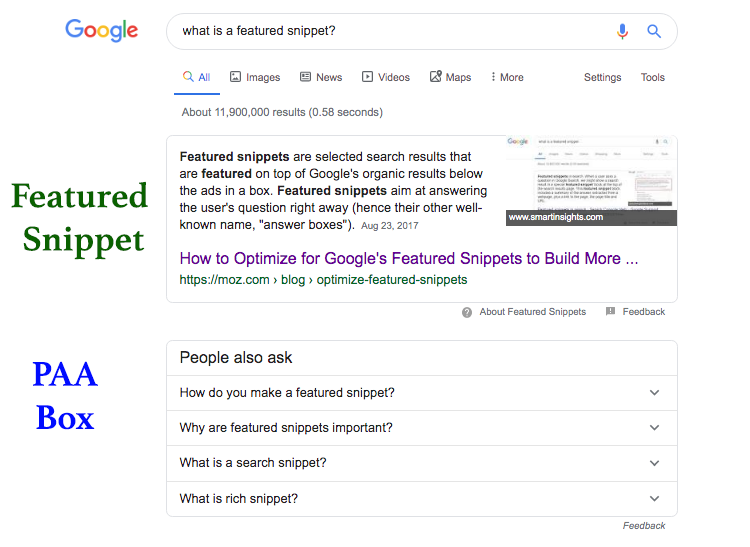
Featured snippets and PAA boxes, for example, are considered and traffic opportunities because they are features that attract a percentage of clicks on the search engine result page.

featured snippet and PAA box are traffic opportunities in your content strategy

Optimize to appear in these features for additional traffic to the same page for multiple related search terms.

Link building strategy

Link building is necessary to get votes of confidence in the quality of your content. Well-placed links to your content build credibility and authority in your niche and industry.

There are a number of different link building methods you can employ, but regardless of what you choose the strategy should appear as natural as possible.

A common tactic employed is to assess your competitor’s links. By identifying where their links come from, you can pick up on a few links for your site.

Not every link on a competing page will be good for your ranking. In fact, there may be links pointing to their site that don’t help them and are hurting their ranking potential.

Choose to pursue links from websites that have traffic and whose visitors will be genuinely interested in your content. This approach helps to identify the sites that have a strong relation to yours and also get more people on your site that has a strong possibility to become clients.

Reach out to similar niche and authority sites

Most SEO campaigns require some level of outreach. In order to get links in the most natural way, it’s common to reach out to website owners who publish similar content.

The success of your link building depends largely on the quality of your content. When you have good content worth sharing people won’t mind linking to it.

Achieve goals and benchmark your success with your SEO strategy

Every SEO campaign should end with the goal of driving traffic to your site from keyword searches that serve a role in your overall keyword strategy.

Creating content that ranks is a primary function of traffic generation. With the right keyword strategy, your website will thrive from the flow of visitors that convert to clients.

Customize your SEO campaign to achieve keyword related goals and drive traffic that converts.

Christian Carere
Christian Carere

Christian Carere is the owner and founder of Digital Ducats Inc. in Toronto and heads the SEO team at Austin Bryant Consulting in Plano, TX.  Christian has been published on publications such as Search Engine Watch, Venngage, Small Biz Daily, Grasshopper, Data Box, Socialnomics, and Mention.
old.digitalducats.com/

Written by Christian Carere · Categorized: Content strategy, Link building, On-page optimization, Web development

May 27 2020

How to Outsource Freelance Writers For SEO Content Creation at Your Website

You want your website to grow in traffic and become a brand.

You want it to win SERPs, get backlinks, and – sooner, rather than later – convert.

For that, you work hard on crafting your website. UX design, colour psychology, UTP, on-page SEO, and social proof are all very well; and you already know who can help you with that. But the most powerful weapon to help search engines see you and communicate your brand message to consumers is… yes, it’s texts. Outstanding SEO content that would not only contain tons of keywords but also engage people, translate your tone of voice, and encourage them to click and buy is what you need right here and on a regular basis.

Savvy freelance writers would solve the problem.

Benefits are many: You save time and money, you don’t spend resources on workplace organization and training of full-time employees, and you get compelling content that drives organic traffic and works on your brand reputation.

But there’s also a reverse of the coin:

Looking for freelancers, you may face irresponsible performers who miss deadlines, ignore instructions, write poor texts, or disappear once they find a client promising to pay $1 more than you. Outsource is about the interaction of expectations, collaboration, insights, and personal traits: As an SEO specialist or a business owner, you want them to be cheaper and faster, while they want to write longer and sell texts higher.

To balance the process for a win-win, learn how to outsource freelance writers for your SEO content and how to work with them like a boss.

Where to Look for SEO Freelance Writers

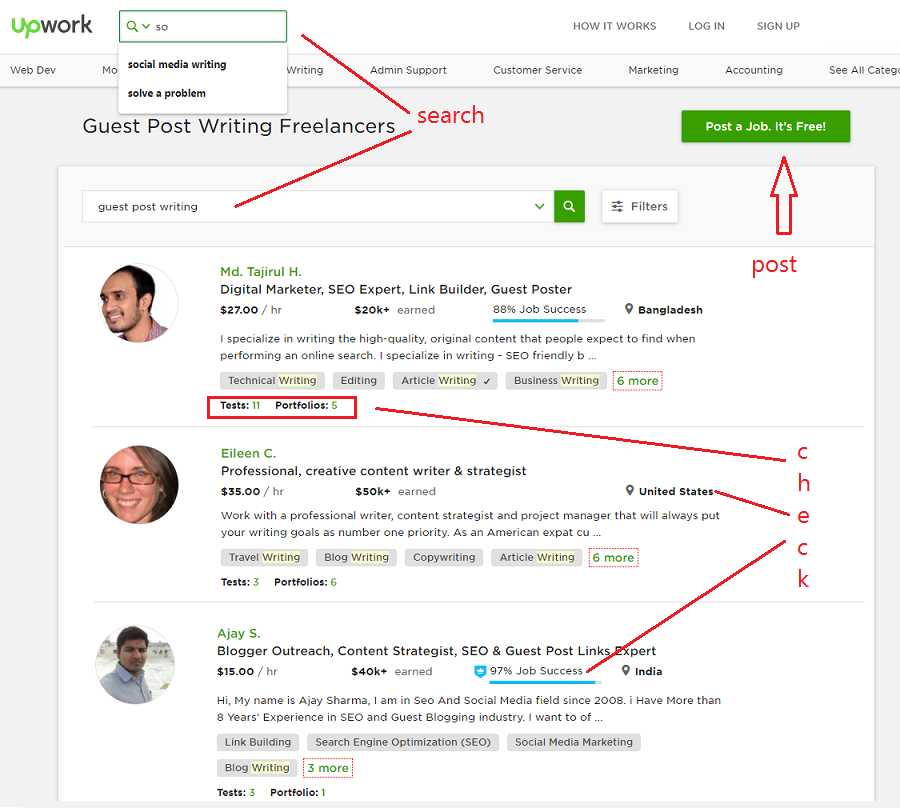
Corresponding websites are many. Freelancer, Upwork, Guru, People Per Hour, Fiverr – each of them has its own approach but the same essence: post a job description, start receiving proposals, compare candidates’ profiles as well as ratings, prices, and portfolios, and hire those fitting your expectations and business needs most.

Tip: Don’t ignore freelancers living and working outside of the US. They work just as well as native-speaking SEO writers but may cost you less, so pay attention to professional background and experience rather than the country.

Screenshot of Upwork for how to outsource freelance writers for SEO content

How to Choose an SEO Writer

Sad but true:

Most people believe they can write.

Indeed, five in ten are bloggers today, posting to Facebook or Instagram with hundreds of likes and shares, which inspires them to practice freelancing or remote work and earn extra money. Good luck to them.

But when you come to find a professional who would create compelling SEO content for your website, you have to thread your way through the tons of their profiles… And you simply get lost there.

How to save your time, nerves, and money? How to understand which writer can deliver your keywords, search intent, and business message, not just put words on paper?

Pay attention to these aspects:

  • A writer is able to meet deadlines.
  • A writer is creative, with writing style and voice, but also adaptable i.e. able to follow your instructions.
  • A writer’s texts are thoughtful and well researched.
  • A writer is flexible, able to deliver SEO content when you need it or revise it according to your feedback.
  • A writer is accurate and attentive to details: They know the principles of critical writing, format texts properly, avoid most common spelling and grammar mistakes, design content from scratch, and clearly understand what you want from them.

The questions gathered by Corey Wainwright at HubSpot will help you understand if a particular writer meets your business needs. Ask them before hiring.

How to Organize Your Work with SEO Writers

First and foremost:

Make it clear for a freelance writer what you want from them. In other words, craft guidelines right and avoid quirky mistakes while training a writer.

Details to include in your guidelines:

  • Target. Tell a writer about your small business and its target audience, as it will help to create engaging content. Specify a type of content you need from a writer – informative, entertaining, or marketing. Also, explain what message it should communicate to the audience. Include all necessary keywords and search intent for a writer to understand your target audience better.
  • Task itself. Include information on formatting and visual elements: how to format headings, lists, citations; paragraphs length; what links to include if any; what words to avoid (if you have a brand style guide, share it with your freelance writer so they could understand your tone of voice better); experts and resources to refer; a deadline.
  • Comments. Share some content assets for illustrative purposes so a writer could see what you expect. Encourage SEO writers to check a completed task for plagiarism to avoid duplications and unintentional rewrite. Give contacts of whom they could address for comments.

To save time and resources, organize your work with freelance writers effectively.

  • Work in Google Docs, as it’s among the best resources to access and manage fast.
  • Create a separate folder for your freelancer to save all texts there.
  • Write a strategic plan, and share its part about the content with a writer so they could see deadlines in advance and organize their work time properly.
  • Create a separate doc with all keywords, formatting rules, and guidelines so a writer could refer to it whenever needed.
  • Discuss payment details in advance; and, plan deadlines smart: Save some time for revision and edits.

And last but not least:

Don’t forget to control your freelance writer’s work for better efficiency. How much time do they spend on one task? How many tasks do they complete within a definite period of time? How many are still pending a revision or already expired?

Screenshot of Google Calendar for controlling your outsourced SEO writer

Google Calendar and Google Sheets are free yet compelling tools to control an SEO writer. Add tasks, change their status, leave comments for a writer to revise texts accordingly, and analyze their working efficiency with formulas.

Also, you might want to try a specific software, developed for business campaigns management. It analyzes completed tasks, grades them, regulates communication processes, generates reports, calculates expenses for every writer, and more. 

Once organized, the work with freelance writers will save you tons of time and costs for SEO services. And nerves, which is sometimes worth more than monetary rewards, isn’t it?

Are you looking for SEO expert jobs? Find out more at Jooble.

Lesley Vos
Lesley Vos

Lesley Vos is a professional copywriter and guest contributor to publications on digital marketing, SEO, and content creation. Feel free to check her work here.

bid4papers.com/

Written by Lesley Vos · Categorized: Content strategy, Web development

  • « Go to Previous Page
  • Go to page 1
  • Interim pages omitted …
  • Go to page 3
  • Go to page 4
  • Go to page 5
  • Go to page 6
  • Go to page 7
  • Go to Next Page »

Footer

Need professional SEO advice?

Give us a call to learn more about how we can help your business

Call for a consultation Request a proposal

Request a free website analysis and proposal for your company by filling out the ” Request a Proposal” form.

  • Privacy Policy
  • Terms Of Service
  • Cities we’ve served

© 2026 · Digital Ducats Inc.