• Skip to main content
  • Skip to footer

Digital Ducats Inc.

SEO Consulting & Services

  • Home
  • About
    • SEO Consulting
  • Services
    • SEO
    • Local SEO
  • Contact
    • Pricing
    • Write For Us
  • Blog
You are here: Home / Archives for Content strategy

Content strategy

Dec 27 2020

7 Effective B2B Content Marketing Strategies In 2021

The world as we know it has changed drastically in the last year. There’s been a rise in demand for online services and products in many categories, while a waning demand in others has put more pressure on companies to perform. So where are we at when it comes to providing the most effective B2B content marketing strategies for our clients? Here are a few strategies you can be sure to see a lot of in the upcoming New Year.

Infographics

Visual content has made its mark in the content marketing world and none is so effective in a B2B setting as visualized data. Creating infographics will continue to be an effective B2B content marketing strategy long into the foreseeable future.

Direct marketing strategy

The ability to retain information jumps from 10% to 60% when presenting text with images as opposed to plain text. This makes visual content an obvious choice for companies who want their potential clients to remember important details in a pitch or project proposal.

Generate quality backlinks

Apart from the advantages of using infographics as marketing material, the fact that infographics produce 172% more backlinks than regular text articles makes them a major asset to a company. With more people searching online than ever before, there is more competition vying for important keywords that generate income.

Improved search visibility

Infographics contribute to a healthy backlink profile and can provide streams of traffic once they rank as resources for other amplifiers who publish content in your industry. Journalists, writers and other publishers in your niche will look for statistics, facts and resources to use within their articles. Infographics are an excellent way to provide a resource with visualized data, which is perfect for those in need of citing a resource.

An example of one is the infographic we did on Web Design Trends By Toronto Experts
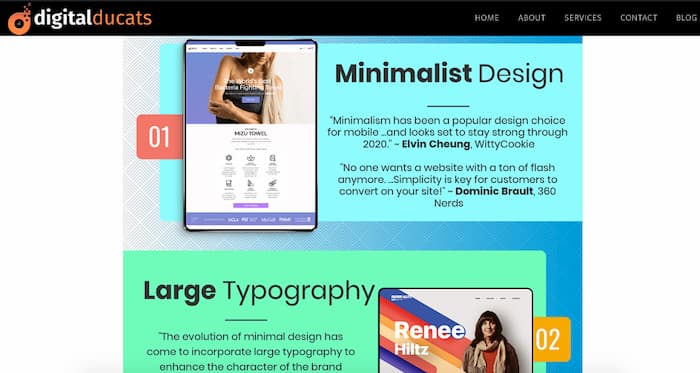
Example of an infographic as an effective B2B content marketing strategy

Video marketing

The rise of video has been an obvious success story over the last three years. YouTube has posted some incredible statistics-more notably becoming the second most popular website in the world (overtaking Facebook). What once was a marketing aid for businesses has now become a full-on business model with engagement statistics through the roof.
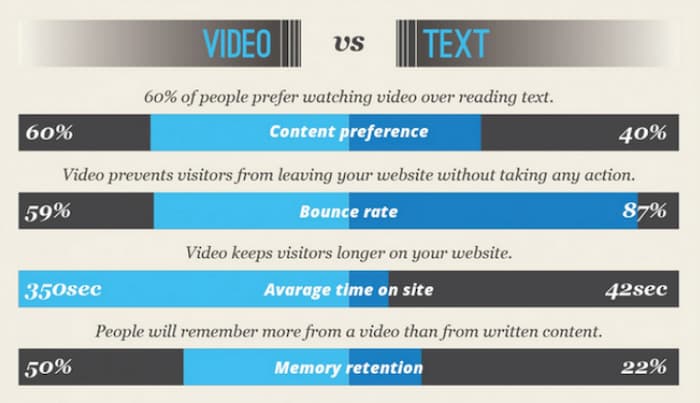
Video content marketing is a B2B strategy that works effectively
Image source

Most notable is the B2C market since YouTube is often visited for product reviews and as a way for customers to learn about a product. However, many fail to see the power of video as an effective B2B content marketing strategy despite the overwhelming evidence of how it works to generate more revenue.

Here are five facts that provide evidence of the success B2B video content marketing has and will continue to have throughout 2021.
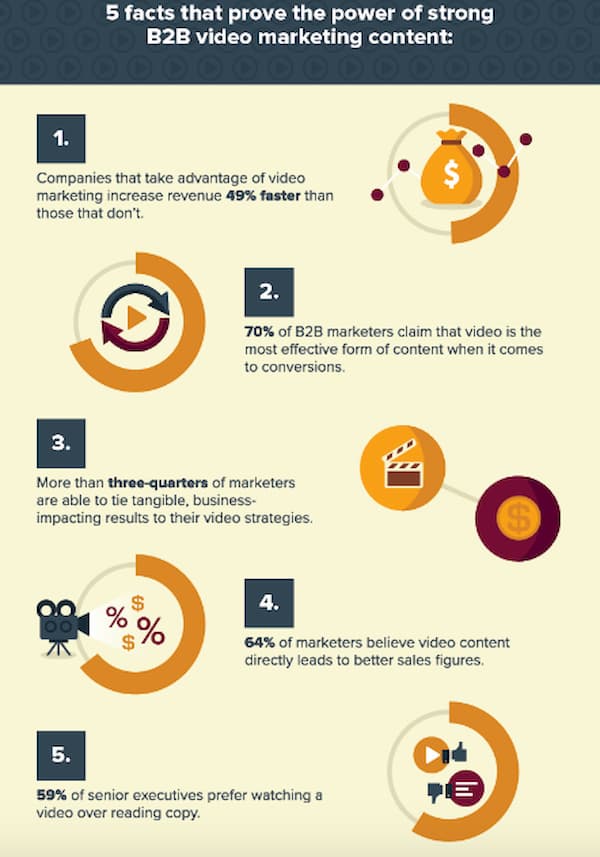
An infographic proving that video is one of the most effective B2B content marketing strategies to use in 2021
Image source

Expect to see more video infographics appear as companies make more of an effort to get more of their message across via this trending channel. There’s a fine line between maintaining a level of professionalism in terms of the video content you publish for B2B as opposed to B2C. A video infographic allows companies the benefits of the YouTube audience while maintaining a high level of professionalism.

Google feature optimization

The proof has already been laid out for us and as scary as it is, the truth is we are witnessing a decline in the number of clicks that are going to organic search.
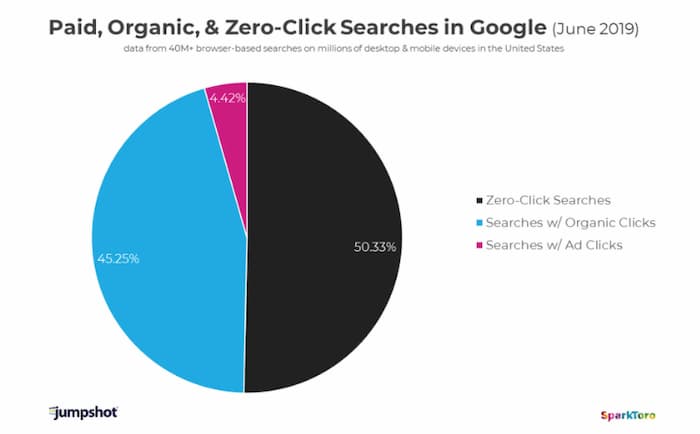
Google increasing the zero-click search phenomenon

As much as this may seem bleak and unpromising, there is a silver lining to this inevitability. Companies can optimize for Google features to counteract the trend of a declining organic click-through rate.

Featured snippets

The most obvious of all Google features is the featured snippet. This is one of the most valuable of all features because it takes the top position on the SERP. The featured snippet is considered position zero-the new first position because it absorbs the bulk of the clicks.
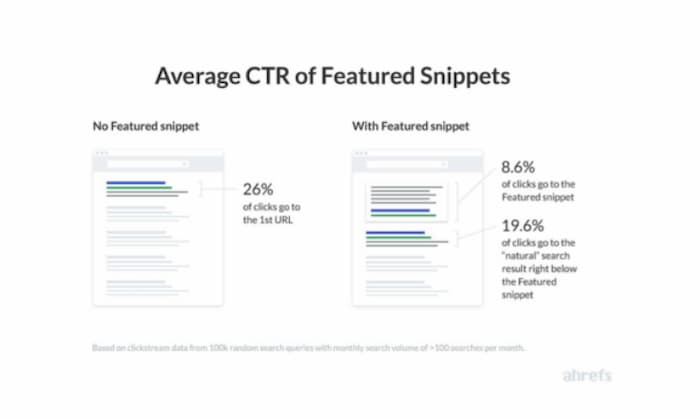
Image showing the average CTR of the featured snippet since it will be a major content marketing strategy for B2B marketing

Optimizing for position zero is an effective B2B content marketing strategy because of the value it holds in traffic as well as branding. When your company is listed at the top of the results page as an enriched search result, it brands your company as an industry leader and an expert in its field.

Companies have and will continue to review first page positions they currently hold to optimize content to appear in this position. Winning the snippet can dramatically increase the search visibility of your website and contribute to more leads and revenue.

PAA boxes

The PAA box appears for a significant portion of search results. SEMRush has discovered that when you hold a position in the PAA box, you hold a position for many different variations of that question which can send a significant amount of traffic to your website. These multiple variations of questions that rank in the box are also known as content hubs.
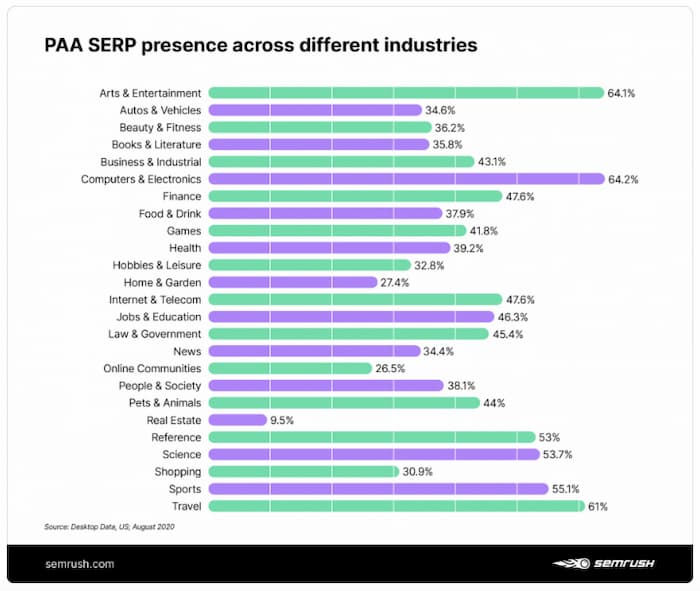
Image showing the SERP presence of the pAA box across different industries

The trend has been to optimize your content into as many snippets as possible. Post more content using tags highlights the information into recognizable chunks (or snippets) for search engines. This makes content more “snippable.”

What does “snippable” mean?

Snippable means to organize content to be recognized more easily by search engines. To make your content snippable leads to more featured results in PAA boxes, passages and featured snippets.

Google passages

If you haven’t noticed already, Google has begun to highlight the text on pages whenever you search for a specific answer to a question. This indicates the level of detail that you can expect in the upcoming era of search.

Example of Google highlighting passages to answer a question in a search query

Not only do search engines find the pages with the most suitable content, but they highlight the text within the page that directly answers the question. Google passages provide us with all the more reason to make your content snippable.

Co-marketing projects and partnerships

Expect to see more companies partnering up as a B2B content marketing strategy for specific projects and/or promotions. The advantages of working with another company have a huge impact on expanding your audience and branding your company as an expert in your industry.

Direct marketing advantages

When companies form an alliance for a specific project, they are sharing one of their most valuable resources; their network. All promotions and content will go through the regular channels such as on-site content, off-site content, social media and any email promotional material.

More companies are creating more opportunities by leveraging their partners’ audience in exchange for their own. This symbiotic relationship can be an ideal partnership for those that aren’t direct competitors but share the same industry.

Airline, hotel and car rentals are an excellent example of how companies can team up and combine their efforts to give their customers the best prices. 

Some companies aren’t anywhere close to sharing the same industry, yet cross promoting still positively affects their revenue. For example, Volvo became the official car for Legoland.

When you’re able to promote another company within your campaigns it paints a positive light on your brand. It shows you’re not afraid to help your audience find a quality product that you believe will help them in their everyday lives. This can contribute to more trust in your brand and ultimately more brand loyalty, sales and revenue.

Long term advantages

Another aspect to partnering with another company is the additional search visibility for the extended network. Keep in mind that backlinks are one of the largest ranking factors that affect search visibility. Working with another company’s network can result in a brand new audience that comes with more possibilities for link building and sharing.

The additional exposure to another network can give your company a huge advantage over your competitors. The surge in traffic can have a long lasting effect in your rankings from increased backlinks and search visibility.

Personalized email marketing

As one of the oldest, yet most effective forms of digital marketing, personalized email marketing will be a top choice as an effective B2B content marketing strategy.

A simple fact is that the ROI is unparalleled in the industry so it’s impossible to ignore (over 3800% ROI). The difference in creating campaigns that get the most conversions will be how well companies are able to segment lists and personalize content.

We’ve already entered an era where user engagement and personalization reign supreme. In order to make the most of what is already working to generate conversions, companies will need to continue to personalize content in order for it to reach its intended audience.

List automation is old news and in order to avoid the trash section of the inbox, personalized content is the only way to separate your company from the rest of the email campaigns.

On-site content development

The content you produce on-site is going to play a huge part on the search visibility of your website. The development of content that provides value to your audience is crucial for spreading awareness and nurturing leads that convert into sales.

Small businesses can expect to produce more leads regularly from publishing SEO content regularly. In fact, companies that publish 11 times a month get 3.5 times as many leads as companies that publish once or twice a month.
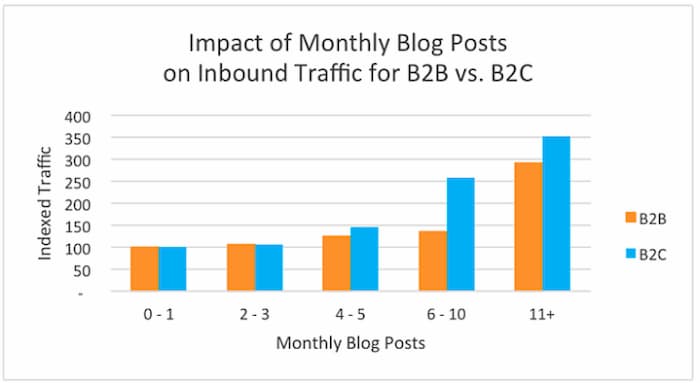
Example of how more on-site content produces more leads making it an effective B2B strategy for 2021

Information is in demand and the means for supplying the specifics to users searches has created benefits for being extremely detailed. The on-site content you produce will play a part in developing the success your website has in the search results and ultimately its performance as a lead generating asset.

Original data and research

Individual data from research, studies and surveys are among the most useful pieces of content you can develop for your company. Identifying what interests your clients is an effective way to publish content that your ideal audience wants to read about.

The more information you have about your clients, the better chances you have for engaging them on more levels. With the proper research, you can build your content strategy on topics that mean the most to your current and future customers.

Research, studies and surveys are excellent tools for developing more insight into what your clients want and how they experience they have using  your products. Find out what works and what’s not to provide a better experience with your brand.

To generate original statistics on your findings gives you a foothold in the industry for publishing original data that no other company has access or has ever published. This is an excellent means for creating newsworthy coverage resulting in earned media and the potential of earning high quality backlinks.

Establish a B2B content marketing strategy for 2021

It’s cliche, and yet it remains one of the great truisms in digital marketing: Content IS King. What’s also true is “He who fails to plan, plans to fail.” The takeaway here is that by establishing an effective B2B content marketing strategy for 2021, you will be setting your company up for success.

Use any or all of the strategies above to drive robust traffic to your website and brand your business as industry leaders. The time has come where everything you do to improve your content will pay off in dividends further down the line.

Need help with your B2B content marketing strategy? Let us give you a hand by assessing your website and proposing a game plan to rank your website to the top of the search results.

Christian Carere
Christian Carere

Christian Carere is the owner and founder of Digital Ducats Inc. in Toronto and heads the SEO team at Austin Bryant Consulting in Plano, TX.  Christian has been published on publications such as Search Engine Watch, Venngage, Small Biz Daily, Grasshopper, Data Box, Socialnomics, and Mention.

old.digitalducats.com/

Written by Christian Carere · Categorized: Content strategy, Web development

Dec 18 2020

How To Create A Marketing Funnel For An Ecommerce Website

There are always exceptions to the rule but for the most part, it takes more than one visit to a website before a visitor makes a purchase. Learn how to create a marketing funnel for an e-commerce website to drive more targeted traffic and convert more visitors into repeat customers.

The sales cycle that your typical customer experiences from start to finish can be categorized into four distinct stages; awareness, consideration, decision and advocacy.

Consider the possibility that every visitor to your website is at a different stage in the cycle and it only makes sense to publish SEO content that accounts for the various stages within the sales cycle.

What is a marketing funnel?

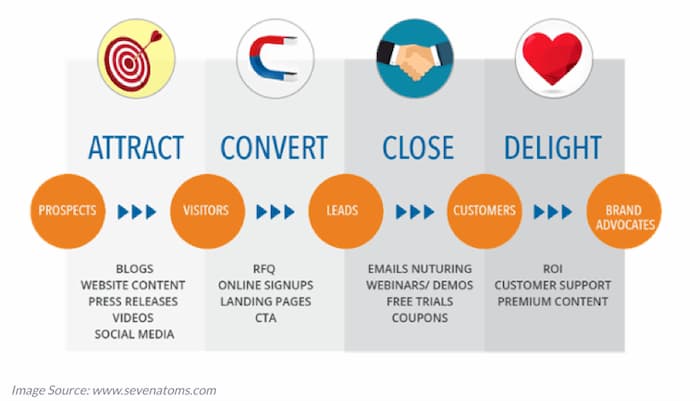
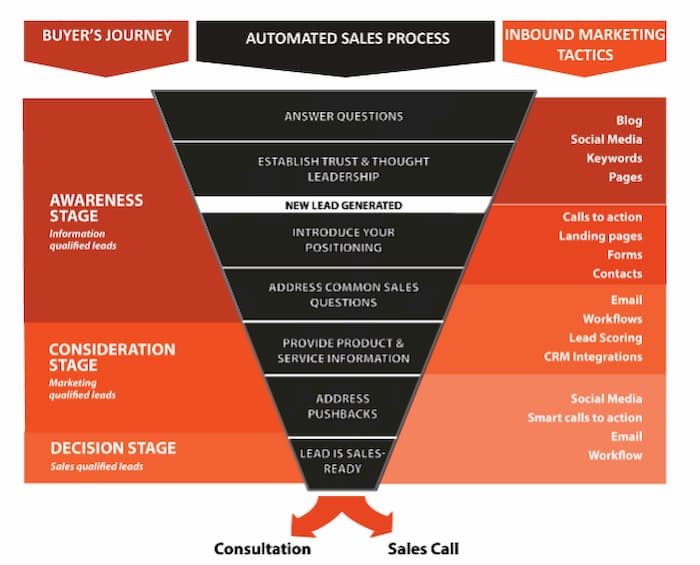
The marketing funnel refers to content that can meet a potential buyer where they are in their understanding and move them closer to making a purchase. The marketing funnel addresses a series of stages that a buyer experiences which is commonly referred to as the buyer journey. 

Sales funnel example for how to create a marketing funnel for an e-commerce website

The content at each level of the funnel caters to the visitors on your site by meeting them at whatever stage of the journey they’re in with the goal of moving them deeper into your funnel.

Imagine a doctor approaching a man with testicular cancer and going to straight to the point about the need for surgery. No explanations, just“This is what has to be done….”

via GIPHY

It’s needless to say that the need for testicular surgery would not be well received by any man who doesn’t understand what’s happening.

There needs to be a sit down about cancer, what it is, how it works and what will happen without surgery and of course, how the surgery will solve the problem.

Similarly, there are multiple stages a person goes through before making a purchase that is represented by a marketing funnel.

To get a visitor to the point they’re ready to buy, there needs to be a basic level of understanding of what they’re buying and why your company is a good choice. The concept of the buyer journey is used to gauge how well your content meets your visitors at the different levels of their understanding.

Four major stages of the buyer journey that mirrors you marketing funnel

Creating content for every possible stage allows you to move visitors along the funnel, to become closer to making a purchase and become loyal brand advocates.

Awareness stage

At this stage, the buyer isn’t aware of the specifics of the problem they have. They know they have an issue they need to be resolved but they’re not sure about what it is and how to resolve it.

An example of this could be extremely dry skin. A person may have psoriasis or eczema, but may not have ever heard of either. If your website sold skincare products to combat eczema or psoriasis, creating content that describes the symptoms would be considered content at the awareness level.

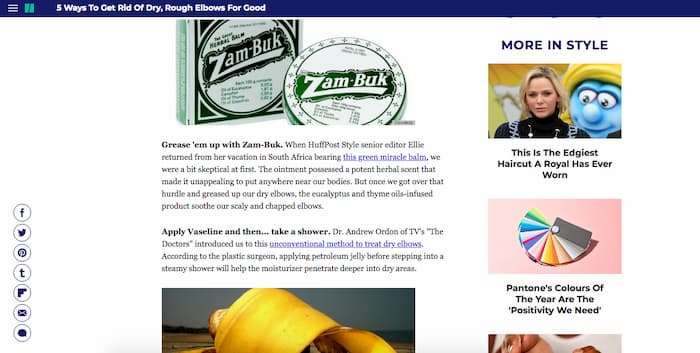
Here’s an article from the Huffington post that ranks for dry skin on elbows. There’s no doubt that the companies in this article needed to pay for placement in return for the thousands of clicks to their website.

Example of ranking for symptoms creates awareness of your brand and product

Content at the awareness level educates your audience about the basic details of their problem and how your product is used to overcome it. At the awareness level, your content would be optimized for symptoms that your product solves like dry skin for a skincare company.

The volume of searches for keywords at the awareness level is the highest of all stages in the buyer journey. These types of keywords are considered top-of-the-funnel keywords that build awareness of your product and brand but aren’t typically “high converting” search terms. The more people you can reach with your content, the more potential clients you drive to your website.

Consideration stage

At this phase of the buyer journey, visitors are aware of their problem and may also be aware of how to fix it, however, they are not ready to buy. At this stage, they are still in research mode and will be looking to compare options to find the best possible solution at the best price. 

At the consideration stage, you would publish content that shows your visitors why your product is effective and superior to other options. This moves buyers forward to the final stage in the funnel by convincing them that you’re trustworthy enough to make a purchase.

Content at the consideration stage includes case studies, visual content, comparative analysis, original research and statistics, etc.

Content that arms your audience with the information needed to make an educated purchase decision builds trust in your brand. Rather than being too “salesy” or “pushy” about how great your product is, it’s considered best practice to create content that educates and demonstrates your expertise in your field.

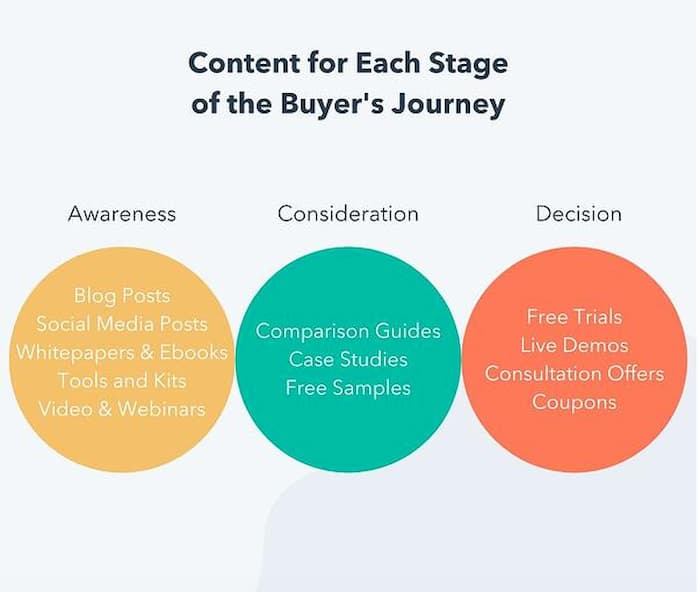
Examples of types of content to use at each stage of the buyer journey.

Case studies

There’s nothing more convincing than a real live case study of the success you’ve had with existing clients. This type of content allows visitors to relate to someone with similar problems and see how your company resolved those issues with your business solutions.

Case studies can also be a form of storytelling, which is a powerful method of branding. People tend to remember stories more than statistics and numbers. Create relatable stories infused with real statistics and results to instill confidence and trust in purchasing with your company.

Original research

This is one of the best forms of advertising when it comes to creating an online presence and moving visitors deeper into your marketing funnel. Original research in your industry sets your company apart from the masses. It gives you the edge for creating new content with statistics and facts that no other company can compete with since they’re statistics that are generated from your research.

A lot of good things happen when you’re able to use original research to your advantage. The first is that original statistics attract backlinks. When you have statistics that no other company has, writers and publishers, tend to link to the source of that stats-and that happens to be your website. This pushes your website up in rank and authority.

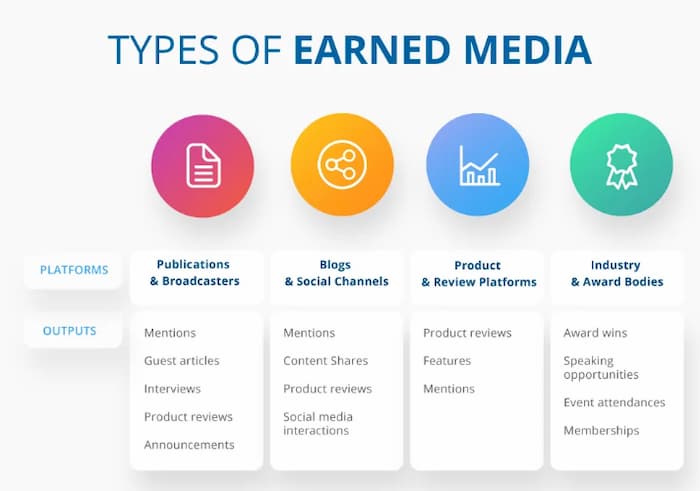
In addition to being cited as a resource by those in your industry, you also are eligible for what is called earned media. That is, giving journalists and reporters something to write about that gets your company into some of the bigger publications and ultimately in front of thousands of readers.

Earned media is a powerful way to create brand awareness and assert your company as an authority and industry leader.

Types of earned media that your company can pursue to improve the authority your brand has in your industry

Decision stage

The decision stage is where your buyer is ready to make a purchase. They have established what they need and who the top choices are and need only the final push to make the purchase. Publishing content at this stage involves offering discounts, coupons and promotions to entice your visitors to make a decision.

Your product pages and services pages are where the conversions from visitors to clients are made. It’s necessary to have a page that inspires confidence in your product or service and that’s easy to navigate, making the purchase as easy as possible.

Loyalty and advocacy stage

This stage of the buyer journey can be the most valuable to your business. Consider the amount of time and resources to educate, convince and convert just one new client. Who better to market to than existing clients who have already purchased with you?! These are your most valuable assets to your business.

If they’ve already purchased with your company, there’s a very good chance they will purchase from you again since you’ve already gained their trust.

Apart from future sales, you want to keep your clients extremely happy, so that they’re able to turn around and tell other people how great your company is. Referrals are the highest form of marketing, and what better way to grow than to have happy clients tell other people how you’ve helped them.

Content at the advocacy stage includes sending coupons, VIP promotions, personalized offers and anything that expresses your gratitude for their loyalty.

Increase the lifetime buyer value for each of your clients by giving them the best customer service possible. The more you give, the more you get back.

Conversion rate optimization

To get the most out of your product and service pages, you need to measure and track the behaviour of your visitors to see what they do on your page. If there are specific patterns that are leading your visitor exit without converting, you will need to change those aspects of your page that are influencing that action.

Improving the conversion rate on your pages can be done using many different tools, however, Google Analytics can provide the user engagement statistics you need to improve the conversions on your page. 

Track metrics such as bounce rate, time spent on pages, average pages per session, exit page and the user flow to determine the weaker points of your website and where you can improve.

Bounce rate

The bounce rate is the total number of users that back out of a page without interacting with anything else. This statistic can be useful for determining whether the content on your page is a match to intent, whether the content is engaging or whether you have a technical deficiency that’s causing visitors to leave.

For example, if your page speed is too slow to hold the attention of users, this results in high bounce rates. Lightning-quick pages that load under 2 seconds keep more visitors on your page and lead to higher user engagement.

Keep in mind that the bounce rate can be misleading if users are going to a page and getting exactly what they need from your website. For instance, if people are going to your site to get the address or phone number, they may bounce right off as soon as they get what they need.

Identify the cause of a high bounce rate to determine whether you need to improve the quality of your page. In many cases, improving the bounce rate will lead to more time spent on your site, higher click-through rates, more user engagement and ultimately higher conversion rates.

The improvement in user engagement statistics is considered positive ranking signals-especially on the first page of results, which can lead to higher SERP positions.

Click-through rates

The click-through rate is an important metric to analyze in your content at the awareness and consideration stages of the buyer journey. You want to make sure you’re moving people along the marketing funnel and that they are engaging in your content by clicking through to related articles.

If users are not clicking further through your website, it’s important to understand what they’re doing and what your content is lacking to create low CTRs. 

Adding internal links to related content is the simplest solution to moving users along to more pages within your website.

A more difficult task is to re-evaluate the content that visitors are bouncing from to improve the copy, change the topic or remove the page altogether if it’s not able to achieve its purpose.

Time spent on-site

The average time spent on a website is an indication of how many visitors are interacting with your content. People must be getting through the content you’ve published to know whether they’re reading it through or bailing on it after a few paragraphs.

If there’s a 3000-word article that people are landing on, and they’re leaving after 45 seconds-it’s an indication that this piece of content is not doing its job. It would take at least 5 minutes to get through long-form content so look closer at where the disconnect is between you’re your content and your audience.

If people are not spending enough time, adding videos, images or more multimedia are alternative options to increase dwell time. 

Conversion rates

To track goals, you need to set them up in Google Analytics. Every page on your site should have the desired action you want your visitors to take. Create goals on your website to effectively track where you’re losing visitors and where you’re succeeding in moving them along the buyer’s journey.

Create conversion goals at the awareness and consideration stages

If you’re creating content at the awareness level, the goal is to click through the links on your page that take them through to content at the next stages. Create tracking links that indicate whether the visitors clicked on the internal links you’ve provided.

If you’re not getting the click you can test whether it’s the content, by providing different options or if it’s the placement, by presenting the option to click on internal pages a different way.

Conversion goals at this stage of the marketing funnel will help to identify the content that people are most engaged in. This can serve as a way to build more content around the successful topic ideas that are getting the most clicks.

Conversions at the decision stage

Improving your conversions at the decision stage has a direct impact on your revenue. Make sure you’re taking advantage of all the potential ways to track what your visitors are doing on your page.

There are heat maps and split testing software that can help with the details.

With heat maps, you can see how far down the user scrolled on your pages as well as what buttons were clicked the most.

Split testing software can help you get into the finer details of things like the colour of your buttons. For example, choosing different colours of buttons can lead to small increases in conversion rates. 

Track every option that’s available to track within your content to create the most understanding of what your visitors are doing and most importantly, what they like and don’t like. The data you generate gives you the means to improve the user experience your website offers and positively influence the actions visitors take on your website.

Map out the sales funnel to your e-commerce website

One of the most important aspects of developing your website is planning the site structure ahead of time and documenting how you intend to drive traffic. This means incorporating SEO at the earliest stages of your website’s development.

Whether you’re just starting or your website has been up for years, go through your content starting at the conversion pages first. Work your way up by layering your content from the bottom of the marketing funnel to the top. This strategy provides a way to convert the traffic you’re already getting and slowly increase the volume as you go.

Establish a basic marketing funnel and track your results. As your website continues to generate data, you’ll be able to make the changes necessary to constantly improve your traffic and conversions which leads to more sales, revenue and a long list of happy clients.

DIgital Ducats Inc. specializes in optimizing websites for increased conversions and sales. Learn more about our custom-fit SEO services and how we can optimize your website to generate more revenue for your business.

Christian Carere
Christian Carere

Christian Carere is the owner and founder of Digital Ducats Inc. in Toronto and heads the SEO team at Austin Bryant Consulting in Plano, TX.  Christian has been published on publications such as Search Engine Watch, Venngage, Small Biz Daily, Grasshopper, Data Box, Socialnomics, and Mention.
old.digitalducats.com/

Written by Christian Carere · Categorized: Content strategy, Web development

Dec 16 2020

How To Find the True Search Intent Of A Keyword

SEOs talk a lot about search intent as a major factor for achieving search visibility. The significance of search intent is that search engines want users to be able to find what they’re looking for with the least amount of effort. If you know what a user is looking for, you can publish the content that can be displayed as the best result to a search query. This article outlines how to find the true search intent of a keyword to drive more targeted traffic from higher-ranking positions on the SERP.

This function of SEO is critical because if you miss the mark identifying the intent, no matter how good your content is, no matter how many backlinks your page has, you will NEVER maintain a position on the first page of Google. This makes identifying and satisfying search intent a fundamental aspect of developing keyword and content strategies.

Basic forms of intent

At the highest level, you can break down search intent into three major areas; informational, navigational and transactional. Each of these categories represents a basic motivation for initiating a search.

Informational

As it turns out, informational searches account for about 80% of the total searches made on search engines. Providing useful information on your website can accelerate the growth of traffic being driven to the top level of your marketing funnel. 

Marketing funnel concept helps categorize search intent

By making visitors more aware of their problems and the solutions that you offer, you brand your company as an expert in your niche. Publishing SEO content regularly facilitates your ability to reach a larger group of people searching for information about the problems your product or service solves.

Navigational searches

These types of searches are when users already know what they’re looking for and are looking for a way to get there. There are millions of searches for the term “Facebook login” every single day made by people who want to get to Facebook.

Although navigational searches can drum up a significant number of searches, they are typically not keywords you would use in your SEO strategy.

Transactional searches

Users who want to make a purchase will use transactional keywords that represent buyer intent. Transactional searches represent users searching for a way to buy a product that they have already researched and are ready to purchase.

One way to research transactional keywords is to use Google Keyword Planner. Here you can find the level of competition, the average price paid for a click from that keyword (cost per click or CPC) and the approximate volume of the keyword being searched.

Determine general intent with a SERP Analysis

The first step to identifying search intent is to analyze the first page of search results. You can tell a lot from the features that a search engine displays in response to a query.

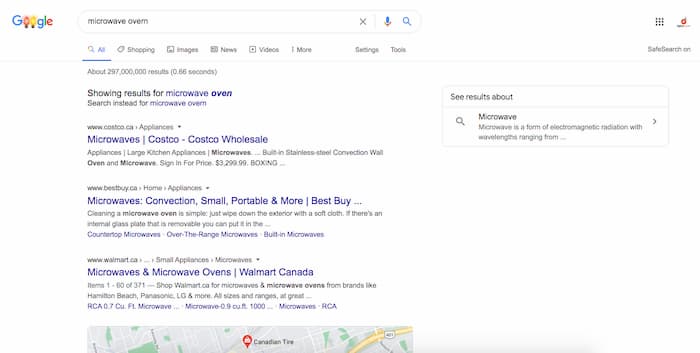
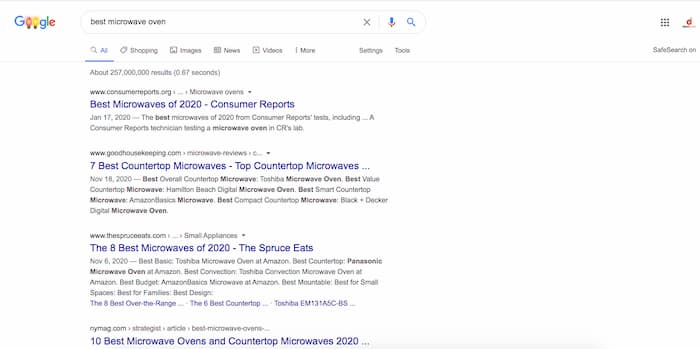
For example, if you were to search the keyword microwave oven you would find a slightly mixed bag of results. Users who search this term could be at the buying stage or they could be in the research stage.

The first three results are category pages for big-box stores selling microwaves.

How to identify the true intent of a keyword by analyzing the organic search results

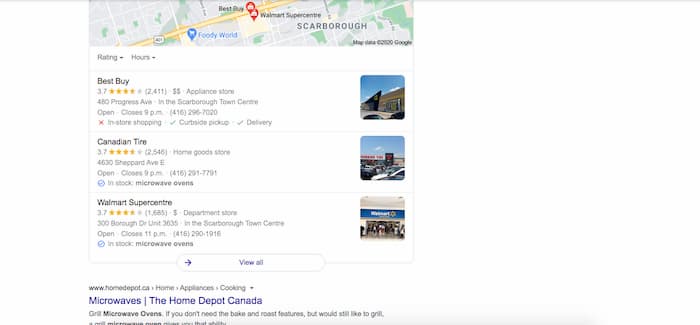
Further down we have a local pack for people who want to visit a store that carries microwaves.

IMage of a local pack indicating the existence of local intent

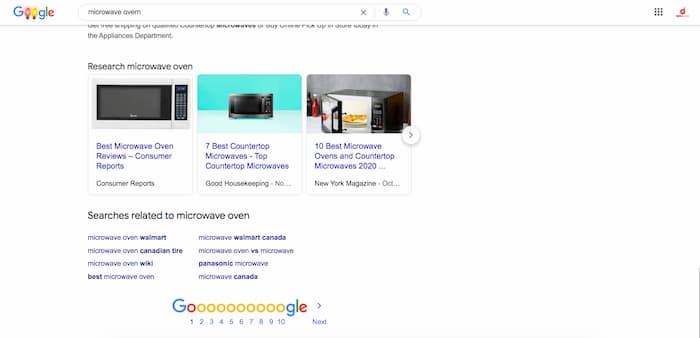
Lastly, we have a section Google titles “Research microwave oven” and displays articles that compare brands and models.

A research section in the search results shows tinformational intent

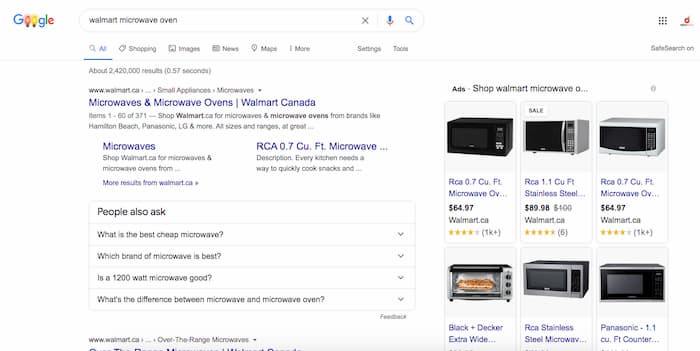
If we were to change the search to Walmart microwave oven, we immediately see the intent of the search switch to mainly transactional. Evidence of this is the Google Ads that immediately pop up above the fold.

Branded search for walmart microwave oven is considered to have transactional search intent

The organic results are primarily Walmart pages because this is a branded search. It’s clear that the user is in the purchase stage and is ready to buy a microwave, making this a transactional search. 

If we type in the keyword best microwave, you can once again see how the intent shifts to an informational search. The articles displayed on the top 10 are all targeting the consideration stage of the marketing funnel. 

Example of informational search intent which is usually the case whenever "best" is in front of a keyword

This is an informational search because users want to research and compare options. Evidence of this is in the fact that the search results are mainly blog posts that compare different microwaves.

The lack of Google Ads is also another indication that the main intent of the user is to gather information and they’re not quite ready to buy yet.

Identify the content type that ranks best

To rank highly for informational search terms, you have to pinpoint the underlying motivation of the user and address their intent better than any other page. The titles of the top 10 organic results are a good indication of the type of content that has the best chances of ranking.

The term best microwaves clue us in to the fact that the user is looking for a) a buyer’s guide on how to choose the best microwave or b) The best features that microwaves offer. Every search listing in the top ten for this term is either a listicle (numbered list of “X of the best microwaves” or a buyers guide.

To publish content that has the best chance at ranking, you would publish an article written in this form.

Account for complete topic coverage

To publish a page that outperforms the competition you need to be able to provide the user with what they need to end their search. The proof is in the pudding and by going through the top three results, you can get an idea of the level of depth and topic coverage required to satisfy the intent.

Example of analyzing the top search result to cover all topics

If you scan through Consumer Reports, the number one search result, they’ve grouped microwaves into two major categories; countertop and over the range.

They compare five microwaves in each category and provide links to buy the microwaves from multiple vendors.

To compete with this page in terms of content, your page would need to cover each of those aspects and provide some sort of value-added aspect. 

An example could be by adding more detailed images, a video that summarizes the content or more products in your comparison.

Create audience-centric content

Search engine optimization is constantly including more ways to measure audience-centric content. User engagement statistics enable search engines to gauge how well a piece of content can hold the attention of visitors and ultimately satisfy the underlying intent of a search.

Identify search intent during part of the keyword research process to optimize to be found by the most accurate audience. Understanding what a user is looking for enables you to publish content that hits the mark and ranks highly in the search results.

Anything less and you can be sure any first page appearances will be short-lived. Content that nails intent creates long-term value and high search visibility that drive streams of highly targeted traffic.

Christian Carere
Christian Carere

Christian Carere is the owner and founder of Digital Ducats Inc. in Toronto and heads the SEO team at Austin Bryant Consulting in Plano, TX.  Christian has been published on publications such as Search Engine Watch, Venngage, Small Biz Daily, Grasshopper, Data Box, Socialnomics, and Mention.
old.digitalducats.com/

Written by Christian Carere · Categorized: Content strategy, keyword research, Web development

Dec 09 2020

The Difference Between SEO and Content Marketing

There are a number of different strategies within the digital marketing spectrum. Most of which are their own unique and distinct entities that can easily be differentiated between one another. SEO and content marketing are unique in that sense.

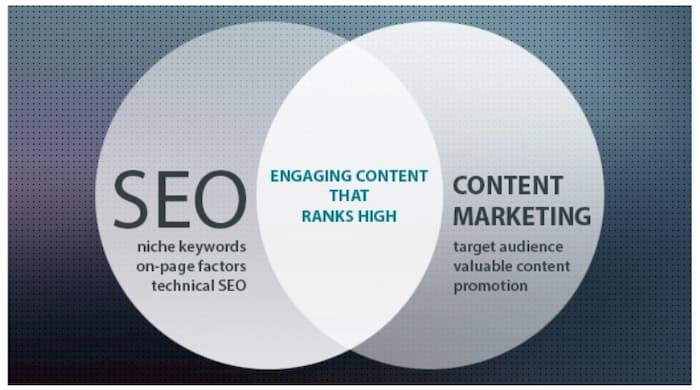
A PPC campaign is different from a website design. Social media marketing is completely different from email marketing. When it comes to SEO and content marketing, however, the lines are more blurred because they work together pefectly.

The overlap between SEO and content marketing
Image source: Lyfe Marketing

People get confused about the two strategies since quite a large part of each strategy overlaps with the other. This article should straighten out any misconceptions you may have about the two and give you a better understanding of how they are used together to maximize results.

What is SEO?

Search engine optimization services incorporate a variety of tactics to improve the likelihood of content being found by users and search engines. SEO uses keyword research, keyword targeting, keyword mapping, on-page optimization, off-page optimization, content creation and technical SEO elements to improve the overall optimization of a page or piece of content.

SEO has a narrow focus

SEO has a more specific focus because it is primarily keyword-based. It’s true; search engines have evolved from ranking web pages solely by keywords, however, keyword targeting is necessary to make sure your page gets in front of the right audience. The result is that an optimized page will not only rank for one keyword, but a series of keyword variations as well.

Search engine optimization is an analytical process for not only identifying the audience, but for finding out what they type to search for topics and what is required to appear at the top of the search results.

SEO is technical

SEO involves incremental changes and additions that continuously move your page closer to the top of the searches. SEO goes beyond the content to improve on technical aspects of performance that search engines credit as positive ranking signals.

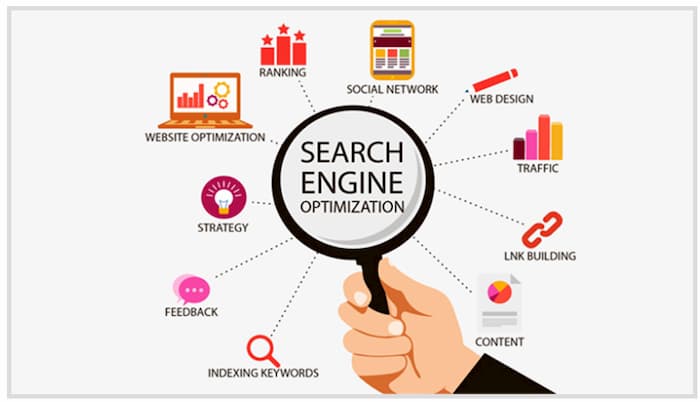
Technical issues that affect indexing are a major component to SEO. Improving page speed is also a factor that affects the ranking and engagement statistics of a web page. Maintaining longer dwell times, higher click-through rates and increasing the average number of pages per session are all calculated efforts to improve the quality of content on a website.

benefits of SEO
Image source

So how does this tie in to content marketing? First let’s define what content marketing means to a business.

What is content marketing?

Content marketing means identifying an audience and creating content to educate and/or entertain based on their interests. Content is typically created for a broader audience that appeals to all stages of the buyer journey.

Content marketing can be for social media, increasing conversions on a website or creating awareness by appearing on popular websites. Content marketing can come in the form of research, storytelling, articles, images, videos, slide shows and literally any form of multimedia.

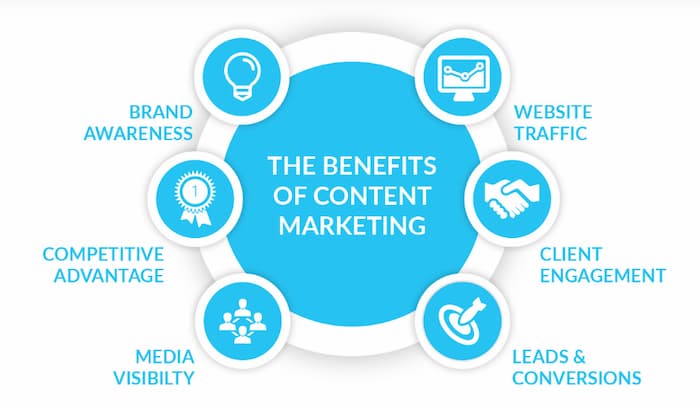
benefits of content marketing
Image source

What’s the difference between SEO and content marketing?

The difference between SEO and content marketing lies in the scope of which each has in terms of an audience. SEO has a narrower focus that is keyword based. SEO focuses on the intent of the audience and identifies the technical requirements to reach that audience.

Content marketing has a broad focus that can apply to an audience with multiple intents. There are no technical requirements to create the content necessary to serve its purpose.

How content marketing and SEO overlap

Combining SEO and content marketing is where we see powerful results. 

First of all, SEO can’t exist without content. 

SEO optimizes content to be found by a specific group of searchers. Without any content to optimize, there is no SEO.

Content marketing becomes a powerful method of marketing when it’s optimized to appear in front of a specific audience. By identifying what people are looking for in searches, you can create content that satisfies their intent.

Good content brings brand recognition, brand loyalty and more confidence in making a purchase from your company. 

By identifying the major keywords being used to search for your products and the problems and solutions related to using your product or service you can reach a specific group that is more likely to convert from visitors to new clients.

SEO establishes the parameters for what content is needed to generate more traffic to your website. Content marketing supplies those requirements.

Create content that’s in high demand

At the end of the day, you want to create content that people are actively looking for on Google. The process that’s proven to be the most effective for driving targeted traffic is simple:

  • Establish the true intent of keywords that represent high business value.
  • Create content that satisfies the intent of the search.
  • Optimize content to appear for your keyword topic.
  • Improve ranking and increase traffic to your pages by building links and promoting on social media and other content distribution channels.

This four-step process works to create new streams of high converting traffic. This system requires targeted SEO content writing with consistent production to create long-lasting results in the search engines. The result is increased revenue from more traffic and new clients.

Speak to a professional today and learn how to drive traffic with an SEO content strategy custom-fit to your website. For more details visit our SEO services page.

Christian Carere
Christian Carere

Christian Carere is the owner and founder of Digital Ducats Inc. in Toronto and heads the SEO team at Austin Bryant Consulting in Plano, TX.  Christian has been published on publications such as Search Engine Watch, Venngage, Small Biz Daily, Grasshopper, Data Box, Socialnomics, and Mention.
old.digitalducats.com/

Written by Christian Carere · Categorized: Content strategy, SEO strategy, Web development

Nov 23 2020

What Is Search Intent Optimization In SEO?

Search intent (aka user intent) is the underlying motivation a user has when searching a specific query. Satisfying search intent is Google’s top priority when it displays the organic results and SERP features. Search intent optimization is the process of identifying what exactly users are looking for and optimizing your page with the ability to satisfy search intent.

Why is search intent important?

The importance of identifying search intent, or user intent, is to be able to provide the content and information required to satisfy the user. In order to be the final destination of a search, your website must satisfy the user’s intent. If we miss the mark, visitors will leave your website in search of another that can satisfy search intent.

When you hit the mark on search intent, users spend time on your site. The concept is simple and yet it is of the utmost importance to make sure you understand the intent a keyword implies before creating content to target that word or phrase.

Generally speaking, search intent falls into three broad categories; informational, transactional and navigational.

Informational intent

This type of search is where the user is looking for explanations, answers to problems and is basically researching something specific. Over 80% of searches are informational according to a Penn State research study. The type of content that ranks for informational searches are therefore blog posts, articles, guides, videos, best-of lists, etc.

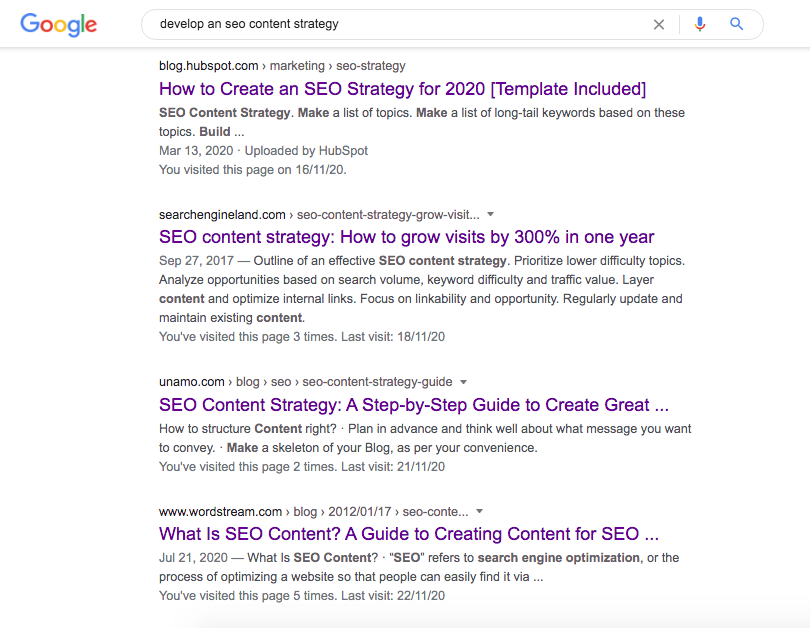
If you were searching for the phrase develop an SEO content strategy, the search results display websites that teach a template approach on how to develop an seo content strategy.

Transactional intent

A user with transactional intent is looking to make a purchase. These types of searches are usually made with buyer keywords such as “where to buy X” or “what stores sell Y”

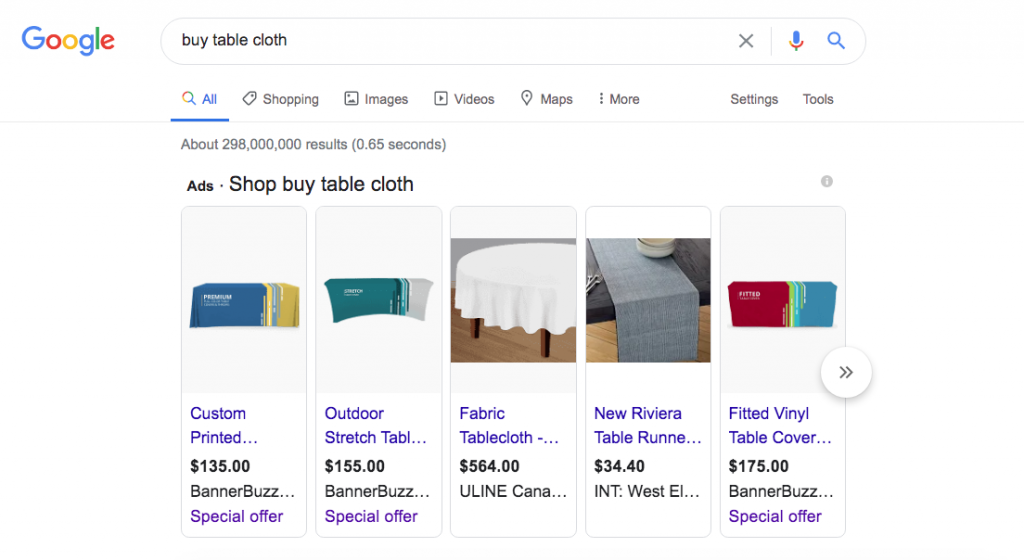
Transactional searches also include brand names and product names. The first clue to spotting a transactional search is when you see a lot of ads near the top of the page. The websites listed in the organic search results will also have products listed and a means for purchasing them.

Example of transactional intent when identifying your search intent optimization

Navigational intent

Many people use search engines to find websites or pages that they want to go to specifically. For instance, millions of users type in Facebook login to get to their Facebook page.

Ranking for terms like this have little to no value because the user already knows where they want to go. In most cases the result they’re looking for is within the top one or two results and they’ll click without scanning the rest of the page.

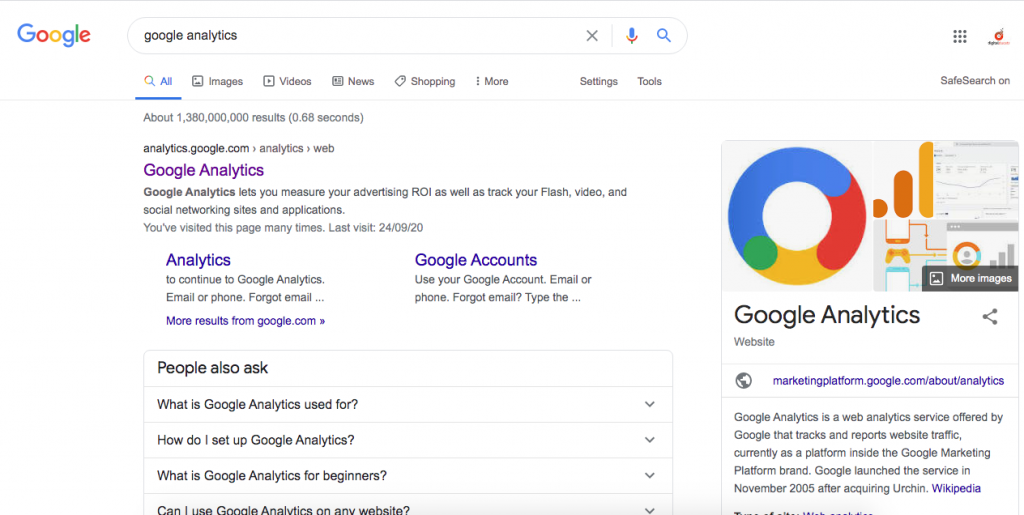
For example, if I want to go to Google Analytics a simple search would give me the URL. Despite the millions of searches being made for this keyword, the other sites ranking below, I would most likely have an extremely low click-through because the answer to the user’s intent is the first result on the page.

Example of navigational intent when attempting search intent optimization

How to discover search intent

When you’re attempting to rank for specific keywords, you need to know how to discover search intent. You could say that every search engine’s goal is to be as accurate as possible in attempting to satisfy the user’s intent. Therefore, to rank at the top, your page needs to match what the search engine is showing you is the most important content to satisfying user intent.

There is no other method better than extracting clues from the search engine result page itself. If you want to isolate the true intent of a search, you need to see what type of content is ranking in the top ten positions.

Categorize the general user intent

Based on the three categories described above, come to a conclusion on what type of content is a match to user intent. Does the user have transactional, informational or navigational intent? Does your page cover the same content and offer similar solutions to the top-ranking pages?

Scan the top pages for topic coverage

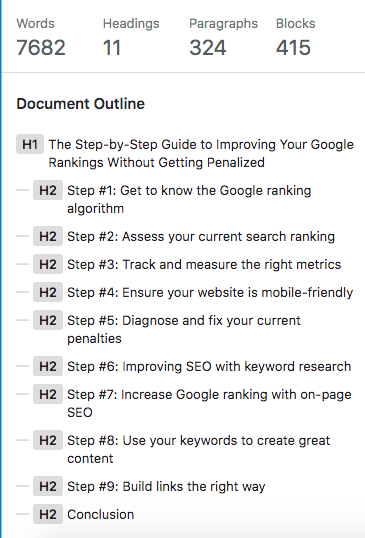
Go through the top-ranking pages to see how they’ve satisfied intent. If you scan the subheadings you can get a general idea of the topics they’ve covered to ensure that you haven’t missed anything.

Example of how to analyze a competitors page using the WordPress HTML editors summary button.
An example of an article that ranks for improve Google rankings

Compare top-ranking pages using the WordPress HTML summary as a way to highlight important topics that are being covered on a competitor’s page.

The keywords that the top 10 pages are ranking for are clues to the content they’ve included on their pages. Use the keywords that your page is not optimized to rank for as a guide on how to include the same and better content that the top pages have published.

Scan the SERP for additional clues

Do a sweep of the first page of results for the SERP features that are being displayed. You can get a few good clues that hint at the intent of a search by interpreting what Google is displaying.

Position zero

The first result on a page is often a featured snippet. This immediately shows a user the most convenient result with an answer without clicking further. Use this feature to determine what Google is displaying as the most important information associated with the search term.

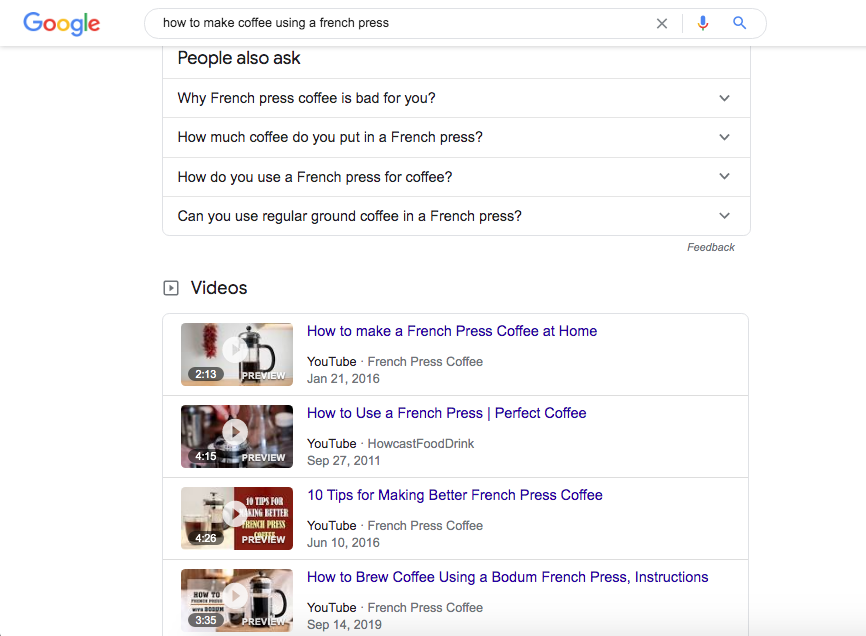
PAA boxes

For example, the PAA box will often appear with a bunch of related questions. This is Google’s way of telling you that these questions are relevant to the keyword research. They are questions that people also ask!

Add the questions you find in the PAA box and publish your own answers to improve your page’s ability to answer search intent. It will also make your page eligible to appear in this feature.

Videos

Videos are important to note when they are placed higher up on the page. The higher up on the SERP that results appear, the more relevant they are to the keyword search. 

Videos will often appear as an answer to queries for how to do something or for product reviews.

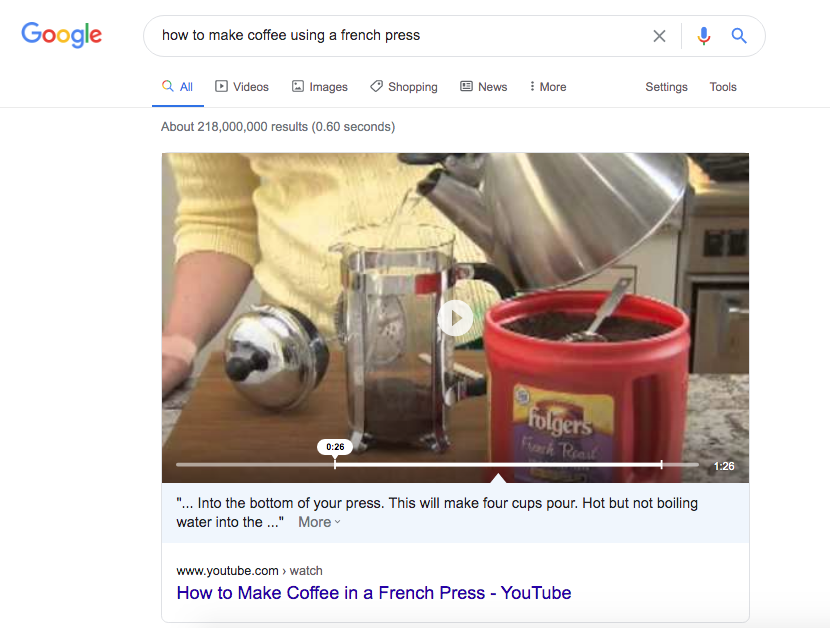
Placing a video on your page can create more relevance to the query. In the above example, a video appears in the featured snippet, followed by the PAA box followed by a stack of video results. It should be obvious Google and users find video the most helpful and the strongest form of content to answer intent.

If you publish a video on YouTube, you may even have a chance of appearing in the video feature as well as strengthen your page to appear in the organic results.

Local pack

When you see the local pack appear, it becomes clear that your keyword indicates local intent. This could change how you optimize your content in order to reflect that your business serves a specific local area.

Google Ads

When you see a lot of Google Ads appear on the SERP, there is a strong transactional intent behind the search query. Users may be looking for a product or service to buy because they’re at the decision stage of the buyer journey. In situations like this optimizing a landing page that gives them the option to make a purchase would be a way to satisfy search intent.

Publish high-quality content

The skyscraper method is not a new concept when it comes to outperforming the competition. Humans will always have the need to conquer and outperform the standard-no matter what situation. The same holds true for SEO and website development.

In order to be the best answer to a search query, you need to produce the best content that satisfies the intent of the query. It’s been established and a well-known fact that Google is choosing to display websites that are typically more in-depth.

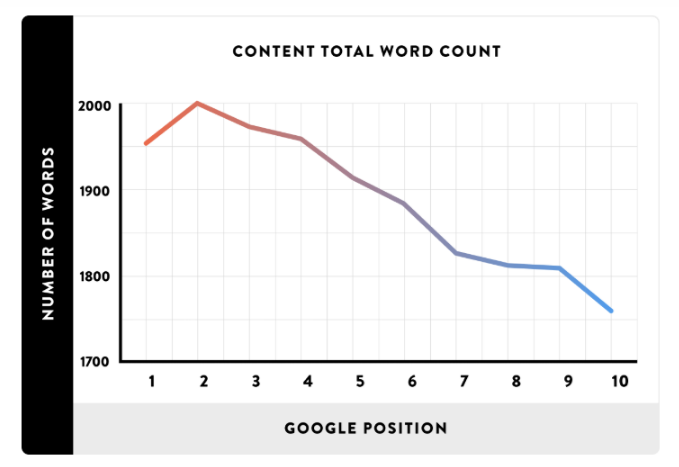
Word count is not a ranking factor, but it is an indication of the level of detail or the breadth of the topic your page needs to cover. The average length of a page that ranks first on Google is over 2000 words.

Average word count of the top 10 ranking pages

Knowing this, it seems only logical that you would need to plan out a page that exceeds the standard in the level of depth and coverage.

Interested in other ways to drive traffic? Read about the 33 Ways To Drive More Traffic To Your Website

Address user intent for better rankings

Despite the 200 plus ranking factors that search engines use to assess the ranking ability of your website, none are as important as being able to satisfy search intent. The truth is, if your page doesn’t have what users want, it will never rank on the first page of Google.

As search engines evolve, so does search engine optimization. The general trend has been in favour of providing more accurate and higher quality search results. This being true, search intent optimization has become the most important aspect of achieving a top ranking.

Related reading: Google’s BERT Update: Should You Be Worried?

Christian Carere
Christian Carere

Christian Carere is the owner and founder of Digital Ducats Inc. in Toronto and heads the SEO team at Austin Bryant Consulting in Plano, TX.  Christian has been published on publications such as Search Engine Watch, Venngage, Small Biz Daily, Grasshopper, Data Box, Socialnomics, and Mention.
old.digitalducats.com/

Written by Christian Carere · Categorized: Content strategy

  • « Go to Previous Page
  • Go to page 1
  • Go to page 2
  • Go to page 3
  • Go to page 4
  • Go to page 5
  • Go to page 6
  • Go to page 7
  • Go to Next Page »

Footer

Need professional SEO advice?

Give us a call to learn more about how we can help your business

Call for a consultation Request a proposal

Request a free website analysis and proposal for your company by filling out the ” Request a Proposal” form.

  • Privacy Policy
  • Terms Of Service
  • Cities we’ve served

© 2026 · Digital Ducats Inc.