• Skip to main content
  • Skip to footer

Digital Ducats Inc.

SEO Consulting & Services

  • Home
  • About
    • SEO Consulting
  • Services
    • SEO
    • Local SEO
  • Contact
    • Pricing
    • Write For Us
  • Blog
You are here: Home / Archives for Content strategy

Content strategy

Jan 26 2020

Google’s BERT Update: Should You Be Worried?

BERT has been an official update since October 1st, 2019. This major update is claimed to be the biggest leap forward in Google’s algorithm in the last five years. 

In the past, the impact of major updates was very clear because rankings were completely shaken up. This time around, this “major update” has been rolled out and implemented with seemingly no real changes to search results. 

Has BERT made the internet a better place? 

Has Google done something good for everyone? 

To make that decision you need to understand the challenges that have made BERT a breakthrough update and why it has revolutionized search forever.

So what exactly is BERT?

BERT stands for Bidirectional Encoder Representations from Transformers. The algorithm is a neural network-based technique for natural language processing that is able to assign more accurate context to phrases. To put it plainly, BERT helps Google better understand the intent users have when searching.

The algorithm considers the meaning of a word based on the words that come before and after it to better understand the context in which they are being used. 

This differs from the older algorithm that processed each word in a sequential order, which in many cases would misinterpret intent. BERT allows search engines to understand how each word relates to each other in order to assign context. 

So what does it mean for companies and website owners?

For most, there has been a very subtle change in rankings and therefore it has seemed BERT has come and gone as silently as a fart in the wind. Don’t be fooled. BERT is making a stink and after the update, it was reported that it affected 1 out of 10 search queries in the United States.

Many of the subtleties of the update are seen in longer phrases that use “to” and “for” because they completely change the intent a user has in a search. 

An example from the Google blog from before and after the update is a search for “2019 Brazilian traveller to USA need visa.” Before the update, Google didn’t consider the word “to” as it related to the rest of the phrase and so it returned a result that was what the user was looking to find. 

Brazilian traveller example of before and after BERT update

After BERT you can see that the search result is more accurate because it considers “to” in the query, which changes the context of the search.

Take the search term “math practice books for adults.” Before the update, the algorithm didn’t take into account that the word “for” would assign a different meaning to the search term. The difference is now a more useful result for the user.
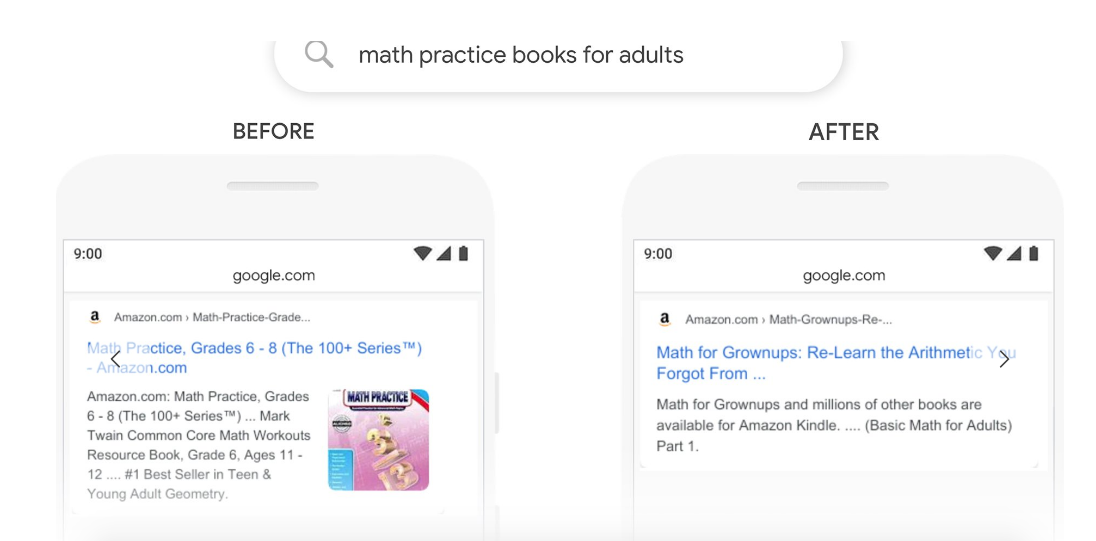
Math books for adult example of before and after BERT update

Another example is the search term “parking on a hill with no curb.” In the past, search engines would not have recognized the change in intent made by the words “with no” curb. Instead, they used “parking uphill” and “curb” as the main focus in producing a result for this search.
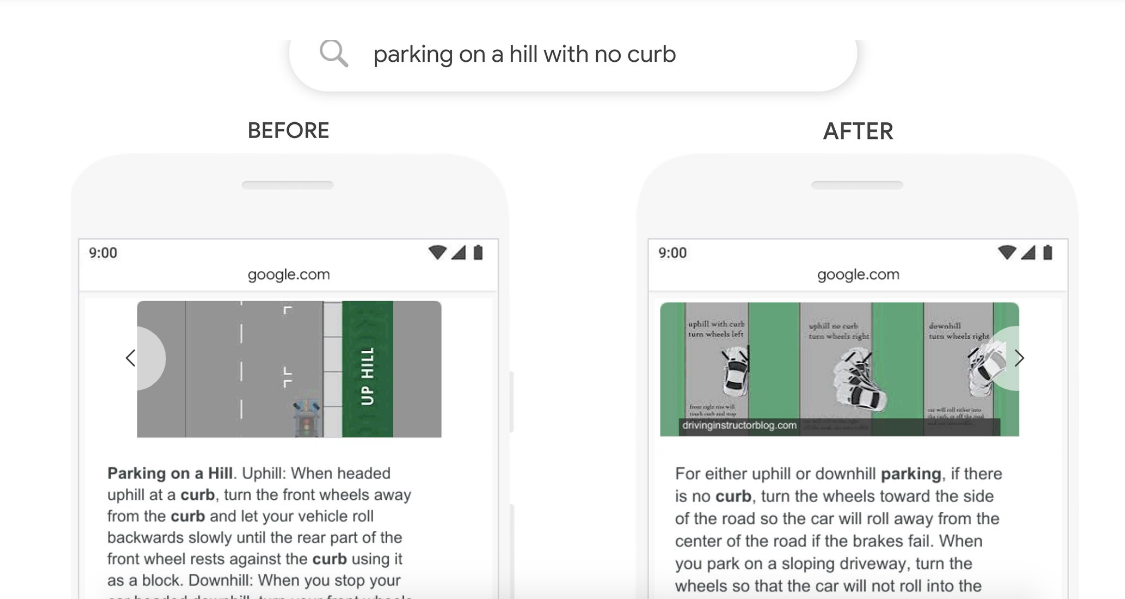
uphill no curb example of search results before and after BERT update

There isn’t really any call for reform on behalf of website owners based on the update. There has always been a long-standing demand for high-quality content and that continues to be the case. 

Common misconceptions about BERT

Now that BERT has been rolled out, there have been some myths that need to be debunked. Many people make assumptions and here are a few that warrant an explanation.

EAT principles will have more of an impact on search results. 

This is false. The EAT (Expertise Authority and Trust) principles are a completely separate algorithm. This focuses on a completely different aspect of assigning value and credibility to articles and authors. 

Google consists of thousands of layers baked into the algorithm and many of them work harmoniously with one another. BERT is about context, not credibility and is a completely different algorithm to the changes in EAT principles.

Site owners need to optimize for BERT

You can’t optimize for BERT because the algorithm is designed to provide more accuracy in the contest of search queries. If it isn’t clear what the pages on your site are about, you needed to make changes regardless of the BERT algorithm.

BERT is the biggest update Google has ever made

The BERT update was reported to be the biggest update within the last five years but has not been claimed as the all-time biggest update. 

There have been quite a few updates that changed how Google assigned value to content and backlinks, however, this update was revolutionary because it changed how search engines assign meaning in a more human-like understanding.

Moving forward

As we move forward, BERT will continue to improve its understanding of how users search. The breakthrough update has changed the way search engines assign meaning and this is only the beginning. As learning and contextual recognition grow, so will the accuracy of search results for the user.

RELATED READING: Drive Traffic With Content That Solves Problems

Christian Carere
Christian Carere

Christian Carere is the owner and founder of Digital Ducats Inc. in Toronto and heads the SEO team at Austin Bryant Consulting in Plano, TX.  Christian has been published on publications such as Search Engine Watch, Venngage, Small Biz Daily, Grasshopper, Data Box, Socialnomics, and Mention.

old.digitalducats.com/

Written by Christian Carere · Categorized: Content strategy, Web development

Dec 05 2019

How Effective Is Guest Blogging In 2020?

Mar 1, 2021 @ 5:15 pm

In almost every survey on link building methods, guest blogging ranks among the top three most popular choices. One of the burning questions that many business owners and SEOs want to know is “How effective is guest posting in 2020?”

Hero image for How effective is guest blogging in 2020?

What is guest blogging?

Guest posting, or guest blogging, is publishing content on a third-party website and linking back to your own website from that content. The process is usually initiated by the guest author pitching a website a content idea, or the hosting website asks a guest author to contribute content.

A brief history leading up to guest posting in 2020

In 2010, it wasn’t uncommon to see a 300-500-word article that linked to completely unrelated content. Like every link building tactic that worked to improve ranking, guest posting was heavily abused with low-quality guest posts because it worked where you could publish any piece of content and like to any type of website.

You might land on a post about banking trends that had a link to a cookware website. To top off the terrible contextually unrelated link, the article would offer little to no value to anyone who even bothered to give it a read. And yet, the cookware website would rank highly from the link regardless of the lack of contextual relationship and low-quality content.

The effectiveness of low-quality guest posting was for the most part eliminated in a series of Google Updates. The Panda update enforced better quality content. The Hummingbird update allowed Google to understand the context of a page more accurately. The Penguin update killed a lot of the link building manipulation that people were using to achieve high rankings.

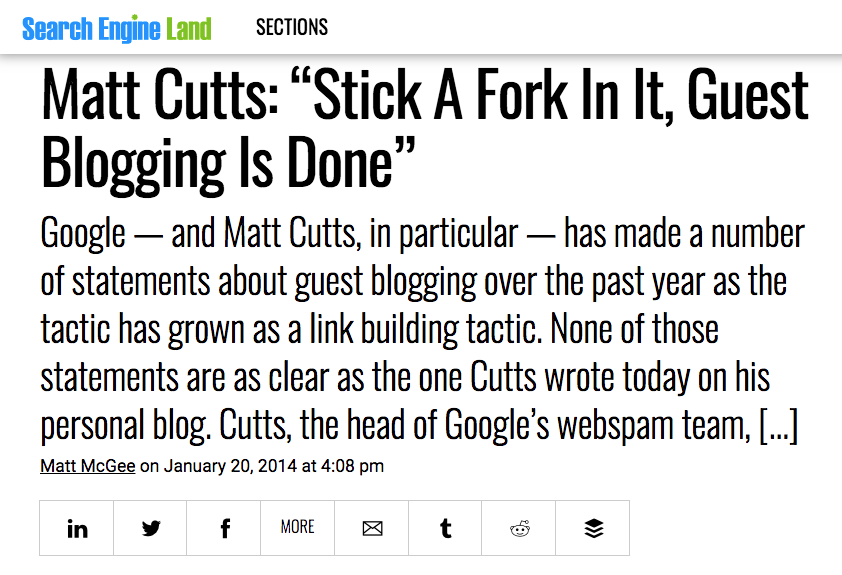
It seemed that guest posting was one of the few methods of link building that wasn’t completely doomed by Google. Then the cryptic message from ex-Google employee Matt Cutts, who headed the web spam team:

Matt Cutts quoted predicting the death of guest blogging in 2014

Despite the ominous warning about guest posting, it has continued to prove effective over the last few years. One of the most recent success stories that were solely based on guest posting is Adam Enfroy’s story and his short rise to riches.

Guest posting has its success stories

In a 15 day experiment, Adam was able to secure 8 high-authority guest post links to his website. Although he continued to publish over 80 guest posts in a year’s time, his blog traffic increased to over 200k/month and his website hit a record high revenue of roughly $30k/month.

The most recent update was that he was able to get as high as $80k/month this year. So what’s the debate about the effectiveness of guest posting? Well, it’s not entirely a clear cut and dry case about how Google is viewing the SEO value of guest post links.

We’ve seen numerous warnings about guest posting

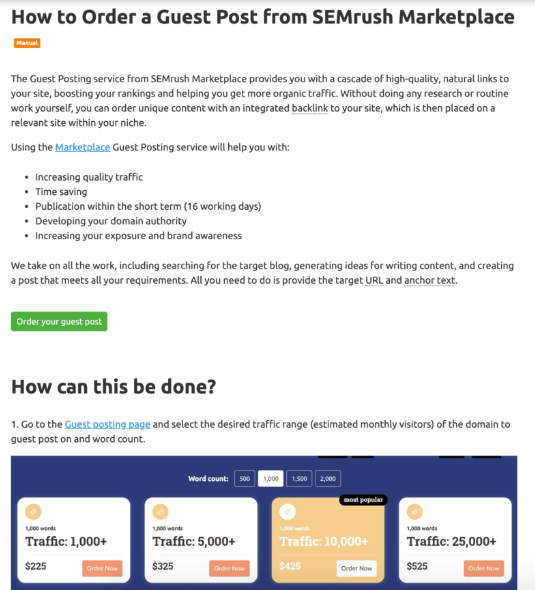
SEO software giant, SEMRush announced that they would be launching a guest posting service that would identify websites willing to accept guest posts, write the articles on your behalf and publish them with a link back to your site.

The page about SEMRush guest posting service before it was removed

It was made clear by John Mueller that this service violated Google’s best practice guidelines in that it was essentially a service that accepted money for links.

That’s an unnatural link – the kind the webspam team might take action on. https://t.co/kfQQithCnK & https://t.co/q5GmAxx2YM have more. Making sure the links use rel=nofollow / rel=sponsored would still allow sites to get visibility without having to worry about manual actions.

— 🍌 John 🍌 (@JohnMu) June 3, 2020

Whether SEMRush saw it the same way or not, they kiboshed the service as it was clear there would be penalties issued. This controversial service rehashed many of the questions, doubts and fears about how Google views guest posting.

The other thing is that because this is so old, we have a lot of training data for our algorithms. I wouldn’t be surprised if the largest part of those links are just ignored automatically. If all that work is for ignored links, why not just do something useful instead?

— 🍌 John 🍌 (@JohnMu) June 14, 2020

He further indicates that there is a problem with the system for guest posting for links that improve SEO value. If you’re the author of an article and award yourself links to your own site, how can that possibly be viewed as earned links?

The part that’s problematic is the links — if you’re providing the content/the links, then those links shouldn’t be passing signals & should have the rel-sponsored / rel-nofollow attached. It’s fine to see it as a way of reaching a broader audience.

— 🍌 John 🍌 (@JohnMu) June 11, 2020

Hence the guest posting dilemma regarding whether guest posting for links improves ranking or has any SEO value.

Does guest posting work as an effective method of building links in 2020?

The short answer to this question is yes, guest posting is and will remain an effective method of building links. The longer answer is that it depends on what goal you hope to accomplish with your link building since some guest post links have less SEO value than others.

Guest posting is confirmed by Google to be good for branding and search visibility.

Guest posting will always remain an excellent way to gain search visibility and brand your business. Google has agreed on this. There are guest-posting sites that have a large readership and will send tons of referral traffic to your site (assuming you write a great article).

According to Google’s best practices, you can drive traffic to your site through guest posting and linking to content assets on your site with nofollow links. This will increase search visibility and attract backlinks to your outstanding content. In theory.

Guest post links are being devalued under certain circumstances

The reason for doubt in the effectiveness of guest posting are speculations on the SEO value that is gained from a guest post link. But what about when your website is mentioned in someone else’s guest posting article?

How does Google know whether your site is being used as a resource, or whether you’re awarding yourself links from your own guest posts?

To get the most SEO value out of guest post links it would seem that you’d need to mentioned or not be attached as the author of the guest post. The following is a detailed guide on how to guest post in 2020 and beyond.

How to effectively build links using guest posts in 2020

Many different guides will tell you much of the same information on how to go about the process of pitching and writing guest posts, however, it should be clear about what will really move the needle from your efforts.

Keeping in mind what has happened this year, it would seem to me that the most effective method of building links by guest posts cannot be done alone. You need either a) the help of a personal influencer network b) strategize how you acquire your guest posting links by avoiding the author link in the bio or c) Guest post for nofollow links with the goal of referral traffic to pages that people will link to because they have present high value as a resource worth sharing and referencing.

Form a PIN

A typical link strategy doesn’t end with one link to your website. In most cases you’ll need a few different websites linking to your page to get it moving in rank. If you’re going to be actively guest posting on a few different websites seek out those whoa re also guest posting actively.

Contact good authors or content writers who publishes content in your niche. Propose that for every link you send to their website, they send one to yours. This way you’re able to maximize on the number of links you acquire per guest post.

If you have 4 or 5 people you work with that means you would include 4 or 5 links in a guest post article to each of their websites. That also means for every article you publish, you would receive a link from your article, plus 4 or 5 links coming from your personal influencer network.

Working with a PIN makes guest posting more efficient and it builds valuable links that Google won’t devalue from the association of you as the author.

Avoid the connection as the author of a guest post

There are many websites that have manipulated guest posting by using fake names to make it appear that someone else is linking to their site. This circumvents the connection Google makes to you awarding yourself links in a guest post and results in a link that has more SEO value for your website.

I’m not recommending using fake names, merely stating a fact. This is also a reason why link building services will get you results as well as hiring a freelance content writer.

Google’s principle behind links as a ranking signal is based on the concept of votes and/or referrals be websites that have the credibility to impact your authority. By this understanding, guest post links to your website have SEO value as linked mentions.

Choose website’s where a nofollow link is valuable

It’s a hard pill to swallow, however, since John Mueller has recommended that all guest posting links be marked as nofollow but the upside is you have to consider guest posting on sites with relevant traffic. This perspective forces you to consider what websites have traffic that’s actually good for your website-all SEO metrics aside.

Why is this a good thing? Instead of posting to a website because of its authority, you’ll be looking for websites with real traffic that are highly targeted to your content. This is one of the best reasons to go after a link in the first place.

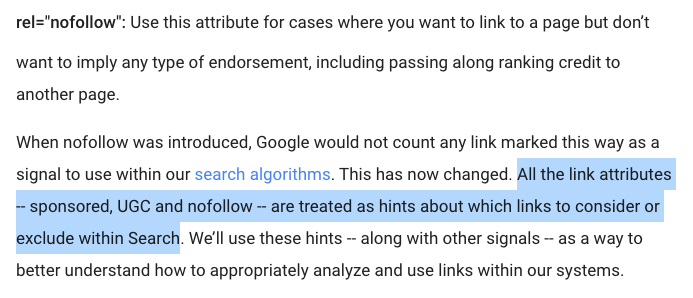
Keep in mind that Google has also stated that they are treating the nofollow attribute as a recommendation. Whether that means SEO value could be awarded or not isn’t clear. The fact that Google wants to have the option may point to some future changes in how links are viewed.

Image source from Google Webmasters Blog

How to land a high authority guest post in 2020 and beyond

It seems like a lot to digest, but the truth is that guest posting is still working as an effective way to build links and get your website more search visibility. In order to have the most impact as a link building method, you want to stick to the websites that will have the most positive influence on ranking and referral traffic to your website.

Set your standards for quality guest posting websites

If you follow a set of guidelines for how to guest post, you can streamline the process of finding websites, pitching and writing content.

The first area that takes a large amount of time is prospecting your websites. Establish a minimum domain authority for the websites that you intend to pitch. The domain authority isn’t the most important aspect, but it can be used as an effective filter for sorting out who you spend time prospecting.

An effective tool for identifying a website’s domain authority is the Mozbar. It’s free to download as a browser extension and all you need to is an account on Moz (also free). This allows you to see the page authority, the number of links, domain authority and spam score directly from the search results.

mozbar example

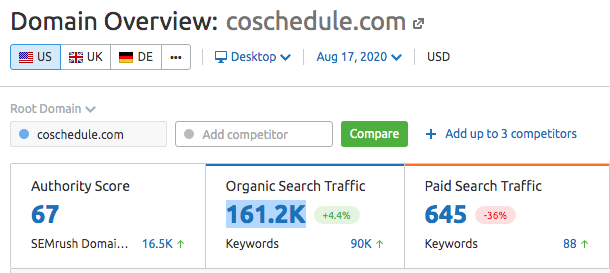
Another valuable tool to use is SEMRush for identifying the organic traffic a website has flowing through it. This is important because it cuts through the vanity of domain authority and tells you whether the website is ranking for organic keywords and driving traffic. This is important if you’re going to benefit from any referral traffic offered by guest posting on the website.

In the following segments, you’ll learn how to prospect potential guest posting websites, pitch the editors and write guest posts that improve your search visibility.

How to find websites that accept guest posts

There are three ways to find websites that accept guest posts; browse published lists of websites that appear in the search results; search using command operatives and plain old outreach.

There are literally thousands, if not millions of websites that accept guest posts, but not all of them will be good for your website. For a guest post to have a positive influence on your business, it needs to improve the authority of your website and/or send you traffic that engages with your content.

Browse published lists of sites that accept guest posts

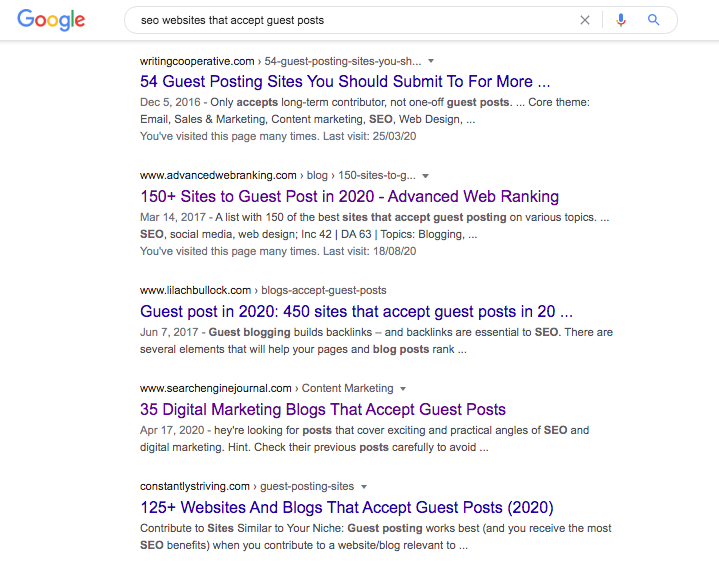
If you simply type in the search phrase “[your keyword] websites that accept guest posts” you’ll produce a lot of search results of published lists of guest posting sites related to your keyword. This isn’t the best way of finding guest blogging prospects, but it can definitely help identify some high authority websites that would be beneficial to your content.

The benefit of using a published list to prospect websites is that it’s already made for you, so it saves time searching. You can cut and paste the list to an excel sheet and work systematically through the list. Working on a spreadsheet allows you to make notes as you go.

The downside to using a published list is that it can be inaccurate with the information it provides. Many of the websites may have changed their guest posting policy or may no longer exist.

Some of the websites may not even be related to your industry or niche.

Regardless of the results you find, you’ll still need to qualify any potential prospects according to your own set of standards for quality. This can be done equally as effectively by using command operatives.

Search guest post sites using command operatives

Command operatives can be used to instruct Google to search for specific websites that contain keywords in specific places. To find relevant guest posting sites you can use the commands inurl and intitle to find websites that have your keyword in the URL or the title respectively.

One of the most popular command operatives used to find sites that accept guest posts is looking for the words “write for us” in the url or the title of the page. Adding the keyword in front of the search string makes the results keyword related:

[your keyword] + inurl: write for us

[your keyword] + intitle: write for us

Here’s an example of a command operative you could use to find a dog training website that accepts guest posts:

Dog training + inurl:contributor

This method is preferable because more often than not you’re getting websites that are actively accepting guest posts. If you have the Mozbar setup, you can quickly browse through the websites that meet your minimum DA.

Plain old outreach

The goal for every website owner is to achieve a level of search visibility that allows more potential clients to find their website. Considering that publishing SEO content is one of the best methods for driving targeted traffic, it’s reasonable to pitch websites that aren’t publicly offering guest posts as well.

Most editors and website owners will publish content if it benefits their audience and represents an asset to their content strategy. Don’t limit the websites you pitch to just those that publicly accept guest posts. If there are websites you know that would make a huge impact on your search visibility, add them to your list of prospects and make them an offer they can’t refuse.

How to pitch content to editors and website owners

The email you send to editors will likely determine whether your pitch gets any attention or is handily ignored along with the rest of the guest posting requests. In order to craft the ultimate approach to a high authority website, you need to make a really good first impression. Here are some tips to improve the acceptance rate you get from high authority websites.

Make contact before pitching

If you really want to make a good impression, do some research on the website that you’d like to get your content on. Find out who the content editor is, or people in charge that could help you get published, like the owner or executive officers.

Linkedin is pretty good for finding out general details about a company. You can find just about any company on Linkedin and once you do, click on people to see a list of the staff working there. Pick the most appropriate person/people to make contact with before sending them a “cold outreach email”.

You can vary this tactic by commenting on articles on the company blog or on guest posts when you see them. Follow the company on social media and make comments and share their posts. Your efforts will surely be noticed when you’ve made four or five attempts to comment and share their content.

By making yourself more familiar you improve your chances of your email being noticed and taken more seriously than the rest of the email from other gust authors.

Read a few articles from the prospective blog

You can’t craft the perfect pitch without reading the blog itself. In order to offer something of value, you need to figure out what that is for the blog you’re pitching. One of the top reasons articles are rejected (other than low quality) is because the content isn’t a good fit for the website.

Read a few articles to get a feel for the content being produced along with the style, tone and topics that match your prospects’ blog.

Create catchy headlines

Think about it. The first thing you’re presenting to an editor is the possibility of writing an article based on the headline. In order for there to spark any interest in your article, your headline has to instantly appeal to the editor.

There’s a lot of rehashed content that lives on the internet so try not to be boring by putting a twist on your topic. For example, instead of Website Traffic Creation, try using How To Generate Explosive Traffic To Your Shopify Store.

The second title is more descriptive, more focused and more interesting than the first. Brainstorm title ideas by writing down a list of 20 different headlines. You can use tools like Coschedule’s headline analyzer to gauge how effective it is. Or just apply some headline strategies that are known to improve click-through rate.

Include a brief outline of your proposed article

Include, at a minimum, four to five bullet points on what you plan on discussing within your proposed article. This gives editors a sneak peek at the content you’re going to send them-which hopefully makes your article more appealing.

Include some title options

It’s best practice to send along a few other title options of another article idea you’d like to write about. Not every website owner will want the exact article you’re pitching. Giving them a few other options opens the door to more ideas, rather than shutting down your pitch completely.

Always include a few links to writing samples

Even if you’ve never published a single guest post, you can include links to content on your own blog. This establishes some credibility and proves to the editor that you’re capable of putting together a good article.

If you have previously published articles, send links to your best work on the most well known websites.

Write an article that will represent your business

Upon acceptance, write an article that will be an excellent representation of your business. Approach guest posting the same way you would write an SEO optimized blog post for your own website.

It’s not just about getting the link. The goal is to attract readers to click-through to your site. Whether you get a high volume of traffic from the article or not, the article itself is a form of advertising your company and teaching people what you offer as a business.

This is a form of branding for your company so treat it as a presentation to inform, enlighten and engage your readers.

Quality is key

To get the most of guest posting, you need to commit to publishing quality content on the hosting website as well as your own. There are no shortcuts to this. In order to get people to click on a link that goes to your site, they have to read and trust the content your publishing as a guest author.

Once they’re on your website, the content on your site needs to be link-worthy and should engage your ideal audience. The ideal outcome to guest posting is twofold; you receive traffic interested in what your business offers; you receive traffic that likes your content so much they share it within their network and link to it in their own writing.

To do this, make sure you’re publishing well researched, well-written content that links to content assets on your website.

Don’t forget your PIN

Remember to add links to your personal influencer network in order to get links from them.

Link to internal articles

It’s not always required but it’s always a nice touch to include a few internal links to the hosting site’s content. It shows you’re interested in improving their blog and that you’re willing to help out where you can. Building relationships with the editors and website owners you submit to can go a long way in your link building career.

8 benefits of guest blogging

#1-Increased referral traffic

As a guest author, you have the opportunity to publish an article on a website within your niche, with a link pointing back to your site.

A link on a popular blog site provides you with targeted referral traffic. These visitors are obviously interested in reading your content if they read your guest post and clicked on your link.

Keep in mind that the number of visitors that click through to your site largely depends on how much traffic the hosting site receives.

#2-Provides a targeted audience

Guest posting puts your content in front of readers who are interested in your niche. Aim to publish a guest post on a site that your potential clients visit. By limiting your guest posting prospects to highly relevant sites within your industry (or a direct parallel) you improve the impact your link building strategy has on your ranking.

This also improves the chances your guest posts will be read by visitors interested in the solutions your business offers.

#3-Promotes better branding

This form of link building is considered a branding opportunity because it allows you to demonstrate the expertise of your company. Problem-solving content can be a powerful way for people to learn about your business and compel readers to click through to your site.

A well-written guest post can communicate to people how your company is capable of solving problems related to their own. Successful guest posting strategies promote awareness of your brand and establish thought leadership within your industry.

#4-Increases visibility

As a guest author, you are allowed the opportunity to tap into a third party’s traffic resources. Many blogs have a subscribership/email list that receives every new article that gets published.

Your article gets sent to that audience and you can get your site in front of a whole new network you wouldn’t have normally had access to.

#5-Develops authority

A link from a guest post will pass authority to your site when it’s acquired correctly. A major reason for posting on a blog site is to gain access to traffic that is a good match for your website. The relationship between your site and the guest posting site should be clearly identifiable.

Acquiring links from sites within your niche will improve your site’s credibility and ranking ability if they are followed links and preferably awarded by anyone but yourself.

#6-Enhances optimization

Its best practice to link to the inner pages of your site with anchor text links.

In fact, you enhance the optimization of your pages by using your target keyword in a select number of your anchor text links.

This creates stronger relevance signals for keyword related searches.

Typically you want to use exact match anchor text sparingly to avoid any signs of rank manipulation.

Using a good blend of long-tail keywords, brand links and naked URLs is the best form of implementing a safe backlinking strategy.

#7-Improves ranking

The strength of a backlink profile plays a major contributing role in the ranking your page receives for your target keyword. Quality links will go a long way for moving the needle in the competitive placement of your page.

The more high-quality sites that link back to your page, the more authority and ranking ability your page accumulates.

High authority domains have more impact on your domain authority and ranking ability. The more popular the blog site, the more traffic and the more authority that is passed through to yours.

#8-Builds more entry points to your content

The more links that lead. to your website the better. Each link you build creates a bridge allowing more visitors to find your website. As long as you’re linking from relevant content on websites that receive a healthy flow of traffic you’re improving the number of entry points to your content.

As a method of link building, this is among the most popular because it allows you to cover the basic three essentials of acquiring quality links.

Links are most beneficial when they are:

  1. Highly relevant to the content hosting the link. Since the article is being written on behalf of your company, it’s obviously going to have strong relevance to the content in which you’re linking.
  2. The health of the site in which your link resides is another criteria for acquiring a quality link.
  3. Choosing websites that have established traffic and strong readership is the third part of the criteria for acquiring quality backlinks.

Make the most of a linking opportunity

Although the linking criteria will differ from site to site, be sure to fully understand what the site is allowing in terms of providing a linking opportunity.

A contextual link is the most valuable type of link you can acquire because it provides a reference to related content. As far as search engines go, the sole purpose of linking is to share content that is deemed worthy of sharing.

If the editors allow you to link to your site within the body of your article, take advantage by linking to the inner pages of your site. Your links should be natural, meaning they are not forced and are referencing a relevant page on your site.

Try to incorporate as many relevant links to previous guest posts since you can build on their authority and boost the value of the links to your site.

Answer comments and responses

Respond to any comments or questions your article generates. User interaction provides good ranking signals that give your article more traction in the search results. Many webmasters will actually ask you to respond under penalty of having your links removed from your article!

6 Tips & Tactics For Guest Blogging

#1-Summarize your article with subtitles

Use creative subtitles to separate your article into segments that give the reader an accurate summary of what your article is communicating. Many people (editors included) who read online tend to scan through content and if your subtitles can paint an attractive or interesting enough picture you can capture their attention to read further.

A good article will segment your thoughts and ideas into easier to digest blocks of text. The added ease of comprehension is an asset to any article and makes your article a more attractive possibility for publication.

#2-Use Grammarly to proof your article

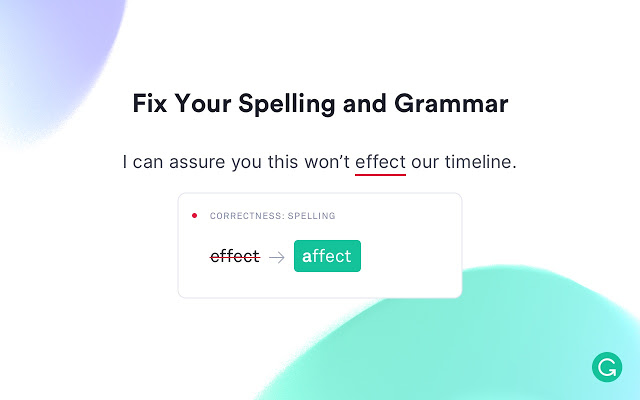
This app is extremely easy to use and highlights all of your spelling and grammatical errors. The corrections are as simple as hovering over the highlighted text and clicking on the option that is the most suitable correction.

This app is functional on an HTML editor or Google Docs, which makes it ideal for blogging. There is nothing more unprofessional than spelling mistakes and poor grammar. Use a tool like Grammarly to eliminate those errors. and raise your level of professionalism.

Even if you’re a great writer this tool will catch a lot of mistakes you might otherwise miss. Your writing becomes much more appealing to editors when submitting content for publication.

#3-Use images & media at every opportunity

It should go without saying how important images are to incorporate in your articles. People retain 60% more information when there is an image to associate with the text. Since some blogs will require images for your article and in most cases, they will add images to your article, you can save them time and include them yourself.

Make your article more enticing by posting some related images to prove points or illustrate examples. If you don’t own the rights to the image be sure to credit the source of the image with a link or proper attribution.

#4-Read a few articles from the blog

Many blogs have a specific style that can be discerned by reading a few of their blog posts. Get a feel for that style so you can incorporate it within your content. If you can nail the blog’s tone and format you’ll always be invited back to write gain for the blog.

#5-Read the guest posting guidelines for each submission

There is always valuable information that each site will offer in their guest posting guidelines-which is different for every blog site.

The linking policies are a major issue that should be understood before you pitch or submit an article to a site. If they are only offering nofollow links, it may affect your link building strategy as well as your contribution to your PIN.

Some sites will enforce strict protocols when accepting submissions. There are sites that won’t consider your article if you’ve missed one of their requirements. Editors will literally dismiss your article without notification.

For every website you consider, read the submission guidelines as a non-negotiable part of your routine. It will save you time and resources in the long run by having a clear idea of what you’re getting as well as what you need to provide.

Conclusion

When done correctly, guest blogging is one of many strategies for building backlinks that are considered safe and effective for branding, improving authority and building the strength of your backlink profile.

As long as guest blogging continues to get great results within an SEO campaign it will remain one of the most popular methods of link building in 2020 and beyond.

Related reading:

  • 33 Ways To Drive More Traffic TO Your Website
  • 50 Ways To Improve On-Page SEO

Subscribe To Receive The Latest SEO Trends & Strategies

* indicates required


Christian Carere
Christian Carere

Christian Carere is the owner and founder of Digital Ducats Inc. in Toronto and heads the SEO team at Austin Bryant Consulting in Plano, TX.  Christian has been published on publications such as Search Engine Watch, Venngage, Small Biz Daily, Grasshopper, Data Box, Socialnomics, and Mention.
old.digitalducats.com/

Written by Christian Carere · Categorized: Content strategy, Link building

Oct 09 2019

What Are Featured Snippets & How Do You Get Them?

Mar 1, 2021 @ 3:59 pm

Featured snippets are Google’s way of delivering what it perceives to be the most accurate response to a search query. Most would consider the featured snippet an improvement in user experience because it directly answers a search query with highlighted information.

Some consider it a negative feature because it provides the information a user wants directly on the result page resulting in a lower click-through rate to your website. 

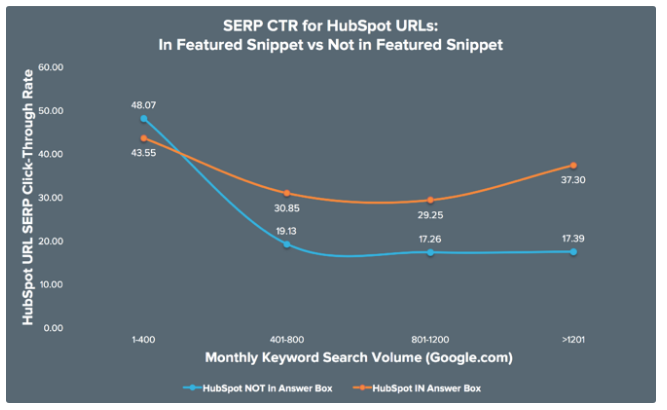
While in any given circumstance, both beliefs are true, the majority of snippets have proven to increase traffic rather than keep it on the SERP.

The click-through rate for Hubspot URLs holding featured snippets vs without

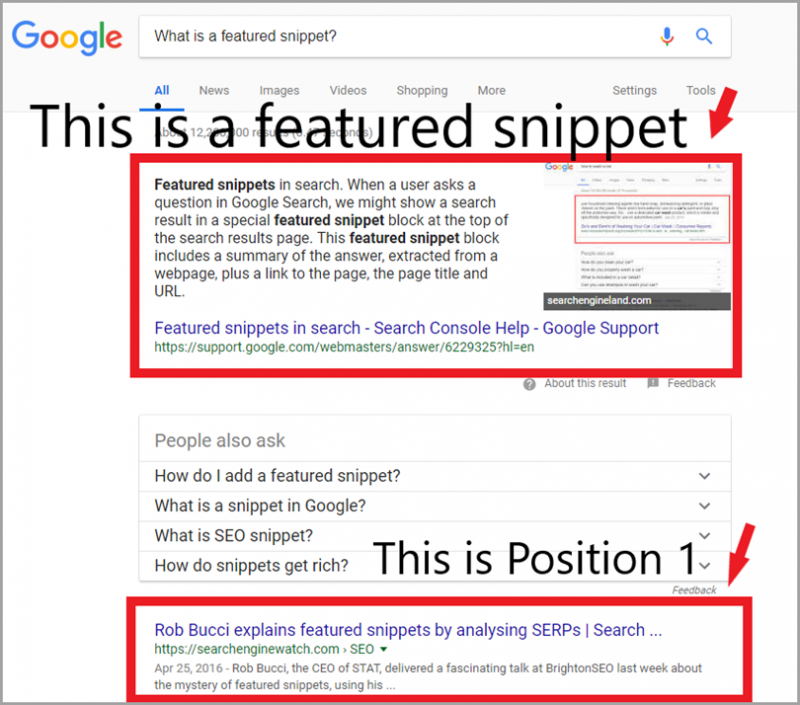
In 99% of all instances when the featured snippet is triggered in a search result, it appears at the top of the page. Since it appears ahead of the organic results, marketers often refer to the featured snippet as Position Zero.

Recently, Position Zero became the new number one organic listing on the SERP (although it is still referred to as position zero). The old version of snippets allowed a website to win position zero as well as have a position as a blue link in the organic results. 

Image showing featured snippet and the first organic position

Now, the featured snippet repositions your website position from the organic results with traditional blue links to the top position as an enhanced search result (referred to as a rich result).

What are the advantages of a featured snippet?

Your listing holds the top SERP position

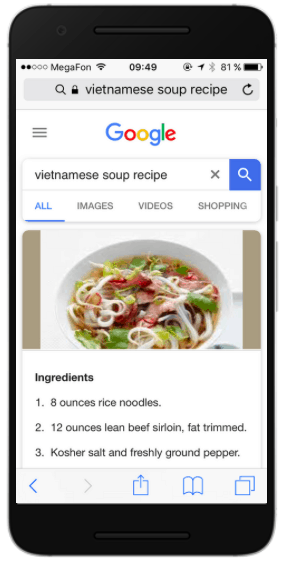
The featured snippet is a coveted position because of its prime location. Your website receives the highest click-through rate and therefore the most traffic from winning the position. This is especially dominant on mobile screens, where the feature takes up most of the screen.

Example of featured snippet on mobile phone

Your search listing becomes and enticing, attractive rich result

What’s more, your website is featured as a rich result. The added markup to displaying your page makes for a more attractive search engine listing. Look at how much more your attention this feature demands compared to the organic blue links.

Image of how much more attractive a rich result like a featured snippet can be when compared to the organic results.

The featured snippet is considered to brand your website as an expert since Google is featuring you as the top result. This is something that no other feature can do for you regardless if you pay or not.

Organic results are the most trusted in comparison to paid results and so acquiring this position is a major benefit to branding your company as an authority in your niche.

Increased likliehood of being selected for a voice search result

Voice search and featured snippets are linked because the results from voice are often displayed from featured snippets.

In fact, 80% of Google home results are pulled directly from featured snippets. Snippets are considered to be the best answer to a search query, so it makes sense that they would be the first choice in a voice search. The use of structured data also makes it easy for voice assistants to pull information quickly and provide quick and accurate answers.

The different types of snippets

There are four major types of featured snippets that have become regular features on the SERP.

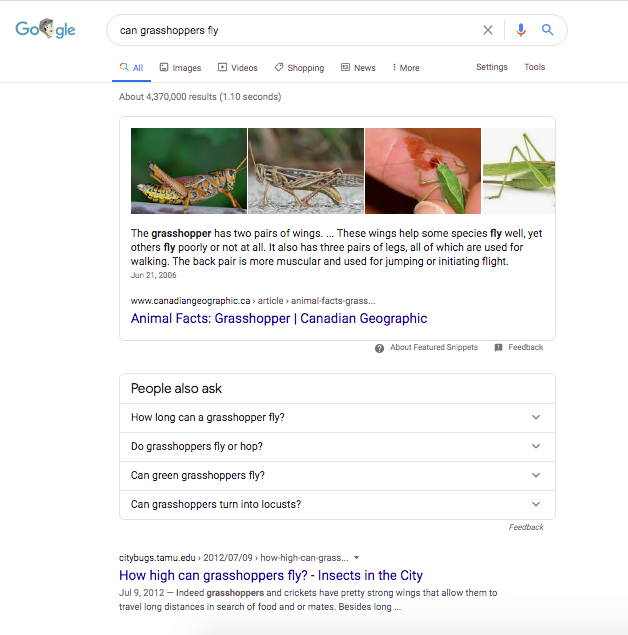
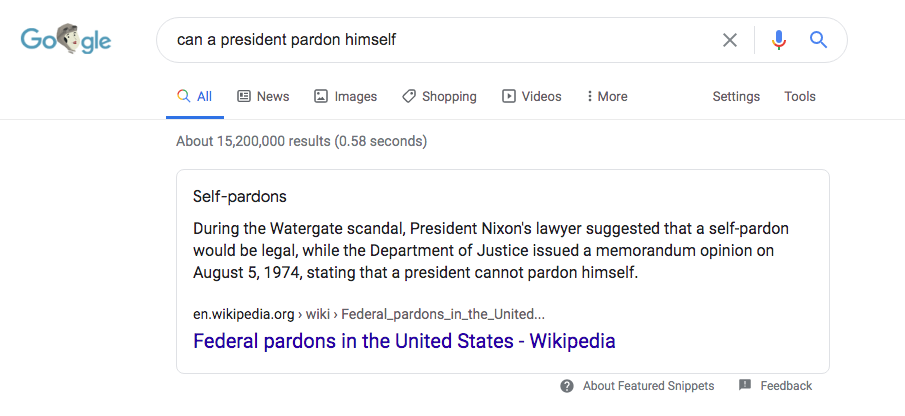
The most common is the paragraph snippet that is seen in approximately 70% of all featured snippets.

ple of a paragraph snippet

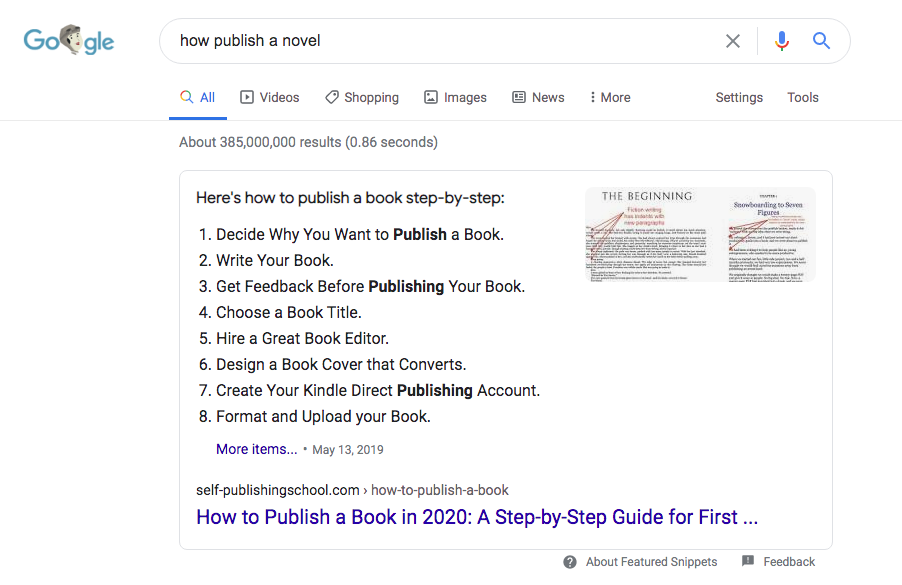
The list snippet is the second most common type and accounts for 19.1% of all snippets:

Example of a list snippet

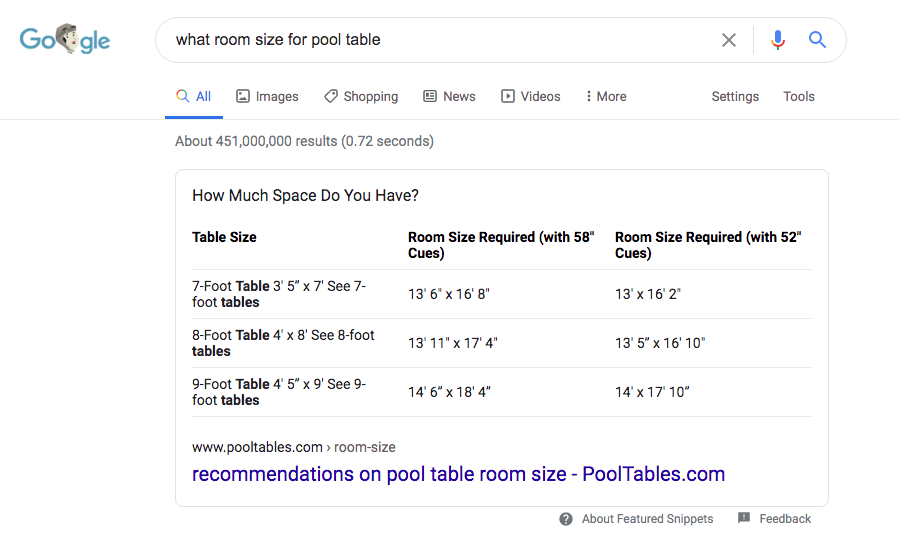
Table snippets account for roughly 6.3%

Example of a table snippet

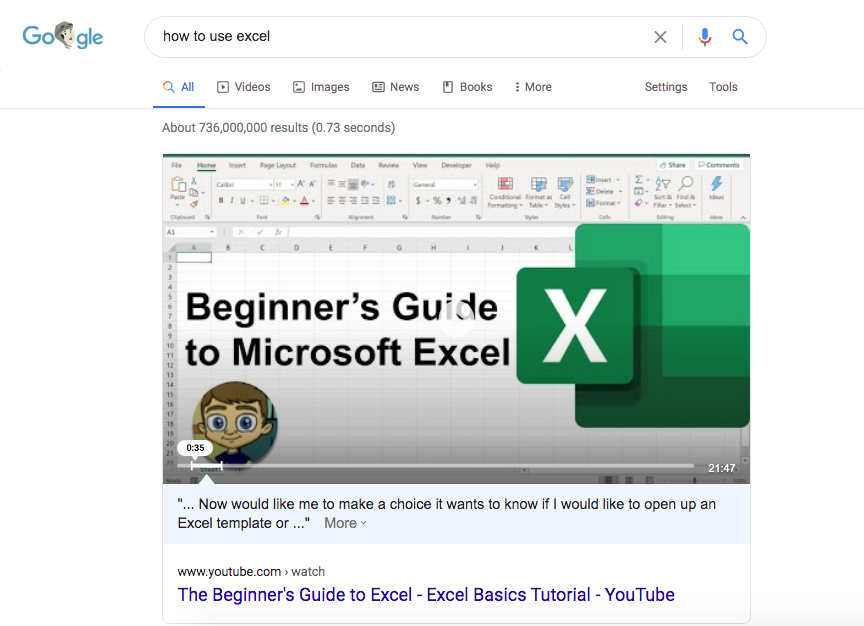
And videos have slowly been gaining ground, but are still only around 4.6% of all featured snippets.

Example of a video snippet

How do you win position zero? 

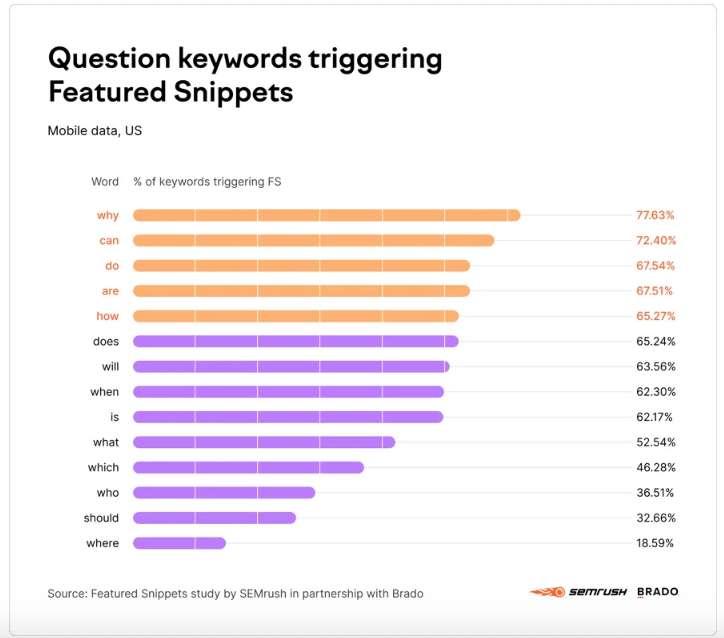
A function of SEO content writing is to make content “snippable.” It helps to know whether a snippet appears for the keywords you’re targeting. The most common searches that trigger a snippet are searches that begin with can, how, what, who, when, why.

Featured snippet trigger keywords
Image source: SEMRush

Rather than search manually for every possibility, it’s best to use software to streamline your efforts when researching keywords. When you’re assessing the potential of a keyword you can see what features appear on the SERP and make sure your content is optimized to appear for the question.

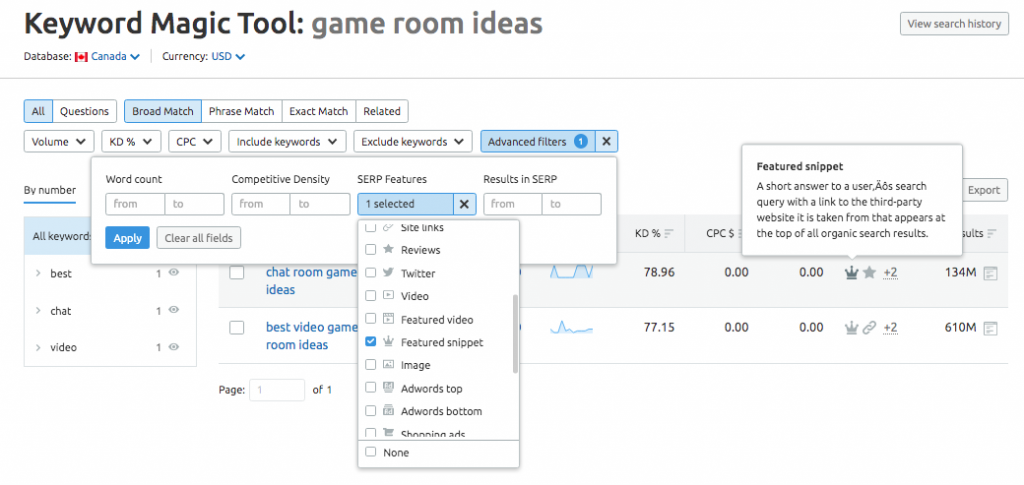
Another way to go about identifying opportunities is to search the keywords in which your website holds a position in the top 10 results. You can then toggle the filter to show which of those search terms display a featured snippet on the SERP.

SEMRush keyword tool shows you what SERP features appear for every search term that's generated

Analyze the current snippet holders content

Although no one has the exact recipe for how Google decides what website to place as the featured snippet, the best practice is to include the major characteristics common among snippet holders.

Secure Socket Layer

It should be a given that your website uses HTTPS. If you haven’t got onboard yet, you’re way behind. Google has made it clear that HTTPS offers a slight ranking advantage over HTTP. Regardless of search engines, consider the fact that users don’t want to visit a website that is marked as “not secure.” 

Chrome labels domains not secure whenever the SSL certificate is missing. In order to get to the site, you need to click on the advanced setting, and then click proceed to the website. This definitely plays a role in how users perceive your website and will contribute to higher bounce rates and a decrease in traffic.

Depth of content

The content on your page should have some substance to it. The depth of your content should be adequate enough to pass as authoritative. If you have a flimsy page with 200 words there’s no chance you could cover any topic in depth or detail. The average word count on pages with featured snippets are over 1100 words.

Title tags

Always use headings and subheadings to segment your content and highlight the most important aspects. This provides clarity to the content your page covers and is often used in snippets.

Tag your titles and subtitles in the proper hierarchy and if possible, provide a summary answer to your h1 title tag with the subsequent subheadings (h2-h6). The average number of headings on a page that has won the snippet is 14.

Images

The images that are featured in a snippet are not always taken from the page whose answer is being featured. Using images in your content gives your page context and enhances optimization. Let’s face it, content with more images is considered to provide a better user experience and therefore considered higher quality.

The average snippet holder has 8 images on their page with the alt tags completed.

Duplicate the optimization being used to win the feature

To win the snippet, you’ll need to understand what Google likes about the content that’s already being featured. Here are a few major characteristics that are common among the different types of snippets.

Paragraph snippets

A featured snippet in paragraph form is most commonly found to have between 40-50 words explaining the snippet question.

Tag your snippet question and provide the most detailed, comprehensive summary of the answer immediately following the heading.

Keep in mind that Google will use subtitles to form a paragraph in a featured snippet.

List snippets

Always analyze the snippet holders’ content to see the best way to optimize for the featured snippets. The list snippet can be won by using an ordered list but it can also be displayed as a collection of subtitles from your content.

The best practice is to create lists with 9 or more lines in order to increase the click-through rate to your website. There’s less incentive for a user to click-through to your website if a full list is displayed that answers their intent for the search.

Table snippets

Give your table a title and make sure you phrase the heading using your keyword. Tag the title using h-tags to highlight the questions your table can answer. 

Video snippets

Use your snippet question in the title of the video. All YouTube videos are already marked with structured data, however, you should include a transcript of your video in the description. This gives search engines the exact content in the video (which is more than most people provide) creating a competitive ranking advantage.

Increase your traffic with the featured snippet

Featured snippets have become extremely common for answering questions directly on the SERP. Aim to improve the traffic your website receives by winning position zero when your content ranks in the top 10 search results.

The effect of branding your company as an authority combined with the additional traffic will be worth its rewards in new clients and increased revenue.

Want to get your site featured in position zero? Speak to a consultant about including featured snippets in your SEO service package for additional traffic to your website.

Subscribe To Receive The Latest SEO Trends & Strategies

* indicates required


Christian Carere
Christian Carere

Christian Carere is the owner and founder of Digital Ducats Inc. in Toronto and heads the SEO team at Austin Bryant Consulting in Plano, TX.  Christian has been published on publications such as Search Engine Watch, Venngage, Small Biz Daily, Grasshopper, Data Box, Socialnomics, and Mention.

old.digitalducats.com/

Written by Christian Carere · Categorized: Content strategy

Sep 24 2019

Generate More Leads With Authoritative Content

When you invest in SEO services for your business, you’re creating a stronger foothold in your niche to drive targeted traffic and generate more leads. SEO is the top inbound marketing priority for 61% of companies. Your company becomes a familiar sight in the search results for people searching for terms that are related to your business. This promotes recognition in your industry and will naturally drive more traffic to your website.

Identify user intent

It should be noted that although keywords play an integral part in the optimization of your site, the way they are used has changed entirely since semantic search was introduced.

Search engines are now extremely adept at ascertaining the meaning of content on a website and determining whether it will satisfy the user intent behind a search query. This fact alone has forced websites to provide the information a user is looking for as an ideal outcome from their search.

Adequate keyword research will not only identify what people are typing to find what you offer but what is directly related to what they are looking for. This point takes us back to finding the true search intent behind keywords.

We know that someone who types the phrase “bathroom renovation” will also be interested in countertops, cupboards, sinks and bathtubs. Therefore it would make sense to include those subtopics in the content for the page on bathroom renovations, but also to link out to separate pages that take each of those subtopics and explain them in more detail.

Create keyword clusters

Keyword research is not only choosing the keywords with the highest volume, and lowest competition, but also finding the related keywords to paint a more detailed picture on the entire keyword topic. This is known as a keyword cluster, which lays the foundation for the content that needs to be created on-site.

This type of structure is highly effective for better traction in the search results because it demonstrates a more in-depth knowledge of a particular topic. Each subtopic from your main keyword presents more opportunities to pursue more focused keywords that are directly related to your main keyword.

The traffic from each spin-off article from the main page will attract customers from different aspects of your service. This traffic shares similar search intent, which ultimately generates more leads and new clients from higher volumes of traffic.

Articles that are published with this type of focus will continue to build on the presence and reach of your company. Keep in mind that just publishing an article isn’t enough to automatically generate traffic. It needs to rank in order to start driving traffic to the site.

Optimize on-page

Search engines assess how deep a site goes into a topic but will also look for specific signals that indicate what keywords in which the page is optimized. Your page should be hyper-focused on a particular subject within a keyword topic and optimized to reflect a specific search term.

On-page optimization is crucial for influencing your page to appear for specific queries. The placement of your keyword emphasizes the focus of your content and promotes positive ranking signals for your keyword or phrase.

Increase ranking ability

Building links to a page increases the authority and pushes the page up towards the first page of results. Link building is a mandatory strategy for most competitive keywords with commercial value.

Due to historical manipulation of link building tactics, the practice can be quite treacherous if performed improperly. Outdated strategies and black hat tactics can cause your website to tank in the rankings, or even worse be removed from Google’s’ index.

One of the preferred methods of link building for businesses is guest posting. This method gives companies the opportunity to brand their business while building links.

An article is published on behalf of your company on high-traffic blog sites within your niche. This allows your company to reach a larger audience with an article that demonstrates knowledge and expertise within the industry.

The larger sites are more difficult to get published, but when accepted can land you some very powerful links as well as targeted referral traffic. As more content is published on your behalf your website grows more powerful in authority and you add to the streams of traffic being driven from an improved ranking position and from each referring blog site.

Generate more leads

It’s possible to have quick results from an SEO campaign, but the best results are seen in the long run with the accumulation of higher volumes of traffic regularly driven to your website. An SEO consultant develops your website to generate more leads, attract more clients and increase revenue.

Christian Carere
Christian Carere

Christian Carere is the owner and founder of Digital Ducats Inc. in Toronto and heads the SEO team at Austin Bryant Consulting in Plano, TX.  Christian has been published on publications such as Search Engine Watch, Venngage, Small Biz Daily, Grasshopper, Data Box, Socialnomics, and Mention.
old.digitalducats.com/

Written by Christian Carere · Categorized: Content strategy, Web development

May 30 2019

How To Select The Best Keywords For Your Website

Nov 8, 2020 @ 3:56 pm

Learn how to select the best keywords for your website to drive traffic that converts to clients and sales. Qualify keywords through a series of endeavours including but not limited to the following:

  • Identify your main seed keywords
  • Develop keyword options
  • Assess commercial intent
  • Target long-tail keywords
  • Perform a SERP Analysis
  • Assess the competition

The keyword research and strategy you implement can make or break the success you have in converting visitors to clients.

If you want to know how to find the best keywords for your business, this article will walk you through a few of the most common steps in determining a strategy.

Identify your main seed keywords

Make a list of keywords on a spreadsheet describing the major areas of your business. Come up with as many different keywords as if you were a client typing in a search to find information about your product.

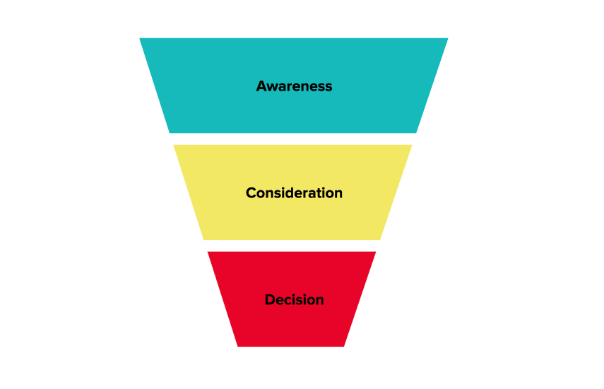
Keep in mind that there are different stages of the sales funnel for every keyword you’re thinking of optimizing content to rank for. You will need to target both transactional and informational keywords to help move visitors along the buyer journey.

An image of the 3 stages of the buyer journey to guide you how to select the best keyword for your website

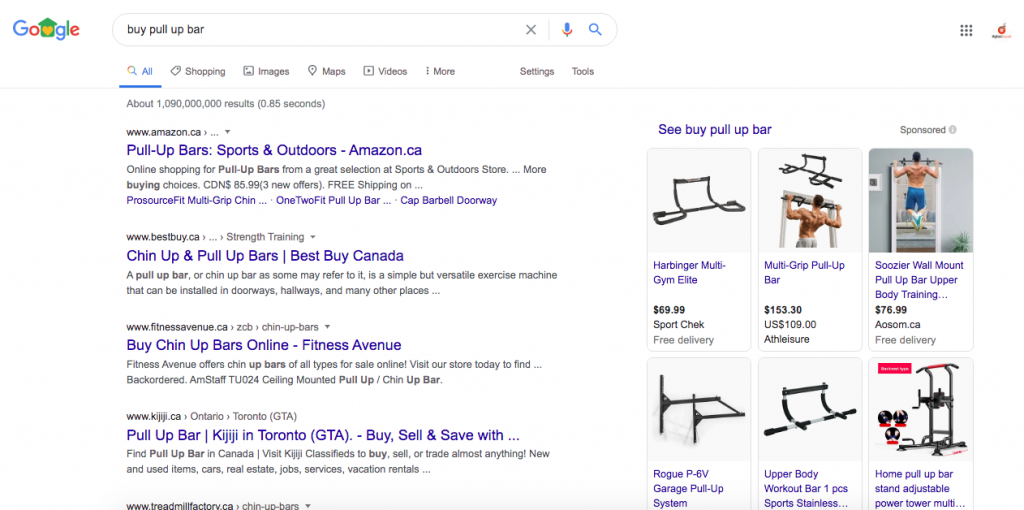
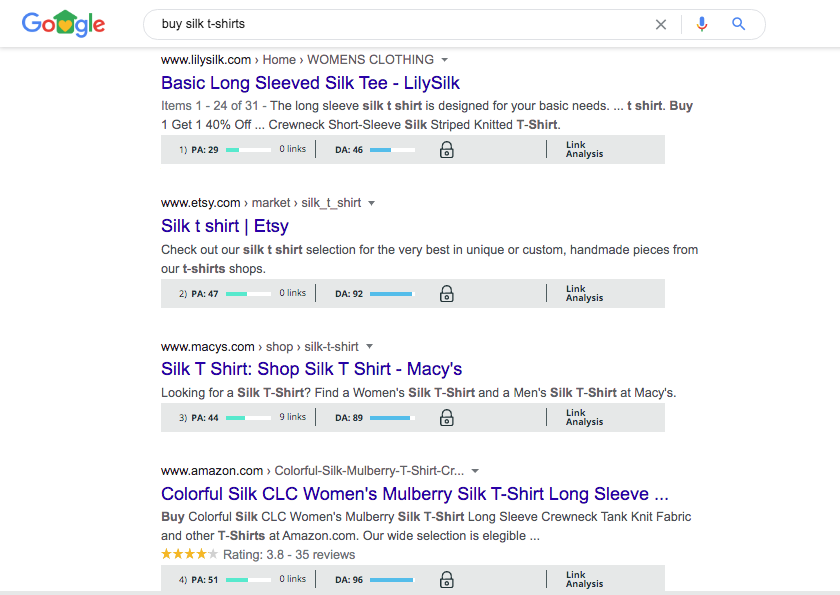
For example, “buy + [your keyword]” is a transactional search term that will trigger a search result that most likely lists ads and product pages.

Transactional keyword search result display

This would be considered at the bottom of the funnel where users have already done their research and are looking to buy a product or service.

Develop keyword options

Some keywords may seem obvious choices, however, you have to consider that not everyone will search like yourself. There are many different ways people search for the same thing. There’s also the possibility that the keyword you’re thinking of may not drive traffic that’s good for your business.

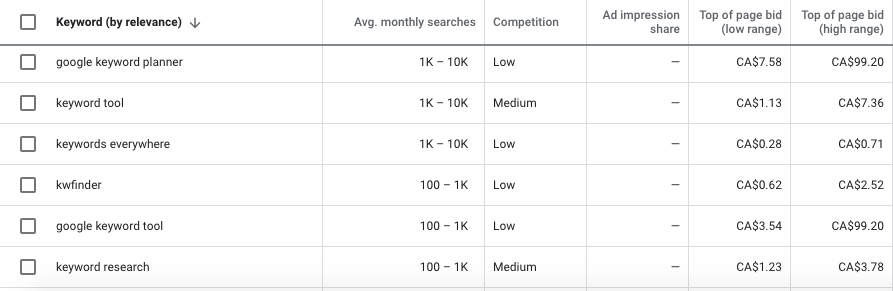
One tool you can use to find popular keywords that convert is the Keyword Planner. This is Google’s tool to use when building an Adwords campaign and can be valuable for generating keyword ideas, estimating traffic and providing clues to commercial intent.

Google Keyword Planner reports the best keywords suggestions for your website along with the metrics for each keyword

The Keyword Planner will generate a list of keyword options along with the volume, competition rating and cost per click. Each value should be considered as an indicator to use in your decision.

Assess volume in relation to conversions

The traffic that is displayed is an approximate value. Keep in mind that volume can sometimes have little bearing on the value of a keyword. It’s one piece of the puzzle that can be used as an indicator of whether your keyword is suitable for your business.

The volume a specific keyword generates should be assessed by the type of traffic drives and how well those visitors are a match to your business.

Assess commercial intent through the CPC bidding system

The commercial intent of a keyword can be inferred by the range of bids that exist for placing ads with Google for that specific keyword.

The low and high bid amount shows you what people are paying per visitor for that keyword on both ends of the spectrum.

The higher the top bid amount, the more inferred value you can assume from the traffic a keyword generates.

Target long-tail keywords

Although seed keywords typically have the most search volume they are not always the ideal keywords to pursue. They are often extremely competitive and convert at lower rate.

Targeting transactional keywords are beneficial however you also need to educate your buyers about your company and product to earn their trust.

Enter long tail keywords.

Long-tail keywords are considered to convert higher because they drive traffic that is a better match to the content you’re producing.

For example, imagine your company sells silk t-shirts.

If you were to optimize for the search term “t-shirts”, it would bring you a lot of irrelevant traffic because of the broad search intent it carries. Your site would be getting visitors looking for cotton, nylon, sports t-shirts, etc.

Many visitors would simply leave your site when they see you only offer silk options. This produces poor metrics (bounce rate, dwell time).

The longer you create a target keyword, the more of a match you can make to the traffic that finds your content.

Optimizing for the term “Silk t-shirts” eliminates a lot of the unwanted traffic your site was generating from the term “t-shirts”

“Silk t-shirts for women” would be an even more specific stream of traffic to target.

Once you’ve identified your seed keyword it’s important to go through the related content that people would be searching. In most cases people are looking to solve a specific problem. Your content should provide as many solutions to problems that people have regarding your keyword topic.

“Silk t-shirts for psoriasis” would target an extremely specific group of people. By publishing a piece of content titled “Why Silk T-shirts Are Good For Psoriasis” you would be driving traffic from a very specific group of people looking exactly for what you’re offering.

Although the traffic is likely to be much lower, the competition will also be lower because of how specific this long-tail search term is.

With a high-quality article making a convincing argument, you can easily move your visitors a step closer to buying your product by targeting a problem and providing the solution.

How to find long tail keywords

Apart from good old-fashioned brainstorming, you can use a few tools to help produce a list of the questions that people ask regarding any keyword topic. One of the first places you should look at is Google Search.

You can get a load of ideas for what people are searching for from Google Autosuggest. This is literally Google telling you “Hey! Here are some popular search terms we’re suggesting will help you find what you’re looking for.”

autosuggest for silk tshorts to find keywords

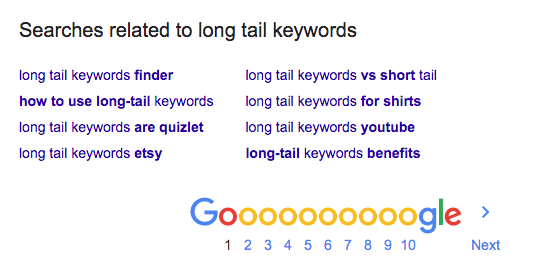
Find related terms in the Searches related to [your keyword] section at the bottom of a search result.

searches related to section of the search engine results page helps to select the best keywords for your page

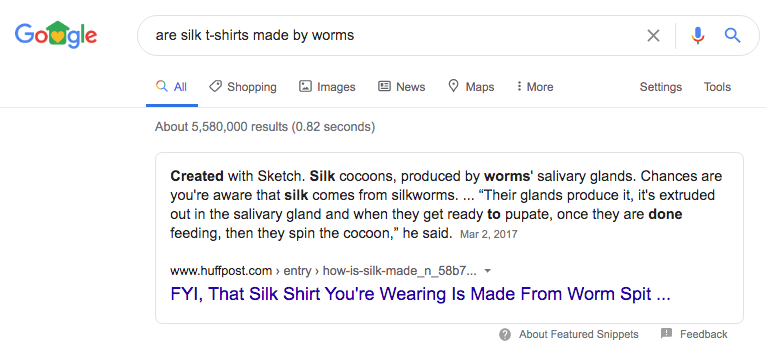
You can get some great long-tail keywords and phrases from Featured Snippets.

Featured snippets can provide the best long-tail keywords for your website

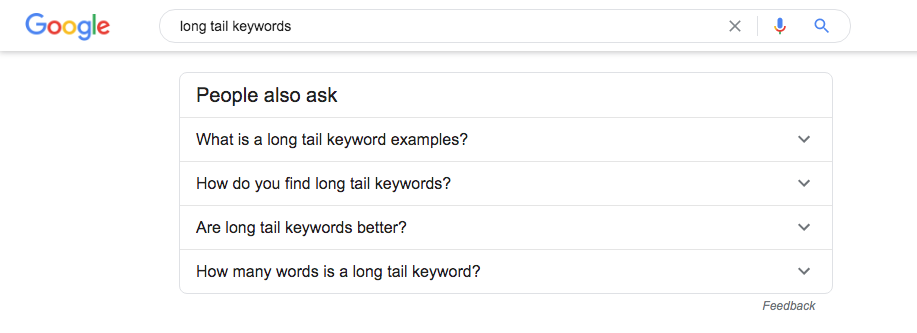
Or PAA Boxes

The PAA box holds important clues for how to select the best keywords for your website.

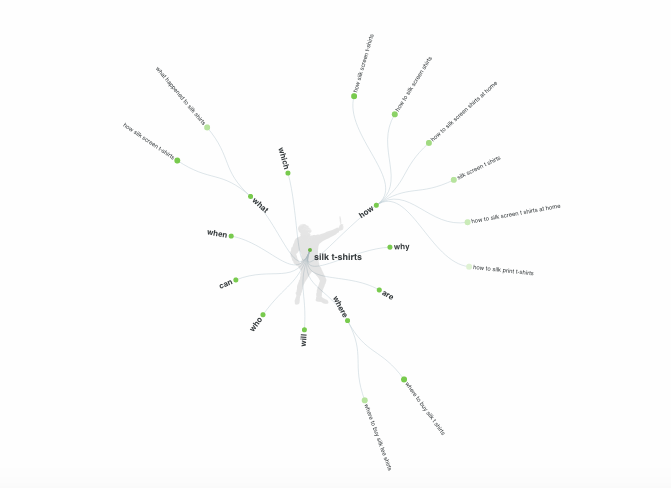
You can use Answer The Public to get a list of questions and phrase matches.

Answer the public keyword result for finding the best keyword related questions for your website

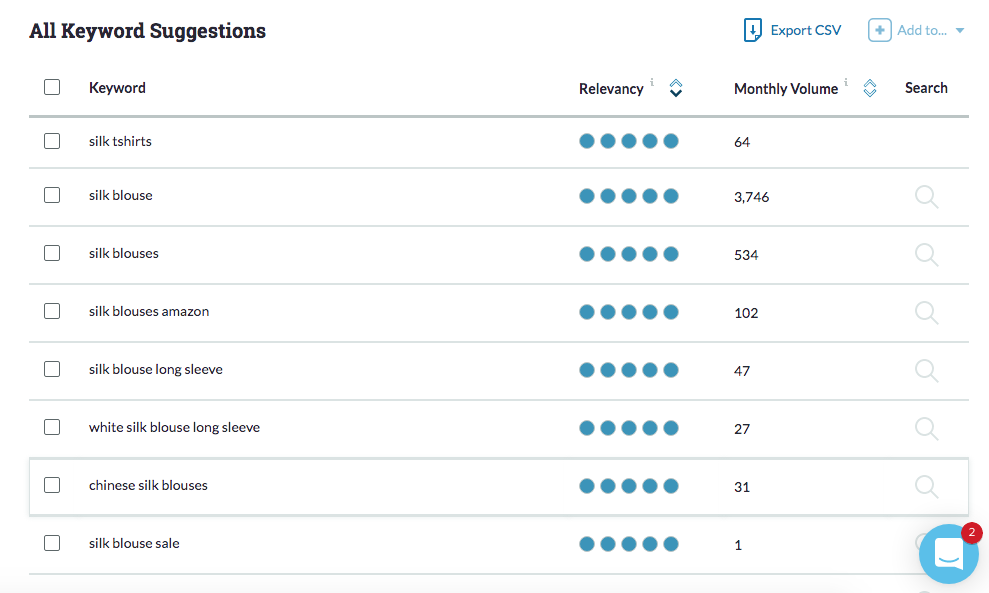
You can use software from the biggest names in the industry such as Ahrefs, SEMRush and Moz. Here is your typical keyword report from Moz.

moz keyword report on silk tshirts

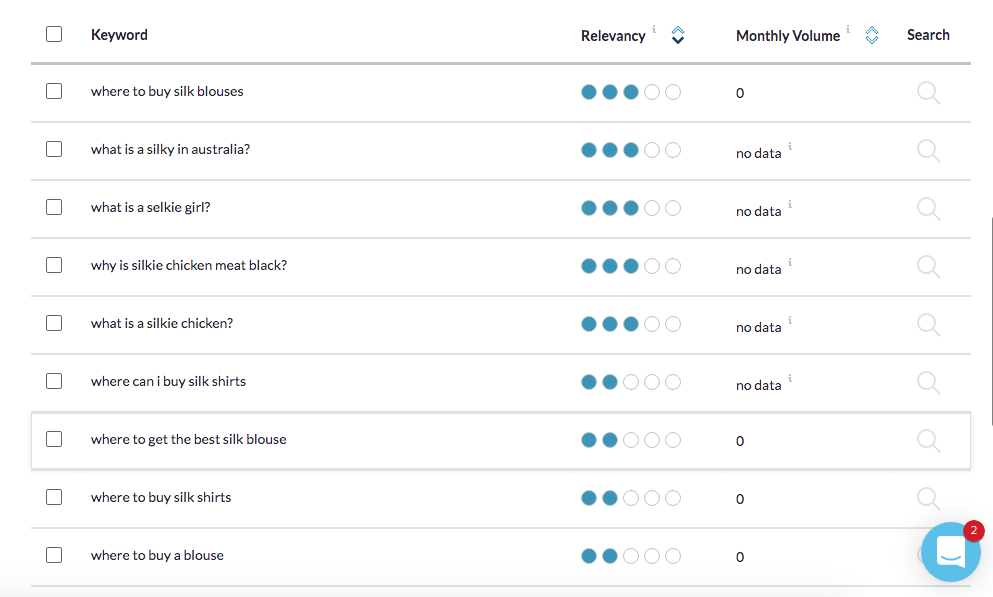
One click on the “questions” tab and your report displays related questions to your keyword.

moz report for keyword questions regarding how to select the best keywords for my website

The process for converting visitors to clients often takes more than just one visit to your site.

This is part of the reason for providing informational content on your blog.

According to a survey by Conductor, educational content makes visitors 131% more likely to purchase from your company.

Being in touch with the problems that are most commonly faced by your audience is critical in your content creation. If you can provide solutions to these problems within your content, you will earn the trust of your audience and move them closer to purchasing from your company.

Perform a SERP analysis

Analyze the SERP (search engine results page) to give you a deeper understanding of what type of search result a keyword generates. The factors you will need to consider are the features Google displays and the competition you will be up against.

Assess the competition

To assess one aspect of your competition you can use Mozbar, a free tool available for download in Chrome. This tool allows you to see the Page Authority, Domain Authority, number of backlinks and the spam score. All metrics are summarized for you right from the search result.

Mozbar helps assess competition to find the perfect keyword for your website

Keep in mind that domain authority is a metric created by Moz and does not reflect the complete picture for how to rank for a keyword. It is merely an indicator to use when determining the strength of your competition. Typically, the higher the DA, the more ranking ability a site possesses.

Account for the SERP features

Take an inventory of the different types of features that are displayed in the SERP. Google has produced over 20 different types of SERP features to better serve the search intent that a user may have for searching a specific query.

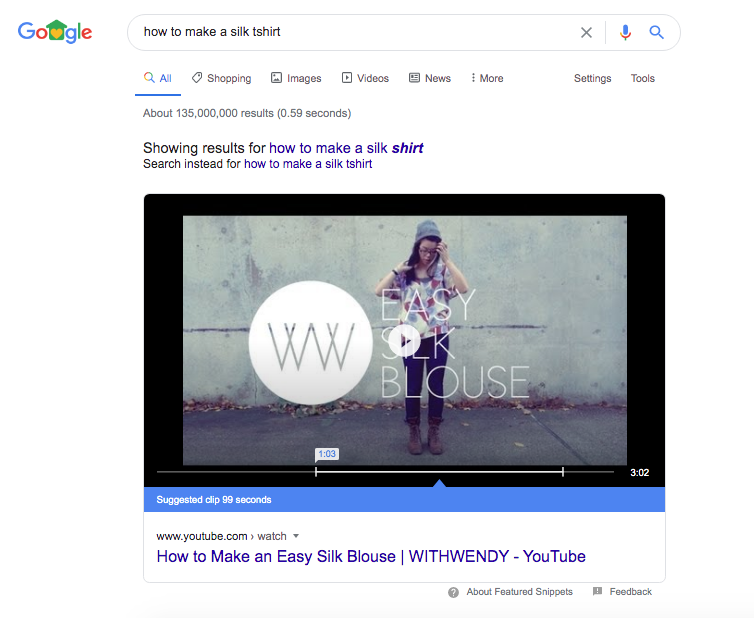
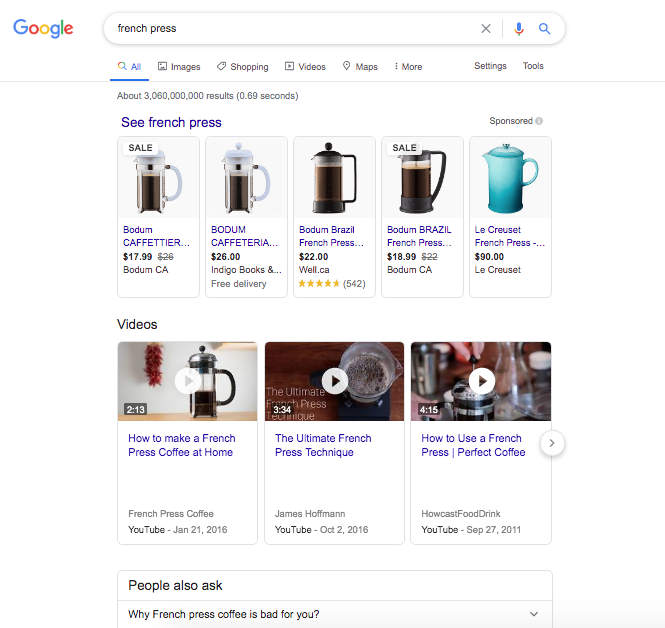
For example, if your keyword triggers a carousel of videos at the top of the page, you will need to consider producing a video to compete for the available clicks for that keyword. “How-to” searches are notorious for producing video results.

Video wins the featured snippet for keyword "how to make a silk t-shirt"
First spot is occupied by a video winning the featured snippet position

There are many phrases that will trigger a featured snippet. It’s important to recognize what terms are triggering the display because it will affect how you optimize your content.

Features that diminish your click-through rate for a specific search term

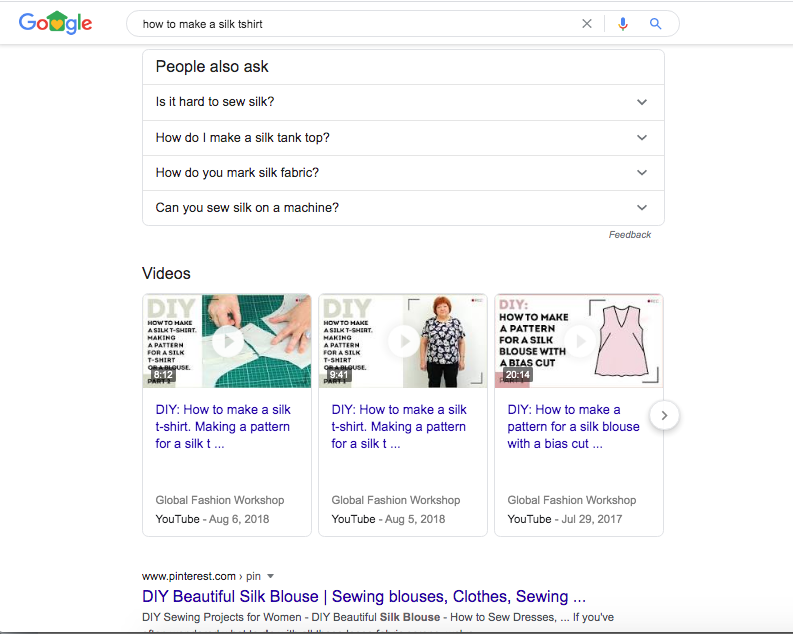
Take note of the different features that are displayed in a search result. Each feature may require a different form of optimization. If you’re not optimized to compete for the position, you may be facing a low organic click-through rate.

Shows the PAA box and Video carousel being placed before the first organic result
The PAA box and video carousel are placed before the first organic result

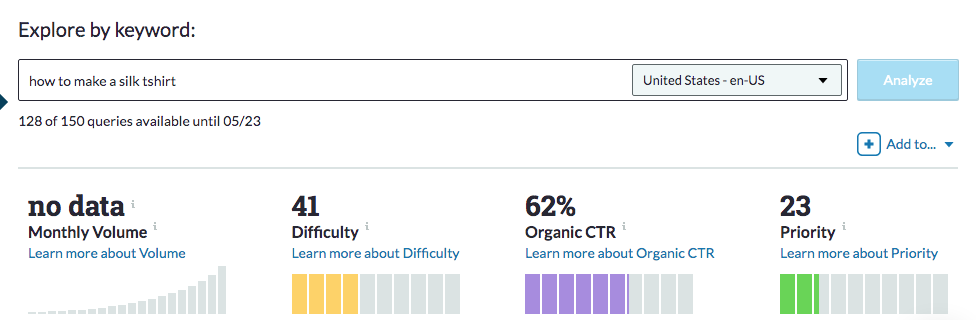
Consider the organic click-through rate

This is a measure of the total clicks that are made to the organic results as a percentage of the total search volume. If your keyword has a low organic CTR, ranking on first page may not be worth the effort to get there.

How to select the best keywords for your website by assessing the organic click through rate

Many of Google’s SERP features have contributed to low CTR for searches that are easily answered by featured snippets and the knowledge graph (calculators, translators, etc.)

Develop an effective keyword strategy

The keywords you choose to pursue will have a direct impact on the relevance of your traffic. Developing a strategy should include keywords that target every aspect of your business and the problems your product or service solves.

A complete and effective keyword strategy is the blueprint for your content creation. By addressing the different stages of the buyer journey and sales funnel, you create content that educates your audience on the benefits you offer.

Each page you publish should serve a purpose within your overall keyword strategy. Keeping users in mind first before search engines will help keep your content focused on providing insight and useful information. Learn how to select the best keywords for your website and you are one step closer to driving traffic that converts.

Keyword research is one of the many SEO services that benefit a company. Contact us today for a consultation so we can select the best keywords that would benefit your business the most.

Related reading:

  • 10 Expert Tips For Writing SEO Optimized Blog Posts
  • 10 Reasons Your Website Doesn’t Rank On The First Page Of Google [Updated List]
Christian Carere
Christian Carere

Christian Carere is the owner and founder of Digital Ducats Inc. in Toronto and heads the SEO team at Austin Bryant Consulting in Plano, TX.  Christian has been published on publications such as Search Engine Watch, Venngage, Small Biz Daily, Grasshopper, Data Box, Socialnomics, and Mention.

old.digitalducats.com/

Written by Christian Carere · Categorized: Content strategy, keyword research, Web development

  • « Go to Previous Page
  • Go to page 1
  • Interim pages omitted …
  • Go to page 4
  • Go to page 5
  • Go to page 6
  • Go to page 7
  • Go to Next Page »

Footer

Need professional SEO advice?

Give us a call to learn more about how we can help your business

Call for a consultation Request a proposal

Request a free website analysis and proposal for your company by filling out the ” Request a Proposal” form.

  • Privacy Policy
  • Terms Of Service
  • Cities we’ve served

© 2026 · Digital Ducats Inc.