• Skip to main content
  • Skip to footer

Digital Ducats Inc.

SEO Consulting & Services

  • Home
  • About
    • SEO Consulting
  • Services
    • SEO
    • Local SEO
  • Contact
    • Pricing
    • Write For Us
  • Blog
You are here: Home / Archives for Web development

Web development

Jan 25 2021

6 Different Types Of SEO Techniques

SEO is a practice that consists of many different tactics, strategies and efforts. It’s an umbrella term that can cover a wide spectrum of different types of SEO techniques that will make your website more optimized for search engines.

Types of search engine optimization techniques

Some websites will need more than one type of SEO than others. Knowing which types of SEO techniques your website needs puts you in a position to improve your search visibility for target keywords.

The following are some of the major types of SEO techniques that you should be aware of. All SEO practices can be classified into one of three categories: White, Black and Grey hat SEO. 

Although it would be rare to find an SEO company that operates using black hat SEO, it’s important to know what it is and how it can affect your website.

#1-Black hat SEO

Black hat SEO has a very negative connotation attached because it consists of SEO practices that deliberately break the rules search engines try to enforce. Black SEO is any practice that is considered to “game the system” such as sneaky redirects, doorway entrances, automated link building, paid links and type of activity that provides an unfair advantage in the ranking.

Is blackhat SEO considered unethical?

Blackhat SEO is considered an unethical practice in the context of a client and SEO provider relationship unless the provider is being upfront with their practices and explains the risks. If not, the provider could be taking on high (and unnecessary) risks for a quick gain, jeopardizing the status of the clients’ website.

The penalties for violating Google’s SEO best practice guidelines and terms can range from a mild slap on the wrist (decrease in the ranking from an algorithmic filter) to a full-fledged de-indexation of your website (Google exile enforced by a manual penalty).

The only way to recover from a manual penalty is to reverse any wrongdoing and submit an appeal for re-evaluation. Even if your re-evaluation is approved, many violators have said their rankings are never the same and it’s more difficult to gain Google’s trust again.

For this reason, black hat SEO is not an option for most legitimate SEO companies.

An image of two types of SEO techniques: black and white hat seo

#2-White hat SEO

White hat SEO is all of the recommended practices for developing a website and improving its search visibility that fall within Google’s guidelines. White hat practices include publishing high-quality content, natural link building, on-page optimization, and off-page optimization.

White hat SEO is usually a longer process because it takes time to develop content and even longer to accumulate links naturally. The fact that pure white hat link building takes so long has influenced even SEO companies to dabble in grey hat link building.

#3-Grey hat SEO

Grey hat SEO is just as it sounds. It’s the in-between area or “grey area” that neither completely falls within the guidelines, but is not exactly punishable by definition.

Link building, for example, is an issue that many SEO companies struggle with at scale because it’s important to get results for clients in a relatively short amount of time.

Grey hat SEO are the types of SEO techniques that are in between white and black hat SEO

Google’s perspective on link building

According to Google, links should be acquired naturally, which means users not only have to find your website but like it so much that they link to it to share it with others. This is all good in theory but with 2 million blog posts being published every day what company wants to wait around hoping people are going to link to their website?

Outreach is a white hat SEO practice that is still heavily favoured by SEO companies because it’s reaching out to people asking them to link to your website. This can take an enormous amount of effort and time and at the end of the day,  you’re at the mercy of other website owners to give you a link.

Enter grey hat SEO.

The devious nature of PBN’s

Many SEO companies will build their websites and link to their client’s websites. There are already a few of your reading this, pointing your finger and screaming,

“Witch! Black Magic! That’s a PBN! Private blog networks websites are illegal” 

Fine. You may be right however, there is a grey area that this falls into when the website is built, developed and nurtured as a real, purposeful website. How can Google tell the difference between a PBN website and a normal website?

Example of how PBNs are set up to raise authority and ranking ability

PBN’s were targeted a few years back when they were extremely effective and working to rank websites quickly. All you had to do was buy an expired domain, slap an article on the homepage and link to your website. 

Here is what a bad PBN website looks like that leads to a Google penalty.
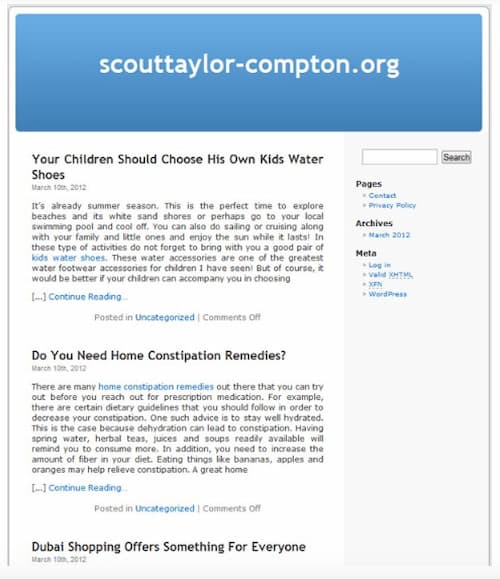
Bad PBN website example

What about this website? Is it a PBN or a real website?
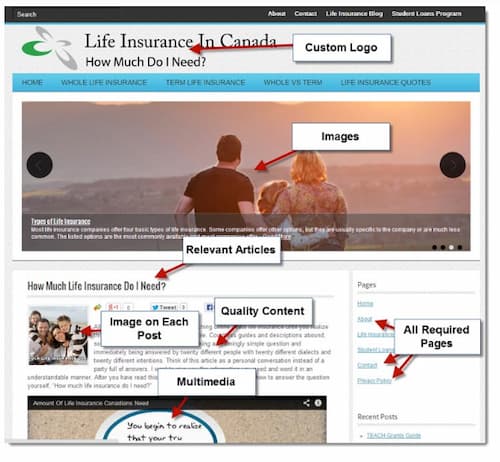
A good PBN website is one of the many types of SEO techniques that are used today

If a website is publishing articles regularly and has real traffic flowing through it, who’s to say it’s being used solely for link building?

That is an example of grey hat SEO link building-when white hat practices are bent to give more control over the links that a website acquires. It happens all the time and it works very well if you’re good at it.

#4-On-page SEO practices

The optimization of a web page can go into many different degrees of compliance. There’s the technical aspect of optimizing a page to account for what search engines reward as well as the overall user experience that it provides. After all, what’s good for users is good for search engines.

Keyword optimization

One of the more infamous forms of optimization is keyword targeting. To influence a stronger appearance in the search engines for a target keyword, the keyword should be placed in specific parts of a page to enhance on-page optimization. These areas include but are not limited to:

  • Title
  • URL
  • First 100 words (the first paragraph is even better)
  • Keyword synonyms in subtitles
  • Image alt tags
  • Meta Description

It’s important to note that this method of optimization is not as powerful as it used to be. The days of ranking pages according to keywords on-page is now over. Search engines will use the topical optimization of the page as a larger ranking factor.
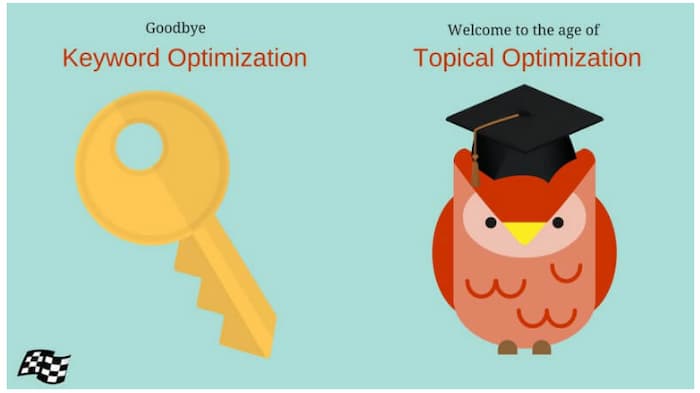
keyword optimization has been replaced with topical optimization as one of the newer types of SEO techniques

Keyword topic optimization

It should be noted that search engines have evolved past the point of relying on keywords in the metadata to define what a page is about. The ability to provide information in a way that users engage with is a major aspect of how well your page ranks for specific search terms.

To improve the way your page performs in a search query it should have the ability to satisfy search intent by covering a keyword topic in its entirety (as it pertains to the search). This type of coverage creates a resource for users and makes the page relevant to related searches since it is likely covered within the content.

Search intent optimization

The true intent the user has for initiating a search is referred to as user intent and/or search intent. When a user can end their search on a page it is considered to have satisfied their need to search further and thereby satisfies search intent.

To enhance the ability of a page to satisfy search intent you can link to related content that enhances the user’s experience. The connection your page has to relevant resources improves the amount of information you’re providing to the user. This helps the user in their search and therefore contributes as a positive ranking signal for searches related to your keyword topic.

Search intent optimization image that shows the steps to solve and satisfy user intent

User experience optimization

One of the aspects of optimization means making your page more user-friendly by providing an enjoyable experience. This task can sometimes be fairly technical, while on the other hand there is a creative aspect to improving the user experience.

Technical improvements

Page experience can be accounted for systematically since Google provides the exact formula for performance. Your website needs to perform in the following categories to be compliant:

  • Core web vitals
  • HTTPS
  • Safe Browsing
  • Mobile-friendly
  • No interstitials

Creative improvements

On the creative side, the user experience improves according to your decisions regarding the uniqueness of your page. For instance, the type of multimedia you choose makes a difference to how the user interacts with your content.

Video content

If you have a video to explain your page, it provides an additional way for your content to be consumed. Since 0ver 70% of users prefer video as a means of learning about something, it means you’ve improved the user experience for at least 70% of your audience.
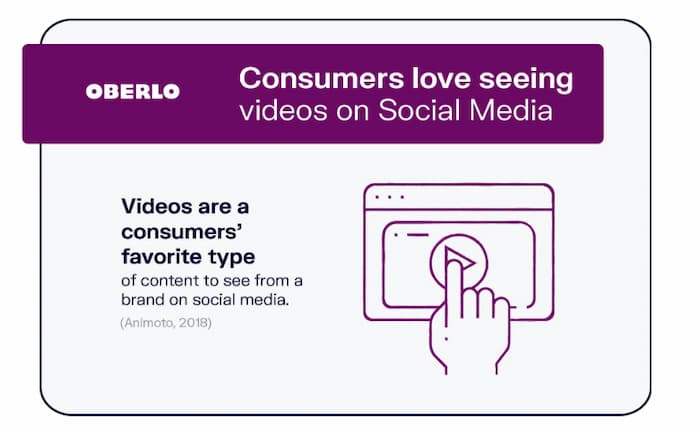
Videos are the most popular form of content to see from a brand on social media
Slideshows

In some cases, having a slideshow may work even better than a video. As an alternative form of content, you can create a unique experience for users and in effect, separate your page from the masses.

Audio files and podcasts

Podcasts have taken off over the last few years and more and more people are gravitating towards them as they’ve found a place for them in their everyday lives.

Adding multiple types of media can improve the quality of your content and therefore help to rank higher in the search results. One way of looking at is to ask yourself,

“Would the world miss my content (or website) if it were to suddenly fall off of the face of the universe?”

If it would leave a gaping hole in your niche, then you know you’ve done a great job in providing users value in your content. If your pages are easily replaced and are as similar as everyone else’s, you have room to improve the quality of your page and content.

#5-Off-page optimization

Optimizing your site off-page is one of the more well-known types of SEO techniques. Search engines, especially Google, consider off-page optimization to be a highly relevant ranking factor that can heavily influence where your website appears in keyword searches. PageRank is what Google uses as one of the major indicators for determining the order in which websites are displayed in the search results.

Establishing credibility and authority

PageRank refers to a page’s ability to rank based on a scoring system that is designed to reflect the popularity, credibility and trust of a website. PageRank is often misinterpreted as domain authority, which is also a term that alludes to ranking ability. 
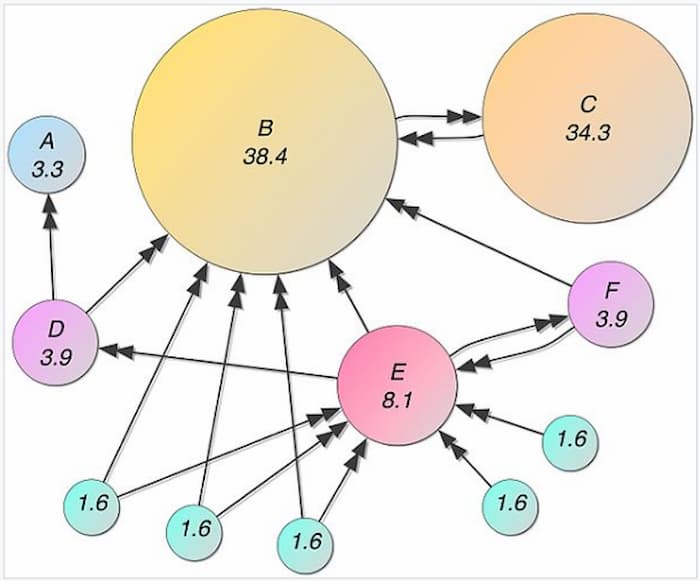
Example of PageRank visualized by a web of websites linking to one another

Domain authority is primarily based on backlinks, but rather than using Google’s proprietary formula, it is based on the quantity and quality of backlinks by third-party companies. These companies provide a metric for the authority of the domain as well as a page itself. It can be measured in a few different scales of measurement:

  • DA/PA (domain authority and page authority) was invented by Moz.
  • DR/UR (domain rating and URL rating) was invested by Ahrefs.
  • TF/CF (trust flow and citation flow) was invented by Majestic.

Why is domain authority important?

The ultimate goal of any search engine is to provide the most relevant and helpful results to a user when they type in a keyword. To do this the search engines not only need to assess the relevance of the content, but also the authority and credibility of the website that has published this content.

How to improve domain authority and credibility

Authority and credibility are measured by the overall number of websites that vouch for their content by linking to their pages. The quality of the linking websites plays a big role in the impact of the links that are acquired. 

To improve the authority your domain has in its niche you need to acquire backlinks from other quality websites that have authority and credibility in the same niche or a close vertical to it.

Link building is one of the most powerful types of SEO techniques to use for increasing search visibility.

Build citations

One of the first steps to building links is to acquire citations from popular directories and review sites. These types of sites are already trusted by search engines such as Yelp, Yellow Pages, Manta, Foursquare, etc. They provide the first layer of trust and can be considered a natural way of acquiring backlinks.

Build high-quality links

As the name “The web” infers, the internet is a web of linked websites. The PageRank theory precludes that the most credible and popular websites should have the most backlinks because they are being shared the most because of the quality of their content. 

The secret to a higher ranking is to therefore build high-quality links from websites that are relevant to yours.

HIgh quality link building means moe time spent on quality content

What is a high-quality link?

A high-quality link comes from a website in which its visitors would be interested in your content. That would prove the relevance between websites and therefore be good for both users and search engines.

The linking website will power up this type of link if it has a high volume of search traffic or a high number of quality links (from websites that would be a good fit to link to yours). 

The effects of a quality link should do one or both of the following;

Provide quality referral traffic: The visitors that arrive on your site via the link should be engaged with your content for the link to be effective. Engaged visitors eventually lead to a goal conversion-which can be anything from an opt-in to an email list, on-site purchase or a phone call.

Possess powerful authority: When a website’s authority metrics are powerful enough to lift your website’s authority metrics, it can be considered a good link. Higher authority means more ranking ability.

The off-page optimization is not only limited to external links. Internal links can also be a powerful form of optimizing a page for a keyword topic or specific search term.

Internal link building

You can optimize a page for a specific search term or topic by linking from other internal pages within your website. Internal links are a way of pointing users to relevant pages that relate to the content they’re currently consuming. 
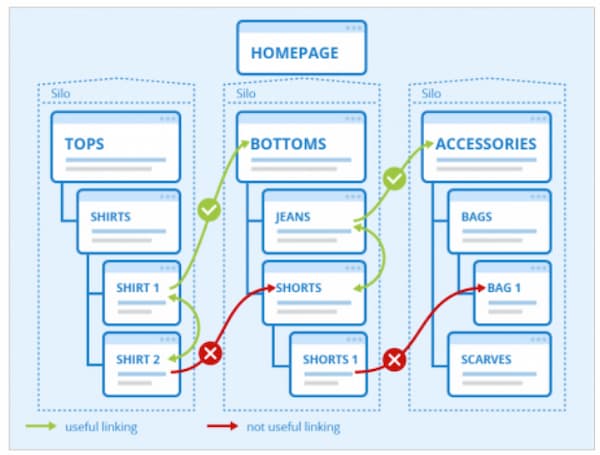
Internal link building is an SEO technique that leads to improved user engagement statistics
Image source

Make use of optimized anchor text

By linking with the keyword as anchor text you can enhance the optimization of a page. When search engines see that a specific term is being used to link to the page, it directly communicates the importance of the term. 

There is the possibility of over-optimization so the use of keyword synonyms is highly recommended.

Share link equity

Internal link building spreads link equity. A page that has a high number of links, and therefore a high page authority, will pass on authority when it links to another page on your website. 

Increase authority by sharing link equity via internal links.

Build topic clusters

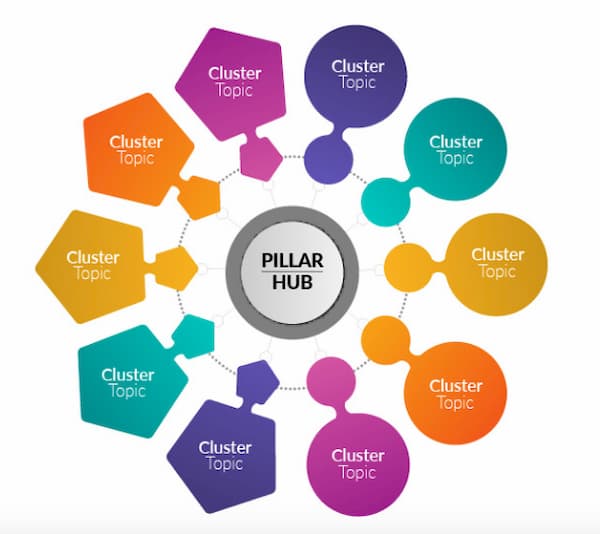
Topic clusters are an effective way to create a content hub that links related content together. The structure of linked content will often point to one core page, known as the pillar page, which covers the topic in breadth. 

Example of a pillar page with cluster content which forms a topic cluster.

Linking to a pillar page within a topic cluster improves the authority of the page, which contributes to higher rankings.

Technical optimization

Not all off-page optimization comes in the form of content. There are also things you can do to improve the technical performance of your website and its pages.

Page speed

The time it takes your pages to load is a direct ranking factor. Off-page optimization tactics could include the implementation of a CDN, choosing the best hosting options and leveraging browser caching-all tactics to increase page speed.

Indexing issues

The issues that affect indexing can often be found off-page. For example, search engines use the robots.txt file as an instruction manual for which pages to index. If there’s a mistake in that file it could stop your pages from being indexed-which means no one will see them at all.  

#6-Negative SEO

Negative SEO is a way of attacking the credibility and authority of another website by linking it to unrelated websites. This unethical practice is one of the types. of SEO techniques that usually come in the form of automated link building where the victim site is targeted and the software will automatically build thousands of links to its pages.

Google has become fairly good at detecting malicious attacks and will for the most part ignore massive amounts of links when it’s obvious they aren’t aimed at manipulating ranking.

The more devious attacks can be successful when the attacker uses relevant anchor text repeatedly and links to sites that will negatively impact credibility.

The solution to negative SEO

The solution to negative SEO attacks is to use the Disavow links tool. Google provides this tool to exclude links that are being built to your site which you can’t control.
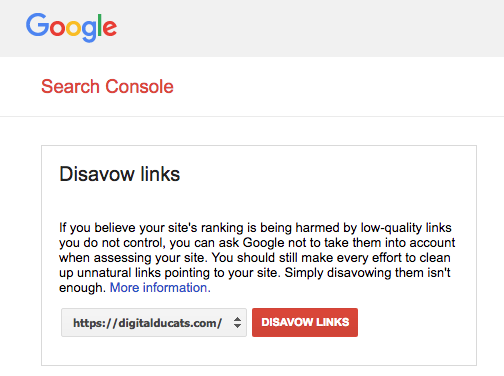
Disavow tool is used to exclude links from being counted towards your backlink profile

Upload a disavow file to the tool and once it’s processed, the links will be discounted from your backlink profile.

This tool is a must if you’re issued a manual penalty for link building and can’t get the website owners to delete your links (as is commonly the case when links are automated).

Choose the types of SEO techniques that works best for your website

As you can see, there are many different types of SEO that are available to improve your search visibility as well as SEO practices to hurt your or other people’s websites. Not every website will require the same approach so it becomes necessary to prioritize a list of goals and assign the correct strategies and tactics to achieve them. 

If you have any questions about the SEO strategy your website should implement, feel free to call or send us a message for full website analysis. Our team will develop a custom strategy to include the exact types of SEO techniques that make your site rise in the SERPs and dominate the competition.

Christian Carere
Christian Carere

Christian Carere is the owner and founder of Digital Ducats Inc. in Toronto and heads the SEO team at Austin Bryant Consulting in Plano, TX.  Christian has been published on publications such as Search Engine Watch, Venngage, Small Biz Daily, Grasshopper, Data Box, Socialnomics, and Mention.
old.digitalducats.com/

Written by Christian Carere · Categorized: Link building, On-page optimization, SEO strategy, Technical SEO, Web development

Jan 22 2021

11 Tactics To Increase Landing Page Conversions

Landing pages are an essential part of the marketing funnel. The sole purpose of a landing page is to achieve a specific goal conversion that moves visitors closer to purchasing from your company (deeper into your marketing funnel) or guides them to the purchase itself. When you are able to increase landing page conversions you directly increase the number of leads and revenue your website generates.

Before we go any further, let’s take care of the basics.

What is a landing page?

A landing page is a page that is specifically designed to explain an offer to visitors, demonstrate the benefits and guide them to a specific conversion. Landing pages are used for lead generation and increasing sales a company generates from its website.

Why are landing pages so valuable?

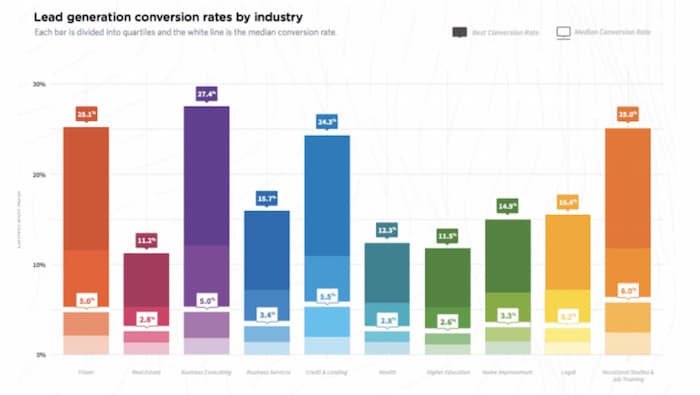
Ultimately, landing pages are used to increase revenue. The average conversion rate of landing pages (across industries) falls between 3-5.5% according to a recent study by Unbounce.

Bar chart showing the average conversion rates by industry on landing pages

Create multiple landing pages on your website to facilitate more conversions and ultimately increase the revenue your website generates. Here are a few tips and tactics to help you increase landing page conversions.

#1-Update your headline for higher CTRs

Your headline is the main attraction when a user is choosing between pages in a search result. Spend time crafting multiple headlines to get the most attention from your audience and increase click-through rates.

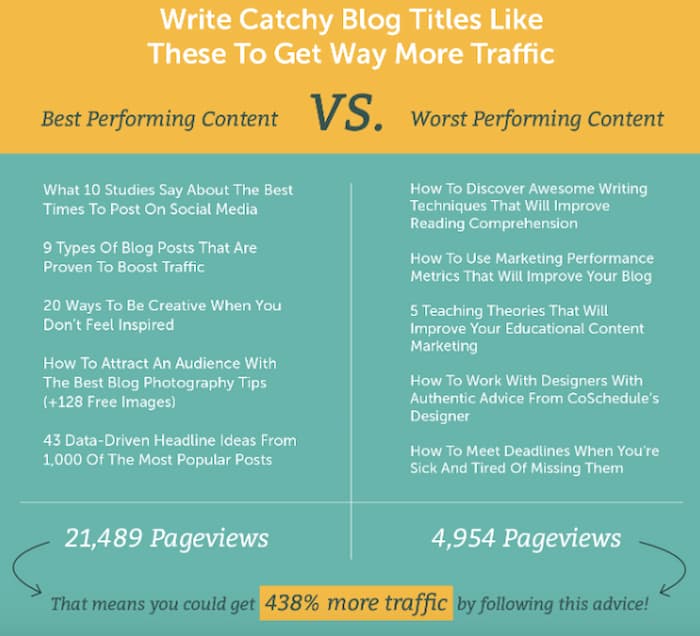
Infographic showing catchy headlines and how they improve click-through rate

Update your headline periodically to keep it fresh and relevant to users. When you find a headline that is working well you’ll need to split-test before making any final decisions.  

There are dozens of tools you can use (see AdEspresso below) that allow you to test the effectiveness of multiple headlines.

Adespresso example of a headline split-test to increase landing page conversions

#2-Use social proof within your copy to boost confidence

Did you know that 72% of people trust an online review just as much as a personal recommendation? Think of the impact reviews and testimonials can have on the credibility of your business. It’s imperative to include social proof of your product or service within the copy of your landing page.

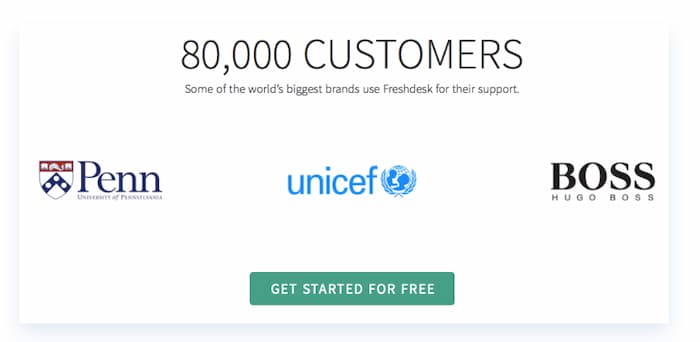
Freshdesk is an example of how to use social proof to increase landing page conversions by showing how many clients already use their service

If possible get a few clients to write a testimonial specifically speaking about what your product or service has done for their lives. Include a photo to give your testimonial the most credibility.

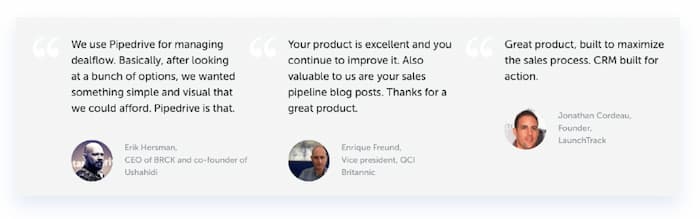
Increase landing page conversions by using the testimonials of clients and influencers

If you have a strong social media following or a large subscribership, that can also be used to provide social proof of the value of your content.

#3-Focus on one Call To Action

Choose a single CTA to limit your visitor’s options for what they can do on your landing page. With only one option, you increase the probability of your visitors completing the goal conversion since there are no other distractions to lead them away from making a decision.

If you give your audience more than one option it can confuse them as to what they need to do which in many cases results in no action. Constant prodding and guiding in the same direction is a recipe for success on a landing page.

Here is an example of a good single CTA by Digital Marketer. The only option is to fill out the contact form in order to receive the download. No confusion there.

Use a single CTA like Digital Marketer to avoid confusion and increase conversions on your landing page

#4-Use contrasting colours on your CTA buttons

It’s just common sense to make your CTA buttons stand out as much as possible. Use colours to make your CTA stand out and scream “Push me” to increase landing page conversions from more user interactions.

Example of how to make a CTA button stand out by using contrasting colour

The more the user is drawn to the button, the more likely they are to push it. Make your buttons noticeable and attention-grabbing for the best results.

#5-Split test everything

To maximize the conversion rates on a landing page you have to split test everything interchangeable. For example, it’s impossible to know whether a green CTA will be more effective than an orange CTA without getting the data from real user interactions.

Test different headlines, length of opt-in forms, background colours, CTA buttons, images, videos and everything that can be tested. Split testing the things on your page that could affect the conversion rate will optimize your page and maximize your results.

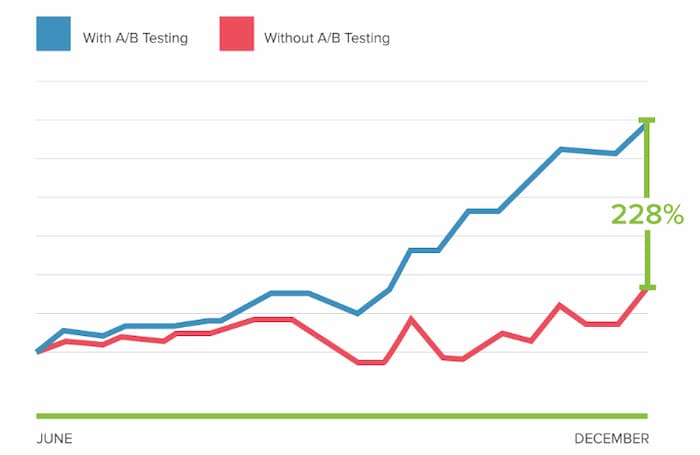
Here are a few examples of the difference split-testing has made:

Three examples of companies that experienced growth in landing page conversions

#6-Make sure your headline matches the offer

One problem that site owners can encounter is a mismatch between the headline and the actual offer/content. Avoid sensational headlines to attract more visitors without actually backing the headline up with the content.

If a visitor doesn’t see what the headline promises, they’re going to leave the page immediately. A misleading headline leads to higher bounce rates and lower conversions.

#7-Use high-quality images

The use of images has been known to help users retain more information as well as make content easier to digest. Use high-quality images to help convey a stronger message and set the tone of your offer. It’s no secret that visual content is an essential part of creating high-quality content. As the list of multimedia continues to expand, users expect more than just text to consider a page worth reading.

#8-Embed a video

If a picture is worth a thousand words, you can only imagine what a video will do for your message. Videos have been known to increase conversions by as much as 80%.

Increase conversion rate of your landing page by 80% with a video

A video provides a more personalized touch and is the preferred method of consuming information by over 70% of users. Try using an explainer video to provide an additional method of getting through to your audience on topics that range from basic to advanced.

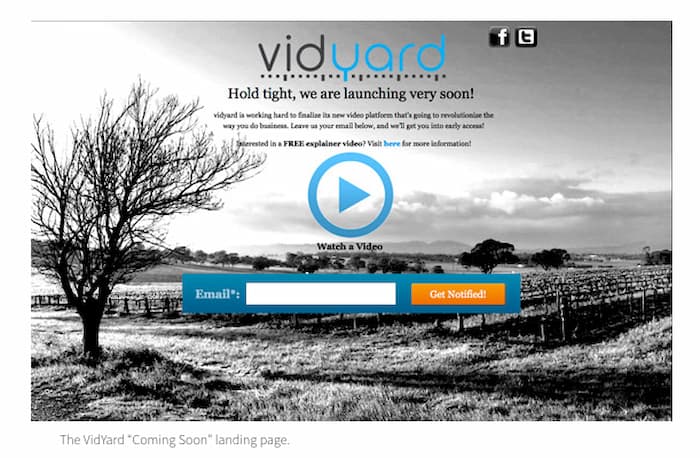
Vidyard created a landing page and split tested the results of using a video using Unbounce. 

Vidyard landing page with video

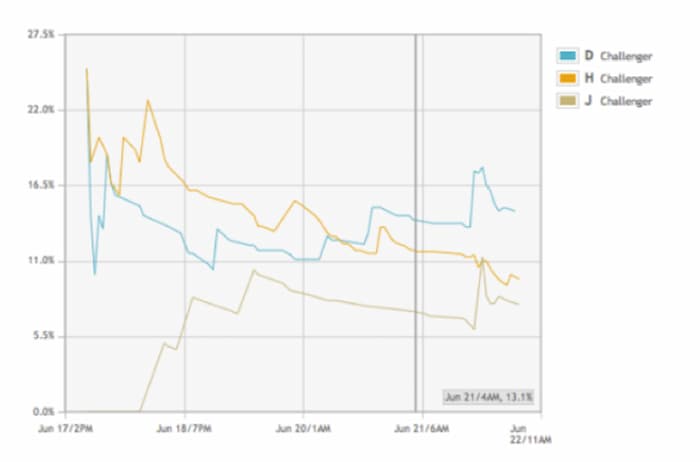
The results were definitive.

Video landing page results show increase in conversions
Vidyard landing page split test results

#9-Touch on a pain point

One of the most powerful reactions you can elicit from your audience is the avoidance of pain. People want to avoid pain at all costs. Touch the most common pain points associated with your product and then explain how your product provides the perfect solution.

The connection between your product as a way to eliminate the pain associated with a problem increases conversion rates. 

Here is an example of how this landing page plays on the frustration of low conversion statistics. 

Example of headline that addresses pain points to increase landing page conversions

#10-Touch on a pleasure point

Paint the picture of the most attractive benefits of using your product to elicit feelings of pleasure. By creating the scenery and most desired situation of what you’re offering you can show your audience the feelings that could be theirs should they decide to move forward in the buyer journey.

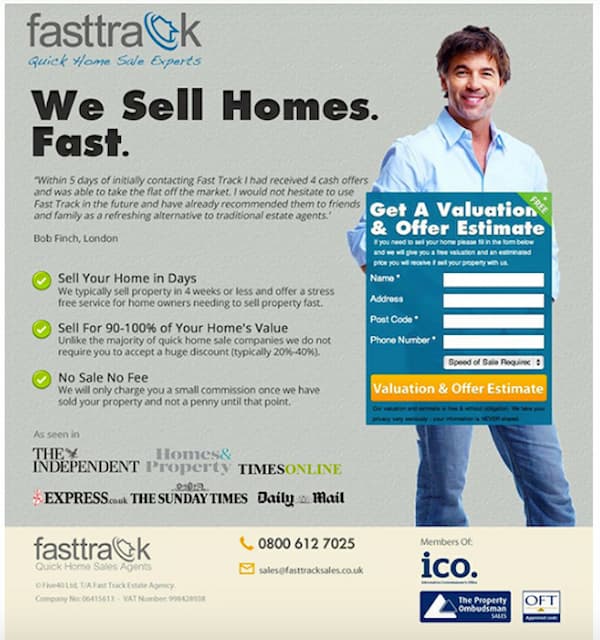
Here is an example of Fastrack using the idea of selling your home quick and painless as a way to increase landing page conversions.

Example of Fastrack using pleasure points to increase conversions on their landing page

#11-Remove links and navigation

Landing pages are highly focused on achieving a single conversion goal, which means there is no need to lead your visitors to other pages. Remove all links and the navigation bar (if possible) to eliminate the distraction of clicking through to another page on or off-site.

Landing pages that only allow one action-the goal conversion, tend to convert at higher rates than those that allow users to leave without achieving the goal.

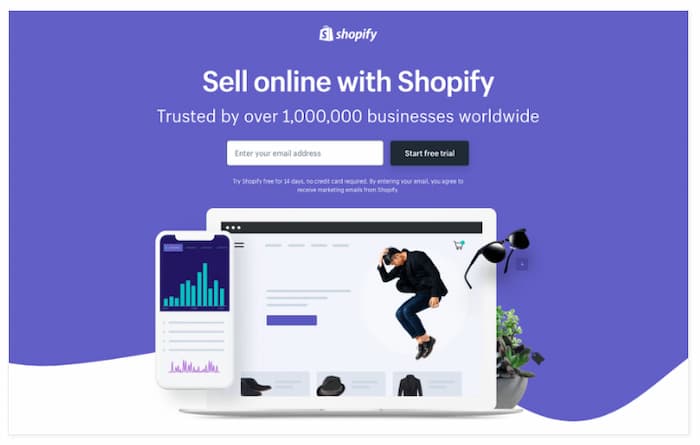
Here is an example of how Shopify corners users into one option on their landing page.

Shopify is a prime example of a website that removes navigation to increase landing page conversions

Watch landing page conversion rates rise dramatically

One of the most important things to remember when optimizing your landing pages is that there are no absolute rules that apply to every industry. To maximize conversions you have to monitor, track and split test results. This leads to a better understanding of your audience and how they react to various aspects of your page.

Most companies find that creating more landing pages raises the overall conversion rates of a website. Use landing pages for specific keywords and remember that the way your users are finding your page is important to how you optimize your page.

Mobile optimization will be different from email marketing or pay per click optimization. Either way, you choose, continue to discover the options that will increase landing page conversion rates to generate more revenue and new clients for your business.

Christian Carere
Christian Carere

Christian Carere is the owner and founder of Digital Ducats Inc. in Toronto and heads the SEO team at Austin Bryant Consulting in Plano, TX.  Christian has been published on publications such as Search Engine Watch, Venngage, Small Biz Daily, Grasshopper, Data Box, Socialnomics, and Mention.

old.digitalducats.com/

Written by Christian Carere · Categorized: Content strategy, SEO strategy, Web development

Jan 18 2021

Page Experience: Core Web Vitals Are On Google’s Radar

It was in May 2020 that Google announced the introduction of Core Web Vitals in Google Search Console. There should be no surprise that Core Web Vitals are now going to be included as a ranking factor pending the Page Experience Update in May 2021.

There's a ton of information about them starting at https://t.co/LPlEXdVKxy – that's where I tend to go. LCP is similar to the page loading speeds you've probably looked at, but it tries to figure out when the primary elements are visible, which is what users care about.

— 🍌 John 🍌 (@JohnMu) May 28, 2020

If you’ve been reading about how search engines work, you may have come across the fact that they like when websites provide users with an enjoyable experience. If a user is satisfied with the results provided there’s no need to continue searching.

This is the underlying reason for the Page Experience Update. Google is adding core webs vitals as new ranking factors to consider when assessing the overall experience a page provides to the user.

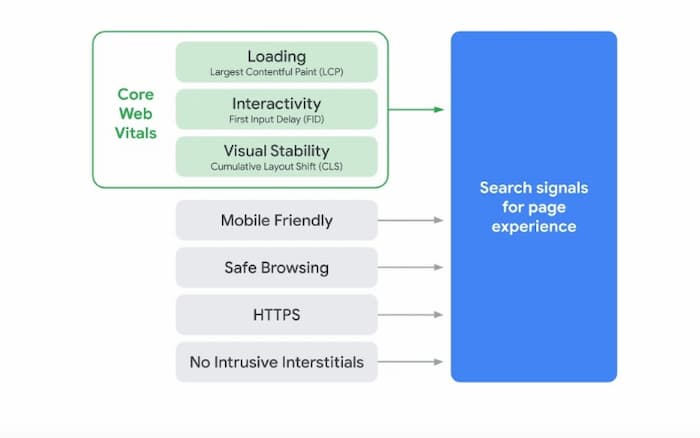
Core web vitals are being added to the page experience ranking factors

Page experience can be broken down into the following major categories:

  • Core Web Vitals
  • HTTPS
  • Safe browsing
  • No interstitials
  • Mobile-friendliness

Google already considers page experience as an influencing ranking factor with the exception of the new additions within the core web vitals. 

All truth be told, page speed is already a ranking factor but it is now being broken down into three metrics that make up core web vitals. The May 2021 update will mark the start of including those metrics in Google’s ranking algorithm.

Core Web Vitals

There are three components to measuring core web vitals. Each of the components has a direct impact on the user experience your website offers.

Largest Contentful Paint (LCP)

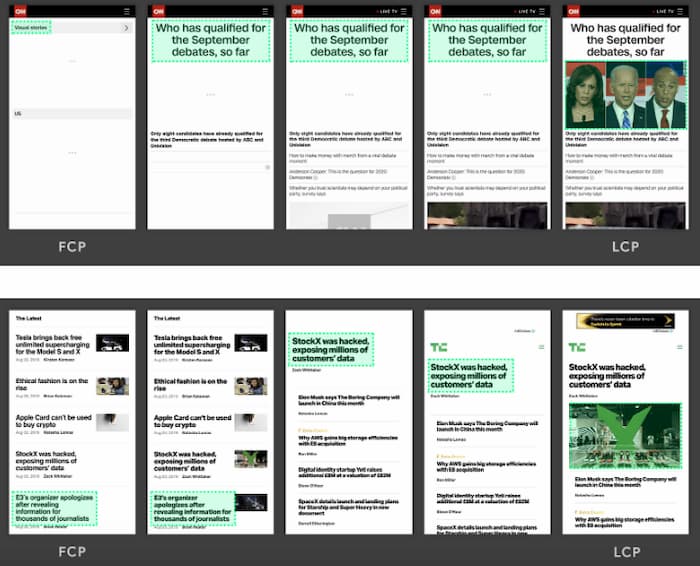
The LCP is considered the time it takes the main content on your page to load. Users need to see the major content of the page (text block, image or video) before feeling satisfied that the page is useful. According to Google, that moment is the LCP.

Here is an example of where the LCP loads later in the page poad time.

Example of LCP loading late which is considered a poor page experience

Here is an example of where the LCP loads closer to the beginning of the pages total load time.

Example of the LCP loading early contributing to a better page experience.

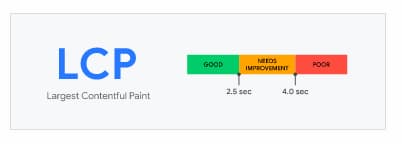
To provide a good user experience the LCP of your website should be at or under 2.5 seconds.

The scale for LCP that shows what's good, poor and needs attention

First Input Delay (FID)

The FID is a measure of the time it takes your website to be interactive. It measures the time it takes your website to respond to a command such as pressing a button, clicking on a link or interacting with an on-page feature.

The greater the delay in interactivity, the worse the user experience. If a user clicks on a button and there is no response they may click on it again or click on other buttons which can result in unintentional actions.

The FID should be maintained at a time no longer than 100 milliseconds.

Cumulative Layout Shift (CLS)

This aspect of UX is a big one because it deals with the stability of your website. The CLS measures the time it takes your website to stabilize (stop shifting completely).

Consider a situation where the user sees two very different options and attempts to select one but at the last second the layout changes causing an unintentional selection.

Below is the perfect example of how this can result in a detrimental user experience.

The CLS standard to maintain a good user experience is 0.1.

The scale for CLS that shows what's good, poor and needs attention

How will the Page Experience Update affect your business?

The answer to this, like most things  SEO-related, is it depends.  It’s hard to say exactly what this update means for your business specifically, but in the general sense, this update will affect everyone.

Content will always win over page speed

For those who aren’t competing for extremely difficult keywords, you may have some leeway when it comes to the technical side of page experience. If your content is the best solution to search intent you may not see any changes in your keyword positions and ranking.

Content trump’s most ranking factors. You may have a slow website, but if users love your content Google will surface your website over another that has fast page speed with weaker content.

We have to put it into perspective that although page experience is a ranking factor, it won’t be as influential as a page’s content and above all, its relevance to a search.

Brand searches would remain unaffected

Would it make sense that if a user types in Home Depot, that Home Hardware shows up first because their site is faster than Home Depots? Or if the site becomes interactive quicker than Home Depots, does it deserve to outrank it in a brand search?

Hopefully, you answered no.

At the end of the day, page experience is just a ranking factor that must be taken into the context of the search query. Relevance would mandate that brand searches will still return the pages from the actual brand itself.

Opportunity to gain a competitive edge

On the flip side, if Home Depot and Home Hardware are both competing for the keyword how to fix a leaky faucet then page speed may start to play a bigger role in the search.

Let’s assume both pages have similar content, similar links yet Home Depot’s page takes 10 seconds to load, while Home Hardware’s page loads under 2 seconds. Here are a few advantages that start to accumulate.

  • More users will stay on the Home Hardware page.
  • More users will leave the Home Depot Page before it loads.
  • More users will click through more pages of the Home Hardware website.
  • More users will reach conversion goals on the Home Hardware page.
  • More users will spend more time on the Home Hardware page.

Better engagement statistics mean a higher ranking.

All of these factors paint a picture of how users are interacting with both pages. In the case where page speed breaks ties, it will eventually mean the page that performs better, will rank higher. Higher rankings lead to higher click-through rates, increased traffic, leads and revenue.

Improved user experience leads to higher rates of conversion

Apart from a better ranking on Google, all companies should be considering their user engagement statistics seriously. Typically, what’s good for users is what’s good for search engines, so the Page Experience Update in May is just another hint at what will improve the quality of your website.

Page speed directly affects page performance

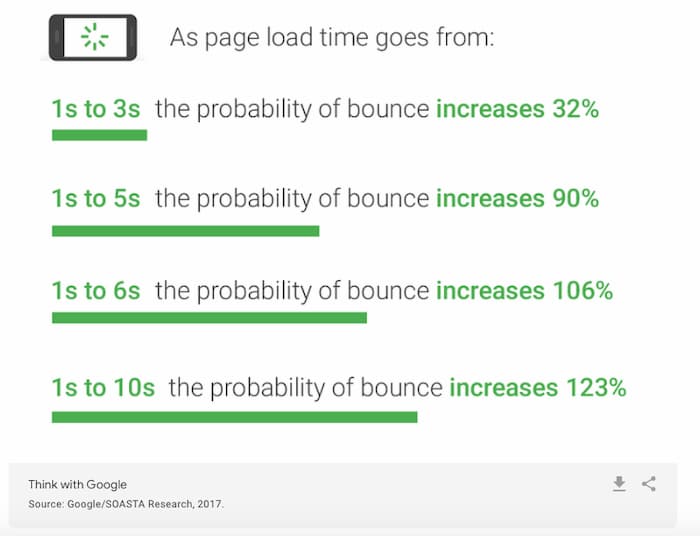
Google published some shocking stats a few years ago regarding the likelihood of a visitor to stay on your site with slow page speed. Here are the stats Google reported:

Google reports the bounce rate probability as page speed deceses

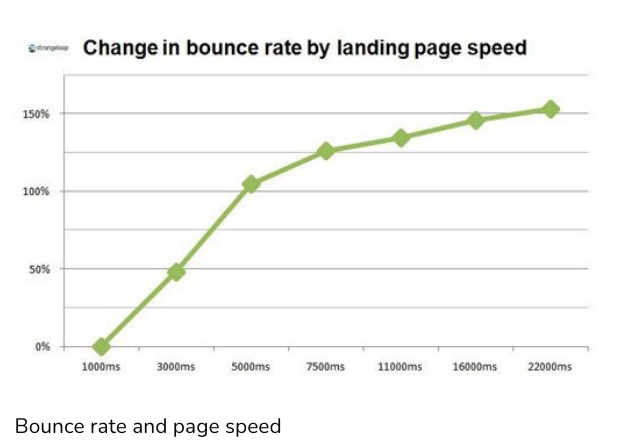
Page speed vs. bounce rate

The bounce rate is defined as when a user lands on your page and backs out without interacting with anything else on your site. A bounce is registered when there are no other pages visited, no links clicked.

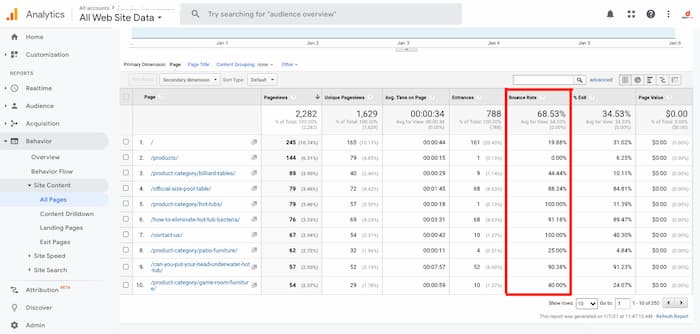
The bounce rate of the pages on your website can be found by visiting Google Analytics and running a report under Behavior, Site Content, All Pages.

Bounce rate in Analytics

The bounce rate is a measure of the percentage of visitors that land on your page and back off without any further interaction. High bounce rates become a concern when you want visitors to take a specific action on your page. You’re essentially losing traffic, which in many cases, can be traced to slow page speed.

A chart showing the relationship between page speed and the bounce rate of a website.

A real-world example of how page speed affects your business

Assume your website has the best content and ranks #1 for an important keyword. The problem is your page takes 10 seconds to load. According to Google, even though a user will most likely click on your page (it’s the #1 result) there is a 131% chance that they will leave if your page takes 10 seconds to load.

Let’s assume that they wait 10 seconds and even read your content. Do you think they are going to wait another 10 seconds to read another page? The chances of a user clicking through to other content have completely diminished because every click is a 10-second wait.

There’s a 131% chance they will back off your page and go to the #2 website.

Let’s assume that the #2 website loads in less than 2 seconds. Viewing multiple pages is easy and fast. The user can read more about the company and get a better idea of what they’re offering. 

There’s a much higher probability the user will fill out a contact form or complete a goal conversion when they spend more time and click through more pages on the site.

How do the page experience ranking factors affect my business?

And it’s not just page speed that is in question. There are now additional loading factors (CLS and FID) that Google is telling us can negatively affect the user experience. Keep in mind that the entire page experience encompasses four more of the aforementioned categories that currently influence ranking.

SSL / HTTPS

HTTPS refers to the secure socket layer that is installed on your website. Your SSL certificate is like your internet passport that proves your website is what it appears to be.

Without an SSL certificate, websites can hide malicious software, disguise their identity and attempt to give you a virus or potentially steal sensitive information from you. To reduce the number of harmful websites, Google made HTTPS the new standard for security.

This means your website encrypts data and guarantees a user that a website is exactly what it appears to be. If your website is not conforming to this standard you’re losing one of the ranking signals that Google has already confirmed affects your search visibility. 

When browsing on Chrome, a website without an SSL will show as insecure.

Not secure warning on Chrome if your site doesn't have an SSL certificate

Do you think you might lose visitors if this is what they see before they click on your website?

To get to your site you have to click on Advanced and then proceed which I think we all can agree is not an enjoyable user experience.

Mobile Friendliness

It should be no surprise that the mobile-friendliness of your website is a ranking factor. After all, more than 50% of total searches are made from mobile devices. Google rewards and penalizes sites (mildly) based on the mobile user experience.

Apart from adjusting the layout to make things more user friendly, there are also specific aspects of web design that could affect mobile usability. For instance, if the font is too small or buttons are too close together.

Although a developer may have made a website responsive, you may need to make minor adjustments to improve the page experience for your visitors.

Safe browsing

This best practice ensures that there is no malicious content on your website such as malware. This refers to unwanted software that is harmful to a computer, mobile device, or software. It can be downloaded from a website, without the user’s permission or knowledge by attaching itself to a downloadable file. 

Websites that contain this type of content will lose search visibility as it is deemed detrimental to the user experience.

No intrusive interstitials

How much do you love when you land on a page and a pop up completely blocks access to the page without any options given to exit the screen? This is an example of an intrusive interstitial.

Pop-ups, popovers, or annoying advertisements degrade the overall user experience by blocking access to the content the user intended to see in the first place. 

Google penalizes websites that utilize ads or sign up forms that don’t provide an easy exit button. Cornering your users into making a decision is considered against best practices and warrants a negative ranking signal.

Provide an enjoyable page experience

Just to be clear, the page experience ranking factors have been around for some time. It is the addition of Core Web Vitals that will take effect in the next Page Experience Update scheduled for May 2021.

Although the impact on ranking can be speculated to be somewhat minimal in most cases, it should be noted that every competitive edge you can add is worth the effort. Not only will this tip the scales in a head to head tiebreaker in competitive situations, but your conversions increase when you provide a better UX for your visitors.

Take the hint Google is offering, along with a plentiful heads up to prepare for yet another update intended to improve the overall quality of the user experience.

Christian Carere
Christian Carere

Christian Carere is the owner and founder of Digital Ducats Inc. in Toronto and heads the SEO team at Austin Bryant Consulting in Plano, TX.  Christian has been published on publications such as Search Engine Watch, Venngage, Small Biz Daily, Grasshopper, Data Box, Socialnomics, and Mention.
old.digitalducats.com/

Written by Christian Carere · Categorized: Technical SEO, Web development

Jan 17 2021

Attract More Website Visitors On A Shoestring Budget

The situation is you’ve launched your new website and yet the damn thing cost you damn near every penny you own. It was a mistake not to consider SEO with your web design, however, you’re at the point where you need to attract more website visitors, but you’re not sure how.

If this is the case, you’re definitely reading the right article. This article provides a basic outline to attract more website visitors without all the expensive tags and tools. The truth is if you know your clients inside out you’ve already got half the battle won.

Although there is a lot of technical advice and work that needs to be integrated into your website, if you can nail down the following fundamental tasks, you can create a solid SEO foundation for your website and attract more website visitors from your efforts.

Create a buyer persona

Have you taken the time to sit down and think about who your clients actually are? Piece together details about your ideal client to create a buyer persona. This concept is invaluable since it serves as a guide for all of your marketing efforts.

Buyer persona example to attract more website visitors

A strong buyer persona surfaces many of the subtle details about the personality, traits, characteristics and tendencies of your ideal client. Using these details creates an advantage when it comes to creating content that resonates more deeply within your target audience.

We can even take it a step back from content creation and focus on the value a buyer persona has for keyword selection. Understanding the language, tone and major interests of your target audience gives you greater insights into the types of search phrases that are being used in searches.

Use this exercise as a powerful tool for focusing your entire SEO strategy. Identify who your buyers are, how they think, as well as their personal preferences to increase the impact of your efforts.

Choose the right keywords

Once you have a good understanding of who your audience is, you can create a list of keywords that would benefit your website the most. Keep in mind that just because your ideal client may use a keyword is a search doesn’t mean it’s the best fit for your website. You’ll need to consider the difficulty and value of the word to your business.

Avoid difficult keywords

If you’re a business owner doing your own SEO, you want to take the path with the least resistance. Sometimes you can tell when a keyword is highly competitive and sometimes it’s not as obvious.

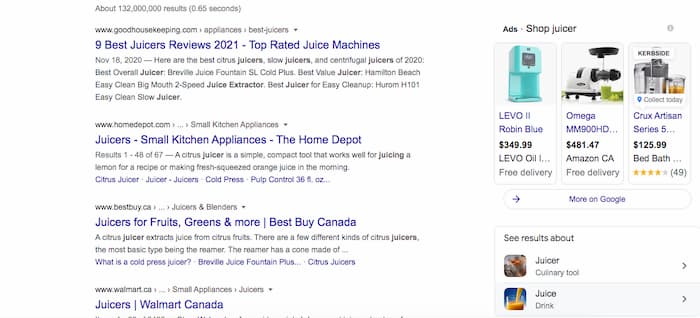
For example, if you’re in the retail industry and one of your potential keywords produces a search result with Walmart, Amazon, Ebay, and a number of retail giants, you may want to pass on that keyword. 

Search for juicer reveals tough competition between retail giants
Search for the keyword “juicer” results in big-box companies competing for spots on 1st page

Without an intimate knowledge of on-page optimization, link building or any experience in outranking websites, you’re not going to beat these websites.

Look for comparable websites to compete with

The solution is to look for keywords where the search results produce comparable websites on the first page. This is where you want to start. Choose keywords where you can compete by publishing better content than what is out there.

Structure your keyword strategy

You can’t always avoid the difficult keywords in your industry. Sometimes they are the best options for taking your business to the next level. A keyword strategy is what will prioritize the keywords you’re pursuing for short-term wins and long-term goals.

Use a topical structure to form your content schedule and prioritize the major keyword targets. Using pillar pages and cluster content is an excellent structure for developing a marketing funnel that moves your readers along the buyer journey.

Marketing funnel that matches the buyer journey to attract more website visitors

Publish answers to the questions people are asking

When you consider the fact that 80% of the total searches on Google are informational searches, it makes sense that being a resource puts your website in front of a larger audience. When you can be the best solution to a keyword search, your website surfaces more often on the first page of Google.

Blogging is a top method of traffic generation

This is a big reason why blogging has become one of the best ways to produce leads and build awareness of your brand. Your blog content should be based on providing answers to commonly asked questions and publishing solutions to commonly faced problems. When your content can help a visitor with an issue they’re facing, it builds trust and confidence in your expertise.

Publish long-form, in-depth content

There is much to be said about search intent since it is the primary ranking factor that search engines use to display the top 10 results, however, there are distinct advantages to publishing long-form, in-depth content. It’s not the length that provides the value, but the depth (which in most cases is the reason it ends up being long-form content).

“Ultimate guides” are more common

Publishing an “Ultimate Guide” has its advantages. When you can cover a topic in its entirety, it becomes a resource for those who are searching to learn more about the topic. There are multiple keywords that your content asset ranks for because it addresses multiple aspects of the keyword topic.

LInk on how to make an ultimate guide to attract more visitors to your website from additional keywords
Image source: Coschedule

Producing a content asset that becomes “the final destination” of a search will generate high volumes of traffic. Look for opportunities to create a content asset within your niche to create evergreen content that lives on indefinitely because of the value it provides.

Publish content as often as possible

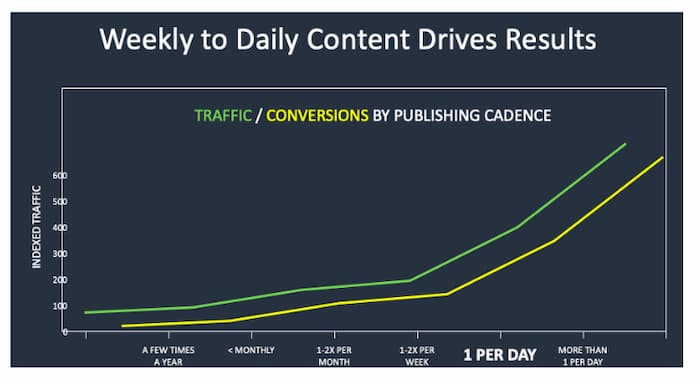
The more often you publish content, the more leads you generate for your business. In fact, a study revealed that small to medium-sized businesses that publish 11 times a month experience 3.5 times more leads than those that published twice a month.

Chart showing how a more blog content drives more traffic and conversions

Just to be clear, don’t publish content, just for the sake of publishing content. If your pages are subpar in quality and don’t drive traffic, your website could become bloated which will drag down your search visibility.

Publish content with the intent of being the best

Publish content with the intention of ranking in the number one position. Make it a mission to be the best solution to search intent. If you’re approach is to continuously produce content that outperforms your competition, you’ll see a difference in the number of keywords your website ranks for which will be reflected by increased traffic.

Target a new keyword with each page you publish

Every page on your website should target a specific and separate keyword. Avoid publishing pages that target the same keyword, phrase or have the same search intent. This is where your keyword strategy comes into play.

Stick to your keyword strategy

It’s best practice to map out the keywords your website will target. Create a content schedule based on the topic cluster you’ve outlined for your website. This way your website is organized topically and you can visualize the way your content covers a broad topic.

Topic clusters attract more website visitors from an organized approach

If you publish pages that target the same keyword, they are essentially competing with each other. This can spread the resources thin on the efforts you put into ranking that page to the top 10 search results. Rather than focusing on two pages, you can combine content and point backlinks to one page for a higher rank in the top ten.

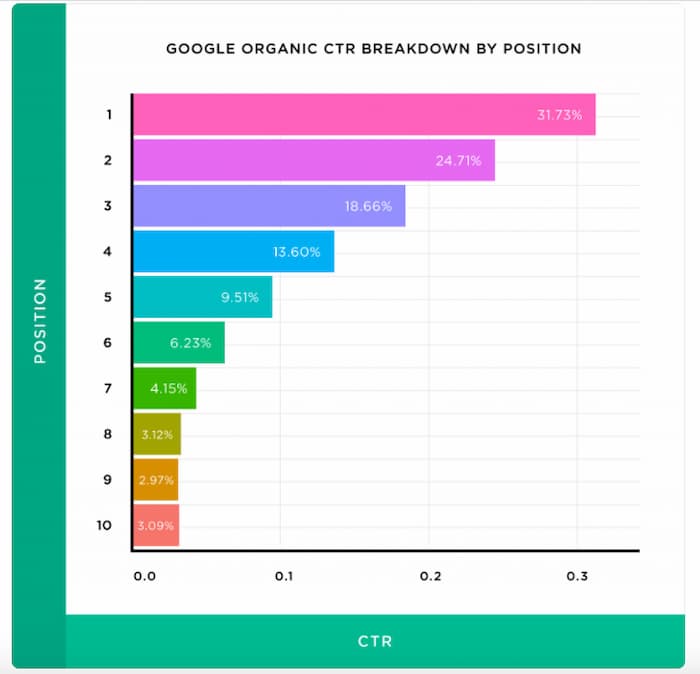
In most cases, it’s better to have one page that ranks in the top three results as opposed to two pages that rank outside the top three results. The reason is there’s a huge drop in the average click-through rate that a website receives from positions 1-3 to 4-10.

Average CTR based on the ranking position on the first page of search results

Be an expert where your expertise is needed

People are always looking for answers online. Google is becoming the go-to solution for providing the fastest results, but not all people search this way. There are still those that seek help on social media and niche forums. You can drive targeted traffic to your website by helping people with answers to their questions on these sites.

Social media

Every industry has a social media website or two that works well for generating leads. Make sure you’re on the website that is best suited to your business. You can’t really go wrong with Facebook since there’s a group for everything. After all, they have about 3 billion users that are on the site so it’s likely you can drum up some business using them as a source.

Be smart about it. Linkedin is excellent for big-ticket sales and for B2B marketing. Instagram and Pinterest convert extremely well for retail product sales.

Get some help with free software

You can use tools like Buzzsumo to find out what’s being talked about and shared the most in your niche. Join these groups and conversations to get involved with what people are saying and more importantly what questions they are asking.

Answer questions honestly and avoid being overly promotional. People appreciate transparency and they appreciate good advice even more. 

Drop a link or two to your website whenever it applies to give people a way to learn more about what you offer while sending them to an article that is relevant to the conversation.

Niche forums

You can accomplish the same task of answering questions on niche forums. In fact, it may be easier to get to a lot of questions since the main reason people are on forums is to ask and answer questions. 

Quroa

Quora is one of the largest Q & A websites where you can get a high volume of traffic to your site by answering the right questions.

Quora is ideal because they allow full HTML responses with links (nofollow only) which means you can take excerpts of your blog posts and paste them in as answers with a link to read more. You can literally help people while promoting the content you’ve already written.

The bonus to Quora is that many of the questions on Quora happen to surface on the first page of Google search results. If your answer is the most upvoted, you not only get the thousands of views from Quora but the search traffic from Google as well.

Monitor keyword mentions

Use software such as Mention or Brand Mentions to be alerted to conversations where your keywords are mentioned. If there are conversations on social media going on that you can contribute to, wouldn’t it make sense to be alerted so you can join in and give your two cents?

Attract more visitors to your website on a regular basis

This entire article has been dancing around the plain facts that if you have expertise to offer make it easy for people to find you by helping them. When you make helping people your first priority you improve your ability to target the things that mean the most to your ideal visitor. This approach makes your content more effective and builds more trust in your brand.

On one hand, search engine optimization is getting more complicated because there are so many things that go into an optimized website. 

On the other hand, the importance of providing an exceptional user experience has never waned and has remained THE most important factor that trumps all ranking factors.

Create your website for the benefit of users and use your expertise to help those in need. Put this concept into a keyword-targeted content schedule and you’ve created the best SEO foundation possible for attracting more website visitors.

Christian Carere
Christian Carere

Christian Carere is the owner and founder of Digital Ducats Inc. in Toronto and heads the SEO team at Austin Bryant Consulting in Plano, TX.  Christian has been published on publications such as Search Engine Watch, Venngage, Small Biz Daily, Grasshopper, Data Box, Socialnomics, and Mention.
old.digitalducats.com/

Written by Christian Carere · Categorized: Content strategy, Web development

Jan 10 2021

Data-Driven Marketing: Invest In Effective Solutions

If you travel back in time to the turn of the century, you would find that in the year 2000 marketing was a very different animal. Most marketing was dominated by radio, television and ad placement in magazines and billboards. Fast-forward 20 years and the bulk of the spray and pray tactics are now obsolete since data-driven marketing has proven to be the best way to increase leads and revenue.

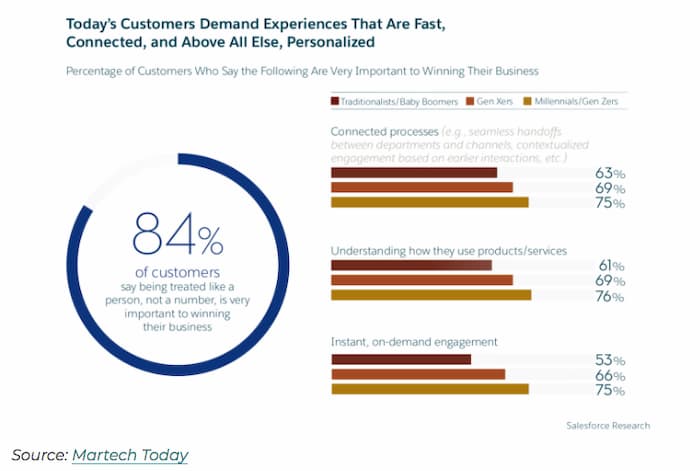
There is a much higher demand for personalization from consumers and a world of data to pull from. In fact, if you’re not appealing to specific desires from your target audience, you’re losing them to other companies.

The customers demand for personalization requires the use of data-driven marketing strategies

Today’s consumers are naturally trained to glaze over advertisements. There are so many ads that are in our face every day that it’s become a natural response to automatically close popover, pop-ups and generally skip paid ads to get to the organic results. 

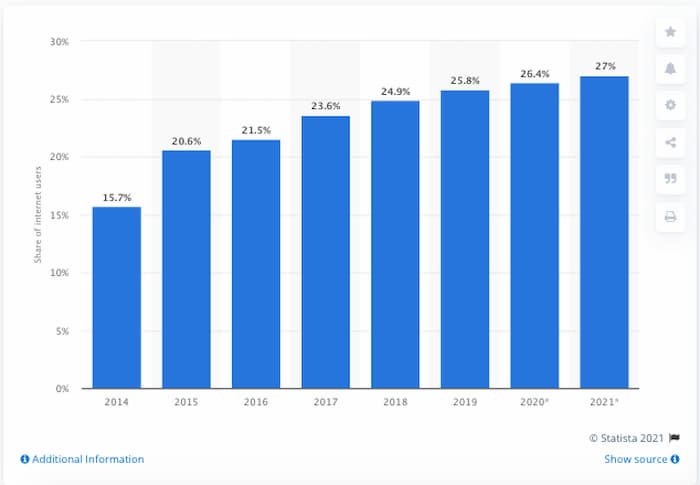
Use of ad blockers is growing

This behavioural pattern has given rise to the power of inbound marketing and the importance of becoming specialized in a specific area of expertise.

In order to cut through the noise and separate yourself from the masses, you need to apply data-driven marketing strategies to reach the audience that will engage with your brand the most. 

By applying statistical facts to your marketing decisions you can outperform the old methods of operating on gut instinct. This is how companies are increasing profit and successfully expanding their audience.

What is data-driven marketing?

Data-driven marketing gives companies insight into the preferences and behaviour of their target audience based on big data and statistical facts. Companies then use this information to make more informed decisions on the marketing tactics and strategies they choose to employ for increased engagement.

Without measuring the impact of your efforts, it’s difficult to optimize your campaigns to be more successful. When data is collected (preferably from a large sample size) it is then used to increase key performance indicators that will result in more leads and revenue.

Example of data driven marketing

Here’s an example of a data-driven marketing campaign: Assume your company is running a PPC campaign where the target city is Toronto. After one month, you assess the results and notice that the majority of clicks are coming from similar postal codes.

You research the average household income for the areas in Toronto, and find that the majority of the clicks is coming from the postal codes where income is the highest.

Based on the results of your first campaign, your data would suggest that you need a different type of advertisement to get lower income areas to click on your ads. 

You would need to cater to the lower income households by creating a more appealing-perhaps one that communicates more savings. 

This approach would increase the number of clicks and conversions by simply changing your copy to something more personal and applicable to the demographic.

This is data-driven marketing in action.

Who uses data-driven marketing?

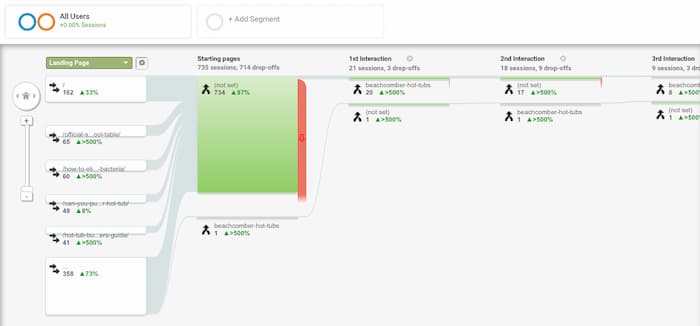
You would be hard-pressed to find an industry leader that isn’t using data to help make informed marketing decisions. Here at Digital Ducats, we use Google Analytics to collect data on visitor behaviour and website performance daily. The more time and visitors that pass through a website, the more accurate the data becomes to make informed decisions.

The data we use tells us where visitors enter your website, how much time they spend on each page and where they leave. Analyzing the flow of visitors on your website allows us to identify the improvements they need to make to keep users on your site longer and guide them to pages that convert at the highest rate.

Behavioral flow in analytics provides the means for data driven marketing decisions.

If there are pages that generate high bounce rates, we find the underlying cause why your website is losing traffic to the page. Through testing and making changes, your website becomes streamlined for conversions and leads visitors to purchase decisions or becoming a qualified lead.

Tools for automation

There are tools to automate everything when collecting data on your business. Depending on what your marketing goals are will depend on the tool you need to employ. Here is a list of tools that can generate useful data for making informed decisions on improving performance.

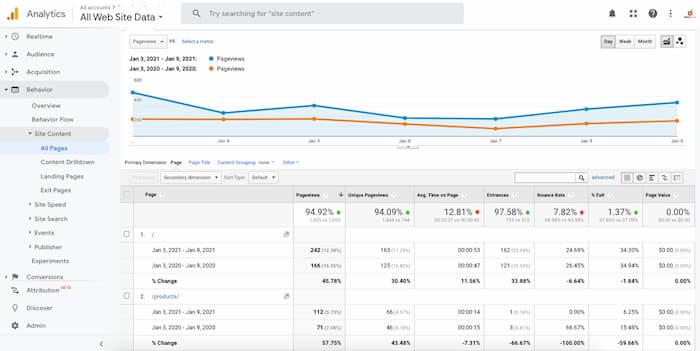
Google Analytics

The fact that the tool is free is a bonus being one of the most comprehensive solutions for tracking website data. Analytics tracks every major metric you will need to monitor your website’s performance when it comes to user behaviour.

Google Analytics sample report to show how data driven decisions can improve conversions

The most commonly tracked metrics are: monthly search volume, unique users, traffic acquisition channels, flow of visitors, average time on page, bounce rate, conversion tracking and more.

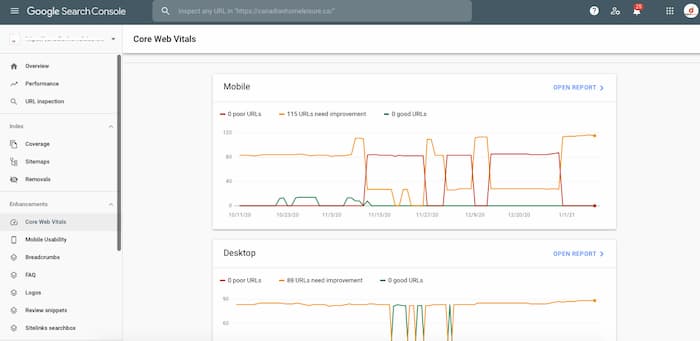
Google search console

This tool is the go-to source for everything that’s happening with your website behind the scenes on Google. As an owner, you are entitled to a free account and can access website performance data such as impressions and clicks to every page.

Core web vitals will officially become a ranking factor in May of 2021 so there is the importance of being alerted to any changes, errors and improvements that need to be made in this department.

Core Web Vitals of a sample client

You can connect your search console and analytics account for more streamlined and accurate reporting.

Analytic keyword tools

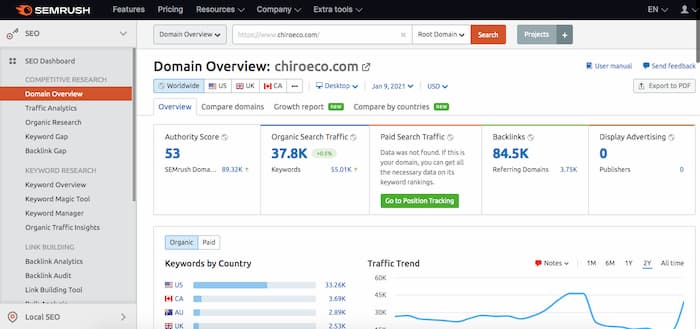
Every SEO company will use a few different tools to provide the best scope and range of information when making decisions on keywords and competition. SEMRush, Moz and Ahrefs are among the top industry leaders for providing access to valuable keyword data and assessing the competition.

Not only do these tools provide keyword generation ideas, they generate loads of information that come with each suggestion to allow greater insight into the keyword. 

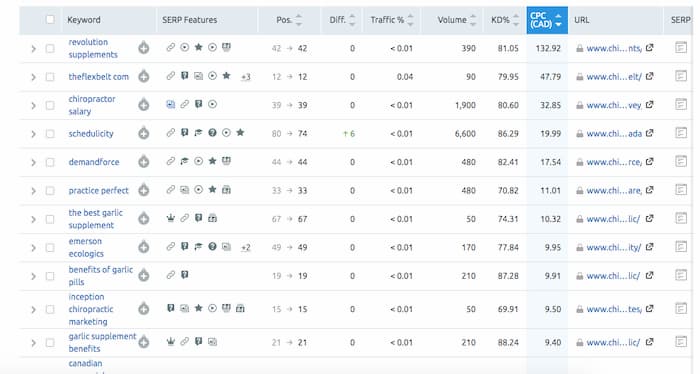
Information about the level of competition, the average monthly searches, the cost per click, the level of competition, the organic click-through rate and the SERP features that the keyword triggers.

SEMRush keyword analysis is required to make a data driven decision on whether to pursue the search term

Most of these tools also provide intensive competition analysis allowing you to see what keywords your competition ranks for and the volume of traffic they generate. You can see whether they are paying for traffic as well as the backlinks that point to their web pages.

Reverse engineering a competitor is a way of making data-driven marketing decisions

No SEO campaign would be successful without being able to formulate informed decisions based on the information provided by these types of software.

Google Ads

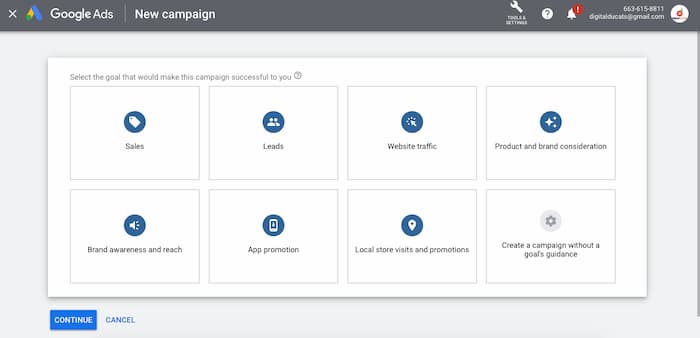
Running a PPC campaign generates an enormous amount of valuable data that can be used to create more successful marketing campaigns. The detailed creation of PPC campaigns coupled with the amount of data that comes back in the reporting can speak volumes about your target audience.

Google ad campaign creation

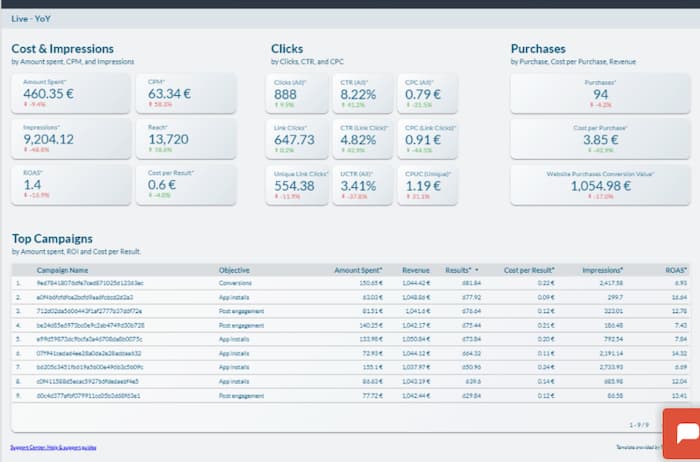
PPC campaigns provide volumes of data regarding the user behaviour and how they respond to your sales copy, landing pages and products. 

Google Ads report is a gold mine for making data driven marketing decisions

What’s more, is the data that is returned can help you build more accurate buyer personas for more effective content and targeting.

Email marketing software

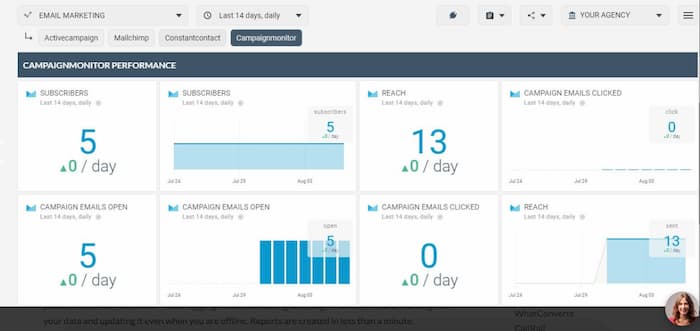
Email marketing software provides you statistics on the success of your email marketing campaigns. Use this data in conjunction with your Analytics to segment your lists and create more personalized content for your audience. You can use tools like Mailchimp, Aweber, Get Response, Campaign Monitor or any you deem worthy.

Campaign monitor sample report that shows data you can use in making future marketing decisions

A simple metric like the open rate can provide you insight into the effectiveness of a subject line in an email. A high open rate would indicate your audience is responding to the topic and delivery of your subject line-which makes it ideal to use variations of it as a title or headline for a blog post or article.

A high click-through rate of an email would indicate the body of content is appealing enough to get users to read further. This gives you a proof of which topics to pursue and build more content around to maintain high levels of engagement.

Tips to create a data-driven marketing campaign

Here are a few tips for creating campaigns that continually become more effective in targeting your audience and more optimized for conversions.

Create a well defined goal

Define the goal that will create a competitive edge in your marketing. You need to have a major objective in your campaign with a clear set of values you can walk away with and use in your next campaign. A clearly defined goal will keep you on track and provide a specific benchmark that can be measured for effectiveness.

Select your tracking tools

Choose the tools that will give you the data you need to make better decisions in the marketing campaigns that follow. Make sure you’re setting up your campaign with the tools that will give you the most accurate values for achieving your objective. 

Setting up analytics means creating conversion goals and trackable links to see what’s actually happening on the pages you’re testing. Without using the proper tools your values can be skewed so make sure you’re getting the most from your campaign by using tools that will provide the metrics you need.

Incorporate data from past campaigns

Always make use of previous data to make informed decisions. If you’ve already run a campaign that has presented a set of data, incorporate that data into your next campaign. This creates a more effective, optimized campaign.

Use data-driven decisions to increase your bottom line

Use as much information about your products and consumers as possible to create highly targeted marketing campaigns. The demand for personalization has been made clear and it’s up to you to meet the demands of your ideal audience.

Applying data-driven marketing strategies are the norm for creating the means for more informed decisions on your marketing campaigns. Make use of statistical facts about your audience to see more engagement, leads and revenue on a regular basis.

Christian Carere
Christian Carere

Christian Carere is the owner and founder of Digital Ducats Inc. in Toronto and heads the SEO team at Austin Bryant Consulting in Plano, TX.  Christian has been published on publications such as Search Engine Watch, Venngage, Small Biz Daily, Grasshopper, Data Box, Socialnomics, and Mention.

old.digitalducats.com/

Written by Christian Carere · Categorized: SEO strategy, Web development

  • « Go to Previous Page
  • Go to page 1
  • Go to page 2
  • Go to page 3
  • Go to page 4
  • Go to page 5
  • Interim pages omitted …
  • Go to page 14
  • Go to Next Page »

Footer

Need professional SEO advice?

Give us a call to learn more about how we can help your business

Call for a consultation Request a proposal

Request a free website analysis and proposal for your company by filling out the ” Request a Proposal” form.
  • Privacy Policy
  • Terms Of Service
  • Cities we’ve served

© 2026 · Digital Ducats Inc.