• Skip to main content
  • Skip to footer

Digital Ducats Inc.

SEO Consulting & Services

  • Home
  • About
    • SEO Consulting
  • Services
    • SEO
    • Local SEO
  • Contact
    • Pricing
    • Write For Us
  • Blog
You are here: Home / Archives for Web development

Web development

Jan 07 2021

9 Ways To Reduce Your Bounce Rate & Improve Traffic Quality

Of all the ways to increase traffic to your website, it’s not often that you think of the source of new visitors as being from the traffic you’re already receiving. There’s a hidden trove of visitors you can unlock by using several tactics to reduce your bounce rate.

What is a bounce rate?

The bounce rate on your site is the total percentage of visitors that land on your site and leave without interacting with any other pages or links. This is a metric that’s reported in your Analytics and a value that can be crucial in improving the quality of traffic your website receives.

You can find the bounce rate of the pages of your website in Google Analytics by clicking on Behavior, 
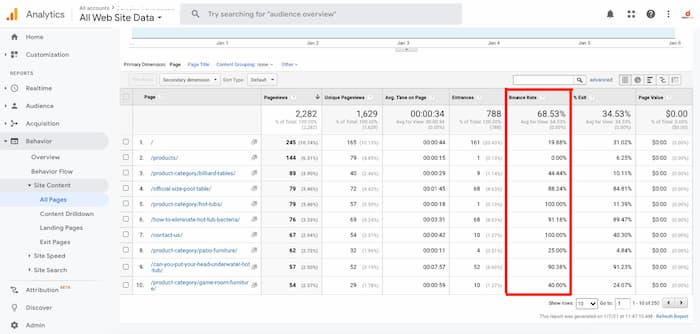
Use Google Analytics to identify and reduce your bounce rate

Used in the right context, this metric can identify problems on your website that may be causing people to leave. 

A high bounce rate can potentially indicate a missed opportunity since visitors are already on your page and yet leave without completing a goal such as making a purchase or signing up to an email list.

Related reading: Key Performance Indicators & Data Analysis

What’s a good bounce rate?

A good bounce rate can be different on a situational basis. Many site managers would maintain that a bounce rate of over 60% warrants attention. Others are happy if their bounce rates are under 80% and yet this could be a catastrophic number to another website.

The percentage of a good bounce rate depends on the niche in which you’re competing and the type of page that’s generating your data.

So where is the happy medium for your website?

Your bounce rate should be assessed in light of the goal you have for the user on the page you’re analyzing. 

You also need to accurately determine the behaviour of your audience to understand the meaning of the data being generated.

Aim to see the bigger picture

The problem with using bounce rate alone is that it doesn’t give you the entire story of what’s happening on your website. In the words of Dan Shewen,

No metric is an island on its own. Click To Tweet

If a user lands on your page and reads every single drop of a 5000-word article, then leaves, it would technically register as a bounce. If 80% of users did the same thing, the first glance at your analytics might tell you visitors do not like your content-which, in reality, this is not the case.

This brings us to the first point…

#1- Reference the average time spent on page

To accurately determine the true meaning of bounce rate on a specific page, you need to compare it to the average time spent on the page. In the example above, the bounce rate alone is a misleading metric without cross-referencing the average time spent on a page.

Google Analytics display highlighting the avg time spent on page

Significance of longer averages

By recognizing that each user spends 5-8 minutes on your page before leaving paints a more accurate picture of how users are engaging with your content. You can’t be certain that your content is the problem judging from just the bounce rate and not referencing the average time on the page.

If people are spending a long time on your page, it means they’re getting through your content.  Consider creating a conversion goal, call to action or offer more options for related content to get them clicking through your site (discussed further in this article).

Significance of shorter averages

A short time spent on your page could mean users aren’t liking what they or they aren’t getting there because your page takes too long to load. If the average time spent on your page is short and you have a high bounce rate, you need to make changes. Users are landing on your page and not even giving it a chance.

Significance of no time on spent on page

If the page in question shows no time spent, the user might have closed the tabs or the browser to end the session on your page. If this happens, there is no time recorded because there is no exit click. 

The average time on a page is measured from the entrance click to the exit click. If your users don’t click on anything and close the tabs you have some slightly misleading data being generated.

#2- Establish a CTA or conversion goal for your page

Content alone is not enough to keep visitors from leaving your page. Establish a clear and concise call to action for each of your pages to keep your audience engaged and moving through your website.

Ask visitors to share your content

Are you trying to build a stronger social presence? Ask your visitors to share your article with their social networks. Social sharing plugins are effective and offer a simple click to share option, making it easy for readers to click on the icon and share with their audience. 
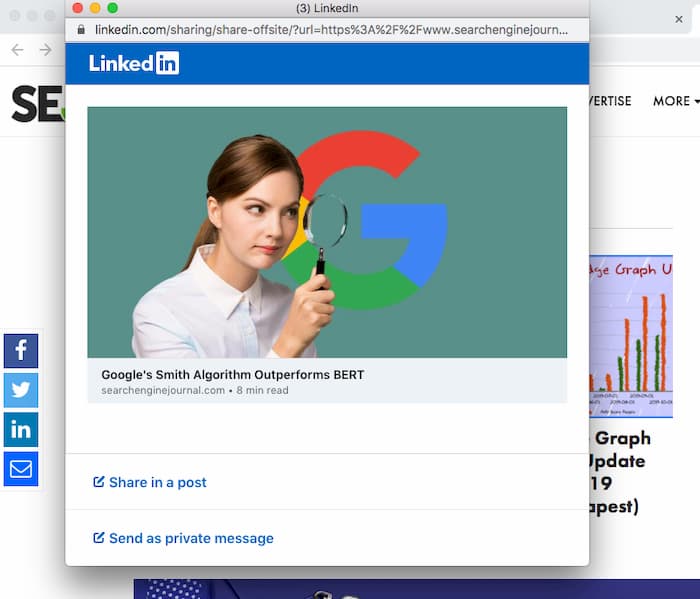
Social sharing icons and a CTA to encourage interaction work to reduce your bounce rate

Ask visitors to join your email list

Present your readers with more opportunities to join your email list. 
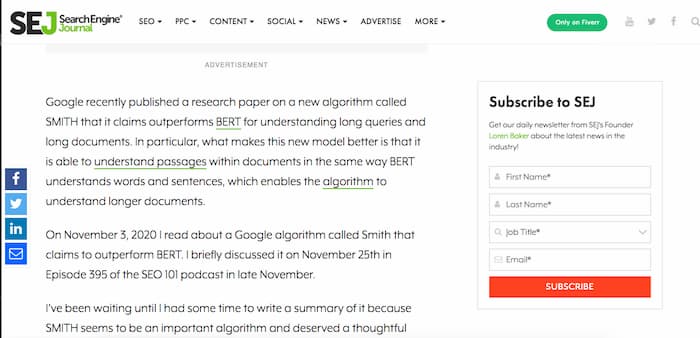
Example of an opt-in box from SEJ with a CTA to subscribe

Include a CTA a few times within your post, which can be on the opt-in form itself.
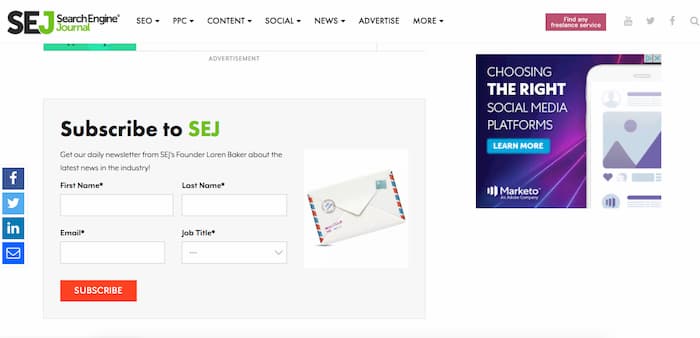
Second Opt-in box to encourage users to subscribe. Adding more instances of a single CTA will reduce your bounce rate

Create conversions on Google Analytics

Ultimately we want our website visitors to purchase a product or service from our business. Creating goal conversions tracks whether your audience is doing what you want them to do on each page. 
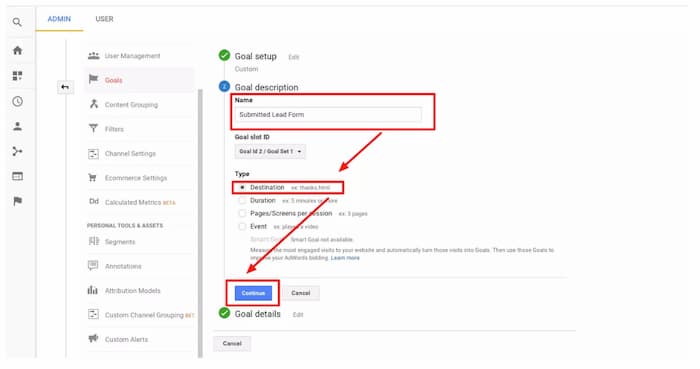
Setting up a conversion goal on Google analytics (reduces bounce rates)

Whether it’s a sale, email sign-up form, or a social share, track your goal conversions. When your visitors start clicking on the links you want them to, it eliminates the session from becoming a bounce.

#3- Use interactive content

In the case where users are landing on your pages and leaving almost immediately, you will need to consider updating the content on the page. Interactive content is a solution to get your audience more engaged with your page and improving the stickiness it has for captivating their interest.

It’s a proven fact that people learn more when they are engaged with hands-on learning as opposed to just reading or listening. Interactive content allows your users to elevate the learning curve and retain more information. By getting your visitors to engage with any of several different content assets, you can reduce the bounce rate of your pages.

Interactive infographics

Infographics may have seen their height in popularity, but they are beneficial for both B2B and B2C sales and marketing. Visual content itself is proven to improve retention from 10% with plain text to 65% with an image. Interactive infographics boost information retention to the next level by allowing the user to interact with the graphic.

Here is an example of an interactive infographic that shows you information on the gay rights of each state in the US. 

Interactive infographic on gay rights laws in every state of the US

Whichever state you hover over with the mouse will highlight the information from that state on the sidebar.

Surveys

Surveys are proven to be one of the most popular forms of content. Incorporate a survey within your content to get your visitors engaged.

Creating and publishing surveys works to reduce bounce rate.

You can choose from some of the most popular survey tools as a starter for testing out your audience’s response.

Polls

Inserting polls within your content also gives your audience a fun way to answer questions and compare their answers to past visitors. 

An example of a poll that can be inserted into your content for users to interact with

Inserting a poll in your content can provide a good break-in text and get your visitor to actively participate and engage with your content.

Pop quizzes

What better way to reinforce the content your visitor has just read than a pop quiz? The response from your audience may vary (some people don’t like to be tested!) but again, it’s a good way to make an option for a user to step outside of the mundane practice of reading and participate in a potentially enjoyable experience.
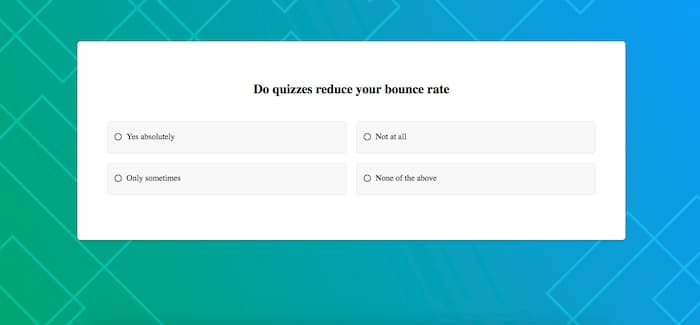
Sample of a pop quiz format to add to your blog content and reduce your bounce rate

You can use sites like quiz maker or better yet, Jotform’s Quiz Maker to create and publish pop quizzes in your content. 
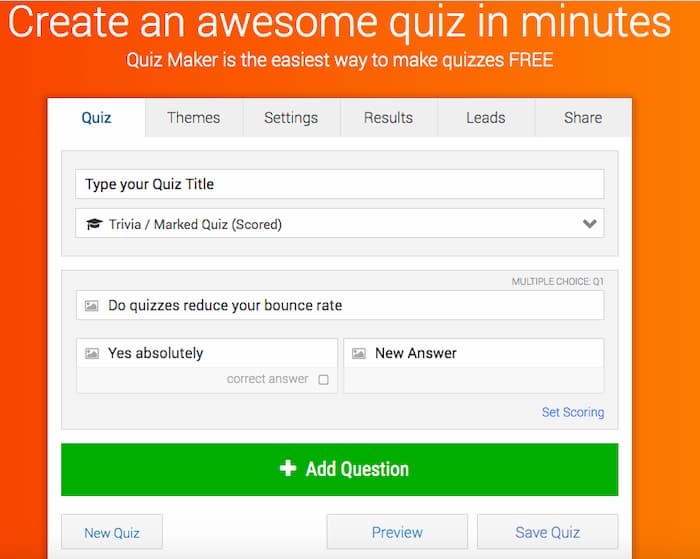
Example of the quiz maker template when creating a quiz for your content

Click to tweet

Inserting tweets a click to tweet call to action is a simple way for your audience to tweet a message or something worth sharing on your site. The amount of effort required for a user to click on the link makes sharing super simple.
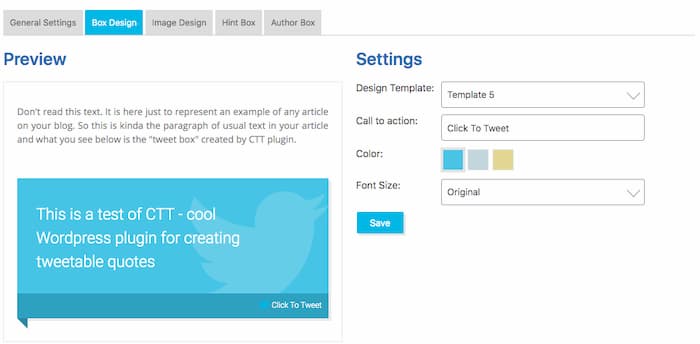
The general settings for the plugin "Click to Tweet"

This type of embed serves as a way to break up the text, get your users interacting with what you’re saying and contributes to increasing your audience. 

#4- Re-optimize for user intent

When a visitor lands on your page, you have a few seconds before they decide whether your page can satisfy their search intent. Re-optimize your content to enhance your page’s ability to satisfy the user’s intent.

"Give the people what the people want."

The adage, “SEO is ever-changing” applies here when it comes to updating old content. Search intent is constantly in flux and going over old content can reveal out-dated articles that need to be re-optimized for current keywords as well as new ones.

SEO is not static with regards to the fact that at its core, it is based on user intent. People are always changing the way they search for things as well as the language they use to search. It can pay off in dividends to go over old content to make sure that your content satisfies user intent.

Improving the quality of your content and making sure it’s up to speed with the competition improves traffic and will reduce your bounce rate.

#5- Simplify your website navigation and searchability

One of the most common reasons users leave a website is because it’s not easy to navigate. When a visitor lands on a site for a specific reason, they need to believe that your website can satisfy their search. It’s important to provide easy access to all of your important pages so users can find what they’re looking for.

Even if they don’t see what they want at first glance, give them your best options to entice them to click further as well as a search box to search the website for something specific.

Counter intuitive layout will confuse visitors and lead to high bounce rates.

Avoid confusing menus and heavily cluttered pages. The actions a user takes on your site should be intuitive and laid out for the easiest and simplest understanding.
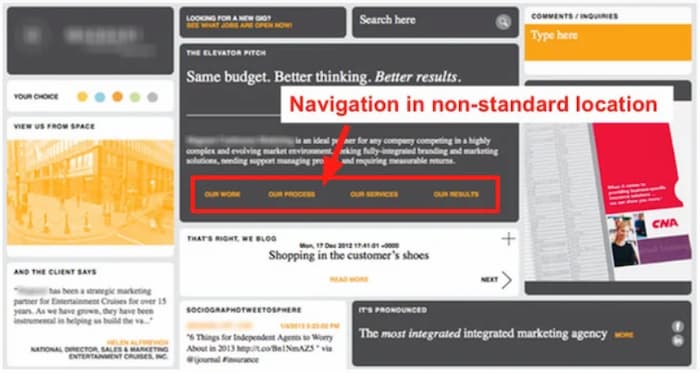
Confusing navigation contributes to a higher bounce rate

Use communicative image icons and a simple navigation bar to encourage more clicks. Think of using the signpost analogy to guide users in the right direction. Drivers need to see signs that communicate clearly what direction they want to take.

Example of an easy to understand format with an obvious horizontal navigation bar as wella s the search box above it

Simplify everything and when you’ve got some results and feedback, simplify it again. The easier your site is to navigate the better the UX experience is, which contributes to a reduced bounce rate.

#6- Reduce the time it takes your pages to load

Page speed is talked about repeatedly in almost every SEO article but it’s mentioned for good reason. Google reports that for every second it takes your pages to load you risk losing more visitors.  
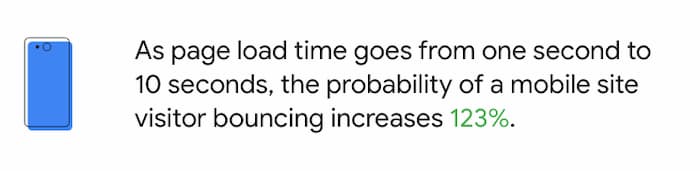
Think With Google statistic stating 123% increase in bounce rate from an increase in 1 to 10 seconds of page speed

Some websites have more to gain by improving page speed. If your website is experiencing load times over 10 seconds you have a big opportunity to optimize your page speed to 5 seconds and cut your bounce rates in half.

The result would be the same as doubling your traffic when you consider that you’re now getting the visitors that choose your site already but would never make it with slow loading pages.

#7- Optimize for mobile screens

If you’re not optimized for mobile screens, you risk visitors leaving your site. Reduce your bounce rate by making sure your website is easy to navigate with a layout that’s easy to use on all mobile screens.

Have you ever tried to use the desktop version of a website on a smaller screen? 

When users are forced to “pinch” the screen to zoom in and out to read text or use buttons it’s considered to be a poor user experience. This can cause visitors to flee in search of a website that better accommodates their screen size.

Example of a better mobile UX format

Apart from reducing your bounce rate, you may also get a boost in traffic if you’re able to improve your mobile-friendliness. Don’t forget that Google indexes the mobile version of websites before the desktop version.

You can test your website’s mobile-friendliness on the mobile-friendly test site or directly from the SERP.

#8-Link to related content within your website

Use a topical internal linking strategy to provide links to other content within your site that a user may be interested in reading. Not only does this optimize your pages, but also you can lead users to different areas of your site for continued learning and discovery.

If the page your visitor lands on has zero links on it, where would your users go next? The only way out is backwards which registers as a bounce.

Offer related reading within your content and at the end to encourage a higher click-through rate and reduce your bounce rate.

Search engine journal related reading always at the end of every article

#9- Write long-form content

The advantage of being an engaging writer is that the more you write, the longer people stay on your page! Long-form content also gives you more opportunity to link to related content and direct traffic to product pages and other important pages on your site.

When compared to short-form content, the long-form gets visitors to stay on your site longer and reduce your bounce rate.

Increase traffic with a reduced bounce rate

Reducing the bounce rate on your site could be the key to unlocking a significant percentage of traffic that you already receive. In many cases, the bounce rate represents users that find your website but never make it to see a single scrap of your content.

Deducing the reason for a high bounce rate on your site is a priority that you can’t afford to ignore. Fixing the underlying cause can result in higher user engagement, increased click-through rates and more conversions.

As the competition becomes stiffer and the organic click-through rate dwindles, finding ways to improve the quality of your traffic will be a key element for sustainable growth and increased revenue.

If you have any questions about how to reduce your bounce rate, feel free to contact us for complimentary website analysis and learn how we can help through using custom SEO services.

Christian Carere
Christian Carere

Christian Carere is the owner and founder of Digital Ducats Inc. in Toronto and heads the SEO team at Austin Bryant Consulting in Plano, TX.  Christian has been published on publications such as Search Engine Watch, Venngage, Small Biz Daily, Grasshopper, Data Box, Socialnomics, and Mention.
old.digitalducats.com/

Written by Christian Carere · Categorized: Content strategy, Technical SEO, Web development

Jan 05 2021

How Does The Google E.A.T. Algorithm Impact SEO?

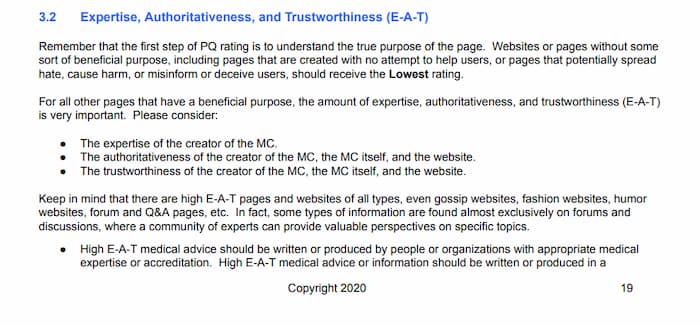
Search engines display web pages based on multiple ranking factors and specific set criteria defined within its algorithm which changes with every query. The underlying criteria for assessing quality is based on the Search Quality Evaluator Guidelines that was published in 2013. The guide defines the principles behind the Google E.A.T. algorithm which continues to play a more integral part in Google’s ranking system.

A snippet of the Google E.A.T. Algorithm defined in the Search Quality Evaluator Guidelines

What is E.A.T. in SEO?

E.A.T. is an acronym that stands for Expertise, Authority and Trust. A page that can demonstrate these qualities at a high level is considered to be of high quality. Understanding how to demonstrate these qualities to Google and other search engines can improve your website’s search visibility.

Expertise

This aspect refers to the author’s experience or credentials and how it contributes to their expertise on the topic being published. Expertise can be defined as awards, occupation, experience or accomplishments that are relevant to the topic of the main content.

Authority

The authoritativeness refers to how recognized the website or author is in their field. Do others mention them in the same niche? Are they well-known within their industry and considered to demonstrate thought leadership?

Trust

How well can the website be trusted? Does the website provide security for safe browsing or give a user the confidence to input personal information? Trust signal refers to the means for providing a user with security when browsing the website or interacting with the website.

These three attributes of a web page combine to form the basic principles of E.A.T. and the foundation of assessing the quality of a page.

Why is E.A.T. important?

A search engine function is to display the best solution to a search query. It should come as no surprise that part of this function is to filter out low-quality results and only display high-quality results. To make your website displayed frequently for important search terms to your business, your website needs to communicate the E.A.T. principles where they are most appropriate.

As search engines become better at applying the many different variables that make up a quality web page, the E.A.T. principles will have more impact on your website’s search visibility. Improving these attributes will contribute to higher rankings from increased traffic generation and ultimately increased streams of revenue.

Who does E.A.T. affect?

Technically, the E.A.T. principles affect every website, although it plays a much bigger role in the search visibility of some website over others.

Website’s with subjective content

For example, if a query is made on worlds cutest pets, E.A.T. won’t play as big a role in the search algorithm because the topic is fairly subjective. There isn’t as great a demand placed on a website to prove expertise, authority or trust when providing subjective or entertaining content compared to something that could impact a person’s life.

Does E.A.T.  still, play a role in search visibility for subjective content? The short answer is yes. There is still the matter of providing a safe browsing experience and even backlinks that will affect ranking (trust and authority). In this example, however, expertise isn’t really a factor as much as the content itself and how users perceive its value.

Website’s with objective content

When a search is for a recommended dosage of a type of drug, then it becomes a more serious topic. The answer requires a specific level of expertise in order to be reliable and safe instructions for people to follow. 

Search engines don’t want to display a search result that could potentially have false or misleading information that could potentially harm someone. 

Websites that affect Your Money Your Life (YMYL websites)

Google rolled out the Medic Update in 2018 specifically to target websites that publish content with the potential to impact people’s lives seriously. These sites were referred to as YMYL websites (Your Money, Your Life). The result of the update was devastating for YMYL websites that did not demonstrate the E.A.T. principles. 

Below is an example of a website that lost more than 50% of its traffic because it did not demonstrate the proper E.A.T. required for a blog that published health related content.

Example of how the Medic Update, (one of the changes in the Google EAT algorithm) destroyed websites like doctoranytime.gr
Snippet from the traffic lost by doctoranytime.gr after Google’s Medic Update

You can read more about how this website not only recovered its traffic but gained much more by applying the principles to match the Google E.A.T. algorithm.

YMYL websites publish content on topics such as health, finances and any information that affects the well-being of a person’s life. Articles that offer a recommended dosage-even with something as simple as aspirin is now a topic that can only be answered by a doctor.

Here is a search result for the phrase correct dosage of aspirin in which not a single website is listed that doesn’t demonstrate high levels of expertise and authority.

Search result page for correct dosage of aspirin
Example of how every website demonstrates E.A.T. for aspirin dosage

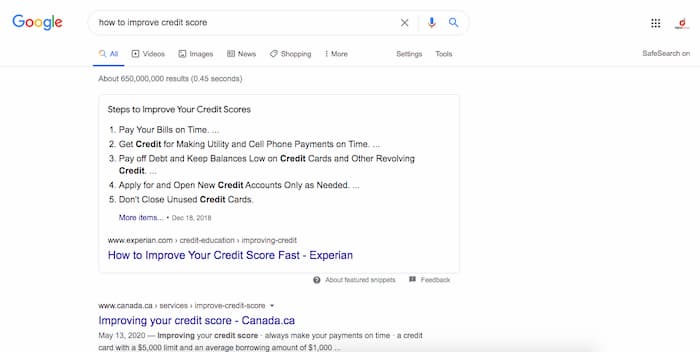
Offering a solution on how to reduce your debt or improve your credit is another topic that should only be published by a professional. Misleading information published on this content could potentially cripple a person financially. The Medic Update now requires searches regarding financial advice to be backed by experts and professionals.

After the Google EAT algorithm the search results page for "how to improve credit score" only displays expert websites

The principles of E.A.T. affect all websites, although there are different degrees in which it affects a websites search visibility

How is E.A.T. applied to ranking?

The Search Quality Evaluation Guidelines outline the specifics on how the quality of a web page is determined. This guide provides a basic structure for what is required to meet the needs of the user and offers examples of web pages in different niches that demonstrate high E.A.T. 

The problem

Although E.A.T. has been around since 2013, Google and other search engines struggled with a way of applying these principles within their algorithm. Many of these concepts are fundamentally human making it difficult to create an algorithm that could accurately assess content by applying the same concepts.

The solution

Google’s solution was to create many smaller algorithms tailored to specific niches that could identify the specifics of what was deemed quality. 

Once the engineers have a potential change they want to implement, they will show the results to a team of quality raters both with and without the changes to the algorithm. The team is not informed on which set of search results is from the new algorithm.

The raters will then provide positive or negative feedback on the new algorithm search results. If the reviews were positive from the new tweak to the algorithm, Google will implement the change. 

How do you improve the E.A.T. of your website?

Keep in mind that every niche may have a different set of values that impact ranking more than another. There are a set of guidelines that are outlined clearly in the search quality evaluator guidelines.

The key to understanding what’s most important is to think of the user first and what would make their experience better. Here are a few of the general practices that will contribute to a higher E.A.T. rating for your website.

Communicate expertise

If your website deals with YMYL content, there is no option but to prove what credentials and expertise the author of the content has in their field.

Publish a detailed About page

For example, if you are the only author on your website that deals with medical advice, you will need to have a strong About page that states your qualifications. 

Tell users and search engines why you’re qualified to write about the content you’re publishing by stating your degrees, years in the industry, name of your practice.

List your achievements, awards and notable accomplishments or acknowledgements by other credible sources. Publishing these types of details signals to search engines that you have the expertise required to publish this type of information.

The same holds true for other websites in every niche. The example used in the Quality Search Guidelines uses the About page from a fish and chips restaurant as an example of a small business web page showing high E.A.T.

A Fish n Chips restaurant About page as an example of a page that shows high E.A.T.

Hire experts or invite guest authors

Best practice to get the most E.A.T. would be to hire experts whenever possible. Have professionals publish content on topics they are qualified to write about. This provides credibility to the content as well as your website.

Provide author bios

Include a section to communicate the expertise of your author. This is the area that you can show users and search engines that your content is written by a professional and boost the E.A.T. signals of your website.

Build authority with high quality backlinks and mentions

Authoritativeness is mostly measured by the quality of backlinks and mentions of your website. This has always been a major ranking factor-since the beginning of Google. This concept is more easily understood through the “voting” analogy.

Aim for a high number of votes of credibility

A backlink or mention of your website by other quality websites are votes of confidence. When you accumulate a high number of votes (compared to your competitors) you’re considered an authority in your niche.

Target websites that are considered high authority

The only difference in this analogy is that unlike the concept of voting some votes count for more than others. Improving the backlink profile of your website creates authority. Strive to acquire quality backlinks from websites that are credible and have authority themselves.

Google is more efficient at determining a quality backlink now more than ever. This is and will be a main ranking factor far into the foreseeable future.

Inspire trust

You can improve the trust signals of your website by creating a safe and reliable user experience. The level of trust that you need to demonstrate depends on the type of industry you’re in.

Provide basic trust signals

For example, if you’re in ecommerce, it goes without saying that if your site doesn’t have the basics like an SSL certificate, you’ve already lost an easy trust signal.

Providing secure methods of payment such as using safe and trusted companies like PayPal or Moneris is also another way to make users feel secure with entering payment information while on your website.

Publish detailed contact pages

The contact information your website displays is also considered a way of inspiring trust. When a user is considering a product or service, your accessibility and customer service may play a role in their purchase decision.

A website that has an email address and a contact form does not inspire trust, compared to a dedicated customer service line available 24/7. This would be important for products or services where people need to feel more secure about the type of assistance they’ll get if something goes wrong.

If customer service is a major component to your product or service, providing adequate and detailed contact information will improve the trust signals of your website.

Add structured data markup

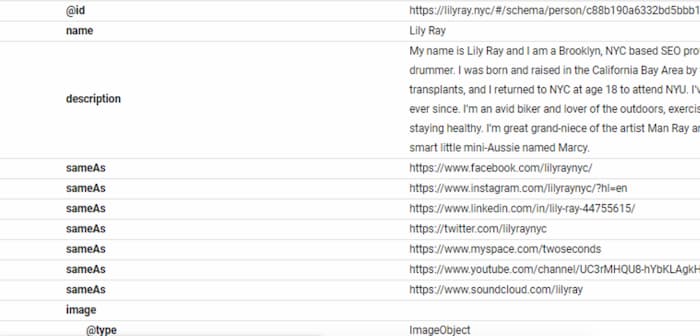
Use structured data markup to implement Schema and communicate to search engines any information you want to be highlighted. The added markup contributes to the knowledge graph and connects your website to other web properties/entities to provide additional trust signals.

Structured data markup for Lily Ray to connect other web entities and aliases.

Structure your site for users

Link to your about and contact pages from the navigation bar or footer of your website to make these pages easily found. Structure your website in a way that users can find everything they need to build confidence in your brand.

What’s good for users is also good for search engines. They are and forever will be linked. Websites that provide a high level of user experience are rewarded with high search engine rankings.

At the end of the day, search engines want what’s best for the user. If you can identify what those things are in your niche, you’re able to apply the most accurate principles that satisfy the Google EAT algorithm and positively impact your search visibility.

Christian Carere
Christian Carere

Christian Carere is the owner and founder of Digital Ducats Inc. in Toronto and heads the SEO team at Austin Bryant Consulting in Plano, TX.  Christian has been published on publications such as Search Engine Watch, Venngage, Small Biz Daily, Grasshopper, Data Box, Socialnomics, and Mention.

old.digitalducats.com/

Written by Christian Carere · Categorized: Content strategy, Web development

Jan 03 2021

Video Content Marketing Trends In 2021

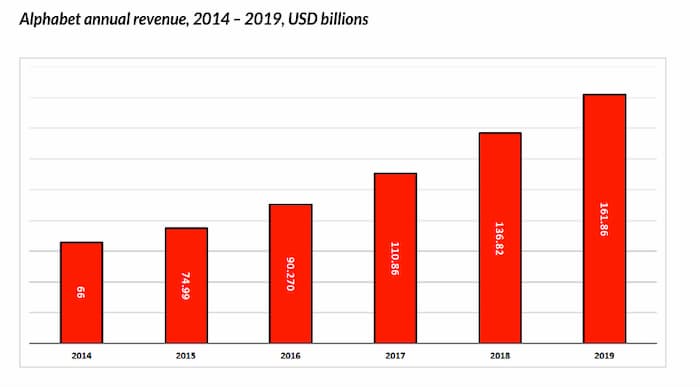
The age of video marketing is upon us and in full swing. We’ve already witnessed the rise of video, which can be seen in YouTube’s rapid growth over the last few years.

video content marketing trends include the growth of YouTube

There are dozens of ways to use video as part of your marketing strategy for 2021 and finding the angle will definitely contribute to additional traffic, conversions and a larger bottom line. Read about the video content marketing trends that are taking the world by storm and which you can capitalize on in 2021.

Ephemeral content

By definition, ephemeral content expires within a certain time period. The angle is to play on the user’s FOMO (fear of missing out) in order to elicit an immediate response or action. This type of content is being used more and more by marketers because of its effectiveness in getting attention. Stories have increased the time users spend on social media from 15-32 minutes a day.

For those who are dabbling in the world of influencer marketing, ephemeral content can be a less expensive way to get your content in front of an influencer’s audience. Many influencers on Instagram for example, will charge less for a story (that lasts 24 hours) than an actual post on their profile.

Ephemeral content provides an accurate way of measuring the impact of an influencer’s audience. The short bursts of increases in traffic and conversions can be attributed to the influencer campaign, giving investors more accurate insight into the value of influencer marketing.

Webinars

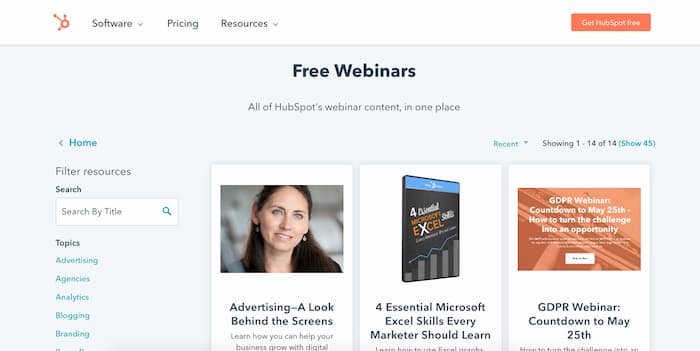
As a growing form of video marketing Webinars provide an effective method of educating an audience while providing a personalized touch (in your live stream events). Communication webinars have a conversion rate of 67%.

Hubspot webinars are an example of a growing video content marketing trends

This marketing tool combines the concept of building authority and the confidence of your audience by educating them about a specific topic. Many webinars aim to sell products focus on showing their audience how to solve a specific problem using their product. With a first hand glimpse at what the product can do, there’s a much higher likelihood that users will buy the product.

Webinars can be extremely informative and therefore repurposed into more bite-sized chunks of content to include in your marketing campaigns. 

The best webinar software allows you to schedule users to watch the replay multiple times throughout the day to continue driving traffic and generating leads.

Google search results

If you’ve been paying attention, you may have noticed an increase in the number of videos that appear in the search results. Apart from the fact that Google owns YouTube (which means 95% of the videos are YouTube videos), there is a growing demand for video content that Google is supplying wherever possible.

Videos are appearing in searches in which the underlying user intent may be satisfied with a video. Take product searches for example. Many times a video will appear as a product review or a video on how to use the product.

french press videos as an example of more appearances of video in Google search

Considering the fact that entire business models are built on YouTube traffic suggests that there is a massive opportunity. The first-page position on Google, as well as a high-ranking position on YouTube, can contribute to massive traffic to a website or conversion page.

There is evidence that incorporating a video on web pages will also contribute to a higher ranking on Google.

How to capitalize on more traffic from video

Obviously, creating a video is your first step. Many companies are under the impression that it takes a large investment to create a video content marketing campaign. Bentley proved this theory wrong by shooting an entire promotion with an iPhone.

Optimize your videos for SEO

Although a video has the potential to go viral or be shared enough to drive a substantial amount of traffic, optimizing your video can get your content in front of a targeted audience.

Use the basic rules of on-page optimization by including your keyword in the title, filename, description and tags.

Take your video SEO to the next level by publishing a transcript of your video within the description. The more information you give search engines about what’s on your video, the more keywords your video can appear for in searches.

Include chapters to increase appearances for video snippets

A simple way to segment your video into pieces is to create chapters. Write out the times on your video that represents where topics change or where questions are answered in order for search engines to pick up on your snippet.

Simply include the segments of your video in the description with a time next to each chapter.

Adding chapters to your YouTube description is one of the video content marketing trends to get more search appearances

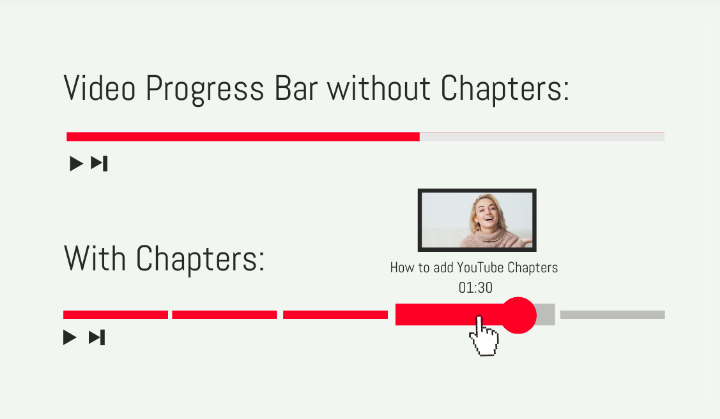
YouTube will pick up on the markings and segment the progress bar into the different pieces of content that you’ve highlighted.

Video progress bar with and without chapters

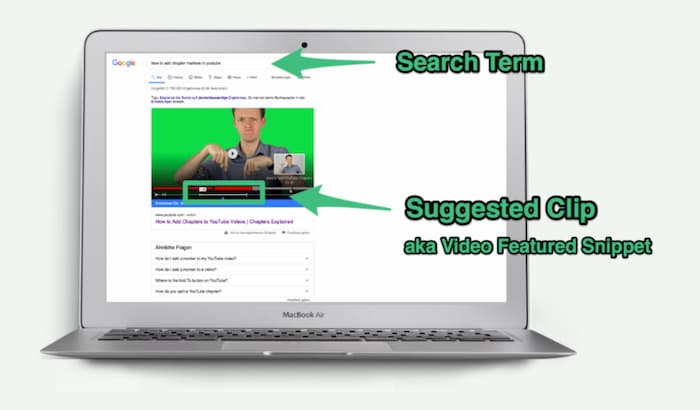
This results in providing search engines with more accurate information that can be highlighted for appropriate search queries. The segmentation of video content creates smaller snippets of specific information that is shown more frequently in keyword-related searches.

Video featured snippet is one of the growing video content marketing trends for 2021

The reach of OTT

Video streaming has already been a major movement that has caused many families to switch from cable to streaming platforms. It is estimated that 87% of families now stream to their televisions and of those, 70% no longer use cable.

Rech and watch time of the OTT providers that support ads

YouTube is one of the largest platforms with far-reaching implications. If you’re going to advertise using a PPC campaign, it’s an obvious choice to consider. The challenge becomes being able to target your ads and make sure it’s reaching an appropriate audience.

Video marketing trends are too big to ignore

The world is changing, as we know it. Video has provided us with an easy way of creating content and is now the preferred method of content consumption. With the numbers continuing to rise, it’s obvious that if you’re not including video content marketing in your overall marketing strategy, you’re leaving a lot of money on the table.

Look to use the most appropriate video content marketing trends that apply to your business. The effort you put in now will only contribute to higher margins, more leads and increased revenue.

Christian Carere
Christian Carere

Christian Carere is the owner and founder of Digital Ducats Inc. in Toronto and heads the SEO team at Austin Bryant Consulting in Plano, TX.  Christian has been published on publications such as Search Engine Watch, Venngage, Small Biz Daily, Grasshopper, Data Box, Socialnomics, and Mention.
old.digitalducats.com/

Written by Christian Carere · Categorized: Content strategy, Web development

Dec 30 2020

14 SEO Myths To Eliminate For 2021

When you look at the bigger picture, the internet is still in its infancy. We’ve seen many drastic changes since Google emerged as the dominant search engine and they continue to make changes to its algorithm daily. Every so often algorithm changes can shake up the entire SEO industry. Constant turnover in what works and what doesn’t can give birth to SEO myths and cause them to circulate.

The truth is that Google’s algorithm is proprietary, making it impossible for anyone other than Google to know with 100% certainty how exactly it operates. Much of what we do know has come from large amounts of data and results in which we have drawn our own conclusions.

To this end, many people are still catching up with the times and are only now learning what search engine optimization entails. With so many years of changes, it makes sense that there are a lot of SEO myths circulating. This article will bust a few of these SEO myths so you can count on creating a reliable SEO strategy for 2021.

  1. Anyone can do SEO.
  2. SEO is primarily about keyword optimization.
  3. More links are better than more content.
  4. Longer content ranks higher.
  5. There’s a secret SEO recipe that ranks your website.
  6. SEO is a “one-time” operation.
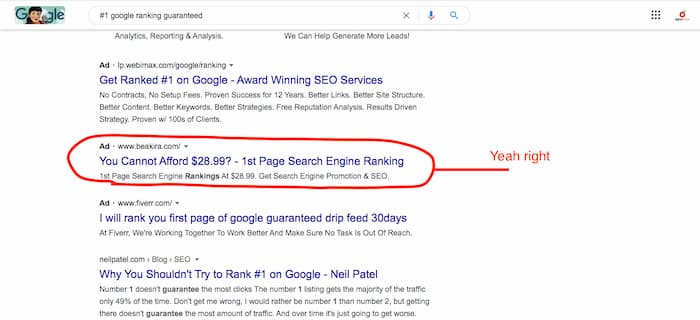
  7. A guaranteed #1 position on the first page of Google.
  8. It’s better to hire an SEO company in your city.
  9. Cheap SEO services save you money.
  10. All backlinks are created equal.
  11. More website traffic means more revenue.
  12. You need exact match keywords to rank highly.
  13. Syndicate content gets you penalized.
  14. All SEO companies offer the same product.

#1-“Anyone can do SEO.”

The belief that anyone can do SEO is true in the sense that you could say “Anyone can be a doctor.” Sure, if you work hard, study hard and learn what you need to know, you can become anything you want to become. But if you think that an untrained and inexperienced individual is as capable as an SEO professional, this is a big fat SEO myth. 

Anyone can learn SEO and at a basic level, understand the concepts and even apply the fundamentals of search engine optimization. Like any skill you practice, there is a learning curve to expect where you’re guaranteed to make mistakes and encounter situations that only experience and knowledge can solve.

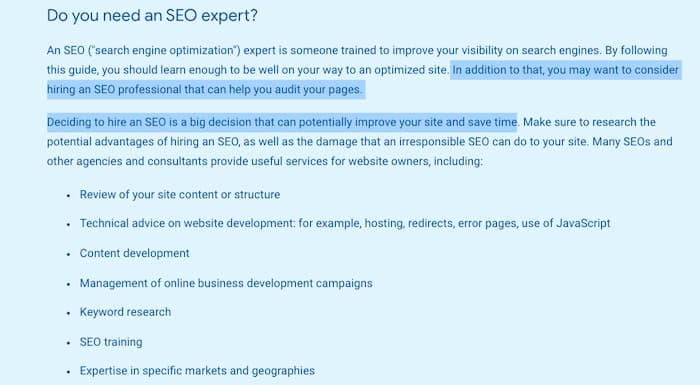
Google recommends using SEO consultants

When you’re working on a website that earns you money, some things are best left to the professionals. Google itself recommends that every website owner at least consult with a professional.

Google start up guide image recommending the hiring of professional SEOs (one of the SEO myths being busted on anyone can do SEO)
Image source: Google SEO Starter Guide

There are mistakes that an inexperienced person can make that will cost your business more than it would to hire a professional in the first place. 

For example, link building can be extremely dangerous if you’re not following Google’s best practices and guidelines. If you’re using the same words as anchor text to link to your pages, you may wind up beyond page 10 of the search results due to an algorithmic filter penalty.

Optimize your earning potential

Navigating around potential disasters is only one side of the equation. The other aspect of hiring an experienced SEO expert is that they know how to get the most out of your website. SEO is a continuous effort where making small adjustments for a few percentages more here and there add up to a lot of extra revenue.

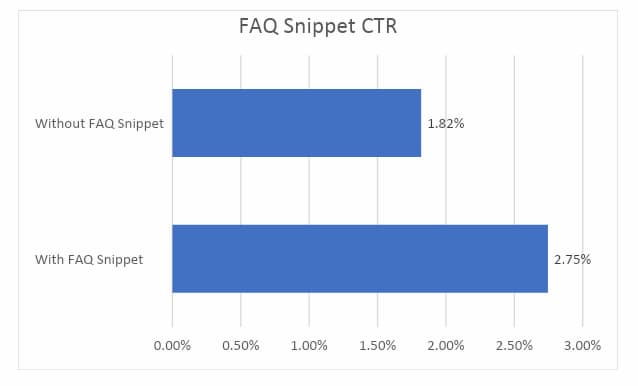
For example, if you knew how to create a rich result you might be able to increase the click-through rate by a few percentage points. If your keyword gets thousands of searches a month, this translates into an enormous amount of additional revenue.

Luca Tagliaferro published his case study on the difference in click-through rate when adding a FAQ rich result to one of his pages. A small snippet resulted in 1.5 times as many clicks.

Graph showing the results of a rich snippet case study on how small improvements can make a big difference which busts the SEO myth that anyone can do SEO.

Hire specialists to get the best results

You wouldn’t ask your local butcher to get rid of a mole on your body just because he’s good with a cleaver. 

via GIPHY

You ask a specialist to remove it. 

In the same way, you wouldn’t ask an IT guy (or web designer for that matter) to come up with an SEO strategy for your business. They may know a thing or two about SEO but when it comes down to getting the most out of SEO,  it is a process best left to the professionals.

#2-“SEO is primarily about keyword optimization.”

This myth could also be phrased as “SEO is all about ranking” or “SEO is primarily about lead generation.” The truth is SEO encompasses a large segment of digital marketing. Most people don’t realize how far-reaching SEO is when it comes to anything search engines, making this statement a complete and utter SEO myth.

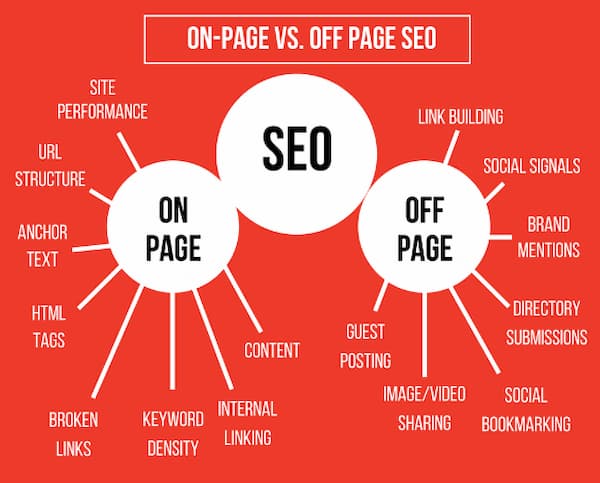
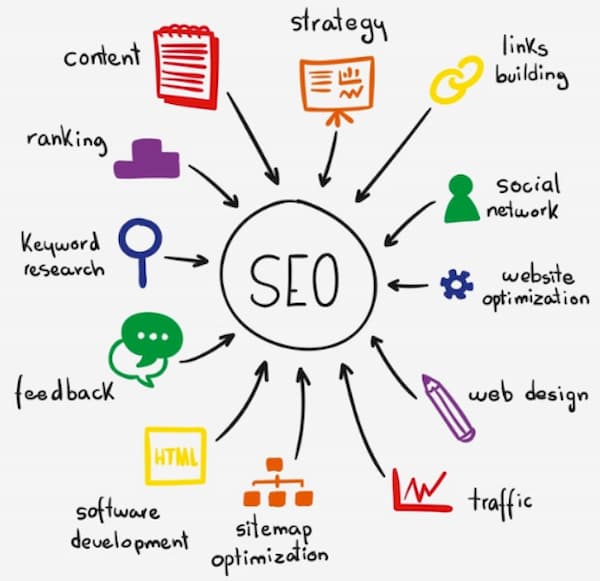
So what exactly is SEO? Search engine optimization is the process of making a web-property more likely to be displayed by a search engine for a specific search query. SEO is not just about ranking, lead generation, or keyword optimization. 

Image showing the many different aspects of SEO

It includes competitive analysis, technical improvements, conversion rate optimization, keyword research, link building, public relations, networking, revenue generation, content creation, on-site and off-site optimization and the list goes on.

SEO plays a role in almost every aspect of generating revenue from your website, social media, content marketing and/or paid advertising.

#3-“More links are better than more content.”

There was a time when the websites that had the most links ranked the highest on Google. Many SEOs reflect on this time as similar to the Wild West era when outlaws were able to get away with breaking the law.

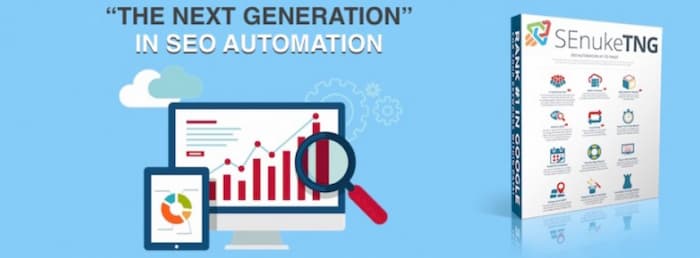
In this period of time, software systems were developed to build thousands of links overnight which made it easy to game the system. 

Image of SEOnukeTNG as an example of automation software

This method of ranking was eliminated by a series of updates (Penguin Update) and technological advances that allowed Google to assess the quality of backlinks. 

The quantity of links is no longer the only variable in the ranking equation.

What is true is that the more quality links you have the more authority your pages gain. 

The key phrase here is quality. 

If there are any unnatural links or irrelevant links, they are ignored. If there is an excess of poor quality links, the authority and trustworthiness of your website is devalued.

This is reflected in your ranking and overall search visibility.

Content is still king

If your content is written for users and gets a good level of engagement, the backlinks will come naturally. If you campaign to acquire backlinks to good content, the process is much easier and faster.

It’s better to have more quality content on your site that users are reading through than it is to have backlinks to poorly written pages. At the end of the day, even if your pages manage to make it to the first page of Google because of your backlinks, it won’t stay there for long if your content doesn’t answer search intent.

#4-“Long-form content ranks higher than short-form content.”

One misconception in how to publish content that outperforms what’s ranking is to make it longer than the competing pages. The truth is that word count is not what makes a piece of content outperform another. In fact, word count isn’t a ranking factor at all.

Why would a search engine use word count as a metric?

— 🍌 John 🍌 (@JohnMu) August 31, 2020

What lends merit to this notion is that in creating a longer piece of content, you are forced to go deeper into detail or cover more topics within the page. Depending on your keyword, the more information you’re able to provide to your audience, the better you’re able to satisfy search intent.

The ability to satisfy search intent is what search engines will value the most when displaying search results. If the search query is an informational search that has multiple levels of depth to the answer, then creating a more detailed article will result in a higher ranking.

On the flip side of the coin, if the search query does not require depth to satisfy search intent, then creating a longer article would be an exercise in futility.

Why this myth is so confusing

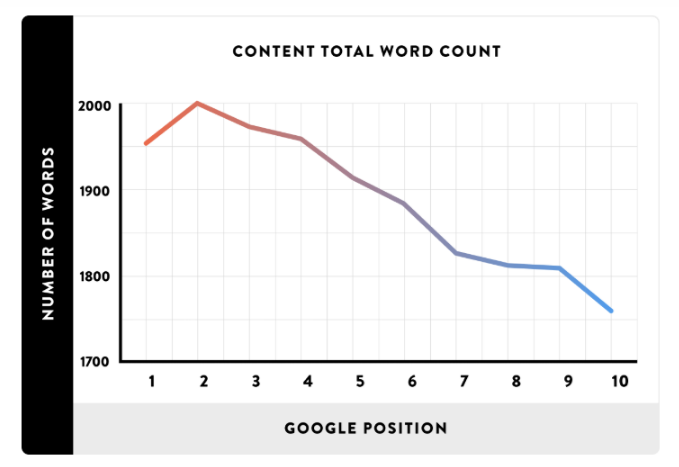
The general trend that has become the norm is that content is becoming longer. The average first page search result is 1890 words.

Average word count of the top 10 ranking pages

There is evidence that Google values depth, but it must be taken in stride with what the intent of the user is when performing the query. It is not word count specifically that determines whether a page is better quality, but the ability to satisfy the users intent of the search.

#5-“There’s a secret recipe to rank a website.”

Many people have the belief that there is a secret sauce or some sort of magic bullet that will rank a website. SEO is quite the opposite in regards to transparency. There are no secrets when it comes to traffic generation or improving search visibility.

Transparency offers the best value

The best SEO consultants can break down an SEO strategy so that it makes sense to the client. The concept of search engine optimization in its simplest form is to create great content that users are searching for and make sure search engines can find that content for specific search terms.

The strategies and tactics that work for long-lasting results are not secrets. Anything that sounds like a magic bullet should be ignored since there is a shelf life for stuff like that-which usually falls into the realm of black hat SEO.

Practice white hat SEO

White hat SEO is the practice of adhering to Google’s best practices when developing a website. Link building is best done through any means that allows a webpage to accumulate natural and high-quality backlinks.

There’s no substitute for producing quality content and natural link building.

Anything else is short lived and could ruin the quality of your website.

#6-“SEO is a “one-time” operation.”

Many people are confused about the process of SEO and what it actually does over time. It’s common to hear someone ask to have their site optimized thinking it will be a one-time job. 

This a complete SEO myth! The SEO process is multilayered and multidimensional.

SEO is a one-time operation is a complete SEO myth because it is multilayered and a long-term process

On-page optimization is one of a few different aspects in developing a website’s content to drive traffic. There are four large groups you can label as part of the SEO process for developing content; keyword research, content creation on-page optimization and link building. 

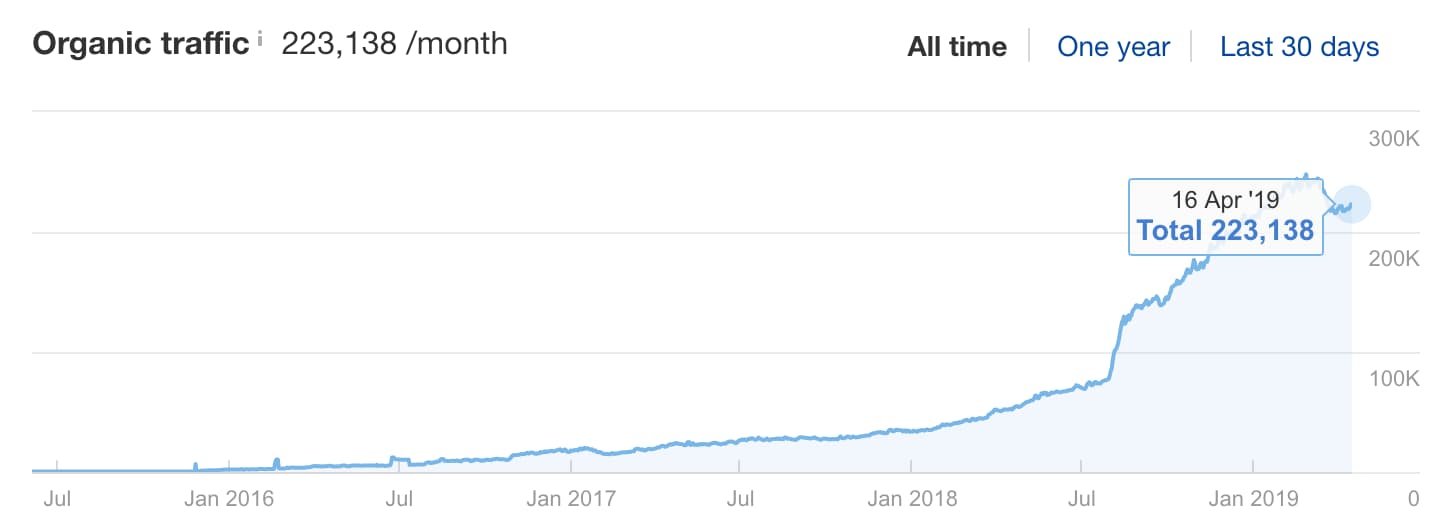
It took Ahrefs four years to build their blog to drive massive traffic. They were able to achieve such huge success in driving traffic by publishing top-notch, evergreen content and then ranking it to the top of the search results.

Ahrefs traffic growth with evergreen content

That doesn’t even touch on the technical side of SEO to produce and maintain a high functioning website.

And we haven’t mentioned the monitoring and tracking side of SEO that incrementally improves search visibility, quality of traffic and conversions. 

SEO is far from a one and done operation and is nothing short of a long term investment.

#7-“A 100% guarantee to rank in the #1 position on Google.”

Let’s start by saying that unless you own Google, it’s impossible to guarantee the #1 position with 100% certainty. Search engines are changing all the time and no one but Google can account for changes in the algorithm that could result in the rise or fall of a website’s ranking.

Having said that, it’s possible to estimate rankings based on experience within the industry or experience in ranking the keyword itself. A 100% guarantee on a #1 ranking is impossible for anyone who doesn’t control Google, however, a seasoned professional could speculate ranking to a close degree of accuracy-especially if they’ve done it before.

FYI, it’s much easier to estimate entering the top ten results than to guess how long it will take to make your site first on Google.

#8-“It’s better to hire an SEO company in your city.”

The beauty of SEO is that it can be done from anywhere. Digital properties can be accessed and worked on from anywhere in the world. The location of your SEO Company does not matter if they are experienced and good at what they do.

Choose your SEO company for the right reasons

Choosing the right SEO company should be based on several factors such as experience, referrals, results and reputation. If you’re in Toronto and you had the choice of ABC SEO Company Toronto or. Rand Fishkin, The SEO wizard of Moz (he’s a big deal in SEO but based in Seattle if you didn’t know already), who would you choose?

Let me help you with this one-you choose the legend of SEO, Rand Fishkin. Why? Because Rand Fishkin will turn your website into a monster moneymaker. So what if you pay extra money every month. If you knew your earnings would increase by 30% at the end of the year wouldn’t it make sense to invest the money on a sure thing?

Let go of traditional ways of doing business

Location can be beneficial to some people for peace of mind. It’s nice to know you can run and bang on the door of a company if you need to go looking for them. At the end of the day, you should be deciding to hire an SEO company for the right reasons so you’ll never need to bang on their door.

Settle for zoom meetings if you’re the traditional type who likes to meet in person. If you want your business to grow, you also need to grow with the times. Your website lives in a virtual space so distance has no boundaries when it comes to choosing the right company for your business.

#9-“Cheap SEO services save you money.”

Finding the right people to work on your website for the right price is an important factor in making the best decision for your business. There’s no problem in choosing an SEO company that’s less expensive than another but it’s important to note that SEO services aren’t cheap. Choosing an SEO company because they’re offering cheap SEO services could cost you way more in the long run.

There are no such thing as cheap SEO services-they are one of the SEO myths to avoid falling for when choosing a an SEO company

You get what you pay for. Be wary of cheap SEO services, as they do not include the same benefits of hiring an SEO company that does all the right things for your site. There are thousands of “SEO professionals” that will offer you prices that are too good to be true. Many of these services will submit your site to low-quality directories or link your site to their private blog network, both of which will ruin your website over time.

These companies can reduce your search visibility and cause more harm to your site than good. There’s no substitute for a professional, accurate website assessment and strategy session with an SEO specialist. Why leave the future of your business in the hands of someone who doesn’t have good references or a strong reputation for getting good results?

If you work with the right SEO company, you will make more money than you would without them. It’s the reason you hire a professional for these services. They make you more money through strategic planning and execution.

There are no shortcuts when it comes to SEO. Make sure your provider is up to par when it comes to putting in the work that will ultimately increase the revenue your website generates.

#10-“All backlinks are created equal.”

To the untrained eye this may seem like the case, however, it couldn’t be further from the truth. Some backlinks will help your website, some backlinks do not affect your website and backlinks that will harm your website. Knowing how to tell the difference can make a huge impact on the search visibility of your website.

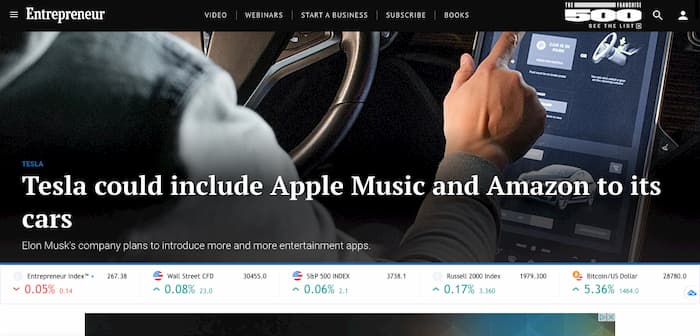
For example, imagine you’ve started a small business that develops custom POS software for retail stores. Would you prefer a link to your website from Entrepreneur.com

Entrepreneur homepage

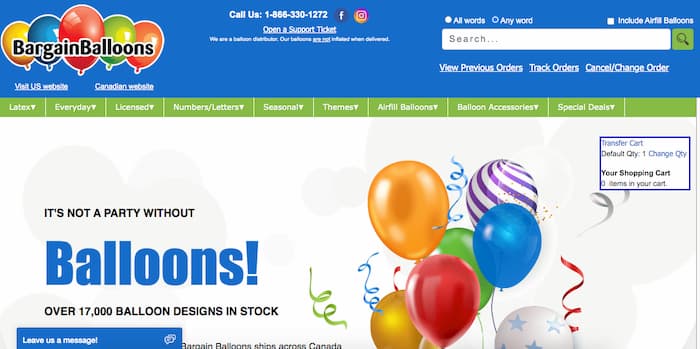
or from bargainballoons.ca?

Bargain balloons homepage

First off, Bargain Balloons (yes it’s a real site) isn’t even in your niche. It’s unrelated to your product and therefore a link from them will be ignored. In fact, if you continued to get links from websites like this, your website would start to lose search visibility. Google would downgrade the trustworthiness of your site and push it back in the search results.

A link from Entrepreneur.com however is an incredible link to acquire. Not only is this backlink from a website that specializes in entrepreneurial content, but the audience consists of the exact types of visitors you would want on your site.

A link from Entrepreneur would send other small business owners to your site that in many cases would be interested in your product. 

This is the first huge win. 

The second is the massive volumes of traffic the site generates. Your site would receive a substantial boost in referral traffic for the life of the article your link is on.

The last huge bonus is that Entrepreneur.com has massive domain authority. A link from them would transfer domain authority to your own site, giving you more ranking ability.

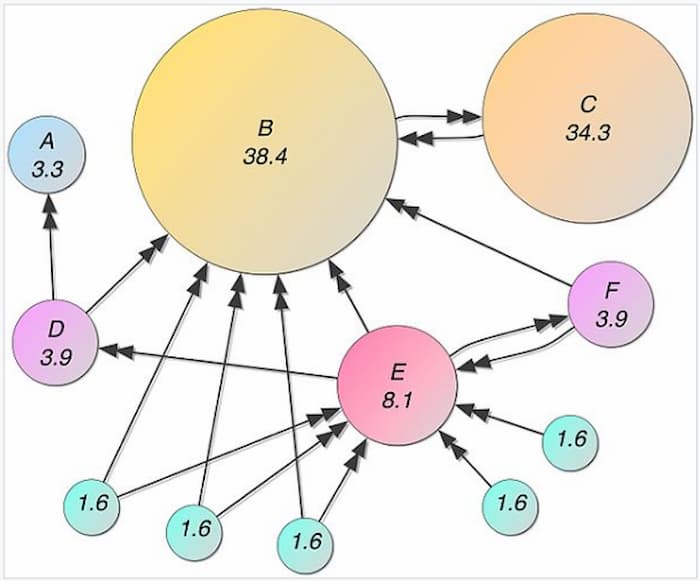
The following image is an visual example of Google’s PageRank theory. It shows how all websites are assigned their own values of PageRank, which Google uses in its ranking algorithm.

All links are definitely not created equal.

Consider the type of website the link is coming from

Another factor to consider is the different types of links that exist. First off, there are followed and nofollow backlinks. A followed link transfers domain authority, a nofollow link does not. 

Besides this very important detail is also the issue of where the links are coming from. 

A link from a directory will not carry the same weight as a link from another business within your industry. There is a value assigned to a link according to the relative ease in which it can be obtained. Anyone can get a link from a directory, but not everyone can get a business to agree to link to their website.  

#11-“More website traffic means more revenue.”

Website traffic alone does not guarantee an increase in revenue. However, more targeted website traffic from high converting keywords will generate more revenue.

For example, imagine you sell men’s athletic wear on your website. If for some reason your website began ranking for the term menswear, it would have mixed results since this keyword has multiple possibilities of intent. Not all users that type this keyword will be looking for athletic clothing.

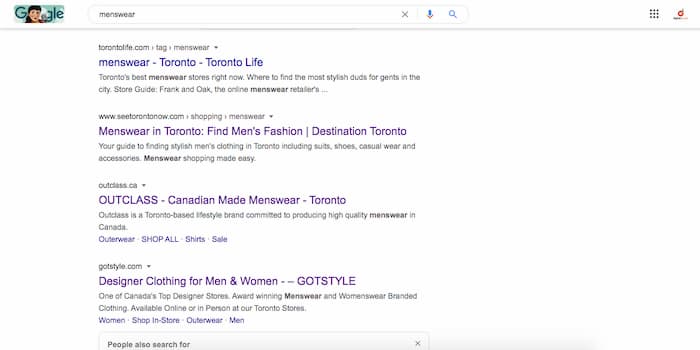
In fact, if we look at the SERP, it suggests this is a broad category. The first two results are local websites that list the top menswear stores (none of which are specifically athletic).

SERP for keyword "menswear?

The majority of the results that appear for this keyword are higher quality casual and formal clothing.

Example of a search results for the keyword "menswear" proving the SEO myths that more traffic does not always mean more revenue

Find the true intent of a keyword

Keyword research is one of the first components of SEO because it helps publishers understand whether the user’s intent for the search will result in a desired action on your website.

Some keywords represent mutliple intentions. 

For example, the keyword French press could mean that a user wants to buy a French press, learn how to make coffee using a French press, learn what a french press is exactly and so on.

You can determine a great deal of search intent based on the search engine result page. The Google SERP features indicate intent.

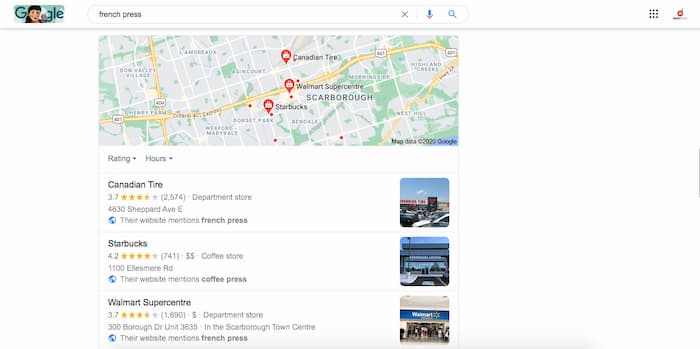
A local pack would mean that people are looking to pick up a French press in their area.

Local pack indicates the keyword "french press" has local search intent

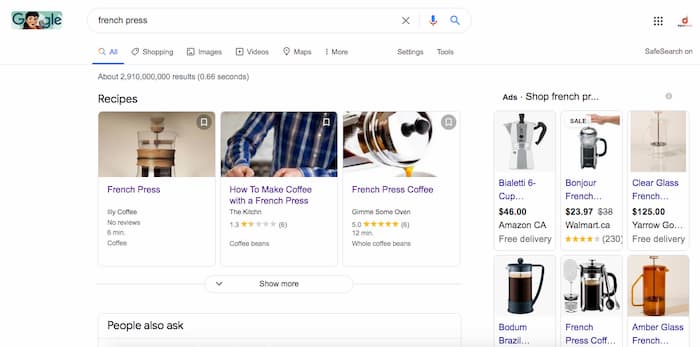
If you see Google Ads appear, it’s an indication that people are making money on this search term because they’re paying to appear in the result.

SEO myth busting session for "More traffic creates more revenue" proving search intent with Google Ads for commercial value

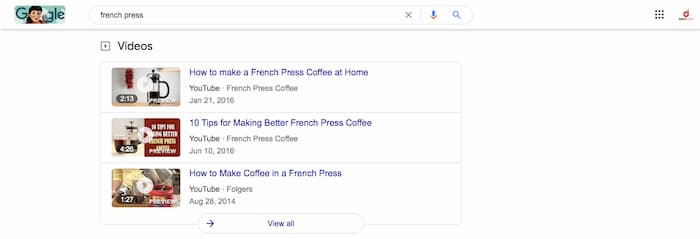
Videos indicate there is a demand to learn more about a brand or how to do something.

A video pack in the SERP indicates that adding a video to your content will increase the optimization and drive more traffic

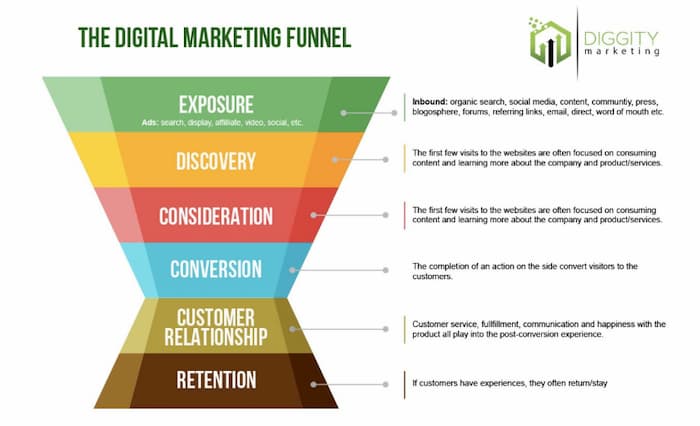
Not all keywords result in an immediate conversion. 80% of keywords are considered to have informational intent. Not everyone who visits your website will buy something when they get there, however, they may become clients at a later date if you’ve established an effective marketing funnel.

Target different stages in your marketing funnel to move visitors further along the buying process.

When you can optimize your website for keywords that have a specific purpose in your marketing funnel, increasing traffic from those keywords generate more revenue. 

Without testing, measuring and tracking your key performance indicators it’s difficult to know how well your website is performing in converting visitors into clients.

#12-“You need exact match keywords to rank highly.”

There is some truth in optimizing content with exact match keywords; however, it isn’t necessary to rank highly. Google ranks pages by keyword topic, not just whether a page has the keyword posted within its content, which makes this statement an SEO myth.

There are millions of examples where Google has ranked a page in the number one position without the page using an exact match keyword. This is because Google understands context and will rank pages according to how well they answer search intent.

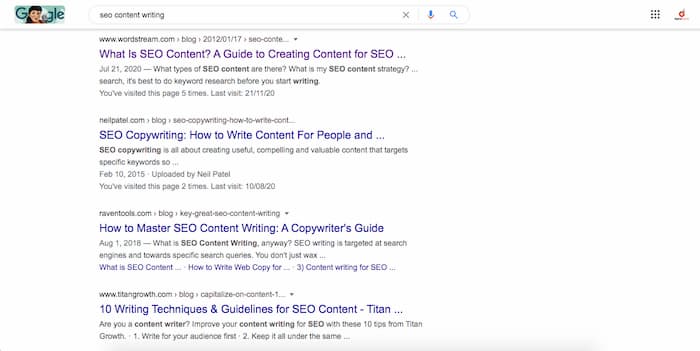
Look at the top websites that rank for the term SEO content writing. Only one title in the top 4 results contain the exact match keyword.

If your target keyword is SEO content writing and your article is an ultimate guide on how to produce SEO content, it’s possible to rank for your target keyword because your page shares the same search intent.

Your title could be “How To Produce SEO Content: The Ultimate Guide.” If it’s the best piece of content and offer the most expert SEO writing tips, you’ll rank for the term. 

Even if other sites have the exact match keyword within all of the expected places, your content will rank the highest of it is the best match to search intent and offers the highest quality of content.

Does adding an exact match keyword help with on-page optimization?

Yes, absolutely. In fact, it’s considered best practice to optimize your pages for a target keyword in which you would include that keyword in the places search engines use to categorize your content.

The requirement for an exact match keyword to rank highly is an SEO myth

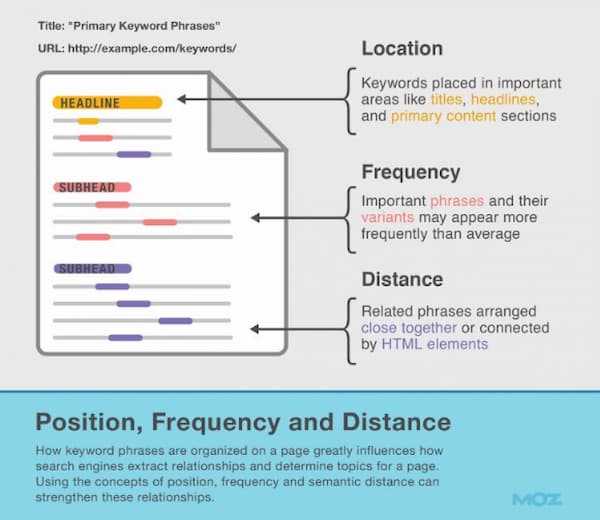
Including your exact keyword in the title, URL, image alt tags and within your content will contribute to a highly optimized page with more probability of ranking higher.

#13-“Syndicate content gets you penalized.”

There is a big difference between syndicate content and duplicate content, the latter being the one that gets you penalized. Syndicate content can actually benefit your site by amplifying good content. If the content you syndicate is being read by a lot of visitors on your site, it improves your user engagement metrics-which is a good thing for your ranking.

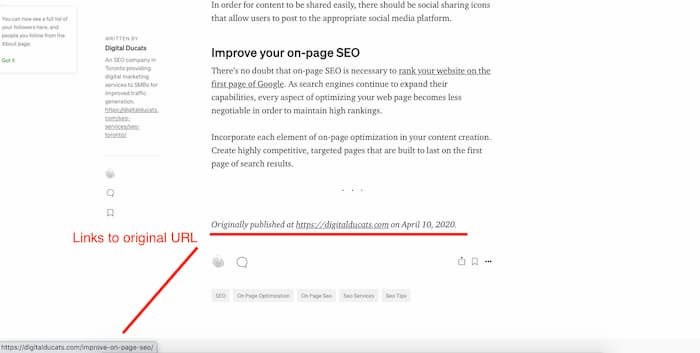
Take Medium for example. There’s so much content on this site that is directly imported from other websites. It still ranks for a lot of top keywords because it uses the correct method of assigning attribution.

SEO myth that syndicate content gets you penalized is officially busted with this screenshot of an article on Medium giving attribution

Absolve yourself from all chances of a penalty by placing the correct canonical tags on the content you produce (WordPress does this automatically for you).

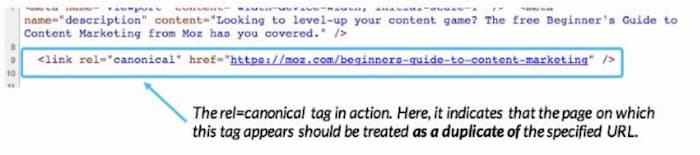
Credit the original website as the author for any content you syndicate. Use the `rel=”canonical”` attribute on the anchor tag that links back to the original article. This tells search engines you aren’t the original author, which means you’re not claiming the content as your own.

Example of the rel=cononical tag in action

Where you get into trouble with duplicate content penalties is when you’ve copied another article and published it as your own. If the content is a match to another page-which would have been indexed before yours, your site will experience an algorithmic filter penalty.

Spun content is just as dangerous as duplicate content

The same algorithmic filter kicks in for spun content. If search engines detect that you’re spinning an article that already exists they will demote your page in terms of trust and authority. This is most obviously reflected in search visibility and ranking.

Always give credit where credit is due. If you’re posting someone else’s content, give them the link to attribute them as the original author and avoid the duplicate content penalty.

Your content will then be considered syndicate content, which is a perfectly acceptable practice when proper attribution is given.

#14-“All SEO companies offer the same product.”

Most SEO companies are capable of addressing the major aspects of search engine optimization, however, not all will offer you the same package. Some companies are better at certain things than others. Almost every company will promote the strategy that they’re good at because they know it will get you results. 

This doesn’t automatically mean it’s the best strategy for your business. Make sure the company you choose offers a strategy that matches your business and industry. An SEO company might be absolute wizards in PPC campaigns. 

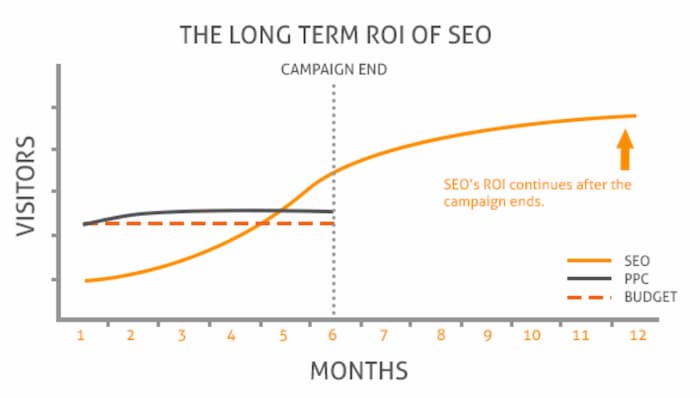
Example of SEO vs PPC

That doesn’t mean it’s the best SEO strategy for your company website even if they get your business turning a profit. You may have bigger opportunities in developing your organic traffic.

It pays to interview three to five different SEO companies before deciding on who to work with.

You will do much better in the long run if you can find an SEO company whose strength lies in a process that is tailored to your operations and offer you the most long term growth.

SEO myths can make or break your strategy

The emergence of SEO myths is an inevitability that should be expected. No one knows what the Google algorithm is with 100% certainty. The truth is it continues to change on a daily basis.

Constant vigilance is required in order to stay on top of the SEO trends that are verified truths as well as the trends that become obsolete. Read industry websites and follow SEO influencers that report major changes to search.

ICYMI: Google is testing people also ask with question mark icons https://t.co/hBXjNAtkkX pic.twitter.com/OlOjspW8Lv

— Barry Schwartz (@rustybrick) December 30, 2020

Being an early adopter to new SEO trends can mean the difference in making thousands of dollars in revenue. 

Identifying obsolete practices before you make the mistake of using them can save you an enormous amount of time and resources.

If you have any questions about the validity of an SEO myth that hasn’t been mentioned yet, feel free to contact us via email. We’re happy to share our thoughts.

Christian Carere
Christian Carere

Christian Carere is the owner and founder of Digital Ducats Inc. in Toronto and heads the SEO team at Austin Bryant Consulting in Plano, TX.  Christian has been published on publications such as Search Engine Watch, Venngage, Small Biz Daily, Grasshopper, Data Box, Socialnomics, and Mention.

old.digitalducats.com/

Written by Christian Carere · Categorized: Content strategy, keyword research, Link building, On-page optimization, Web development

Dec 27 2020

7 Effective B2B Content Marketing Strategies In 2021

The world as we know it has changed drastically in the last year. There’s been a rise in demand for online services and products in many categories, while a waning demand in others has put more pressure on companies to perform. So where are we at when it comes to providing the most effective B2B content marketing strategies for our clients? Here are a few strategies you can be sure to see a lot of in the upcoming New Year.

Infographics

Visual content has made its mark in the content marketing world and none is so effective in a B2B setting as visualized data. Creating infographics will continue to be an effective B2B content marketing strategy long into the foreseeable future.

Direct marketing strategy

The ability to retain information jumps from 10% to 60% when presenting text with images as opposed to plain text. This makes visual content an obvious choice for companies who want their potential clients to remember important details in a pitch or project proposal.

Generate quality backlinks

Apart from the advantages of using infographics as marketing material, the fact that infographics produce 172% more backlinks than regular text articles makes them a major asset to a company. With more people searching online than ever before, there is more competition vying for important keywords that generate income.

Improved search visibility

Infographics contribute to a healthy backlink profile and can provide streams of traffic once they rank as resources for other amplifiers who publish content in your industry. Journalists, writers and other publishers in your niche will look for statistics, facts and resources to use within their articles. Infographics are an excellent way to provide a resource with visualized data, which is perfect for those in need of citing a resource.

An example of one is the infographic we did on Web Design Trends By Toronto Experts

Example of an infographic as an effective B2B content marketing strategy

Video marketing

The rise of video has been an obvious success story over the last three years. YouTube has posted some incredible statistics-more notably becoming the second most popular website in the world (overtaking Facebook). What once was a marketing aid for businesses has now become a full-on business model with engagement statistics through the roof.

Video content marketing is a B2B strategy that works effectively
Image source

Most notable is the B2C market since YouTube is often visited for product reviews and as a way for customers to learn about a product. However, many fail to see the power of video as an effective B2B content marketing strategy despite the overwhelming evidence of how it works to generate more revenue.

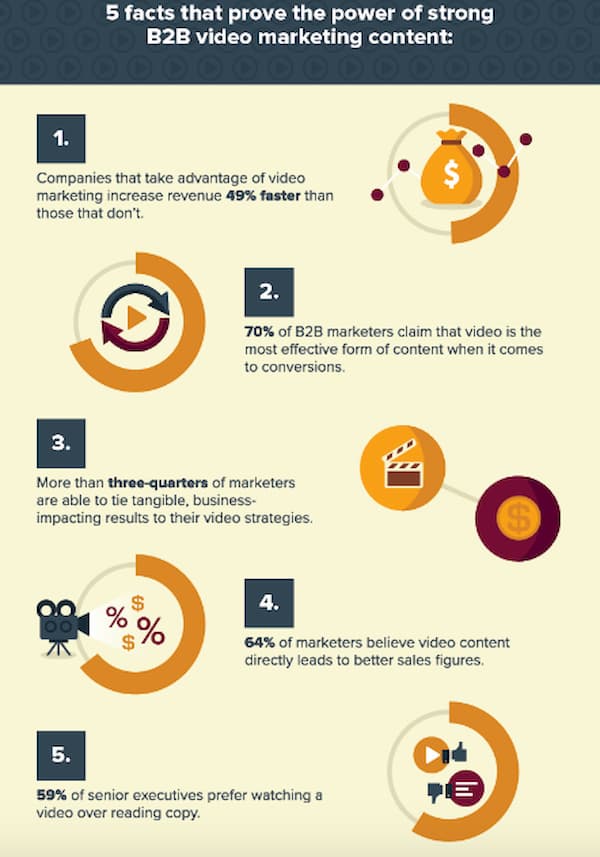
Here are five facts that provide evidence of the success B2B video content marketing has and will continue to have throughout 2021.

An infographic proving that video is one of the most effective B2B content marketing strategies to use in 2021
Image source

Expect to see more video infographics appear as companies make more of an effort to get more of their message across via this trending channel. There’s a fine line between maintaining a level of professionalism in terms of the video content you publish for B2B as opposed to B2C. A video infographic allows companies the benefits of the YouTube audience while maintaining a high level of professionalism.

Google feature optimization

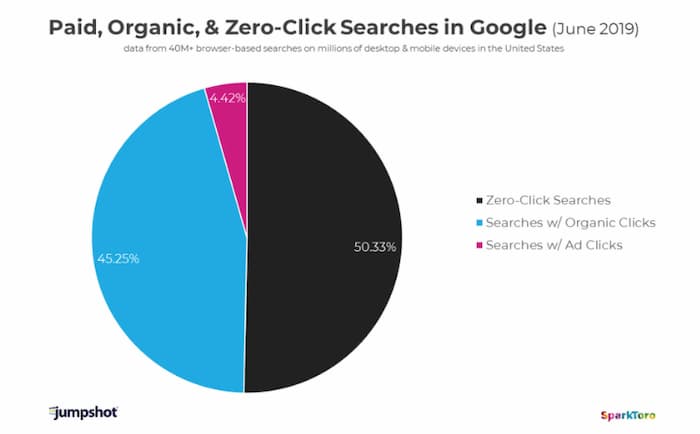
The proof has already been laid out for us and as scary as it is, the truth is we are witnessing a decline in the number of clicks that are going to organic search.

Google increasing the zero-click search phenomenon

As much as this may seem bleak and unpromising, there is a silver lining to this inevitability. Companies can optimize for Google features to counteract the trend of a declining organic click-through rate.

Featured snippets

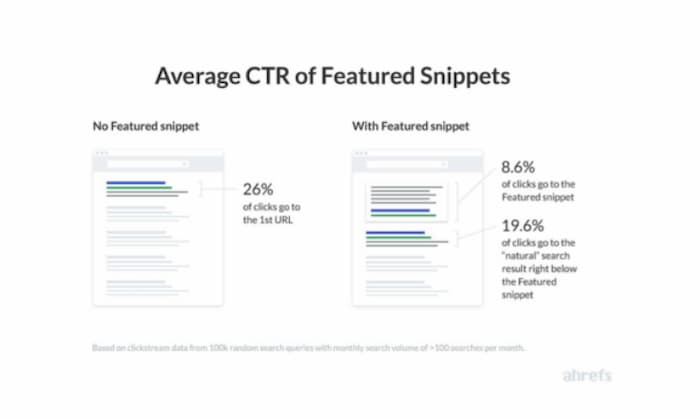
The most obvious of all Google features is the featured snippet. This is one of the most valuable of all features because it takes the top position on the SERP. The featured snippet is considered position zero-the new first position because it absorbs the bulk of the clicks.

Image showing the average CTR of the featured snippet since it will be a major content marketing strategy for B2B marketing

Optimizing for position zero is an effective B2B content marketing strategy because of the value it holds in traffic as well as branding. When your company is listed at the top of the results page as an enriched search result, it brands your company as an industry leader and an expert in its field.

Companies have and will continue to review first page positions they currently hold to optimize content to appear in this position. Winning the snippet can dramatically increase the search visibility of your website and contribute to more leads and revenue.

PAA boxes

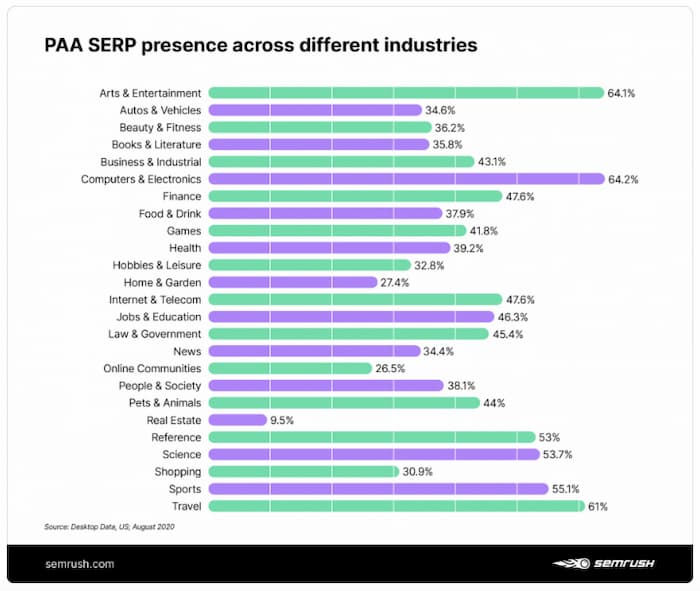
The PAA box appears for a significant portion of search results. SEMRush has discovered that when you hold a position in the PAA box, you hold a position for many different variations of that question which can send a significant amount of traffic to your website. These multiple variations of questions that rank in the box are also known as content hubs.

Image showing the SERP presence of the pAA box across different industries

The trend has been to optimize your content into as many snippets as possible. Post more content using tags highlights the information into recognizable chunks (or snippets) for search engines. This makes content more “snippable.”

What does “snippable” mean?

Snippable means to organize content to be recognized more easily by search engines. To make your content snippable leads to more featured results in PAA boxes, passages and featured snippets.

Google passages

If you haven’t noticed already, Google has begun to highlight the text on pages whenever you search for a specific answer to a question. This indicates the level of detail that you can expect in the upcoming era of search.

Example of Google highlighting passages to answer a question in a search query

Not only do search engines find the pages with the most suitable content, but they highlight the text within the page that directly answers the question. Google passages provide us with all the more reason to make your content snippable.

Co-marketing projects and partnerships

Expect to see more companies partnering up as a B2B content marketing strategy for specific projects and/or promotions. The advantages of working with another company have a huge impact on expanding your audience and branding your company as an expert in your industry.

Direct marketing advantages

When companies form an alliance for a specific project, they are sharing one of their most valuable resources; their network. All promotions and content will go through the regular channels such as on-site content, off-site content, social media and any email promotional material.

More companies are creating more opportunities by leveraging their partners’ audience in exchange for their own. This symbiotic relationship can be an ideal partnership for those that aren’t direct competitors but share the same industry.

Airline, hotel and car rentals are an excellent example of how companies can team up and combine their efforts to give their customers the best prices. 

Some companies aren’t anywhere close to sharing the same industry, yet cross promoting still positively affects their revenue. For example, Volvo became the official car for Legoland.

When you’re able to promote another company within your campaigns it paints a positive light on your brand. It shows you’re not afraid to help your audience find a quality product that you believe will help them in their everyday lives. This can contribute to more trust in your brand and ultimately more brand loyalty, sales and revenue.

Long term advantages

Another aspect to partnering with another company is the additional search visibility for the extended network. Keep in mind that backlinks are one of the largest ranking factors that affect search visibility. Working with another company’s network can result in a brand new audience that comes with more possibilities for link building and sharing.

The additional exposure to another network can give your company a huge advantage over your competitors. The surge in traffic can have a long lasting effect in your rankings from increased backlinks and search visibility.

Personalized email marketing

As one of the oldest, yet most effective forms of digital marketing, personalized email marketing will be a top choice as an effective B2B content marketing strategy.

A simple fact is that the ROI is unparalleled in the industry so it’s impossible to ignore (over 3800% ROI). The difference in creating campaigns that get the most conversions will be how well companies are able to segment lists and personalize content.

We’ve already entered an era where user engagement and personalization reign supreme. In order to make the most of what is already working to generate conversions, companies will need to continue to personalize content in order for it to reach its intended audience.

List automation is old news and in order to avoid the trash section of the inbox, personalized content is the only way to separate your company from the rest of the email campaigns.

On-site content development

The content you produce on-site is going to play a huge part on the search visibility of your website. The development of content that provides value to your audience is crucial for spreading awareness and nurturing leads that convert into sales.

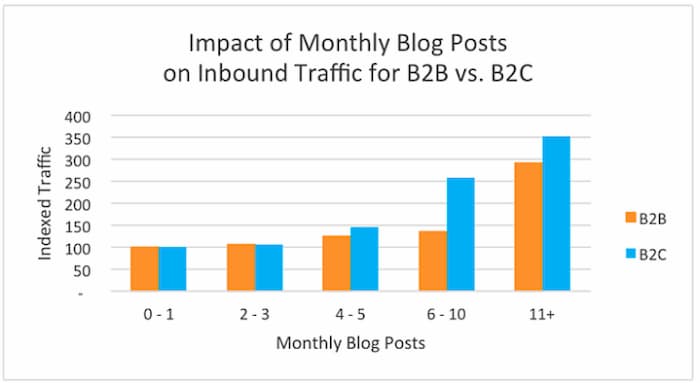
Small businesses can expect to produce more leads regularly from publishing SEO content regularly. In fact, companies that publish 11 times a month get 3.5 times as many leads as companies that publish once or twice a month.

Example of how more on-site content produces more leads making it an effective B2B strategy for 2021

Information is in demand and the means for supplying the specifics to users searches has created benefits for being extremely detailed. The on-site content you produce will play a part in developing the success your website has in the search results and ultimately its performance as a lead generating asset.

Original data and research

Individual data from research, studies and surveys are among the most useful pieces of content you can develop for your company. Identifying what interests your clients is an effective way to publish content that your ideal audience wants to read about.

The more information you have about your clients, the better chances you have for engaging them on more levels. With the proper research, you can build your content strategy on topics that mean the most to your current and future customers.

Research, studies and surveys are excellent tools for developing more insight into what your clients want and how they experience they have using  your products. Find out what works and what’s not to provide a better experience with your brand.

To generate original statistics on your findings gives you a foothold in the industry for publishing original data that no other company has access or has ever published. This is an excellent means for creating newsworthy coverage resulting in earned media and the potential of earning high quality backlinks.

Establish a B2B content marketing strategy for 2021

It’s cliche, and yet it remains one of the great truisms in digital marketing: Content IS King. What’s also true is “He who fails to plan, plans to fail.” The takeaway here is that by establishing an effective B2B content marketing strategy for 2021, you will be setting your company up for success.

Use any or all of the strategies above to drive robust traffic to your website and brand your business as industry leaders. The time has come where everything you do to improve your content will pay off in dividends further down the line.

Need help with your B2B content marketing strategy? Let us give you a hand by assessing your website and proposing a game plan to rank your website to the top of the search results.

Christian Carere
Christian Carere

Christian Carere is the owner and founder of Digital Ducats Inc. in Toronto and heads the SEO team at Austin Bryant Consulting in Plano, TX.  Christian has been published on publications such as Search Engine Watch, Venngage, Small Biz Daily, Grasshopper, Data Box, Socialnomics, and Mention.
old.digitalducats.com/

Written by Christian Carere · Categorized: Content strategy, Web development

  • « Go to Previous Page
  • Go to page 1
  • Go to page 2
  • Go to page 3
  • Go to page 4
  • Go to page 5
  • Go to page 6
  • Interim pages omitted …
  • Go to page 14
  • Go to Next Page »

Footer

Need professional SEO advice?

Give us a call to learn more about how we can help your business

Call for a consultation Request a proposal

Request a free website analysis and proposal for your company by filling out the ” Request a Proposal” form.
  • Privacy Policy
  • Terms Of Service
  • Cities we’ve served

© 2026 · Digital Ducats Inc.