• Skip to main content
  • Skip to footer

Digital Ducats Inc.

SEO Consulting & Services

  • Home
  • About
    • SEO Consulting
  • Services
    • SEO
    • Local SEO
  • Contact
    • Pricing
    • Write For Us
  • Blog
You are here: Home / Blog

Oct 31 2022

Pillar Page Best Practices For Structuring Content

Publishing content regularly can result in your blog resembling a scattered array of articles that don’t work together as themed content. One advantage you can create as a publisher is defining themes within your content by organizing them in topic clusters. As a precursor to creating an effective topic cluster, use the pillar page best practices outlined in this article.

What’s a pillar page?

A pillar page represents a major keyword topic on your website that can be broken down into smaller subtopics. This page would briefly summarize the subtopics, but not go into great detail about them. Instead, it would link to narrowly focused articles that target long-tail phrases and in turn link back to the pillar page.

Pillar page best practices shown as creating a central page and linking smaller subtopics to and from the page

The interlinking structure formed by establishing a pillar page binds your major keyword topic. Since every smaller article points to the pillar it becomes the central hub for the topic, which enhances the page’s authority and ranking ability.

This internal linking strategy raises the profile of the pillar page to demonstrate the importance of its content as it relates to your website. This page represents a central idea being supported by a number of different articles to create depth and expertise in the subject.
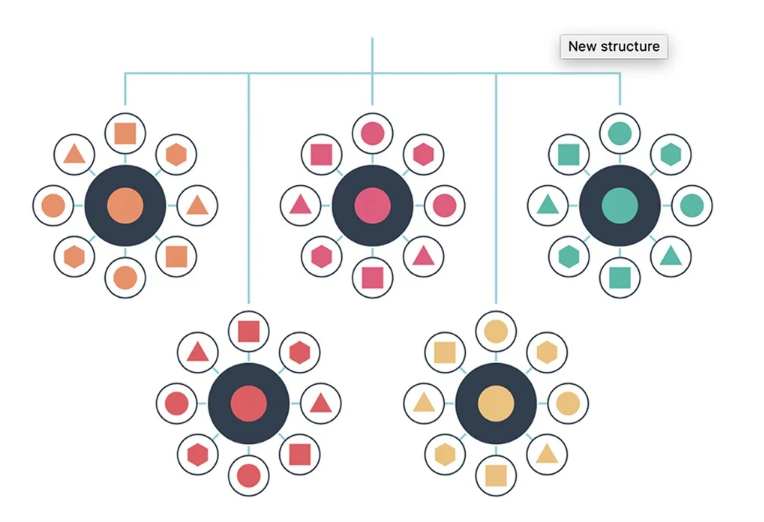
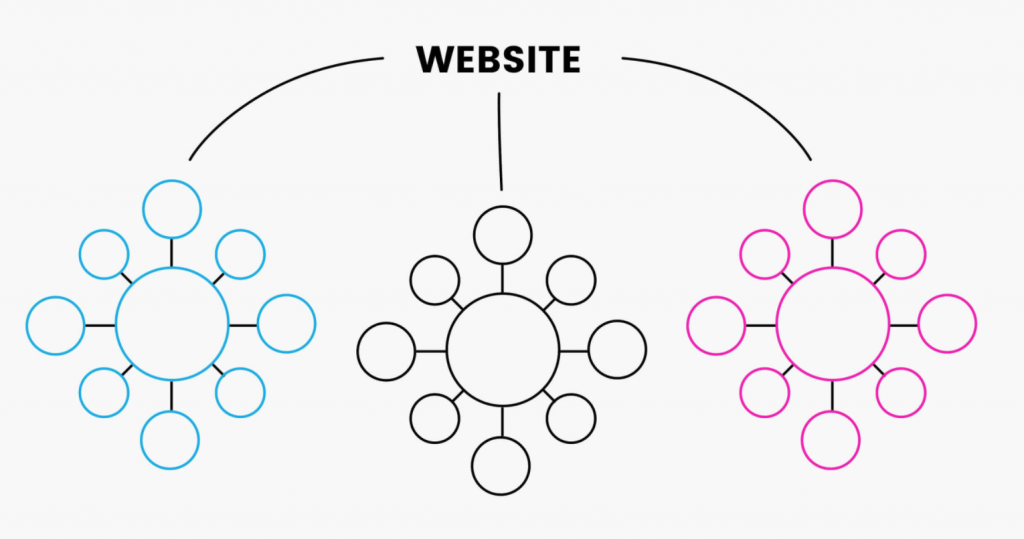
Five separate topic clusters with pillar pages and cluster content

There’s no limit to how many pillar pages you create on your website. For every major topic, create a pillar page to create the main hub for how the information on your site is organized.

What are the benefits of using a pillar page?

This type of structure organizes your content for both users and search engines. The interlinking structure guides and encourages users to read more related articles on the website. This leads to higher click-through rates and extends the average length of time a user spends on your website.

An increase in user engagement translates to stronger ranking signals, which results in more traffic through improved search visibility.

Pillar pages tend to rank for multiple keywords and phrases because of the breadth of content that is incorporated. This gives publishers a lot of opportunities to target featured snippets and win positions in the People Also Ask box.

It also allows for the opportunity to target long-tail keywords using the clustered content as opposed to trying to target those keywords within one pillar page.

The traffic that is driven by the clustered content is a good match to your content since the visitors enter your site through article ranking for long-tail search phrases.

The stronger your cluster content, the stronger your pillar page becomes in terms of ranking ability. It’s similar to a tree growing taller because of a strong root system. With more cluster content that ranks and drives relevant traffic to your pillar page, the more your pillar grows in stature and authority.

Tips for creating a pillar page

There’s no single way to create pillar pages and for every website, it might be different. If there’s already an extensive amount of content on your site, the process will be different than if you’re publishing fresh brand new content.

Some publishers recommend writing your clustered content first so that you know exactly how brief to be in your pillar content. There are others who prefer to write the pillar content first and create cluster content afterward.

Whichever way you go, here are some universal tips, tactics and strategies, and pillar page best practices that will help you along the way to creating well-defined topic clusters that satisfy user intent.

Select your target keywords

Every website needs a strong keyword strategy. There’s simply no way around it. In order to have a clear idea of how to create an effective pillar page, you’ll need to do some keyword research to clarify the terms that your page will target.

Start with the most obvious terms

Almost every keyword strategy begins with a logical list of topics and subtopics that are relevant to your business. Create a list of terms that summarize the most important aspects of your business.

If you’re a digital marketing company, one of your pillars should be about lead generation. Write down every aspect of lead generation to start your list of clustered content. Examples of subtopics would be email marketing, call to action, content strategy, keyword strategy, etc.

Fine-tune your selections

Once you’ve got a basic list you can then add to it using keyword software and fine-tune your selection based on competition, volume, and the value each word represents to your business.

Perform a competitive analysis

You can’t outperform the competition without knowing what exactly they’re doing to rank on the first page of Google. Perform a thorough competitive analysis to find common characteristics of the top-ranking pages.

A content gap analysis will indicate the content your page is missing by identifying what keywords the competing pages are also rankings for to include those keywords in your strategy as well.

Determine the level of detail required to rank

Figure out what the average word count is for the top 10 ranking pages. The average length of a page in the top 10 positions for your keyword indicates the level of detail required to be competitive.

Keep in mind that it isn’t the word count that makes the page competitive but rather the topics that are being covered within the page. There may be room to further break down some of the subtopics you’ve established into several subtopics.

Create content that meets and exceeds the value a user receives from the top 10 ranking pages to make sure you earn the first-page position.

Address each stage of the buyer journey

The pillar page is the central hub of a major keyword topic, so it should naturally be assumed that this page should have the ability to convert visitors into clients. To do this, you should address each stage of the buyer journey to guide your visitors from wherever they are, to making a purchase.

Awareness

Create a stronger awareness of your product or service by incorporating basic information about your keyword topic. Start your pillar page with definitions of your keyword topic so that visitors have a clear understanding of what the page is about.

Consideration

List the benefits and practical applications associated with your product service or major keyword topic. You can always link out to more detailed articles when you touch on a topic that deserves more attention and can be broken down with more detailed explanations.

Decision

Bring the visitor to the conclusion that your company offers the best solutions for what they need. Using comparisons, case studies and testimonials can help influence your visitor into a favorable purchase decision.

Optimize your content

Take advantage of the opportunity to appear in SERP features-more specifically the People Also Ask box and featured snippet. You’ll need to be aware of the questions that appear in these features in order to know how to optimize correctly.

Analyze the SERP by clicking through the question in the PAA box and copying every question that is relevant to your keyword topic. Repeat the process for related terms that your page could also rank to get more options and ideas for how to structure your headings.

It also helps to have a list of secondary keywords to use in addition to your primary keyword targets. Having a list of optimized search terms can influence the headings you use within your content.

Link to all relevant content within your topic cluster

In order to bind your topic cluster together and identify your page as a pillar of your website, you need to build internal links. Your pillar page only becomes your pillar when it’s obvious that there are multiple pages within a cluster that are linking back to it.

Link to every article within your topic cluster and make sure they link back to your pillar. Pillar pages have the most link equity and will increase in authority with more cluster content linking to them.

Be sure to link your cluster content together to emphasize the relationship of the articles within your cluster. This is not only beneficial from a technical standpoint but also enhances the user experience.

Give users the opportunity to read related content by linking to articles that move them through the buyer journey. Keep them learning about your business and how it can help them solve the problems that are commonly faced by those looking for your product or service.

Use call-to-action banners

The purpose of creating content is to educate your audience into making a purchase decision with your company. Make sure you give them plenty of opportunities to make a call, fill out a form, or complete the objective conversion goal you’ve created for your website.

Use a CTA banner throughout your pillar page wherever it makes sense. Definitely leave a call to action at the end of your pillar page to encourage more goal conversions.

Example of how to create a pillar page in a topic cluster

Create options for keyword topics by listing the major keywords of your website. Each of these keywords will act as an idea bucket which you will fill with terms that belong under your main keyword topic.

For example, let’s say your website is about home renovations. One of your pillar pages would target the keyword kitchen renovations. A potential topic cluster that organizes the information related to kitchen renovations into smaller detailed articles would look like this:
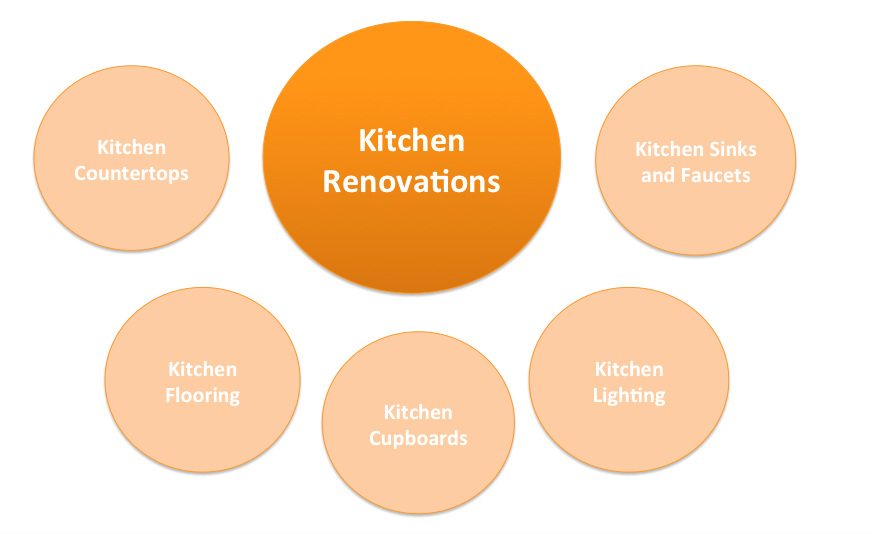
Kitchen renovations pillar page and topic cluster example

Although you would mention all of these subtopics on your pillar page, you would need entire articles to go deeper into detail on each aspect of kitchen renovations in your SEO writing.

Silo your content

Keyword topic clusters can have more outer levels than just the one that surrounds the pillar page. In the kitchen renovations example, you could break down the topic kitchen countertops into deeper detail if there is a demand for that content in your product.
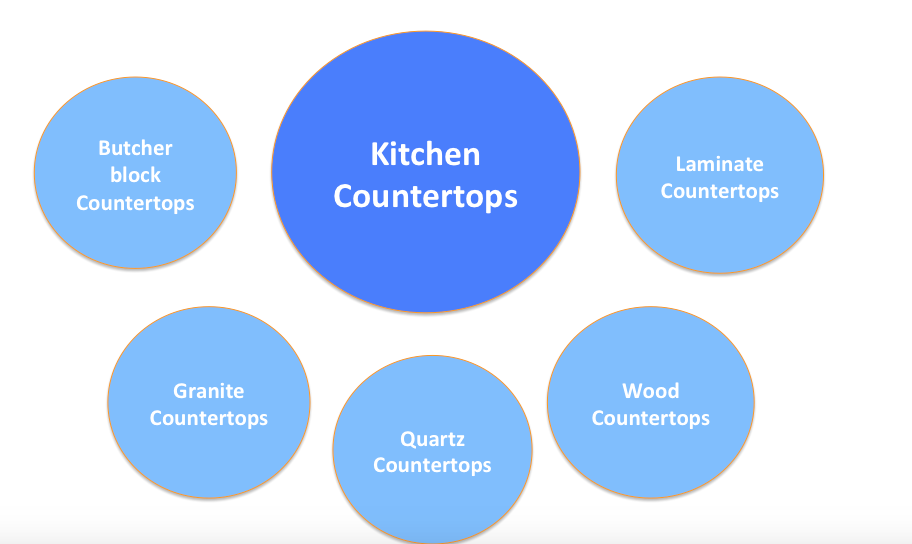
Example of siloing the information needed or kitchen renovations in a kitchen counter tops topic cluster

Repeat the pillar page creation process

Organize your content using a structure that search engines and users understand. Topic clusters are one of the top content structures for encouraging user engagement and ultimately high rankings.

Publish pillar pages to compete for competitive keywords and increase the authority your site demonstrates for that major keyword topic. You can build the level of depth and expertise your website has by continually adding to your clustered content and providing users with the solutions to commonly asked questions and problems.

Search engines prefer to display websites they trust and those that are considered to have an expert opinion. Demonstrate both of these ranking factors by implementing these pillar page best practices to create topic clusters that rank highly to drive high volumes of traffic.

Related reading: 10 Expert Tips For Writing Expert SEO Content

Written by Christian Carere · Categorized: Content strategy, Web development

Oct 14 2022

SEO Content Writing: How Does It Work?

SEO content writing is a term that refers to producing optimized content that appears for target keywords. The process incorporates keyword research, SERP analysis, competitive analysis, content creation, and optimization.

Publishing search-engine-optimized content gives your posts a better chance of being found in the search results. Incorporate the following steps to create articles that rise to the top of the search results:

Want to skip the steps and have an SEO professional do it for you?

Choose the keyword best suited to your needs and ability

The keyword you choose to target should present value to your website as well as be within your ranking ability. It won’t make sense to choose keywords with a low business value just for the sake of ranking your content on the first page.

SEO content writing involves keyword research (image of keywords spelled in scrabble tiles)

Similarly, it’s a waste of time to publish content that no one will read because it’s too difficult to drive traffic to the page for its target search terms. The keywords you choose should be a blend of suitable search volume as well as within your realm of expertise to achieve a first-page position.

How do I determine if a keyword has business value?

Use the cost per click for a keyword to indicate whether other websites are making money from the traffic it drives. The logic behind this is simply that if there are people willing to pay money for every click then they are obviously making money from that traffic.

The higher the cost per click, the higher the inferred commercial value. Apart from the transactional value of the term, you should also consider the impact your content will have on its audience.

  • Does your content make your visitor feel like they need your product or service? 
  • Does it further educate them on making a decision about a purchase? 
  • What stage of the buyer journey does your keyword address?

There’s more to assigning value to keywords for transactional intent. The purpose of your content can also be to create brand awareness and instill a sense of confidence in your prospective client.

The bottom line for choosing a keyword to target is that it moves your visitor closer to making a purchase decision.

Related reading: 10 Expert Tips For Writing Optimized Blog Posts

What’s an appropriate level of volume?

Adequate search volume will be different in every niche. Typically, B2B niches with high-ticket services require less volume to make a keyword profitable. 

If you’re a lawyer or plastic surgeon, one client is worth thousands to your practice.

If you’re selling poop bags for dogs on your website, you’re going to need thousands of visitors in order to pay rent for the month.

Your conversion rate will determine the true value of a keyword and unfortunately, without data, you will need to make an educated guess at how many people you can move into your sales funnel from the total volume of monthly searches.

Gauge the competition

When you’re looking at potential keywords to target, filter out options based on the strength of the competing pages. You can get a good sense of how difficult your keyword will be to rank by looking at the domain authority of the top-ranking pages.

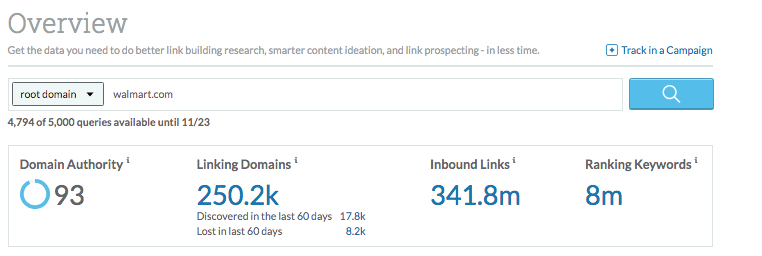
Unless you’re planning years into the future, eliminate keywords where your domain authority is dwarfed by every domain in the top 10 results. If you own an eCommerce website, you may be competing with retail giants like Amazon, Walmart and other high authority websites. In order to outrank those sites, it will take an enormous amount of time and resources.

Image of Moz domain overview for Walmart showing high authority and thousands of backlinks.

Look for openings in the SERP where websites with a similar domain authority are ranking. Keep in mind that Google ranks pages, not websites so you have the option of building links to your page to improve the page authority. That’s how you make up the difference in domain authority.

Choose your keyword based on a blend of factors

It’s rare to find a keyword that has low competition, with high volume and converts extremely well. They do exist but in most cases, you have to concede come qualities for others. Make your final decision on your keyword target by considering each of these factors and how they fit into your overall keyword strategy.

Establish search intent

One of the most important criteria for ranking highly in the SERPs is that your content accurately satisfies search intent. Identify and publish the content type and format that is best suited for users searching your keyword.

Establish what’s working to rank in the top positions by scanning the top 10 page titles on the SERP. The headlines can usually provide a strong indication of the content type that users are enjoying best.

When there’s a predominant type of content that appears in the search results, it’s an indication of what will work best to satisfy search intent. Identify which content type is the most dominant within the 10 organic search listings and plan on duplicating the same content type.

Analyze the top-ranking pages

In order to outrank the competition, you need to understand what is currently working to rank on the first page. You can’t make a “superior” piece of content without understanding what made it rank on the first page.

Analyze the top-ranking pages and determine what topics they cover and how deep into detail they go into. You can get a good idea of the outline a page has by scanning its subtitles.

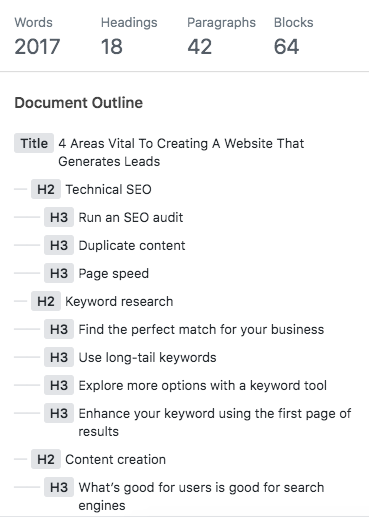
Most articles will have the main points of a page highlighted by using headlines for each segment of their content. You can write them down to compare articles, or even cut and paste the content into your own CMS and see a detailed breakdown of topics. WordPress does an excellent job of summarizing the content you create on its HTML editor:

wordpress headline summary

Take note of the internal and external links that they’ve used within their content as they may be valuable hints for optimization. There are some guides that rank extremely high, and the majority of their pages are external links to the various chapters of the topic.

When search engines crawl your page they will follow the links that you’ve built. If those pages are excellent resources for your topic that link will help to build the relevance of your page for satisfying search intent.

Publish 10X content

Once you’ve determined what the competition has published, aim to create content that is 10 times better than anything on the SERP. Make sure your article completely blows away the competition in every category. Provide more information and better multimedia with the intention of improving the user experience to a level that no other page can compete with.

How do I create 10X content?

After analyzing content on the top-ranking pages you should have an accurate idea of the topics that are covered and the level of depth that they’ve achieved. Your findings alone can be applied to, at the very least, provide a similar version.

Where you excel is to look at what these pages don’t have and including it in your content. If you’re pulling the best from every page you should already have a much better version of content when you put it all together.

Add depth of coverage

Keep adding to your findings by taking clues from the SERP. Use the questions in the PAA box to create more depth by answering commonly asked questions related to your keyword. The PAA box is infinite so if you continue to click on questions-more will continue to populate the box.

Add a completely new segment to your own content to boost the depth of coverage. The goal here is to provide a better solution to search intent, so keep your user in mind when you’re selecting questions that pertain to the topic you’re targeting.

Add new multimedia

Create a more enjoyable user experience by adding new multimedia to your content. Whatever the competition has used, don’t just one-up them, aim to outperform them to the point of embarrassment.

Make sure you have more images that explain more points. If the ranking page has five images, give yours at least 10. Provide a visual example for every subtopic that warrants a visual explanation. This will make your content easier to understand and digest.

Is there a video on any of the ranking pages? Make a video for users who prefer to watch and listen rather than read. Your content will appeal more to that specific segment of your audience that prefers video.

Be innovative and embed a slideshow. This can give your content a feature that isn’t as common, which separates your page from the masses. Whether it’s a slideshow, an audio file, or a gif., use whatever you believe will create a more enjoyable user experience for your audience.

Use original research and data

The more unique your content is with original statistics and real results, the more you differentiate your brand as an innovator. Visitors will trust your company and what’s more, your page will accumulate more backlinks as an original source of data.

The amplifiers in your industry are often looking for statistics when writing about topics. If you can supply original statistics from studies and surveys you’ve completed, the value of your content goes way up.

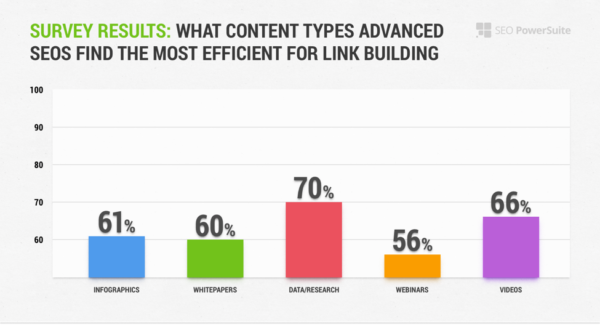
Chart that shows original data and research is the most efficient content type for link building when writing SEO content

Optimize your page for performance

When you’ve finalized your draft, you will need to optimize your content to maximize the traffic you’ll receive. Not only do you want to be optimized for your target keyword, but you want to make sure your page has multiple ways to drive traffic from keyword-related searches.

Review content for the PAA box and featured snippet opportunities

The featured snippet appears for almost every question used in a search. Review your content for any opportunities where you can appear in a featured result.

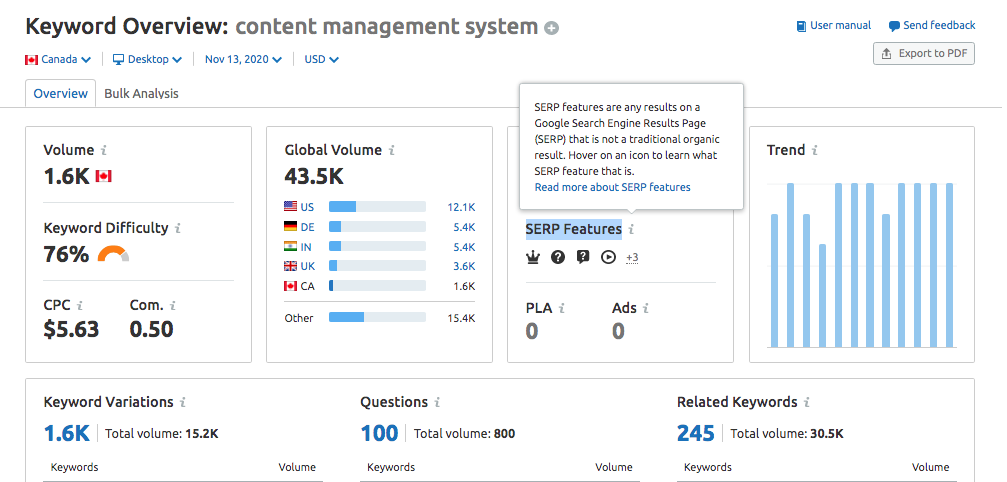
If you’re analyzing keywords using a tool, you can find a list of the SERP features along with other keyword stats.

SEMRush keyword overview that shows the SERP features that appear for this keyword

Look for questions and definitions as those are among the most common forms of snippets that appear in the SERP.

If you’ve followed the steps in this article, you may already have questions you found in the PAA box included in your content. As long you keep your answers short and succinct, you have a good chance of appearing in the feature.

Add structured data

Structured data markup enhances the optimization of your page. Schema.org has over 1300 defined entities that you can include in your page to make it easy for search engines to quickly process and establish the most important elements of your page.

Use the structured data markup helper to mark up your content. Aim for every possibility of receiving a rich result. The added search listing enhancement that rewards your page will attract more attention and ultimately more clicks and traffic to your site. 

You can check here for a list of the items and the markup required to implement rich snippets in your content.

Use your target keyword in the metadata

Using your keyword in your metadata is among the oldest and most well-known forms of optimization for a reason; it has a big impact on your ranking for your target keyword.

Use your keyword in the title, image alt tags, and URL, a few times within the body of text as well as in your meta description. The meta description is the only place that search engines don’t specifically factor into your optimization-but it does impact how users see your search result.

Add secondary keywords

It’s never a bad idea to include some keyword variations a couple of times within your content. Using a keyword twice is probably enough to put it on a search engine’s radar. This adds context to your target keyword and creates more keyword options for search engines to rank your page.

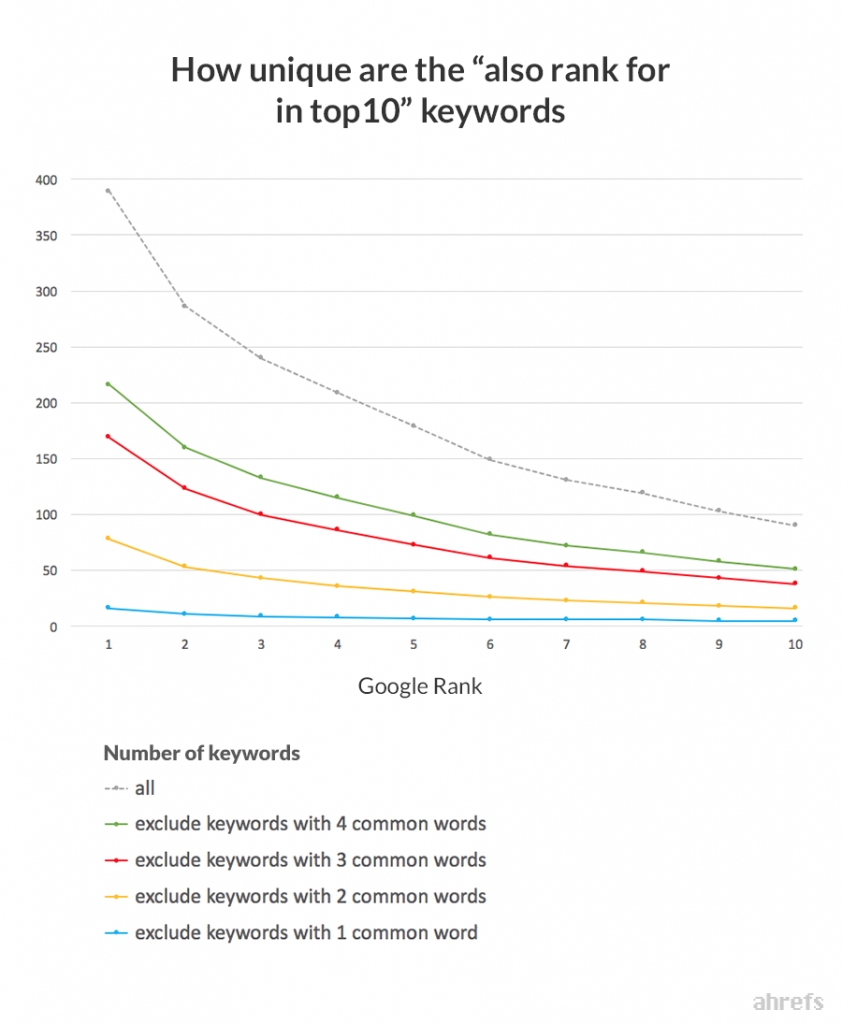
When a page ranks in the number one position for a keyword, it usually ranks for hundreds of other terms and variations, according to a study by Ahrefs.

Line chart illustrating how the higher your Google position is on the SERP, the more keywords you're able to rank for

Give your page the greatest range of options when it comes to optimizing for keywords.

Finalize and publish

SEO content writing is not only a calculated approach to publishing top-notch content but is a way to publish content that drives traffic. Take the steps outlined in this article to produce content that captures the attention of your audience and is rewarded by search engines with a top ranking.

Written by Christian Carere · Categorized: Content strategy

Sep 25 2022

33 Ways To Drive More Traffic To Your Website

The number of ways to drive more traffic to your website is growing by the day. New ways of sharing, new websites and new developments have created a long list of options to choose from. At the end of the day, you need to do what makes sense for your business, within an acceptable time frame and within the limit of your resources. 

Whether you’re doing your own SEO for your small business or are just getting acquainted with how to drive more traffic to your website, here are 33 methods to produce that long-anticipated spike in your monthly search volume.

  1. Publish SEO content
  2. Build links
  3. Improve CTR
  4. Repurpose content
  5. Update content
  6. Perform a technical audit
  7. Improve on-page optimization
  8. Guest posting
  9. Merge Content
  10. Press release
  11. Split testing
  12. Email marketing
  13. Page speed
  14. Host an event
  15. Website performance analysis
  16. Optimize for SERP features
  17. Use structured data markup
  1. Paid Ads
  2. Social media marketing
  3. Social share CTA
  4. Form a PIN
  5. Local SEO
  6. YouTube marketing
  7. Podcasts
  8. Image optimization
  9. Topical organization
  10. Internal linking strategy
  11. Use SEO software and tools
  12. Develop a tool or app
  13. Publish evergreen content
  14. Answer questions on forums
  15. Comment on high-traffic websites
  16. Post to content aggregators

Publish SEO content

Building a blog is undisputedly one of the most effective methods of organic traffic generation. It’s not only the volume of traffic that is so appealing, but also the fact that you can place your website in front of people who are actively looking for what your company offers.

Choose the keywords your prospective clients are most commonly using and break them down into problems and solutions you can publish content about. Publishing high-quality content that has value to your future and current clients is a surefire way for building an audience that’s responsive and engaged with your content.

As you build a library of resources on the topics that revolve around your area of expertise, your website gains authority, as does your ability to answer search intent. When it comes to choosing what websites will rank on the first page of the search results, Google and the other major search engines factor in the authority of your website compared with your competition. 

A large part of this ranking signal is built through its content as well as how your audience responds. The concept of building authority can also be accelerated through link building.

Build links

The links that a website acquires validate the credibility, authority and popularity of a website. These are all ranking factors that will improve the ranking ability of your website for keyword related searches.

Not only do quality backlinks increase the authority of your website but also provide more entry points to your site so that more users can find your content. A backlink is considered to be good quality if it improves your authority or sends good referral traffic to your site.

Link building can provide a competitive edge, however, when done incorrectly can also result in some adverse changes in search visibility. Build links that improve the user experience and are in accordance with Google’s Best Practices to ensure your site an upward climb in authority, ranking and the volume of traffic it receives.

Want to learn more about how to do link building yourself? Here are 17 Backlinking Strategies to try.

Improve CTR

Did you know you can increase the traffic your site receives without even the rank of your pages changing? By attracting more clicks directly from the SERP (search engine result page) you’re able to increase the number of visitors that click on your search listing.

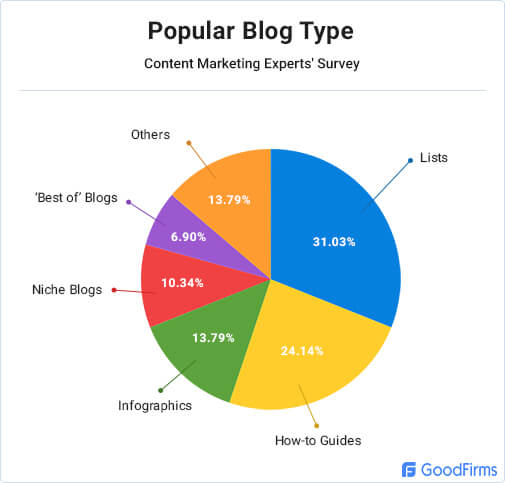
Entice more users to click on your pages by improving your headline. The first thing a user sees is the title of your page and if it’s a bleak and boring title it can easily go unnoticed. Use numbers, percentages or list-styled formats of your headline to maximize your CTRs directly from the SERP.

Popular blog types to drive more traffic to your website

Not only does your title have this power to attract more clicks, but your meta description is also another form of advertising you can use to win over the users’ interest. Be creative and descriptive within your meta description and be sure to use your keywords within the 160 characters limit to present your case.

Repurpose Content

Make the most of the content you’ve published by creating different forms of it using multimedia. This strategy can work to improve traffic on underperforming posts that were once generating traffic and have since declined as well as posts that are popular and still generating traffic.

Everyone has a preference for how they choose to digest information, whether it be through video, audio, images or text. When you can supply different forms of the content your producing, you’re able to cater to a broader base of users and appeal to the different preferences each type of user might have.

For your stout followers and subscribers, this also provides a diverse way to present useful information in more engaging formats to keep them engaged and their interest piqued.

Update old content

New information is always being presented and we live in a fast-paced society where content can grow old and outdated fairly quickly. Search engines love fresh content and if you’ve got content that’s been sitting around and getting stale, an update can help revive your traffic.

If you’re in an industry that loves statistics, like the SEO world, having updated facts and stats is absolutely essential to providing value and being credible.

The competition for search visibility is also steadily increasing and it’s fairly common for websites to use content that ranks to make better versions of it on their own websites. If you’re not keeping up with the status quo in quality, your content will eventually slide right off the map.

Keep your content relevant and useful by updating periodically to see spikes in traffic.

Perform a technical Audit

This may be the most boring part of SEO, but it can also be the most important. If your website is not functioning properly, you might be giving up a lot of search visibility from a build-up of error codes or from pages that aren’t being indexed properly.

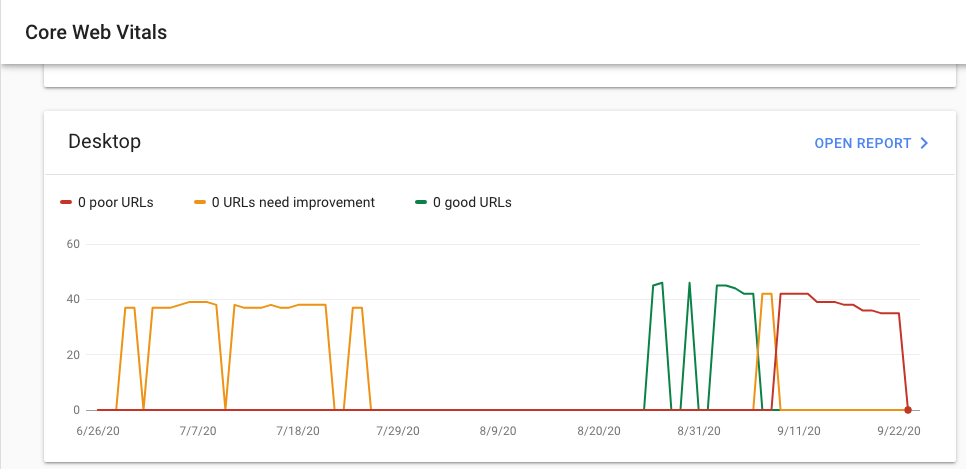
A technical audit will uncover many problems that can impact ranking. Use the search console to monitor your site on a regular basis. The first signs of trouble can usually be detected directly from the search console under the core web vitals tab.

Software such as Screaming Frog or Deepcrawl will also be helpful for identifying pages that have gone missing, that are indexed and that need attention.

Improve on-page optimization

It’s already been some time since Google has moved away from ranking by keywords and now ranks by keyword topic. This shift in how Google assesses your website has resulted in higher quality search results because top-ranking pages are optimized for the entire keyword topic as opposed to stuffing content with keywords.

As a result, if you rank #1 for your target keyword, you will also rank for a number of other keyword variations. Capitalize on the opportunity to improve your ranking by enhancing your on-page optimization for additional keywords.

By placing your keyword in the metadata of your content, you can instantly boost the on-page optimization. Look for opportunities in the title, body of content, and image alt tags. Refrain from changing the URL as this would be the equivalent of creating a brand-new page.

Be an active guest author

Although much has changed in the last year and a half, guest posting, when done correctly can be extremely beneficial for branding and traffic generation. Guest posting allows you to leverage other websites’ traffic by posting your content and linking it to your site.

The links can also improve your authority and ranking ability when they’re posted on topically relevant, high-authority websites.

Publish top-notch content to brand your company and entice users to click on your links. Be sure to include links to valuable resources that people will find useful and ideally present some business value to your company to convert visitors to clients.

Guest posting should be done with careful prospecting and in moderation unless you’re using nofollow links to your site. Google has been exceedingly vigilant in devaluing links from excessive link building by guest posting so you’ll need to strategize accordingly.

A tweet from John Mueller on guest posting as a form of link building to drive more traffci to your stie through improved rankings
This tweet was in reference to a thread about SEMRush’s proposed guest posting service (which was soon dissolved). but lead to the conversation about the effectiveness of guest posting.

Merge Content that targets the same keyword

Google’s decision to allow the full transfer of authority through a 301 redirect makes merging content one of the options that can supercharge your traffic. Rather than have two mediocre blog posts on your website that don’t generate traffic, combine the two posts together for a bigger and better version.

Redirect the pages you delete to the new URL in order to combine the links and authority of the deleted page. This tells Google your content has moved from the detled URL to the new URL.This option should be exercised with pages that target the same keyword topic to get the full benefits of the merged content so the links pointing to those pages remain relevant.

Publish a press release

What better way to reach a broad audience and get published on some high authority websites than to release newsworthy information to the press about your company? A press release will put your content in front of a large number of journalists who regularly monitor press releases to write about something of interest to their audience.

As an old form of link building, you need to be wary of the links that are used in your press release. Most sites will only use nofollow links in your PR-which is a good thing because you don’t want Google to penalize you for unnatural link building. The bonus is when your story is syndicated on other websites, and many of those nofollow links will often become followed on other sites.

Not only do you receive referral traffic and branding but you also pick up a bunch of good backlinks that lead to an increase in search visibility and ranking.

Split testing

A/B testing can be one of the best ways to make decisions on content that provides higher conversion rates. Using software like Crazy Egg can help you conduct different spilt tests to identify what’s working best to generate more traffic to your website.

You can use split testing on your websites as well as in your email marketing campaigns.

Email marketing

This is one of the oldest forms of online marketing and still, today remains the most cost-effective method. Email marketing can get you an industry average of 3800% return on your investment and can instantly drive more traffic to your website at the click of a button.

Avoid spamming your email list with every update to your company and stick to sending fresh content according to the preferences of your audience. Every list should be segmented into each person’s preferences so you can personalize the type of content you send and get a positive response demonstrated by high CTRs to your website.

Page speed

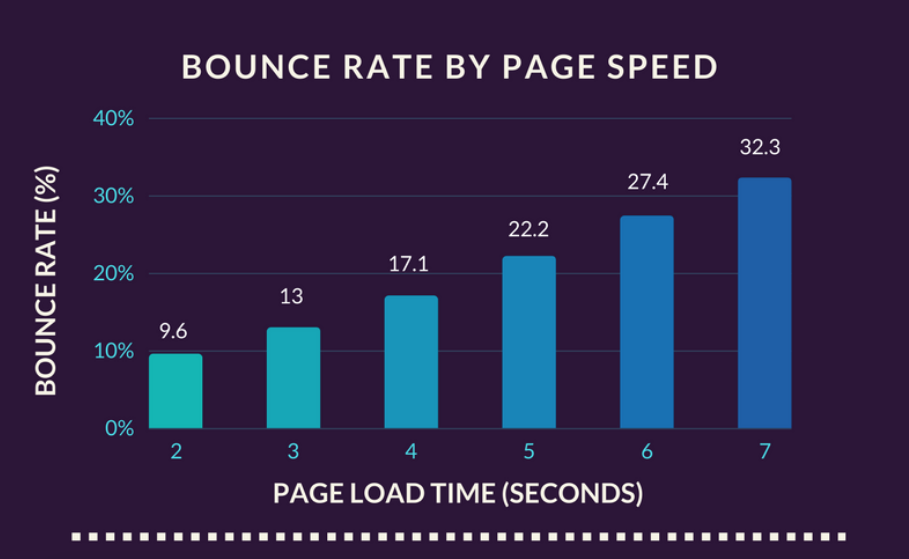
The time it takes your pages to load can affect the number of visitors that make it your website. Studies show that for every second it takes, your site will lose visitors who become impatient and back out from your web page. The number of times a visitor lands on a page and backs out without clicking further is referred to as your bounce rate.

IMproving page speed reduces bounce rate and drives more traffic to your website
Image source: Backlinko

Improving page speed ensures more users stay on your page for more user engagement and ultimately more return visits.

Fast page speed is also considered a ranking factor. So if your website is ridiculously slow, you might be seeing some adverse effects in your ranking. In this situation, improving the speed at which your pages load will increase search visibility and drive more traffic to your website.

Host an Event

Hosting an event is a surefire way to garner more interest in your company and drive more traffic to your website. Whether it’s a live event or a webinar, posting the event on bulletin boards, on your blog and on social media will stir up a loyal and faithful audience as well as round up a few new people.

Analyze your website performance

When you want to see improvement in the performance of your website you need to be aware of the analytics it’s generating. Google provides two of the most valuable pieces of software for free to every website owner which is arguably the most comprehensive of all options.

Using Google Search Console is the equivalent of looking under the hood of your car when there’s a problem. The search console will report everything that going on in terms of functionality as well as performance. You can find errors, backlinks, impressions, clicks to your pages, penalties issued to your website and more.

Google Analytics is useful for running reports on user behaviour, traffic statistics, comparative analysis, goal conversions and customized reporting.

Analyzing the performance of your website can provide you with an accurate way of gauging the success of your current efforts and provide you insight into how to adjust and improve. Analytic reporting informs your keyword and content decisions for more successful campaigns.

Optimize for SERP features

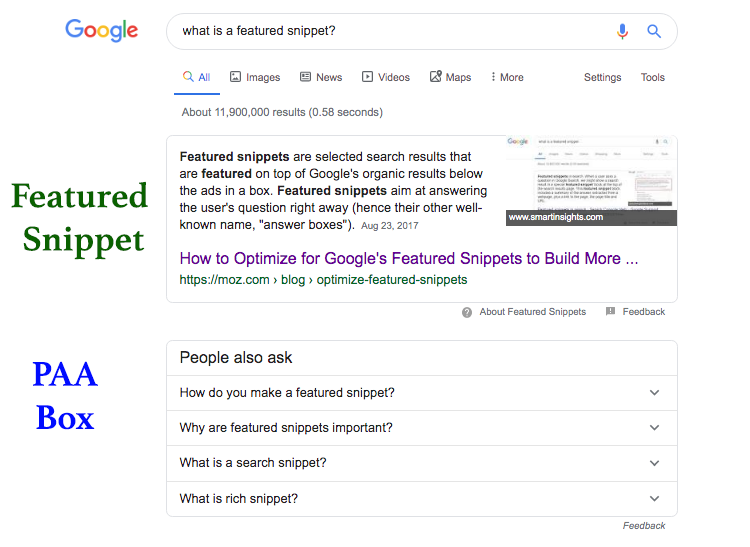
Dozens of features appear on the first page of results in which you can optimize and capture more search visibility. The most obvious features include the featured snippet and PAA boxes.

featured snippet and PAA box present traffic opportunities within your existing content that ranks on the first page of search results

These options are the most common and therefore present more opportunity since a position can be won by optimizing existing content. The additional positions will contribute to higher click-through rates and drive more traffic to your pages.

Use structured data markup

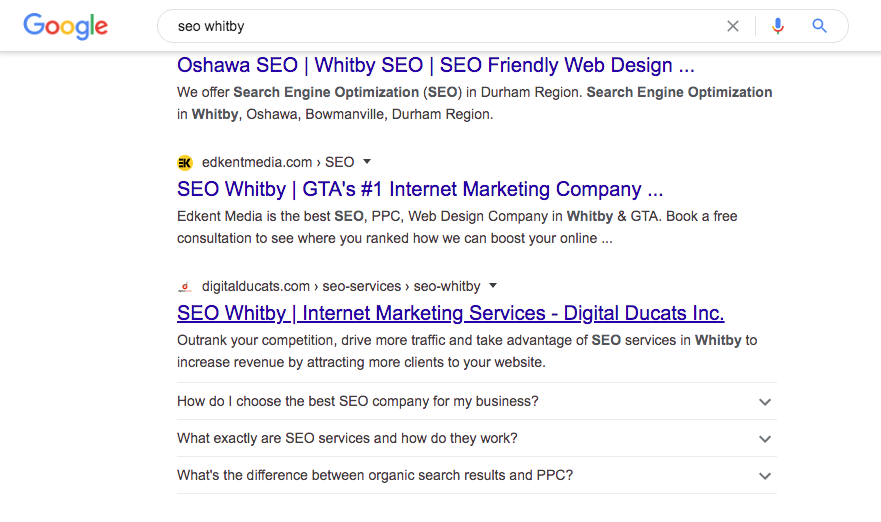
Although implementing Schema and structured data markup does not directly affect your ranking, they can greatly affect the click-through rate your pages receive from the SERP. Using structured data markup can result in rich results that will enhance your search listing.

The faq rich results on a whitby location page leads to higher click-through rates and therefore more traffic

Some of the most common types of rich results you can influence are FAQ, Q & A, How-to, reviews, recipes and show times. The opportunity for rich results exists under specific conditions, one of them being that your page ranks on the first page of Google.

Invest in paid Ads

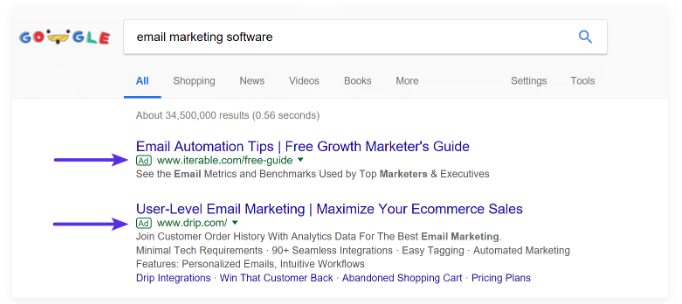
It may be obvious, but it needs to be mentioned as paid ads are an extremely viable way to drive more traffic to your website. The option for paid traffic exists on both search engines and social media.

Google ads example for how to increase traffic

You can reduce the cost of this recurring expense by using retargeting ads where your ad continues to appear in front of those who have already visited your website. This form of advertising boosts your conversion rates since the concept is based on retargeting those who have shown interest in what your company offers.

Engage in social media marketing

Social websites are extremely valuable for increasing search visibility and getting your company in front of a larger audience. For B2C businesses social media sites like Pinterest and Instagram can supply massive sources of high converting traffic.

Did you know that 47% of “pinners” log on specifically to shop?

Effective social media marketing humanizes a business and makes them more relatable to the consumers. Avoid posting content like a robot and make sure you’re able to dedicate some time to interact with your followers.

Get social with your audience, after all, there’s a reason its called social media.

Leave more social share CTA’s

Include a call to action at the end of your posts to get more people sharing your content. People need to be told what to do in order for them to do what you want them to do. Sharing content may not be at the top of a persons list after reading something you’ve posted, but if you leave them a subtle reminder, you can improve your sharing statistics.

On facebook, if you leave CTA’s on your page you can increase your click-through rate by 285%.

The larger the audience you have, the more people will click on your site. Always leave a CTA at the end of your posts to maximize the number of people that view your content.

Form a P.I.N. (Personal Influencer Network)

Do you see many of the same names and faces in your niche? Reach out those who are in a position to amplify your content and come to an agreement about how you can support each other’s efforts.

If you’re actively guest posting it would be ideal to reach out to authors and arrange a link for link agreement. For every article you publish, you can include a link to their site and they can do the same for you.

With enough people in your P.I.N., every article you publish has an exponential impact as it becomes worth as many links as the number of people in your P.I.N. that you’ve linked out to in each article.

Establish a local SEO strategy

If you’re a brick-and-mortar business you can leverage the traffic you receive by establishing a local SEO strategy to drive traffic from your specific location. One of the best ways to rank on the first page of Google is to get your website on a Google property.

List your company in Google My Business to get your website in front of people looking for local businesses like yours. Local traffic tends to have a higher urgency for making a purchase and visitors are typically in the later stages of the buyer journey. Being in the local pack and showing up for localized search results can drive more traffic to your website and increase your bottom line significantly.

YouTube marketing

Video has exploded in popularity. It’s nothing new to business owners considering 81% use video as a marketing tool. The widespread use of video is up 18% from last year and still continues to grow.

Engagement statistics such as time spent on a page and bounce rate improve with the addition of a video. After watching branded social videos, 64% of people will make a purchase. Social shares are higher with video and 6 out of 10 consider video the preferred method of learning.

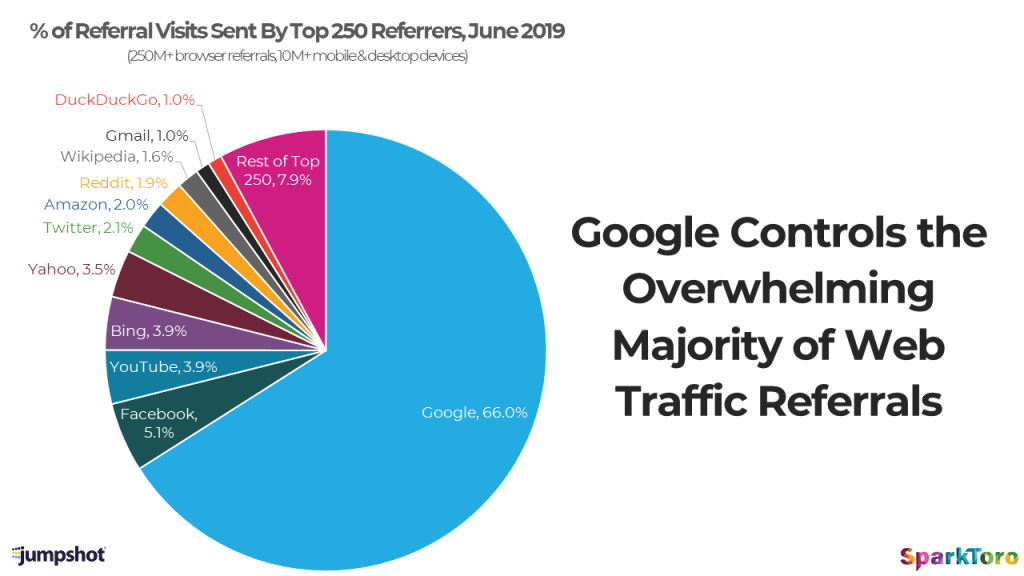
As mentioned above, some of the best ways to rank on Google is to be on Google-owned properties. The number of searches that click on a Google property has officially passed the 50% mark forming the proverbial walled garden.

Ranking on Google properties are among the best ways to drive traffic to your site This graph shows total website traffic referrals

Use this to your advantage by leveraging the second most popular website in the world; YouTube.

YouTube videos account for over 90% of the videos that rank in Google search results. If you’re considering publishing a video, it wouldn’t make sense to do it anywhere else.

You don’t need to rank on Google to drive more traffic. YouTube has become its own search engine and can generate thousands of views from a successful video. Include a link to your site in the video description to refer your viewers to your website.

Participate in a podcast

Video is not the only form of media that’s been gaining popularity. Podcasts have exploded over the last few years creating more opportunities for your message to be heard.

Creating your own series requires a lot of time and resources, which can definitely pay off in the long run, however, you can also ask to be a guest on someone else’s podcast. The host of the show should have no problem linking to your site from the podcast description for some sweet referral traffic to your website.

Even if they don’t, as long as they have a decent subscribership, being featured as a guest is excellent branding and will stir up some interest from an untapped audience. Podcasts are continuing to grow which is an opportunity in itself to capitalize on getting more visitors to your website.

Optimize your Images

A potentially underrated form of driving traffic to your site is through image optimization. Be sure to optimize your images with the keyword in the filename and alt tags. Include a descriptive title and captions whenever the opportunity presents itself.

The more information you give to search engines, the more they have to associate your image in keyword-related searches.

It’s not just the keyword optimization that will get your image to the top of the results but also the number of links it has pointing to it. Create visually appealing images (with data when applicable) and ask people to give you proper attribution with a link.

Organize your content topically

Increase the search visibility of your website by organizing your content topically. If you’ve been doing your homework, you would know that Google is ranking pages based on keyword topics rather than keywords themselves. With a topical organization, you can add the depth of topic your site demonstrates and drive more traffic to your website through increased search engine rankings.

topic clusters concept to structure your content in an SEO campaign for additional visitors to your website from higher rankings

Create topic clusters to emphasize the most important keyword topics of your website. There are pillared content and clustered content that make up a topic cluster. The pillared content is the pages that represent the major keyword topics of your site. They typically cover your topic in breadth and not depth.

The clustered content is smaller more narrowly focused articles that solve specific problems or answer specific questions. For this reason, the clustered content typically targets long-tail keywords in order to rank highly and drive traffic from a highly engaged audience.

topic cluster illustration to show how content should be organized to drive more traffic from increased search visibility

The topical organization of your site makes it clear what the major keyword topics are, which appeals to search engines. It also becomes clear for users to identify the most important topics on your website and get a sense of the depth of your expertise.

The pillar page model establishes credibility, authority, expertise and trust in its niche whic are positive ranking signals that influence more search result appearances for keyword related searches.

Internal linking strategy

The internal linking strategy you implement on your site has a direct impact on your pages performance in the search results. Internal links are also used to form topic clusters and increase the internal click-through rate so users can navigate to related pages with ease.

Use descriptive anchor text to enhance the on-page optimization for individual pages. Sometimes building more internal links to a page can improve ranking with the improved optimization.

Link to related content to guide visitors to pages that are within the same topic cluster. Clustered content always links back to the pillared content in order to build the authority of the keyword topic, improve click-through and drive more traffic to your website through increased ranking ability.

Use SEO tools and software

There are a number of tools and software that allow you to multiply the effectiveness of your efforts. Using tools can give you the insight needed to make better decisions for more calculated success.  

Use analytical SEO software to find backlinks and traffic sources of your competition. Why should they keep all their juicy sources of traffic to themselves? Ahrefs, Moz and SEMRush are all versatile tools that can give you a fast and sure-fire way to ramp up your efforts on finding the best sources for quality visitors.

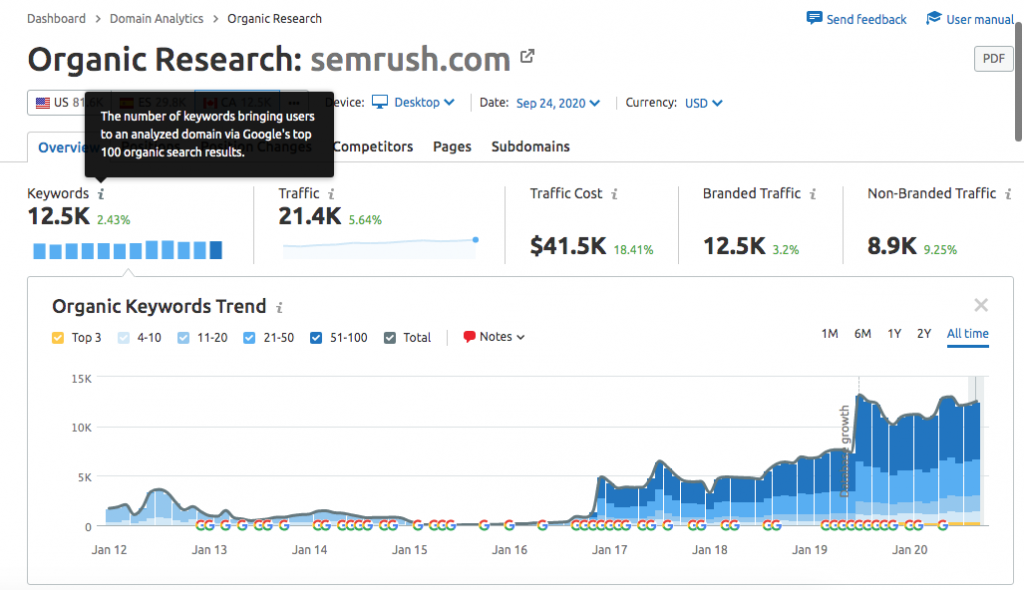
For instance, you can see the exact keywords make up a website’s organic traffic using SEMRush.

SEMRush allows you to see what keywords a website is ranking for the top 100

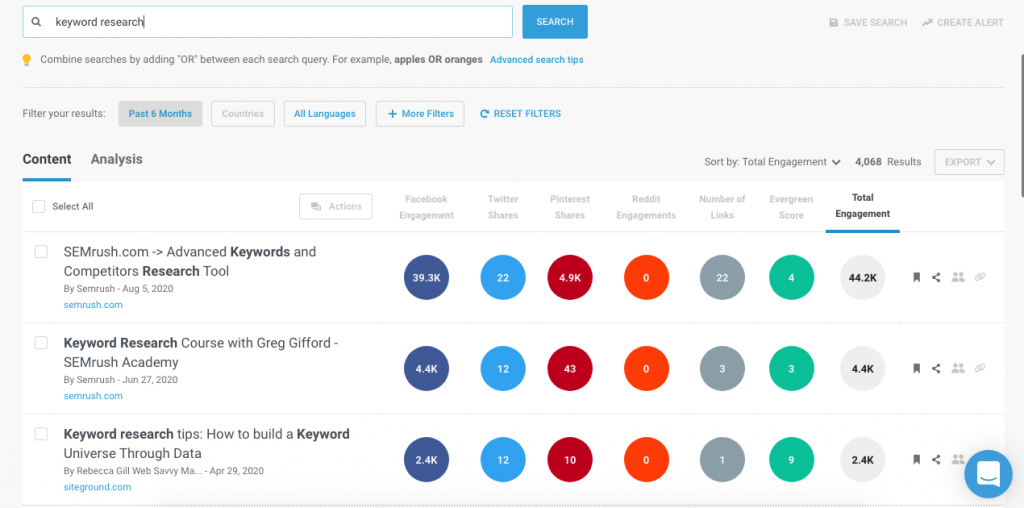
You can also discover popular content topics by using Buzzsumo. Type in the keywords of the content you want to see being shared the most so you can publish content that people have the most current interest in reading and sharing.

An example of what Buzzsumo shows as the top performing content for the term "keyword research"

Stay on the cutting edge of your industry by making use of the tools that give you the ability to collect valuable data about your audience.

Develop a free tool or app

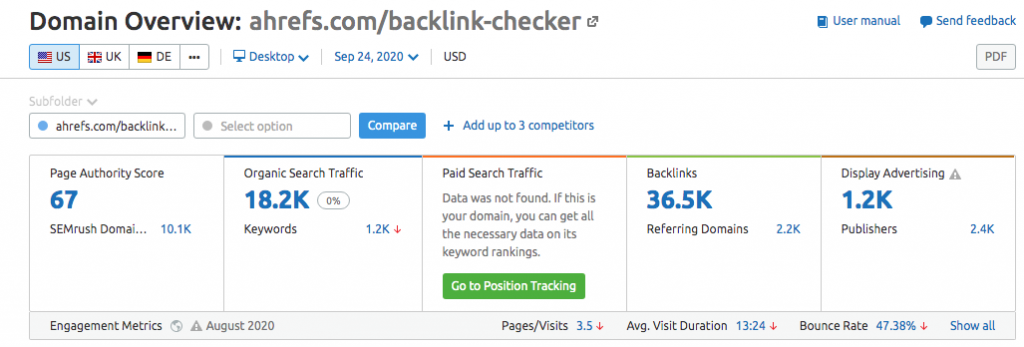
If you have the resources, develop a tool or app that would make life easier for your potential clients. Many businesses drive thousands of visitors to their site just to use a tool they offer. For example, Ahrefs offers users its tool called Free Backlink Checker. This page alone gets thousands of visitors from organic traffic. 

Drive more traffic to your website with a tool like Ahrefs Backlink checker

A few other examples are Ubersuggest, Answer The Public, GTMetrix and the list continues. Even Moz and SEMRush have free versions of their software to get more people familiar with their company. This may be something that is out of your scope but you should know that the potential to drive traffic to your website exists when you can offer a free tool or app. 

Publish evergreen content

Rather than publishing articles on your blog that lose relevance or value overtime, publish evergreen articles that won’t lose value in the foreseeable future. News updates and current events have a short lifespan and become useless for driving traffic and acquiring backlinks. Evergreen content provides both for your website.

The bottom line for producing evergreen content is that you’re able to publish something that can be considered a link-worthy resource. This means that over the life of your post, it continues to collect backlinks, drive traffic and encourage return visits because of its inherent value as a resource.

Evergreen content typically takes the form of long-form content, such as ultimate guides, listicles, case studies, reviews, white papers, interviews, expert roundups, infographics, Q & A pages and more.

Answer questions on forums

This method of traffic generation was a widely practiced link building tactic before Google put a hex on the links that are accumulated from forums. For this reason, many people shy away from using forums for traffic regardless of the fact that it can result in streams of targeted visitors to your website.

Being able to answer people’s questions effectively and thoroughly creates trust and is a way to showcase your knowledge in your field of expertise. The trick is to answer questions on forums that are specialized to your industry as well as drive a decent amount of traffic. Quora is one question and answer site that qualifies in both categories.

Quora gets over 300 million users on its site every month and you can find people asking questions in almost every niche imaginable. You are permitted to leave links to your site within your answers and can introduce people to your business through the content you produce as answers to their questions.

Comment on high-value industry articles

If you’re not reading the biggest and the best blog sites in your industry, you should be. Not only does reading what the top websites publish to keep you current on what’s popular and trending but it also gives you a chance to send visitors from those sites to yours through some well-placed comments.

It’s true, commenting on guest posts and leaving your link has gotten a bad rep, but remember that’s because people were abusing it. There’s nothing wrong with leaving a link to your site on an insightful comment when it makes sense to do so. 

Get your company and website in front of an audience that is obviously interested in the content your producing. The search visibility on some of the top sites is insane and a popular article could receive hundreds of thousands of views over time.

Leave your two cents about that article and if people like your stance, you can bet they’ll click on a link to hear some more of what you’ve got to say.

Post to content aggregators

The best thing about online strategies is that they have the ability to go viral. Submit your content to the aggregators who have the ability to get it in front of thousands of people. Many websites will syndicate the content they find which can lead to some pretty good backlinks.

What’s more, is you can get featured in Google News in related search results if your content gets a good response. 

Medium has the potential to get your content in front of a huge audience because of the way their algorithm works. If your content starts getting a lot of views and social engagement, you’ll see it being shown to more people on the Medium platform.

Neil Patel claims his first big break came when an article of his was featured on Techcrunch. Leverage the most popular sites that allow you the greatest potential of going viral. 

Increase traffic with the methods that are right for your business

Every industry and niche has proven methods for increasing the traffic to your website. For example, if you’re in a B2B service industry, you wouldn’t get as much from relevant traffic from an Instagram campaign as you would from publishing and ranking blog content.

There’s no right or wrong way to get people on your website but you can find the best ways by learning from those who are killing it in your field.

Analyze the efforts of your own campaigns in order to continue to learn and grow from what works best so you can scale up in those areas and continue to drive more traffic to your site on a regular basis.

Subscribe To Receive The Latest SEO Trends & Strategies

* indicates required


Written by Christian Carere · Categorized: Web development

  • « Go to Previous Page
  • Go to page 1
  • Go to page 2
  • Go to page 3
  • Go to page 4
  • Go to page 5
  • Go to page 6
  • Interim pages omitted …
  • Go to page 32
  • Go to Next Page »

Footer

Need professional SEO advice?

Give us a call to learn more about how we can help your business

Call for a consultation Request a proposal

Request a free website analysis and proposal for your company by filling out the ” Request a Proposal” form.

  • Privacy Policy
  • Terms Of Service
  • Cities we’ve served

© 2026 · Digital Ducats Inc.