• Skip to main content
  • Skip to footer

Digital Ducats Inc.

SEO Consulting & Services

  • Home
  • About
    • SEO Consulting
  • Services
    • SEO
    • Local SEO
  • Contact
    • Pricing
    • Write For Us
  • Blog
You are here: Home / Blog

Jan 23 2022

How To Choose A Good Domain Name For Your Business

Choosing a domain name may seem like the easiest part of your journey, make no mistake, the selection and securing process are layered with pitfalls that can affect the future of your business. There is literally a list of considerations to ponder before deciding (hence the existence of this article!). Learn how to choose a good domain name for your business and you will be one step closer to experiencing success on the search engine result page.

Approximately 37% of all domains are .com but does that make it the right choice for you? Here are a few things to consider when you’re both choosing your domain and setting it up with your registrar.

Choose a name that’s easy to remember

Try to pick a name that best represents your brand but is simple to remember. It’s a great name when people can simply type it in and go directly to your website. It helps when the domain has something to do with the product or service you provide.

More often than not, a shorter domain is better.

One or two words are ideal.

Three words are acceptable.

Four words are overkill.

Using keywords vs. a brand name

Consider the SEO strategy when you’re deciding on the domain name of your website. If you’re in an intensely competitive field, you may want to avoid choosing the name of your business as the domain. Without a big budget, it may be difficult to rank your website for a keyword(s) that could literally be worth hundreds of thousands a year.

For example, to rank a lawyer’s website for the top keywords in a big city it would be advantageous to use big keywords that get thousands of searches a month. Look at the search result page for DUI lawyers Toronto.

how to choose a good domain for your business website

Two of the top five results include the keyword (or partial-which works well too) within the domain name. The third domain at the bottom does not have an exact match but Google recognizes the search intent and has matched this domain to the keyword search.

Note that none of these domain names mentioned is NOT the name of their law firm.

Avoid hyphens & stop words

Stay away from using hyphens and stop words that could lead to confusion or mistakenly landing on someone else’s website. Stop words are words that separate keywords but are generally filtered out by search engines.

For example, plumbing-contractor.com is actually a pretty good domain name however, it would be better to get plumbingcontractordallas.com because

a) Plumbing is a service industry that’s limited to specific service areas (unless you’re a national franchise). and

b) You can still rank for plumbing contractor AND people won’t land on someone else’s site if they forget the hyphen.

There is SEO value in incorporating hyphens when you’re competing for a competitive keyword but it’s better to avoid it whenever possible.

Stop-words or adding letters and numbers to your domain is an SEO technique that can be useful. The problem is it doesn’t look very professional. Depending on the purpose of your site, consider whether you business is best represented by a domain like this:
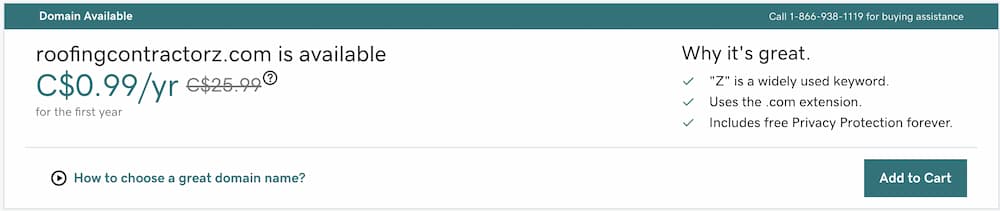
domain with letter at the end

Choose a top-level domain (TLD)

TLDs are the domain extensions that are widely recognized and considered at the top of the list of options. These used to be the only TLDs during the first days of the internet:

  • .com
  • .net
  • .org
  • .int
  • .gov
  • .edu
  • .mil

Each of these TLDs represents a category that the content of the website fell under. Now there are over 1000 new extensions to choose from including country code TLDs. Here are just a few examples of what you may have seen if you’ve been shopping:

  • .digital
  • .agency
  • .club
  • .today
  • .solutions
  • .co
  • .shop
  • .biz
  • .pet
  • .blog
  • .io
  • .coffee
  • .online
  • .me
  • .xyz
  • .live
  • .co
  • .store

So how do you choose a good domain name for your business website? In most cases, the best option is to go with a .com since people are 3.8 times more likely to assume that the end of a domain name ends in .com.

This is good for businesses operating in the United States and who target a global audience.

If your business only provides services or products within your country, then using a ccTLD (cc=country code) is the best option. Search engines recognize ccTLDs as local businesses and will give some preference to websites in a local search result within your country.

Map of the top level domain names by country code

You can go outside the norm and get creative with your gTLD (g=generic) when you feel there is a good way to create a unique and memorable name. If you’re selling coffee beans, it may be advantageous in the long run to register www.beans.coffee as your domain name.

Secure your domain to avoid disaster

When you choose a good domain for your business website, you’re laying the first level of foundation for your business website. You will undoubtedly put endless hours of work (or money) into developing it. Building a business isn’t a short-term project either. Stop for a second to think of what life would be like if, after 6 years of pouring blood, sweat, and tears into your site, it suddenly disappeared from your account.

No words can describe the horror of this situation. It is a complete nightmare to live through. Believe it or not, this happens to people more times than you ever thought was possible.

Here are a few tips to make sure this never happens to you.

Switch your domain to auto-renew

Sounds simple enough right? When the time comes for your domain to renew, the payment is automatically made, and you’re all set to go. Most people lose their domain because they let it expire. Think your domain is safe now? Nope! There’s more to this story.

Enter a secondary payment method

Adding a secondary method of payment creates a failsafe for things that can go wrong. Perhaps you renewed your credit card and the number changed. Maybe your card was at the threshold and the payment didn’t go through. Whatever you think is impossible to happen can eventually find a way to happen.

Enter a secondary email address

Normally when your domain is set to renew (or expire) you get multiple email notifications that count down the days to give you time to pay. It’s not unheard of for people to switch email addresses and forget to update their address with their domain registrar.

Changing the [email protected] address to [email protected] might be the dagger that kills your communication method between you and your registrar. If they can’t tell you your domain is expiring or your payment hasn’t gone through, you’ll lose your domain.

Always maintain ownership of your domain

Never allow an agency to purchase your domain for you. If the domain is in their account, they literally own the domain. It’s like buying a car in someone else’s name who also holds on to the pink slips. If there is a falling out and they want to hold your domain hostage, there’s not much you can do about it.

Delegate access rather than divulge login info

You can delegate access to employees and third-party companies who may need to point to nameservers, work on email accounts, or whatever. This way they can still access your account to do what they need to do but do not have the authority to transfer domains out of your account.

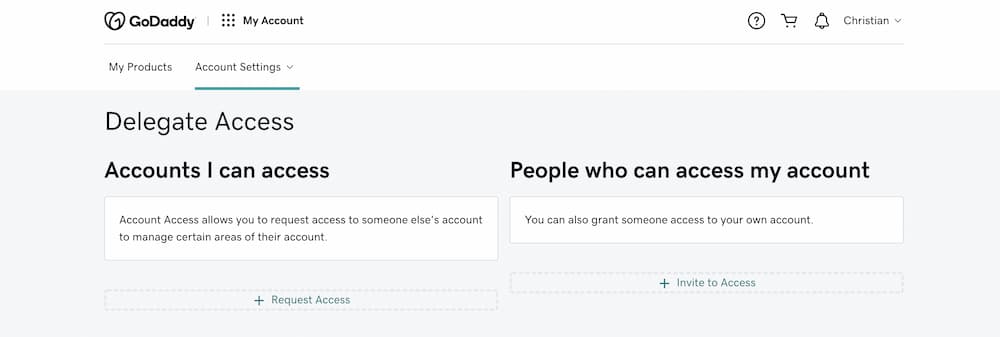
Option to delegate user access to employees when your domain is in the same account
delegate access when you choose a good name for your business that you don't want to risk losing

Lock your domain

You should have the option to lock your domain to prevent transfers to another registrar. It should be as simple as clicking a button or editing settings.

Enable two-step verification

Two-step verification is another way to control who has access to your registrar account. Every time someone (including yourself) tries to log in you will be prompted to enter a code. This prompt is usually sent to you via text, phone call, or email depending on your setup.

The shortcut to quick rankings

It needs to be mentioned that one of the quickest ways to achieve instant traffic and potentially high ranking in search engines is to buy a domain that has been around for a few years. One of Google’s ranking factors is trust. Aged domains are like fine wine. If they haven’t changed hands extensively, they get better with age.

That being said, this tactic is a well-known SEO tactic where we redirect the aged domain to a target domain that we want to rank higher. So you can use the domain itself (if there are no copyright infringements OR if it’s a generic name created for SEO you can use it for your own business. For example, https://seoallentx.com would be the perfect domain name if you wanted to rank for SEO Allen TX on Google.

Purchase from auctions and expired domain sites

You can find domains available for purchase on websites like Flippa.com and expireddomains.net. Afternic is an afterthought, so if you can avoid them-do it (I have personal grievances with this GoDaddy-owned lump of crap).

Businesses that are closing

If you know of any businesses that are scheduled to close their doors they could be in the market for selling their domain. Try to tender and offer personally before they list their domain on an auction site or it could be months before they actually sell.

Love the domain name you choose

At the end of the day, love the domain name you choose. If you’re going about your decision in the right way, you’re probably going to have that domain for a long time. You’re going to need to look at it every day and even if it’s a brand new domain it will gain value overtime just like your business.
Written by Christian Carere · Categorized: SEO strategy, Web development

Jul 29 2021

Social Media Analytics For Small Businesses

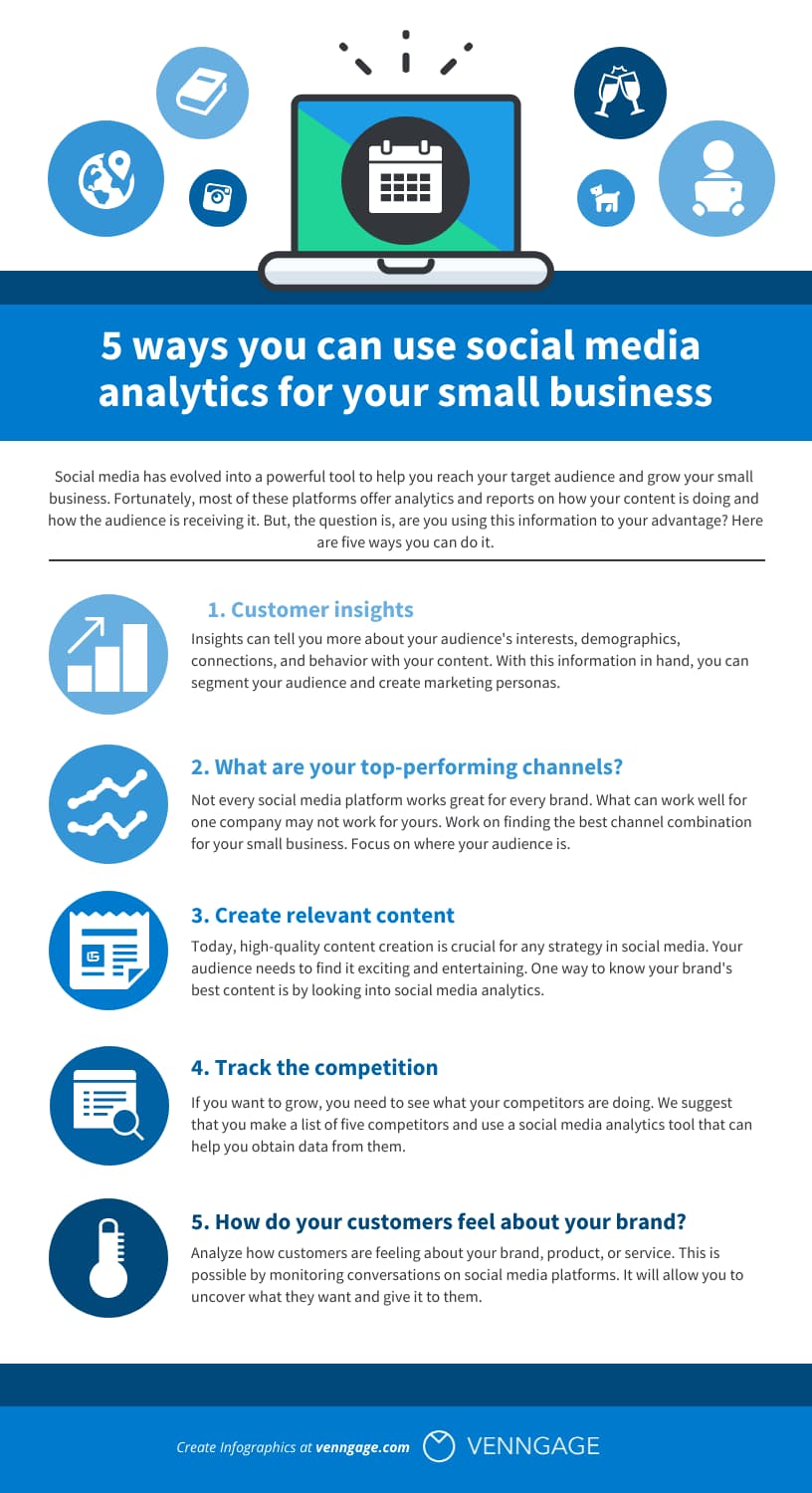
Today, social media has evolved into a powerful tool to help you reach your target audience and grow your small business. For this reason, if you want to take this seriously, you need to make decisions based on the data that social media analytics provides small businesses rather than a gut feeling.

Fortunately, most social media platforms offer analytics and reports on how your content is doing and how the audience is receiving it. But, the question is, are you using this information to your advantage?

Here are five ways you can use social media analytics for your business plan that you can start implementing today!

Social media analytics for small businesses infographic

1. Customer insights

Social media is not only about getting likes, people commenting on what you post and share. The key to real success lies in looking at the right metrics and uncovering opportunities.

Insights can tell you more about your audience’s interests, demographics, connections, and behaviour with your content. With this information in hand, you can segment your audience and create marketing personas.

You can also understand better what your audience is looking for, what their needs and wants are, and how you can satisfy them with your products or services.

Therefore, when you are writing a business plan, you can use this information to decide what products and services you should continue to offer to the target audience to get the best results possible.

What can be considered an insight?

Insights are not just “data.” It needs to be also insightful, and they should meet certain criteria.

First of all, the data should be new. This means that if you already suspected or knew about a piece of information, it is not an insight.

Insights are also unexpected and relevant. If the information does not match your business goals or values, then you cannot use it.

Finally, insights should inspire you to take action.

Where can you traditionally gather insights?

There are many ways you can gather insights for your small business and the marketing strategies you want to develop. One of them is focus groups, but you can also do surveys and questionnaires.

However, as we mentioned above, social media already provides very useful insights that you can take advantage of without having to invest in focus groups, surveys, or more.

2. What are your top-performing channels?

Not every social media platform works great for every brand. What can work well for one company may not work for yours. The good news is that there are many social media channels to choose from: Twitter, Facebook, Instagram, TikTok, and more.

Many people often ask themselves if they should be on every channel. Still, even if you have the opportunity to do so, it may not be the best idea.

Work on finding the best channel combination for your small business. Focus on where your audience is and choose channels to produce great content and engage with potential customers.

The best way to know this is, of course, by looking at the social media analytics of each channel you are using and deciding to keep only those who are performing well.

Which social media channels matter?

As Neil Patel – a digital marketing guru – explains, the first question you should ask yourself about social media is “where is my audience participating in?”. Where are they spending their time? Also, just because you have followers does not mean that you have an audience! There are many fake accounts out there and many inactive accounts as well.

Also, you should ask yourself where your audience is active; otherwise, the site may be of no use to you. Finally, ask yourself what your audience is searching for. Remember that people use social media for socializing but also for searching.

How to choose the best social media channels?

If a brand is getting many leads from a specific social media channel, it does not mean that it will also work for yours; therefore, you do not have to be there.

Facebook has more than 2.7 billion monthly active users, which makes it the largest social network today. However, they are browning photos and profiles, not really interested in anything else.

The opportunity for brands on Facebook is to participate in pages, groups, and events to gather a real presence.

Then we have Twitter, where things are constantly happening. It is a place where you can provide customer service and generate leads; however, not as much as you can do on Facebook.

For B2B businesses, LinkedIn is the place to be. Here, you can connect with professionals and decision-makers.

But, don’t leave out Instagram, YouTube, and maybe TikTok. Why not? If it makes sense for your brand to be there, then you should try it! Also, consider that today video content is becoming more important than ever. You should analyze if your brand could benefit from them.

3. Create relevant content

Today, high-quality content creation is crucial for any strategy in social media. Your audience needs to find it exciting and entertaining. One way to know your brand’s best content is by looking into social media analytics.

This way, you can develop a more ingenious content strategy, focused and targeted to your audience.

You can analyze what content your audience engages with the most and the topics they respond well to are. Then, you can optimize your social media marketing plan and create content that resonates with your followers.

How to make your content more relevant?

There are many ways you can make your content more relevant, and the first step is to create and cater to a buyer persona. No, there is no such thing as content that is relevant to everyone or that you want to sell to reach everybody.

Relevance is audience-dependent, and it has to do with generating a good conversation. The best way to achieve it is by creating one or more buyer personas that will help you understand the characteristics of your target audience, what their needs and wants are, and how you can be relevant to them.

Then, you also need to understand user intent and create a list of keywords. And yes, we are talking about SEO, but the truth is that Search Engine Optimization will help our content reach the audiences we are trying to connect with. Once you have the list of keywords with opportunities, use them in the right places.

Additionally, your content will be relevant if it solves a problem and is timely. Most of the searches people do online are about solving a problem they have, and if you have the answer, then it is your website where they will go to. But, make sure your content is timely and matches current events, whatever those are in your niche.

Finally, make the content as long as it needs to be. You can have great, relevant content that is just a few hundred words long. Longer articles do not mean more relevant and valuable articles.

4. Track the competition

If you want to grow, you need to see what your competitors are doing. We suggest that you make a list of five competitors and use a social media analytics tool that can help you obtain data from them. You can also do a manual evaluation of their profiles and accounts.

Where are they present? What kind of content do they post? How is their engagement, and how do they respond to comments they receive?

All of this information will give you ideas for your brand and perhaps a little inspiration too.

How can you track your competitors?

It does not matter what industry you are in; you will always have competitors seeking your audience’s attention, for traffic, for followers, for sale, and so on.

Therefore, competitor analysis is incredibly important, and there are many online tools available and can help you achieve it. Here’s a helpful list you can use:

  1. Sprout Social: It helps you understand your competitors’ performance on social media from different angles and data points. You can also benchmark your growth against several profiles with a few clicks.
  2. Phlanx: In a few words, it is an Instagram engagement calculator. It gives you clues on how active an account’s followers are and therefore has insights about the competition’s Instagram presence.
  3. Social Blade: This online tool assesses follower counts on the likes of YouTube, Instagram, and Twitter. It assigns a grade to every social profile you search.
  4. SEMRush: This is another very popular tool today for competition analysis and SEO. You can pull your competitor’s backlinks and monitor their ranking and if there have been any changes. Plus, you will be able to know who else is competing for your traffic.
  5. Ahrefs: Check any URL’s top organic keywords with this tool, plus also receive an estimate of the traffic a competitor receives on those keywords.
  6. MozBar: This free Google Chrome extension will allow you to check the domain authority, DA, of any website. This way, you can analyze how competing sites are doing in a Google query with just a glance.
  7. Buzzsumo: This tool will allow you to look at the top-performing content for you and your competitors.
  8. Similarweb: Here, you can better understand where the competitors’ traffic is coming from and what topics their visitors search for.

These are just a few tools from many more that are available out there. We recommend that you choose one or a combination of several so that your small business can gather the data it needs to grow.

5. How do your customers feel about your brand?

Finally, you can analyze how customers are feeling about your brand, product, or service. This is possible by monitoring conversations on social media platforms. It will allow you to uncover what they want and give it to them.

Also, you can uncover challenges, pain points, and more to take advantage of for your strategy. You can even prepare for a potential crisis or prevent it if you know what people are saying about your brand.

Associate your brand with positive emotions

We can bet that personally, you would prefer to be surrounded by people who are positive rather than negative. In fact, it is likely that you avoid being in a negative environment altogether. The same happens with brands and products.

People love to surround themselves with positivity, which is why you should focus on the emotions your brand conveys through the messages it shares: They should be positive and promote a great experience that creates trust.

Positive emotions help create an atmosphere for customers in which they become more trusting towards your brand.

Also, for customers to associate your brand with positivity and a “nice place to be,” you need consistency. However, this consistency needs to occur on an individual level, which is possible by designing diverse and rich marketing communications to transmit their message based on personal experiences. 

Storytelling copywriting is very popular today because of this. Everyone likes a good and captivating story, and it will help people feel closer to you and more positive towards you and your brand or company.

Another important action is personalization, which not only makes people feel special but makes them feel they matter to the brand. The customer-brand relationship becomes more genuine and human.

In conclusion

There are many moments in life where trusting your gut is the right way to go. However, social media strategies are not those. 

To create engaging content, leveraging your social media presence, and grow your small business, you need to use data as part of the planning process. It can even be useful for newsletter strategies, ads, and more.

It is a constant process of analyzing, publishing, reviewing, and making changes to get the best possible results and to grow your business as much as you can. It is a work that never ends but is in constant transformation. The good news is that there are many tools available today and that some of them offer a free version that can be enough for small businesses.

Written by Ermelinda Maglione · Categorized: Content strategy, Social media

Apr 05 2021

Marketing Funnels: Get More From Your Website Traffic

Marketing funnels are a solution to get the most from the volume of traffic that lands on your website. Search engine optimization drives traffic that attracts visitors at various stages in the buyer cycle. Many visitors may not be ready to purchase immediately and therefore require more information and nurturing to convert them into clients. Marketing funnels provide a system for moving your website visitors closer to purchase with your company. 

Create content to address The Buyer’s Journey

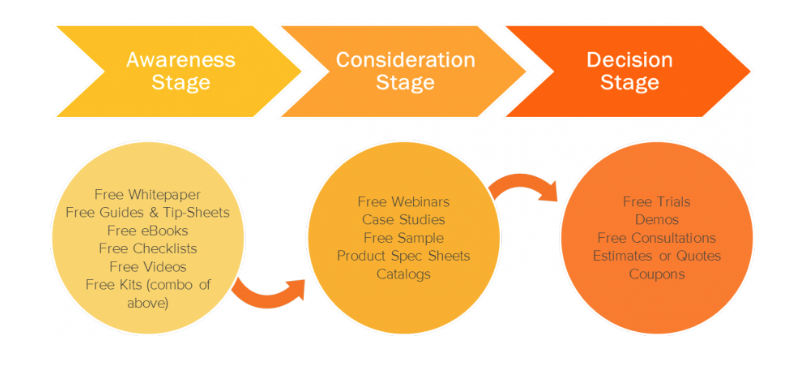
Generally, the buyer’s journey is divided into three main categories; Awareness, Consideration, and Decision.

the buyer journey and the content to include when incorporating SEO with web design

The awareness stage

At the awareness stage, visitors are just learning about the problems they have and what the potential solutions are for solving those problems. This is where they first may encounter your company through a blog post that is aimed at explaining the basics of your niche.

An example of a blog post at the awareness stage of a person searching for SEO would be How do I make my website number one on Google?

The answer to this question is search engine optimization but as far as the user goes, they may not realize what this is until they read the article. Articles such as this would be aimed at expanding the audience in which your content targets.

The content that you publish at this level in your marketing funnels are considered TOFU content (Top Of The Funnel content). Due to the broad nature of the topics, the audience is the largest at this stage of the buyer journey and therefore will also have the greatest drop-off in interest (hence, the funnel concept).

Top to the bottom of the funnel content

Getting people to your site is only one aspect of your growth efforts. When you’ve effectively captured the interest of a new website visitor, the next step is to move them to the consideration stage of the buyer’s journey.

The consideration stage

When a potential client is in the consideration stage, they already aware of their problem and require more information to guide them to a purchase decision.

For example, if you’re searching for an SEO company, you may want to know about the benefits of SEO to consider whether it’s a good fit for your business. Reading about what SEO can do for your company would certainly give you more incentive to move forward with your decision.

Content that provides incentives, facts, and social proof can be considered MOFU content (Middle Of The Funnel Content). Essentially this is content that moves a potential buyer to the decision-making stage.

The decision stage

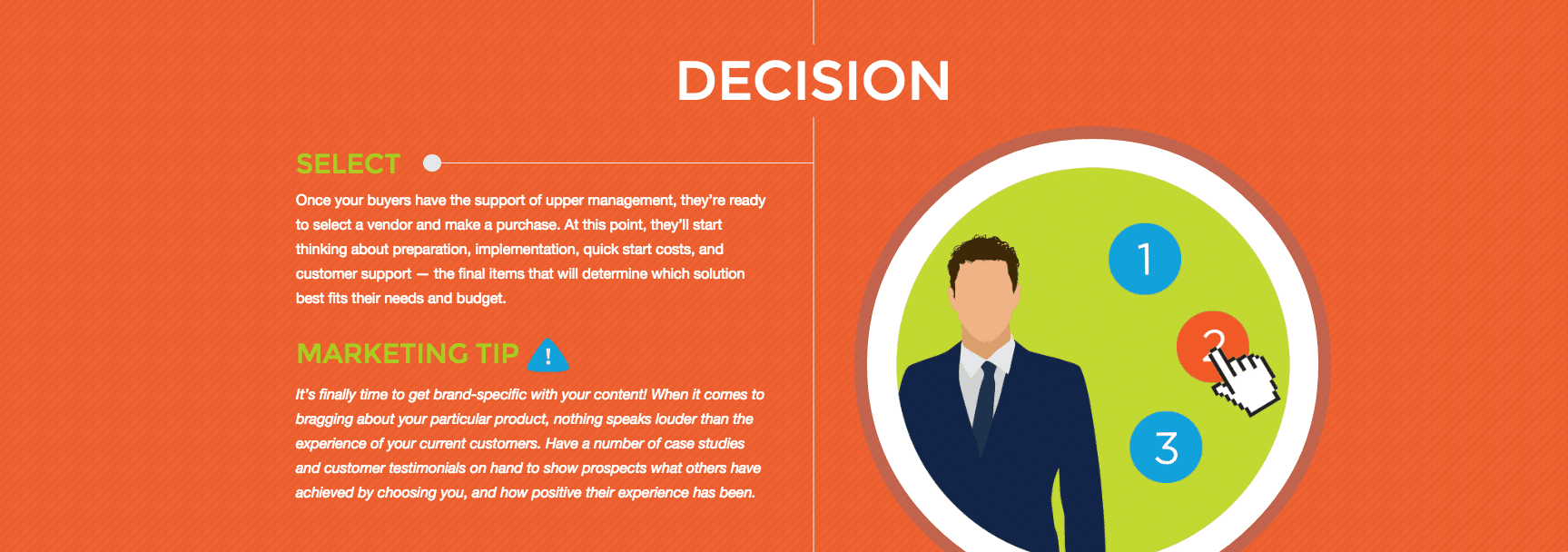
The last segment of the buyer journey is called the decision stage. It’s where the buyer is past the research stage and is ready to purchase.  At this point in marketing funnels, the content that is needed is called BOFU content (Bottom Of The Funnel content).

Decision stage content

Examples of content that convinces a buyer to purchase from your company can be landing pages, case studies, service pages, product pages, and squeeze pages. Essentially, any page that is geared towards convincing the visitor to make a purchase is bottom-of-the-funnel content.

The ultimate goal for your website is to generate revenue. An effective marketing funnel means all content on your site should in some way be leading your website visitors to a specific action that moves them closer to purchasing. That means moving visitors to content further down the funnel through a specific call to action (read more, download, opt-in, or purchase).

Customize your sales funnels

While the buyer journey is a good concept as a basic model, you can optimize your marketing funnel to be more effective by adding detail to each stage. The level of detail is based on the type of clients you deal with regularly.

In many industries, the process for going from learning about a product (or brand), comparing options, and purchasing a product may be completed in one session. This means that you can create content that addresses each of these stages all on one page. Many landing pages for retail products are published to do exactly that.

In this example, LinkedIn is offering a free credit for advertising as well as a strategy guide in exchange for an email address. This is an excellent example of how to get prospects to move from consideration to decision with an incentive as well as free trial to see how effective the product is firsthand.

LinkedIn using a targeted opt-in box in one of their marketing funnels

In other industries, the lead-time for selling B2B services or big-ticket items is often much longer and requires more nurturing during the research stage. For these types of clients, your marketing funnel would need to be more detailed and include more micro-stages to move them along.

Detailed digital marketing funnel

5 reasons to consider email marketing within your sales funnel

As mentioned earlier, SEO brings many different types of visitors to your door. No matter what stage they are at in the buyer journey, it’s important to identify what your potential clients need to give them enough confidence to making an informed decision. Email marketing is an effective solution for layering content in your marketing funnels and getting the most out of your website traffic for the following reasons:

Build relationships

When you capture an email address from an interested website visitor, it provides you with a way to maintain contact and to continue to move that visitor further within your marketing funnel. Email marketing allows you to learn more about your audience and respond with more content that they’re interested in learning about.

Personalization is high on the list for many companies now and what better way to build a relationship than with content that is specifically tailored to your audience? List segmentation, surveys and questionnaires can help you optimize your campaign and get insights into your audience.

Build confidence in your brand

An email marketing system provides your company with a way to continue to help your potential buyer find more what they’re looking for as well as present the reasons why your company is the best option for what they need.

If your product or service requires a longer lead-time before closing a sale because there’s more research involved before making a decision, your sales funnel would include sending informational emails before trying to close a prospect. Structure your campaign to teach your prospect more about the inner workings of your niche to build confidence in your brand.

Increase conversions

The ultimate goal of digital marketing is to generate more revenue. When you consistently remind prospects about your company and the products you offer, you increase the likelihood of acquiring them as customers.

An email campaign can increase conversions by getting your product in front of more interested website visitors (subscribers) more times as opposed to losing them forever when they leave your website.

Increase repeat sales revenue

Once you sell to a client, it doesn’t mean the end of your relationship. Happy clients will often become repeat customers. Use your email list to notify new and existing clients of promotions and sales. An email list can increase the number of sales you make for seasonal specials as well as the regular flow of prospects that go through your marketing funnel.

Promote brand advocacy

There’s no better form of marketing than word-of-mouth marketing. When you have happy customers, they will recommend your services and products and are 75% more likely to become advocates. It’s as simple as that. Brand advocacy adds another form of advertising that is achieved by incorporating content creation for existing clients.

Brand advocacy starts with a great customer experience

Examples of content that is geared towards brand advocacy can be follow-up emails about the service they received, surveys, giveaways, and contests. Maximize the lifetime value of a client by learning more about their preferences and making changes to accommodate them as best you can.

Optimize your conversions with an effective marketing funnel

The traffic your website generates will always consist of visitors at different stages in the buyer journey. Identify what content they’re looking for and what they need to move forward in the buyer cycle to facilitate more conversions.

Develop effective marketing funnels on your website to create the perfect tool for lead generation. Your website should be your number one salesperson and contribute to your revenue, leads and new clients daily.

Need help getting more visitors to your website? Contact us today for a discovery meeting and learn about the best available options to grow your business to the next level. For a free website analysis fill out the form below.

Written by Christian Carere · Categorized: Content strategy, Email Marketing, Web development

  • « Go to Previous Page
  • Go to page 1
  • Interim pages omitted …
  • Go to page 4
  • Go to page 5
  • Go to page 6
  • Go to page 7
  • Go to page 8
  • Interim pages omitted …
  • Go to page 32
  • Go to Next Page »

Footer

Need professional SEO advice?

Give us a call to learn more about how we can help your business

Call for a consultation Request a proposal

Request a free website analysis and proposal for your company by filling out the ” Request a Proposal” form.

  • Privacy Policy
  • Terms Of Service
  • Cities we’ve served

© 2026 · Digital Ducats Inc.