• Skip to main content
  • Skip to footer

Digital Ducats Inc.

SEO Consulting & Services

  • Home
  • About
    • SEO Consulting
  • Services
    • SEO
    • Local SEO
  • Contact
    • Pricing
    • Write For Us
  • Blog
You are here: Home / Blog

Jan 11 2021

Email Marketing Strategies To Increase Engagement

You may be wondering why email marketing has made it this far in the digital marketing spectrum. This strategy is undoubtedly one of the oldest online marketing tactics and you would think eventually, people get tired of it and it would just not work as well. Wrong! Email marketing is just the opposite. With an average of 3800% ROI and one of the best conversion rates in the business, email marketing strategies have evolved to make it more effective than ever.

It’s never too late to start building your email list. Dozens of platforms are fairly inexpensive (free versions as well) to get you started. If you’re planning on scaling up, make sure you’re aware of the options and features that you’ll need as your list gets bigger and demands more management. Automation will be your best friend so plan ahead and in the meantime, here are some tips that will get you that extra-large audience.

  1. Confirmed opt-in
  2. Choose the right frequency
  3. Choose the right time
  4. Make your email accessible
  5. Pay attention to deliverability
  6. Split test your subject lines
  7. Follow your subject line up with a headline
  8. Use images and video whenever possible
  9. Include a CTA
  10. Include a welcome email
  11. Publish pages to create a marketing funnel

Use a confirmed opt-in

A confirmed opt-in box requires your subscribers to confirm their email address when signing up for your list. The reaffirms the interest in receiving emails from your business.
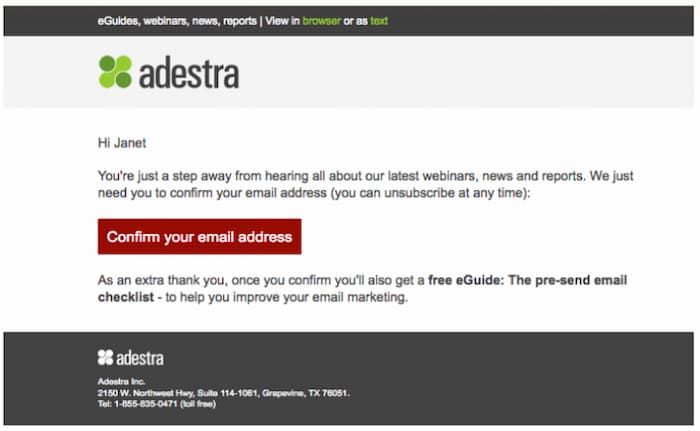
Confirmed opt in example is an email marketing strategy to improve list quality

Some may think this is a double-edged sword. If you double confirm your subscribers, won’t you wind up with a smaller email list? Absolutely. You wind up with a smaller list of a more engaged and more responsive audience.

A confirmed opt-in keeps your list clean. Rather than have a lot of “undeliverable” emails from the user typing in the wrong address, you have a list of confirmed subscribers. This saves you the trouble of pruning and weeding out bad email addresses and keeps your engagement reports more accurate.

Go for quality rather than quantity. Use the double opt-in for less headache and a more responsive audience.

Choose the right email frequency

Are you wondering how many times a week you should be sending your list an email? The industry averages indicate that once a week is the best frequency for optimal results.
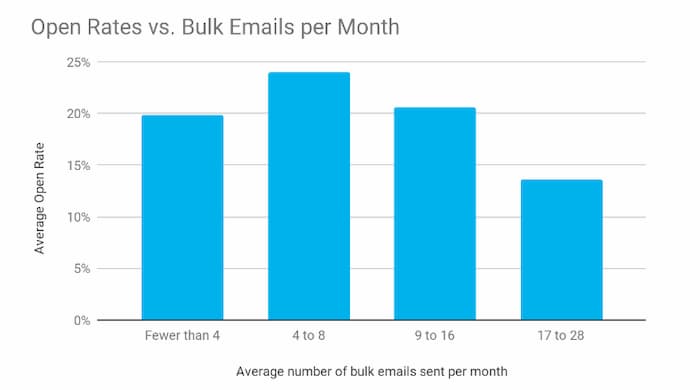
A chart showing the relationship between email frequency (an email marketing strategy) and open rates

There are benefits to emailing your list more than once a week but they also come with a trade-off. The more you email your list, the lower your open rate becomes. There’s a drop off in engagement as people start ignoring your email after a certain point.

Start with sending an email a week and test whether your audience responds positively when you add one more per week. If you’re getting more traffic and conversions, there’s a positive correlation with the additional email.

If there’s a steep drop off in engagement and your list starts unsubscribing, you know you’ve reached your limit and need to back off with the additional emails.

Choose the right time

Did you know that there’s a perfect time to send an email to each of your list members? Unfortunately, it’s different across the board for people but there are options using software that can help you send email to each of your list members based on historical open rates.

If your provider doesn’t offer this option, stick with the general bell curve for the most success in getting your email to the top of the inbox. If your email is the first one that a subscriber sees, it will have the best chance of being opened.

Chart showing the best times to send an email newsletter as part of your email marketing strategy

Make your email accessible

Thankfully, we live in a time of equality and are always looking to make things easier for our prospective customers. Approximately one-fifth of the world population has some sort of visual impairment so you mustn’t exclude this group from your audience.

Make your content accessible by including descriptive alt tags in your images. The alt tags will at least describe to your reader what the image is about.

Example of alt text being used to describe and image in an email to make it accessible for the visually impaired

Many people use software to have their email read to them so make sure you use the punctuation marks within your alt tags. The reader will pause at the appropriate times and make your content more enjoyable for your audience.

Pay attention to deliverability

It’s important to keep track of the email that ends up undelivered. It may not be the provider or a misspelled email address that is causing your email to fall short of its destination. There are multiple reasons why an email is undeliverable.

Check your email spam score to make sure you’re triggering the spam filter. If your email is ending up in the junk folder then it’s time to reassess the content you’re sending and how you’re sending it.

Monitor the open rate, churn rate, bounce rate and complaints. Identifying the underlying reasons for these metrics will improve the quality of your campaigns.

Split test your subject lines

An email list is an excellent place to test the effectiveness of your content. Use split tests to see what subject lines generate the biggest open rates. Identifying what gets the best response from your list will indicate what type of content to continue sending to your list.

Example of implementing an email marketing strategy called split testing the headline

Personalization is a major theme in creating successful campaigns. The more you see what triggers responses from your audience, the more you can effectively engage them in your offering.

Follow your subject line with a preheader

The headline that you start your email with should complement your subject line. It’s a way to follow up with the initial message you’re sending to your readers. Emails with preheaders get an average open rate of 29%.
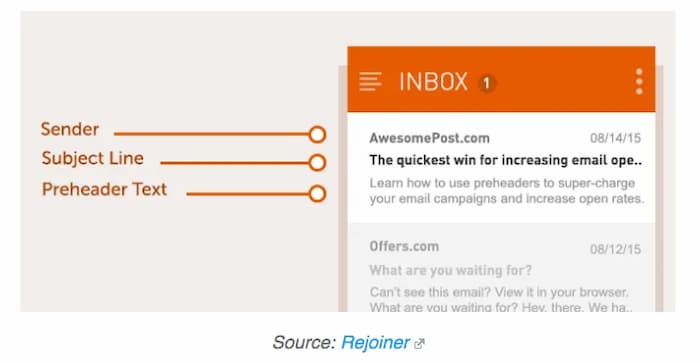
example of preheader in email

Remember that the content above the fold is the most important part of your email. It’s what will essentially hold the attention of the reader and entice them to read further and scroll to the bottom.

If the subject line was enough to get them to open the email then your headline will help maintain that initial interest.

Use images and video whenever possible

If an image is worth a thousand words, how many words is a video worth? It’s not always possible to send a video with every email but the use of visual content is vital to getting the most out of your email marketing campaigns.

Videos are the most preferred form of content so it remains your first choice above all. Videos increase engagement, conversions and reportedly generate a 13% open rate.

Strategize your email marketing with a video in your email (as this image is of a funny faced dude in a video)

Images are the next best thing to make your email more appealing. People retain 10% of the information from text-only but retain 60% of the content they read when there are images to explain the talking points.

Use both images and video whenever possible to enrich your content and make your message much more memorable. The result is more click-throughs and higher conversions.

Include a CTA

People need to be told what to do. Never assume that they will know exactly what you want them to do so include a call to action to increase the desired action you want your audience to take.

Be specific with your CTA and provide marked links, buttons or forms to get your audience to take action.

Include a welcome email

Always have a welcome email sent to your list when they first subscribe. Welcome emails get the highest open rates providing a big opportunity to communicate with your list. 

Welcome emails can give your audience a breakdown of what to expect and provide options on what they can do and what you’re offering. You can introduce your new subscriber to new content and get more out of your list by making sure they receive a welcome email.

Publish pages to create a marketing funnel

Make sure you have pages that will ultimately lead your subscribers to purchase or completing an action. There are emails you can automate to make sure your audience is being guided in the right direction. Here is a list of the forms that will make a difference in converting your visitors to clients.
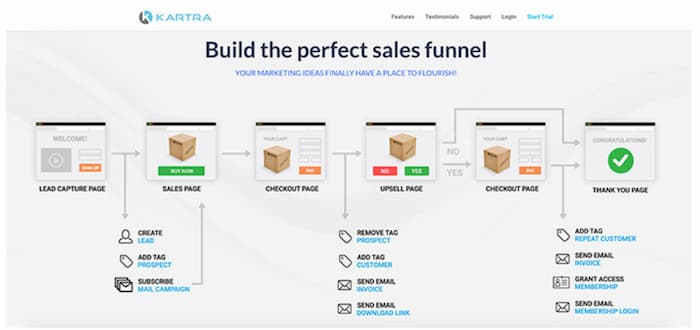
example of the pages in a sales funnel (one of the email marketing strategies to implement)

Use email marketing strategies that make a difference

There’s no excuse for not starting an email list. You have a variety of options when it comes to providers and there are plenty of free services to get you started. 

When you want to take your conversions to the next level implement these email marketing tactics and strategies to get a boost in the traffic and revenue your website generates.
Written by Christian Carere · Categorized: Content strategy, Email Marketing, SEO strategy

Jan 10 2021

Data-Driven Marketing: Invest In Effective Solutions

If you travel back in time to the turn of the century, you would find that in the year 2000 marketing was a very different animal. Most marketing was dominated by radio, television and ad placement in magazines and billboards. Fast-forward 20 years and the bulk of the spray and pray tactics are now obsolete since data-driven marketing has proven to be the best way to increase leads and revenue.

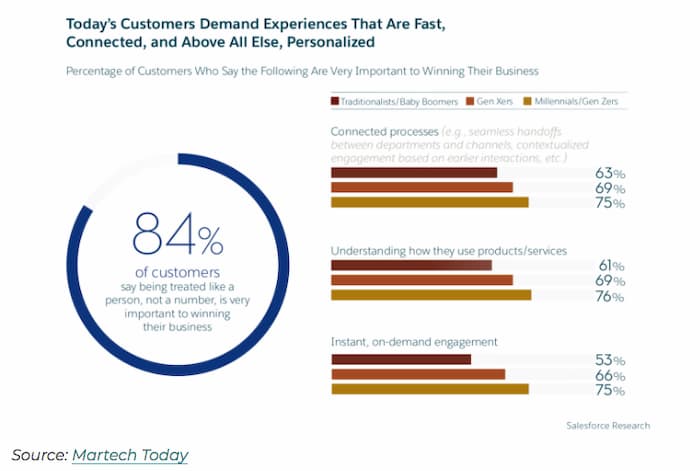
There is a much higher demand for personalization from consumers and a world of data to pull from. In fact, if you’re not appealing to specific desires from your target audience, you’re losing them to other companies.

The customers demand for personalization requires the use of data-driven marketing strategies

Today’s consumers are naturally trained to glaze over advertisements. There are so many ads that are in our face every day that it’s become a natural response to automatically close popover, pop-ups and generally skip paid ads to get to the organic results. 

Use of ad blockers is growing

This behavioural pattern has given rise to the power of inbound marketing and the importance of becoming specialized in a specific area of expertise.

In order to cut through the noise and separate yourself from the masses, you need to apply data-driven marketing strategies to reach the audience that will engage with your brand the most. 

By applying statistical facts to your marketing decisions you can outperform the old methods of operating on gut instinct. This is how companies are increasing profit and successfully expanding their audience.

What is data-driven marketing?

Data-driven marketing gives companies insight into the preferences and behaviour of their target audience based on big data and statistical facts. Companies then use this information to make more informed decisions on the marketing tactics and strategies they choose to employ for increased engagement.

Without measuring the impact of your efforts, it’s difficult to optimize your campaigns to be more successful. When data is collected (preferably from a large sample size) it is then used to increase key performance indicators that will result in more leads and revenue.

Example of data driven marketing

Here’s an example of a data-driven marketing campaign: Assume your company is running a PPC campaign where the target city is Toronto. After one month, you assess the results and notice that the majority of clicks are coming from similar postal codes.

You research the average household income for the areas in Toronto, and find that the majority of the clicks is coming from the postal codes where income is the highest.

Based on the results of your first campaign, your data would suggest that you need a different type of advertisement to get lower income areas to click on your ads. 

You would need to cater to the lower income households by creating a more appealing-perhaps one that communicates more savings. 

This approach would increase the number of clicks and conversions by simply changing your copy to something more personal and applicable to the demographic.

This is data-driven marketing in action.

Who uses data-driven marketing?

You would be hard-pressed to find an industry leader that isn’t using data to help make informed marketing decisions. Here at Digital Ducats, we use Google Analytics to collect data on visitor behaviour and website performance daily. The more time and visitors that pass through a website, the more accurate the data becomes to make informed decisions.

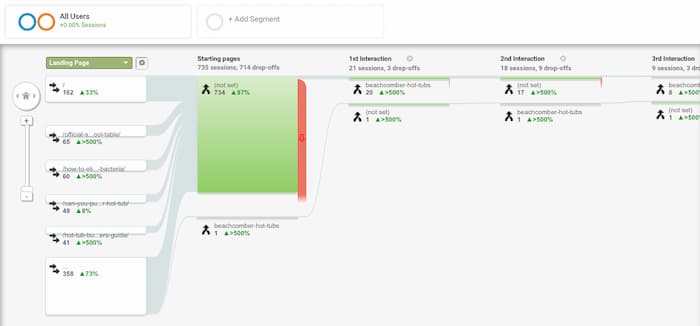
The data we use tells us where visitors enter your website, how much time they spend on each page and where they leave. Analyzing the flow of visitors on your website allows us to identify the improvements they need to make to keep users on your site longer and guide them to pages that convert at the highest rate.

Behavioral flow in analytics provides the means for data driven marketing decisions.

If there are pages that generate high bounce rates, we find the underlying cause why your website is losing traffic to the page. Through testing and making changes, your website becomes streamlined for conversions and leads visitors to purchase decisions or becoming a qualified lead.

Tools for automation

There are tools to automate everything when collecting data on your business. Depending on what your marketing goals are will depend on the tool you need to employ. Here is a list of tools that can generate useful data for making informed decisions on improving performance.

Google Analytics

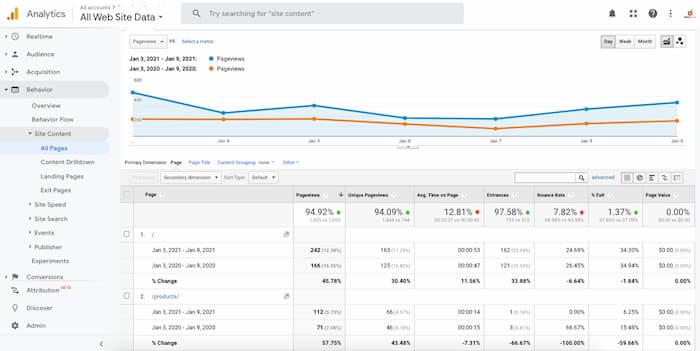
The fact that the tool is free is a bonus being one of the most comprehensive solutions for tracking website data. Analytics tracks every major metric you will need to monitor your website’s performance when it comes to user behaviour.

Google Analytics sample report to show how data driven decisions can improve conversions

The most commonly tracked metrics are: monthly search volume, unique users, traffic acquisition channels, flow of visitors, average time on page, bounce rate, conversion tracking and more.

Google search console

This tool is the go-to source for everything that’s happening with your website behind the scenes on Google. As an owner, you are entitled to a free account and can access website performance data such as impressions and clicks to every page.

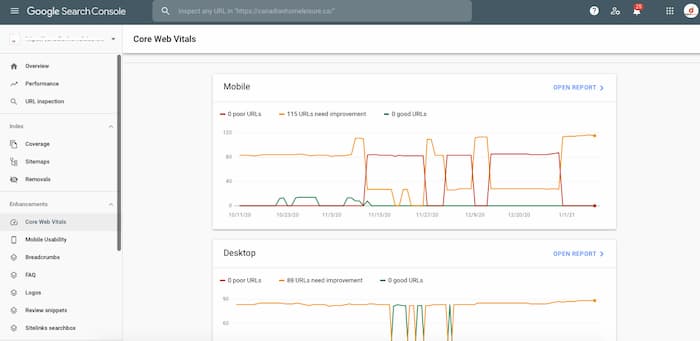
Core web vitals will officially become a ranking factor in May of 2021 so there is the importance of being alerted to any changes, errors and improvements that need to be made in this department.

Core Web Vitals of a sample client

You can connect your search console and analytics account for more streamlined and accurate reporting.

Analytic keyword tools

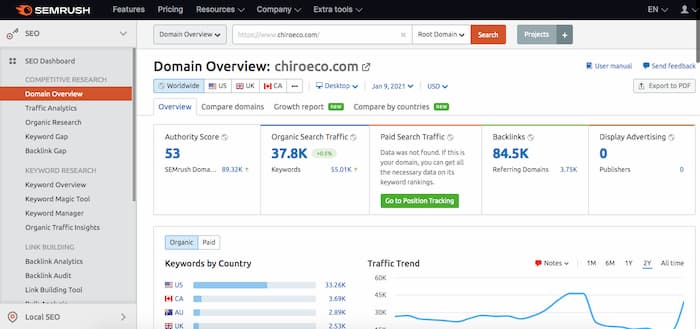
Every SEO company will use a few different tools to provide the best scope and range of information when making decisions on keywords and competition. SEMRush, Moz and Ahrefs are among the top industry leaders for providing access to valuable keyword data and assessing the competition.

Not only do these tools provide keyword generation ideas, they generate loads of information that come with each suggestion to allow greater insight into the keyword. 

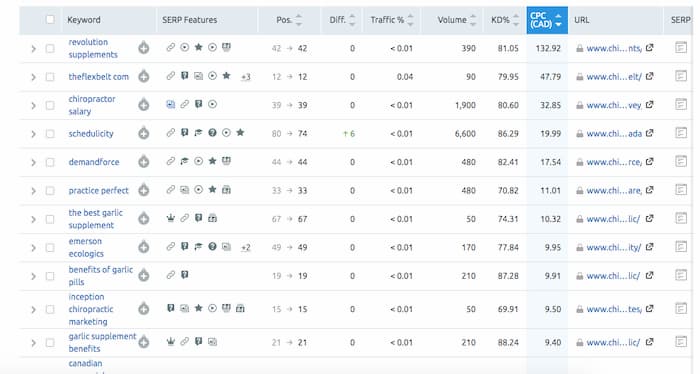
Information about the level of competition, the average monthly searches, the cost per click, the level of competition, the organic click-through rate and the SERP features that the keyword triggers.

SEMRush keyword analysis is required to make a data driven decision on whether to pursue the search term

Most of these tools also provide intensive competition analysis allowing you to see what keywords your competition ranks for and the volume of traffic they generate. You can see whether they are paying for traffic as well as the backlinks that point to their web pages.

Reverse engineering a competitor is a way of making data-driven marketing decisions

No SEO campaign would be successful without being able to formulate informed decisions based on the information provided by these types of software.

Google Ads

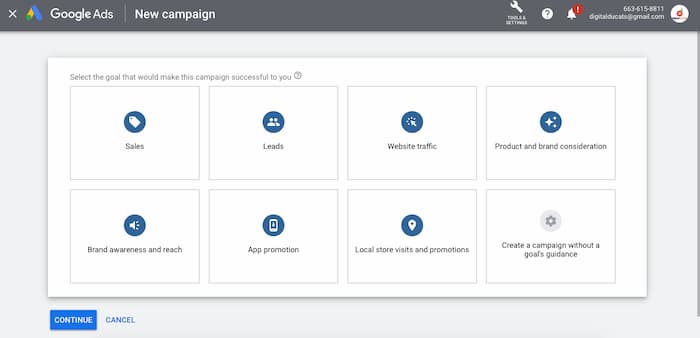
Running a PPC campaign generates an enormous amount of valuable data that can be used to create more successful marketing campaigns. The detailed creation of PPC campaigns coupled with the amount of data that comes back in the reporting can speak volumes about your target audience.

Google ad campaign creation

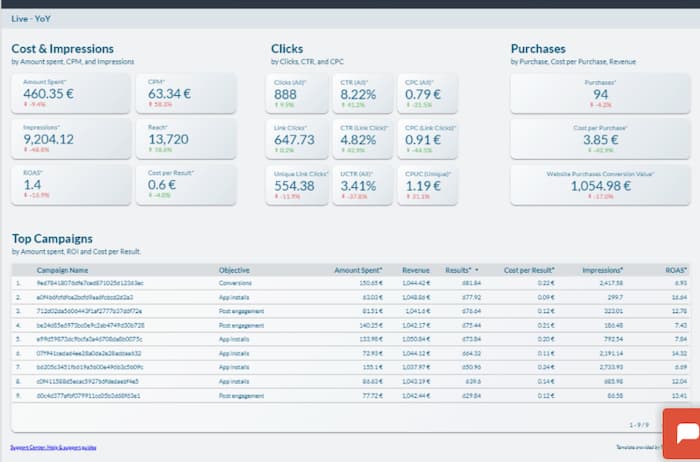
PPC campaigns provide volumes of data regarding the user behaviour and how they respond to your sales copy, landing pages and products. 

Google Ads report is a gold mine for making data driven marketing decisions

What’s more, is the data that is returned can help you build more accurate buyer personas for more effective content and targeting.

Email marketing software

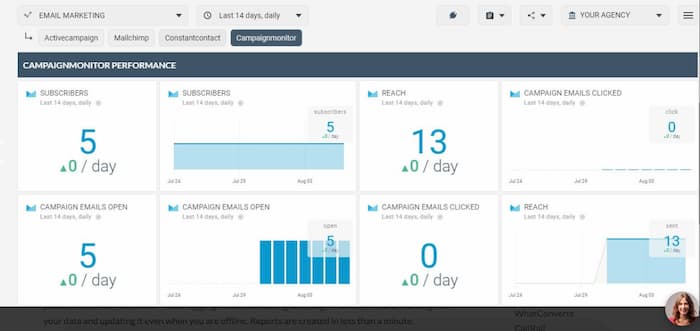
Email marketing software provides you statistics on the success of your email marketing campaigns. Use this data in conjunction with your Analytics to segment your lists and create more personalized content for your audience. You can use tools like Mailchimp, Aweber, Get Response, Campaign Monitor or any you deem worthy.

Campaign monitor sample report that shows data you can use in making future marketing decisions

A simple metric like the open rate can provide you insight into the effectiveness of a subject line in an email. A high open rate would indicate your audience is responding to the topic and delivery of your subject line-which makes it ideal to use variations of it as a title or headline for a blog post or article.

A high click-through rate of an email would indicate the body of content is appealing enough to get users to read further. This gives you a proof of which topics to pursue and build more content around to maintain high levels of engagement.

Tips to create a data-driven marketing campaign

Here are a few tips for creating campaigns that continually become more effective in targeting your audience and more optimized for conversions.

Create a well defined goal

Define the goal that will create a competitive edge in your marketing. You need to have a major objective in your campaign with a clear set of values you can walk away with and use in your next campaign. A clearly defined goal will keep you on track and provide a specific benchmark that can be measured for effectiveness.

Select your tracking tools

Choose the tools that will give you the data you need to make better decisions in the marketing campaigns that follow. Make sure you’re setting up your campaign with the tools that will give you the most accurate values for achieving your objective. 

Setting up analytics means creating conversion goals and trackable links to see what’s actually happening on the pages you’re testing. Without using the proper tools your values can be skewed so make sure you’re getting the most from your campaign by using tools that will provide the metrics you need.

Incorporate data from past campaigns

Always make use of previous data to make informed decisions. If you’ve already run a campaign that has presented a set of data, incorporate that data into your next campaign. This creates a more effective, optimized campaign.

Use data-driven decisions to increase your bottom line

Use as much information about your products and consumers as possible to create highly targeted marketing campaigns. The demand for personalization has been made clear and it’s up to you to meet the demands of your ideal audience.

Applying data-driven marketing strategies are the norm for creating the means for more informed decisions on your marketing campaigns. Make use of statistical facts about your audience to see more engagement, leads and revenue on a regular basis.

Written by Christian Carere · Categorized: SEO strategy, Web development

Jan 07 2021

9 Ways To Reduce Your Bounce Rate & Improve Traffic Quality

Of all the ways to increase traffic to your website, it’s not often that you think of the source of new visitors as being from the traffic you’re already receiving. There’s a hidden trove of visitors you can unlock by using several tactics to reduce your bounce rate.

What is a bounce rate?

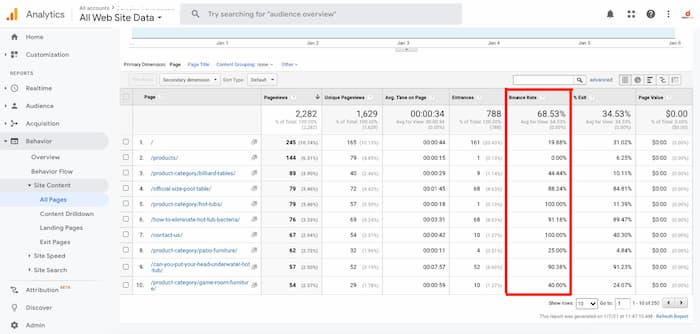
The bounce rate on your site is the total percentage of visitors that land on your site and leave without interacting with any other pages or links. This is a metric that’s reported in your Analytics and a value that can be crucial in improving the quality of traffic your website receives.

You can find the bounce rate of the pages of your website in Google Analytics by clicking on Behavior, 

Use Google Analytics to identify and reduce your bounce rate

Used in the right context, this metric can identify problems on your website that may be causing people to leave. 

A high bounce rate can potentially indicate a missed opportunity since visitors are already on your page and yet leave without completing a goal such as making a purchase or signing up to an email list.

Related reading: Key Performance Indicators & Data Analysis

What’s a good bounce rate?

A good bounce rate can be different on a situational basis. Many site managers would maintain that a bounce rate of over 60% warrants attention. Others are happy if their bounce rates are under 80% and yet this could be a catastrophic number to another website.

The percentage of a good bounce rate depends on the niche in which you’re competing and the type of page that’s generating your data.

So where is the happy medium for your website?

Your bounce rate should be assessed in light of the goal you have for the user on the page you’re analyzing. 

You also need to accurately determine the behaviour of your audience to understand the meaning of the data being generated.

Aim to see the bigger picture

The problem with using bounce rate alone is that it doesn’t give you the entire story of what’s happening on your website. In the words of Dan Shewen,

No metric is an island on its own. Click To Tweet

If a user lands on your page and reads every single drop of a 5000-word article, then leaves, it would technically register as a bounce. If 80% of users did the same thing, the first glance at your analytics might tell you visitors do not like your content-which, in reality, this is not the case.

This brings us to the first point…

#1- Reference the average time spent on page

To accurately determine the true meaning of bounce rate on a specific page, you need to compare it to the average time spent on the page. In the example above, the bounce rate alone is a misleading metric without cross-referencing the average time spent on a page.

Google Analytics display highlighting the avg time spent on page

Significance of longer averages

By recognizing that each user spends 5-8 minutes on your page before leaving paints a more accurate picture of how users are engaging with your content. You can’t be certain that your content is the problem judging from just the bounce rate and not referencing the average time on the page.

If people are spending a long time on your page, it means they’re getting through your content.  Consider creating a conversion goal, call to action or offer more options for related content to get them clicking through your site (discussed further in this article).

Significance of shorter averages

A short time spent on your page could mean users aren’t liking what they or they aren’t getting there because your page takes too long to load. If the average time spent on your page is short and you have a high bounce rate, you need to make changes. Users are landing on your page and not even giving it a chance.

Significance of no time on spent on page

If the page in question shows no time spent, the user might have closed the tabs or the browser to end the session on your page. If this happens, there is no time recorded because there is no exit click. 

The average time on a page is measured from the entrance click to the exit click. If your users don’t click on anything and close the tabs you have some slightly misleading data being generated.

#2- Establish a CTA or conversion goal for your page

Content alone is not enough to keep visitors from leaving your page. Establish a clear and concise call to action for each of your pages to keep your audience engaged and moving through your website.

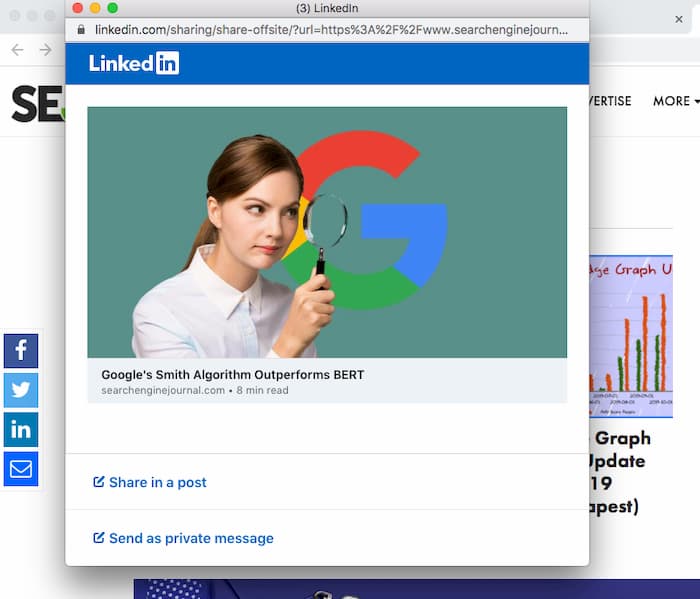
Ask visitors to share your content

Are you trying to build a stronger social presence? Ask your visitors to share your article with their social networks. Social sharing plugins are effective and offer a simple click to share option, making it easy for readers to click on the icon and share with their audience. 

Social sharing icons and a CTA to encourage interaction work to reduce your bounce rate

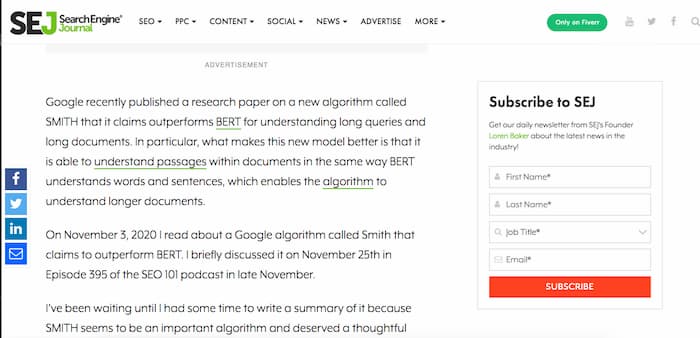
Ask visitors to join your email list

Present your readers with more opportunities to join your email list. 

Example of an opt-in box from SEJ with a CTA to subscribe

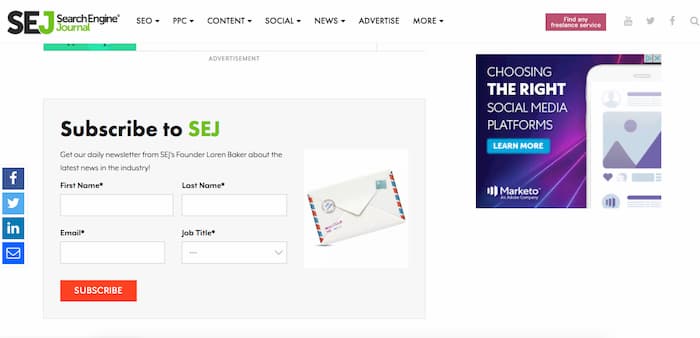
Include a CTA a few times within your post, which can be on the opt-in form itself.

Second Opt-in box to encourage users to subscribe. Adding more instances of a single CTA will reduce your bounce rate

Create conversions on Google Analytics

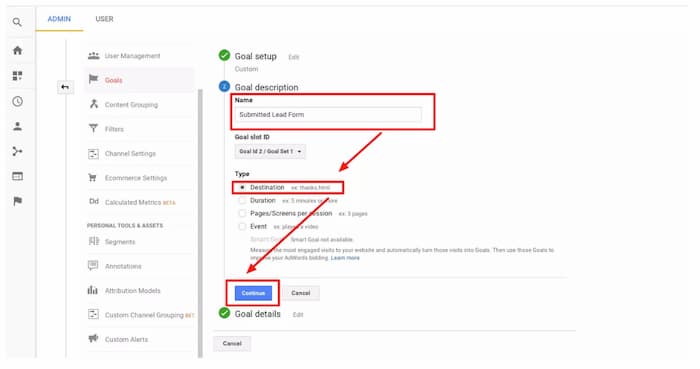
Ultimately we want our website visitors to purchase a product or service from our business. Creating goal conversions tracks whether your audience is doing what you want them to do on each page. 

Setting up a conversion goal on Google analytics (reduces bounce rates)

Whether it’s a sale, email sign-up form, or a social share, track your goal conversions. When your visitors start clicking on the links you want them to, it eliminates the session from becoming a bounce.

#3- Use interactive content

In the case where users are landing on your pages and leaving almost immediately, you will need to consider updating the content on the page. Interactive content is a solution to get your audience more engaged with your page and improving the stickiness it has for captivating their interest.

It’s a proven fact that people learn more when they are engaged with hands-on learning as opposed to just reading or listening. Interactive content allows your users to elevate the learning curve and retain more information. By getting your visitors to engage with any of several different content assets, you can reduce the bounce rate of your pages.

Interactive infographics

Infographics may have seen their height in popularity, but they are beneficial for both B2B and B2C sales and marketing. Visual content itself is proven to improve retention from 10% with plain text to 65% with an image. Interactive infographics boost information retention to the next level by allowing the user to interact with the graphic.

Here is an example of an interactive infographic that shows you information on the gay rights of each state in the US. 

Interactive infographic on gay rights laws in every state of the US

Whichever state you hover over with the mouse will highlight the information from that state on the sidebar.

Surveys

Surveys are proven to be one of the most popular forms of content. Incorporate a survey within your content to get your visitors engaged.

Creating and publishing surveys works to reduce bounce rate.

You can choose from some of the most popular survey tools as a starter for testing out your audience’s response.

Polls

Inserting polls within your content also gives your audience a fun way to answer questions and compare their answers to past visitors. 

An example of a poll that can be inserted into your content for users to interact with

Inserting a poll in your content can provide a good break-in text and get your visitor to actively participate and engage with your content.

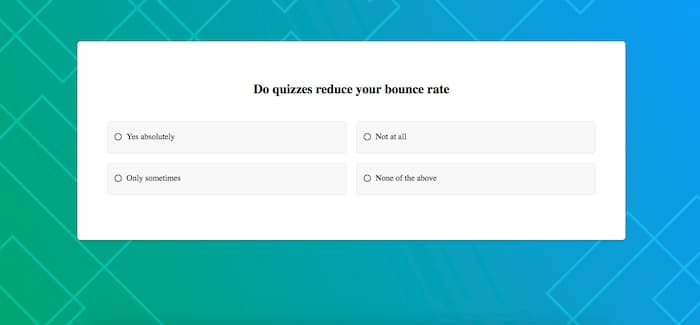
Pop quizzes

What better way to reinforce the content your visitor has just read than a pop quiz? The response from your audience may vary (some people don’t like to be tested!) but again, it’s a good way to make an option for a user to step outside of the mundane practice of reading and participate in a potentially enjoyable experience.

Sample of a pop quiz format to add to your blog content and reduce your bounce rate

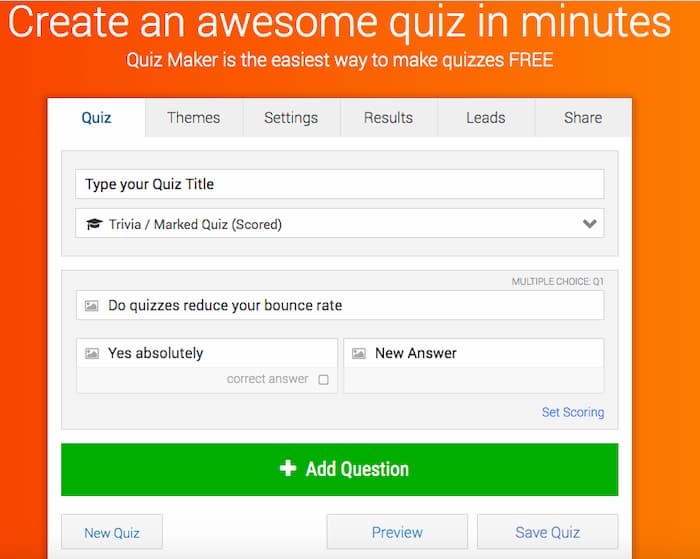
You can use sites like quiz maker or better yet, Jotform’s Quiz Maker to create and publish pop quizzes in your content. 

Example of the quiz maker template when creating a quiz for your content

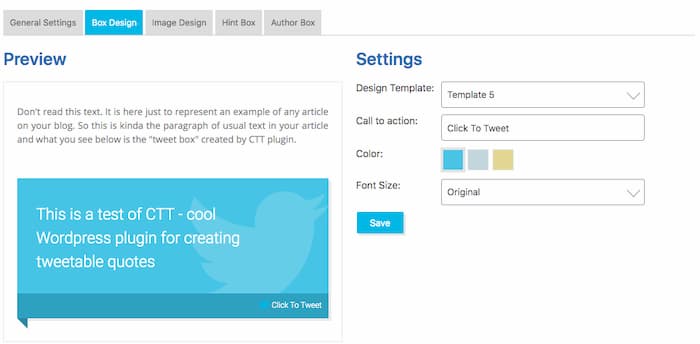
Click to tweet

Inserting tweets a click to tweet call to action is a simple way for your audience to tweet a message or something worth sharing on your site. The amount of effort required for a user to click on the link makes sharing super simple.

The general settings for the plugin "Click to Tweet"

This type of embed serves as a way to break up the text, get your users interacting with what you’re saying and contributes to increasing your audience. 

#4- Re-optimize for user intent

When a visitor lands on your page, you have a few seconds before they decide whether your page can satisfy their search intent. Re-optimize your content to enhance your page’s ability to satisfy the user’s intent.

"Give the people what the people want."

The adage, “SEO is ever-changing” applies here when it comes to updating old content. Search intent is constantly in flux and going over old content can reveal out-dated articles that need to be re-optimized for current keywords as well as new ones.

SEO is not static with regards to the fact that at its core, it is based on user intent. People are always changing the way they search for things as well as the language they use to search. It can pay off in dividends to go over old content to make sure that your content satisfies user intent.

Improving the quality of your content and making sure it’s up to speed with the competition improves traffic and will reduce your bounce rate.

#5- Simplify your website navigation and searchability

One of the most common reasons users leave a website is because it’s not easy to navigate. When a visitor lands on a site for a specific reason, they need to believe that your website can satisfy their search. It’s important to provide easy access to all of your important pages so users can find what they’re looking for.

Even if they don’t see what they want at first glance, give them your best options to entice them to click further as well as a search box to search the website for something specific.

Counter intuitive layout will confuse visitors and lead to high bounce rates.

Avoid confusing menus and heavily cluttered pages. The actions a user takes on your site should be intuitive and laid out for the easiest and simplest understanding.

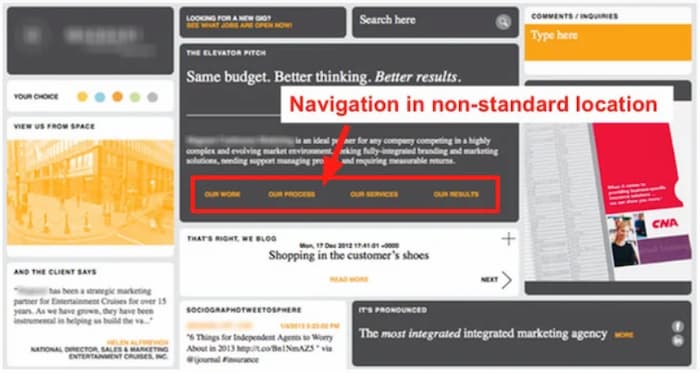
Confusing navigation contributes to a higher bounce rate

Use communicative image icons and a simple navigation bar to encourage more clicks. Think of using the signpost analogy to guide users in the right direction. Drivers need to see signs that communicate clearly what direction they want to take.

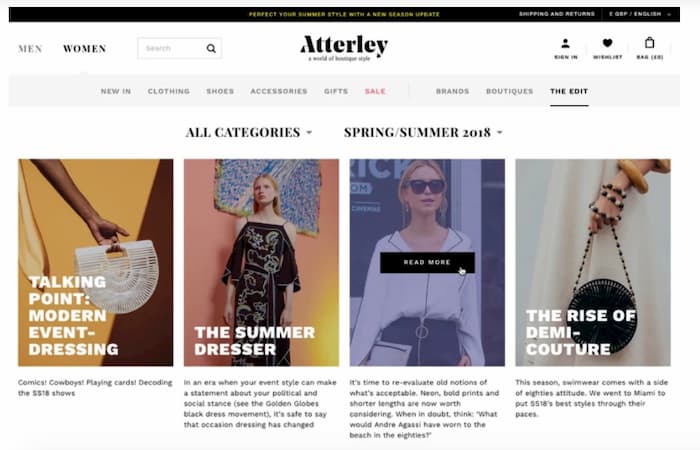
Example of an easy to understand format with an obvious horizontal navigation bar as wella s the search box above it

Simplify everything and when you’ve got some results and feedback, simplify it again. The easier your site is to navigate the better the UX experience is, which contributes to a reduced bounce rate.

#6- Reduce the time it takes your pages to load

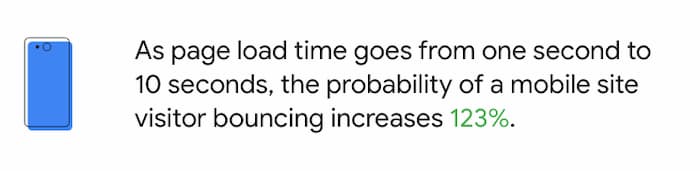
Page speed is talked about repeatedly in almost every SEO article but it’s mentioned for good reason. Google reports that for every second it takes your pages to load you risk losing more visitors.  

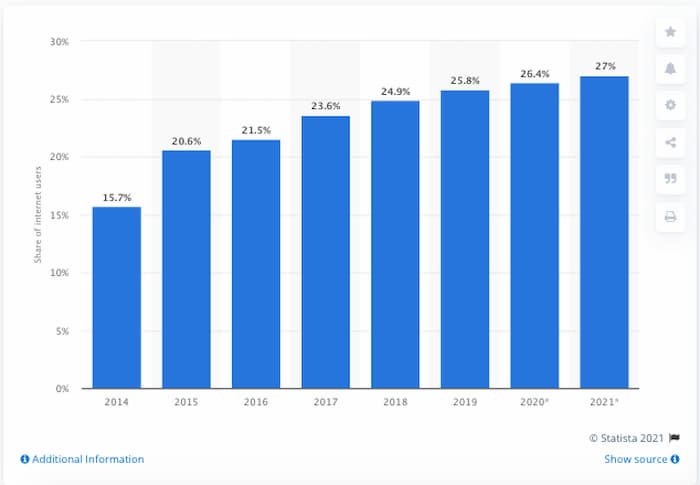
Think With Google statistic stating 123% increase in bounce rate from an increase in 1 to 10 seconds of page speed

Some websites have more to gain by improving page speed. If your website is experiencing load times over 10 seconds you have a big opportunity to optimize your page speed to 5 seconds and cut your bounce rates in half.

The result would be the same as doubling your traffic when you consider that you’re now getting the visitors that choose your site already but would never make it with slow loading pages.

#7- Optimize for mobile screens

If you’re not optimized for mobile screens, you risk visitors leaving your site. Reduce your bounce rate by making sure your website is easy to navigate with a layout that’s easy to use on all mobile screens.

Have you ever tried to use the desktop version of a website on a smaller screen? 

When users are forced to “pinch” the screen to zoom in and out to read text or use buttons it’s considered to be a poor user experience. This can cause visitors to flee in search of a website that better accommodates their screen size.

Example of a better mobile UX format

Apart from reducing your bounce rate, you may also get a boost in traffic if you’re able to improve your mobile-friendliness. Don’t forget that Google indexes the mobile version of websites before the desktop version.

You can test your website’s mobile-friendliness on the mobile-friendly test site or directly from the SERP.

#8-Link to related content within your website

Use a topical internal linking strategy to provide links to other content within your site that a user may be interested in reading. Not only does this optimize your pages, but also you can lead users to different areas of your site for continued learning and discovery.

If the page your visitor lands on has zero links on it, where would your users go next? The only way out is backwards which registers as a bounce.

Offer related reading within your content and at the end to encourage a higher click-through rate and reduce your bounce rate.

Search engine journal related reading always at the end of every article

#9- Write long-form content

The advantage of being an engaging writer is that the more you write, the longer people stay on your page! Long-form content also gives you more opportunity to link to related content and direct traffic to product pages and other important pages on your site.

When compared to short-form content, the long-form gets visitors to stay on your site longer and reduce your bounce rate.

Increase traffic with a reduced bounce rate

Reducing the bounce rate on your site could be the key to unlocking a significant percentage of traffic that you already receive. In many cases, the bounce rate represents users that find your website but never make it to see a single scrap of your content.

Deducing the reason for a high bounce rate on your site is a priority that you can’t afford to ignore. Fixing the underlying cause can result in higher user engagement, increased click-through rates and more conversions.

As the competition becomes stiffer and the organic click-through rate dwindles, finding ways to improve the quality of your traffic will be a key element for sustainable growth and increased revenue.

If you have any questions about how to reduce your bounce rate, feel free to contact us for complimentary website analysis and learn how we can help through using custom SEO services.

Written by Christian Carere · Categorized: Content strategy, Technical SEO, Web development

  • « Go to Previous Page
  • Go to page 1
  • Interim pages omitted …
  • Go to page 7
  • Go to page 8
  • Go to page 9
  • Go to page 10
  • Go to page 11
  • Interim pages omitted …
  • Go to page 32
  • Go to Next Page »

Footer

Need professional SEO advice?

Give us a call to learn more about how we can help your business

Call for a consultation Request a proposal

Request a free website analysis and proposal for your company by filling out the ” Request a Proposal” form.

  • Privacy Policy
  • Terms Of Service
  • Cities we’ve served

© 2026 · Digital Ducats Inc.