• Skip to main content
  • Skip to footer

Digital Ducats Inc.

SEO Consulting & Services

  • Home
  • About
    • SEO Consulting
  • Services
    • SEO
    • Local SEO
  • Contact
    • Pricing
    • Write For Us
  • Blog
You are here: Home / Blog

Feb 11 2021

Clutch Names Digital Ducats Inc. as Canada’s Top SEO Freelancer

Search engine optimization isn’t just for major enterprises and big businesses. In fact, SEO is also important for small businesses and startups. It has multiple advantages and benefits such as being able to track customer behaviour, organic traffic generation, and even business guidance. As a top SEO freelancer, we’re proud to provide our clients with these services at an exceptional level.

Top SEO Freelancer award for Digital Ducats Inc. in 2021

Here in Digital Ducats Inc., we specialize in helping small to medium-sized businesses thrive on the world wide web. Since 2015, our team has been driven to provide impeccable service and outstanding ROI for our clients.

For us, our clients’ satisfaction and positive feedback are what matters the most. We don’t like to think like each project is just another number, rather an important partnership and collaboration. This is why we are genuinely honored to announce that we have been chosen for a Clutch 2021 award.

For those who don’t know, Clutch is an established market research firm from Washington, DC. Their expert team takes thousands of clients’ feedback to conduct market research. They rank companies to help business owners find the right agency to work with.

This year, Digital Ducats Inc. was chosen as the top freelancer SEO agency in Canada. To express our gratitude, here are a few words from our chief executive officer, Christian Carere: 

“I’m absolutely thrilled to be chosen as one of the leading SEO companies in Toronto and look forward to another year of successful triumphs for us and our clients.”

Digital Ducats Inc. ranks third among the country’s best SEO freelancers according to Clutch’s Leaders Matrix.

Our whole team would like to extend our gratitude to our clients, especially those who left us a review on our Clutch profile. For reference, here are some quotes from our their reviews:

“Within two weeks, I started getting traffic and had my first customer. It started to grow from there. Now I have a ton of repeat retail customers.

Our site was initially on the first page of search results, but it was result number 5 or 6. He mentioned if I wanted to be up top in that area, I’d have to do more work. I plan on working with them again in January.” — Owner, ACS Dent Repair

“If I have an idea of what we could be doing better or something that could help Christian do his job better, we definitely communicate about that on an ongoing basis. That’s really the difference between Christian and other companies that we’ve worked with in the past.” — Co-Owner, Canadian Home Leisure

Do you have a project in mind? Please leave us a message and let us know how we can help you.
Written by Christian Carere · Categorized: News & updates

Jan 27 2021

7 Advanced SEO Strategies To Grow Website Traffic

Everyone has a website these days, but not everyone is ranking on the first page. How do you send droves of traffic to your website when thousands of others are competing for the same keywords? Here are some well-known advanced SEO strategies that are proven to increase website traffic for more leads and new clients.

  1. Repurpose content
  2. Re-evaluate your keyword strategy
  3. Build high-quality links
  4. Update, Merge, Delete
  5. Invest in video marketing
  6. Optimize, optimize, optimize…
  7. Optimize for local traffic
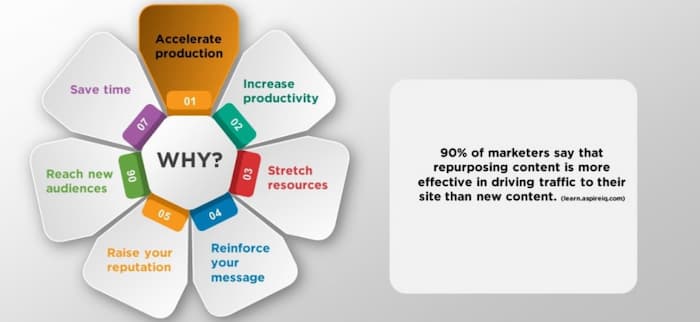
Reasons to repurpose content as an expert SEO tactic

Repurpose content

Choose one of your top-performing pages and repurpose the content into another form to take advantage of existing interest and the traffic already flowing to the page.

What does this mean exactly?

Let’s say you have a blog post on 7Advances SEO Strategies that get a high volume of search traffic. Use the content from that post and turn it into a video, podcast, infographic, slideshow or anything you believe will get a good response from your audience.

Why does repurposing content generate more traffic?

Using an alternative form of content gives you another way to deliver your content. Users all have different preferences on how they choose to consume content and so by providing multiple versions you open up new channels of interest.

Those that may have skipped through or skipped your blog post entirely may choose to watch a video or listen to an audio version.

The bonus of repurposing content that it’s not as hard to do as producing content from scratch. A good deal of the work is already done since you have a finished product. The content is already there it’s just a matter of putting it together in a way that users can consume.

Repurpose your blog post into a new infographic

Turning a blog post into an infographic is a popular method of repurposing content. Visualized data has a much higher retention rate for people because it is a combination of images and facts. Images help visitors retain the most important points of a blog post.

Step one: The first step is to determine your key data points. 

What do you want readers to remember when they see your blog post? This will form the skeleton of your infographic.

Step two: Organize your infographic with sections and headers. 

The key to a good looking infographic is to make it look extremely organized. If everything is balanced and aesthetical it will make more sense to users when they read through the content.

Step three: Keep your text brief and to the point. 

The idea behind making the infographic is to give your audience the most important data points. Don’t try to transpose the entire blog post onto your image. Otherwise, they could just read the blog post.

Step four: Include notes for the designers. 

Be as descriptive as possible when making notes for the designers. You want your ideas to materialize as close to your vision as possible. Tell designers exactly what to do when it comes to branding, colours and images.

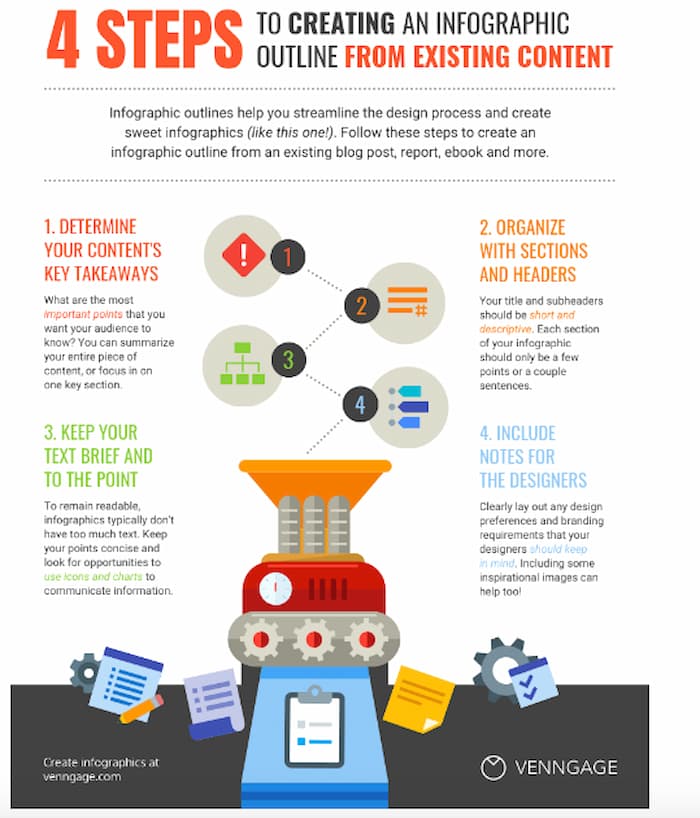
Here is an infographic from Venngage that walks you through these exact steps:

Infographic on how to repurpose content which is considered one of the advanced SEO strategies

Publish a video

Hey, have you heard about that new website called YouTube?! It should be obvious by now that if you’re going to publish a video, you’ll want to do it on YouTube. Not only is it the second-largest search engine in the world, but also, videos rank on Google all the time for high volume keywords. 

(Click here to learn about video trends in 2021)

Add YouTube traffic to your monthly search volume

Drive traffic from both Google and YouTube by publishing a video optimized for an important keyword that will drive traffic. YouTube is not as competitive as Google when it comes to ranking for keywords, which is something, you can capitalize on.

If you’re shy about being on camera, use the images from your infographic to make a video/infographic. You’ll need to be the narrator and be super engaging if you’re not going to show your face on the video.

Tips for optimizing your video

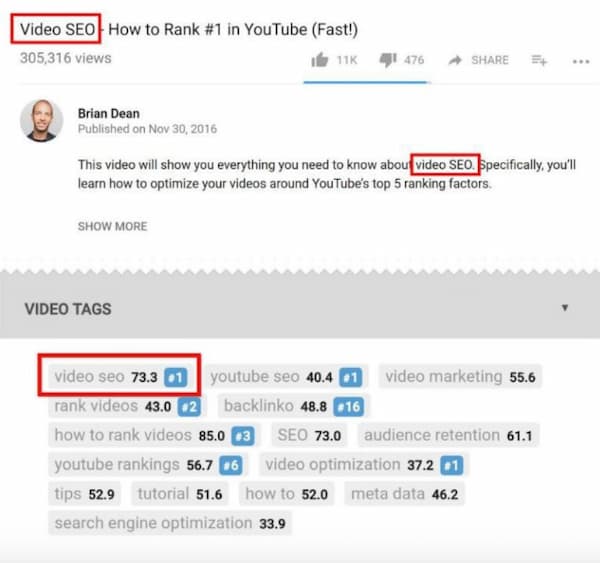
Make sure your main keyword is in the title, filename and tags. Take your video optimization to the next level by including a keyword-rich video transcript in the description. Add Chapters within your description to break up your video into segments. Take note of the top ranking videos and duplicate the tags they use since it also plays a big role in how YouTube sees your video.

This image highlights where keywords are located in YouTube video optimization. This is an advanced SEO tactics that will earn you a lot of traffic

Keep in mind that if people get bored and leave your video before it finishes, it will sink your YouTube ranking. Make sure there are no flat and boring segments. If you can’t help but be super boring then make your videos into short clips. Engagement is the key here.

Publish a slideshow

Slideshows are. away to repurpose content
Slideshare logo

If you’re going to go as far as publishing a video, you can easily import it to Slideshare to publish a slideshow. That’s not the only option for creating a slideshow. PowerPoint presentations convert perfectly and you can always make a slideshow from scratch.

Slideshows allow you to separate your content from the masses by providing a form of multimedia that isn’t as common as infographics and videos. They require user interaction which entices visitors to stay on your page longer and boosts engagement statistics.

Slideshare also has an average of about 80 million unique visitors a month with approximately 38 million registered users. This option can serve as an excellent source of traffic for B2B marketing.

Create bite-sized information for social media marketing

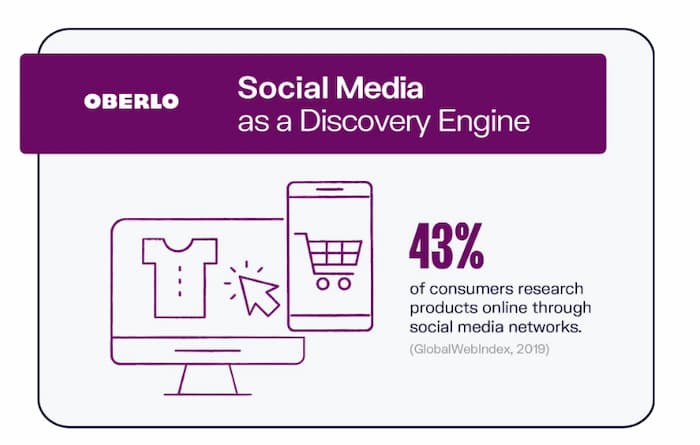
Divide your blog post into the most important points and post pieces of it on your social media one piece at a time. This can give your posts a longer lifespan for capturing interest and driving traffic to the blog post on your website. Oberlo does this really well with its infographics like this stat that was cut from their social media marketing infographic.

Example of making bite sized info for social media. Another advanced SEO tactis

Rather than one post of your entire blog article, you can use multiple posts that are more like teasers to get people to visit your page to read the whole thing. Not to sound like a broken record, but infographics are perfect for this type of social media marketing.

If you’ve turned your blog post into an infographic already you can use each segment as a social media post. Each post will be one of the main data points you’ve chosen for your infographic. With this already done you already have images and the most important messages ready to post.

Save time, resources and boost traffic with repurposed content

If you’re producing content regularly, repurposing content should be a regular part of your routine. It’s not easy to go through years of producing content regularly without experiencing overlap in topic and ideation.

Why not improve the quality of existing content and expand the reach it has by using multiple sources of traffic?

Re-evaluate your keyword strategy

There’s a common misconception that your keyword strategy is a “one and done” type of task. This couldn’t be further from the truth. Your keyword strategy should be re-evaluated periodically to expand on areas that are working to improve your bottom line.

Re-optimize for keyword variations

If there are keywords that are bringing in high converting visitors, you’ll need to pay closer attention to those phrases to build more content surrounding those issues and topics.

Why settle for one high-converting keyword when you can optimize for four or five similar phrases that work to produce the same results? There are many cases where you can get the same page to rank for more keyword variations by making small adjustments to optimize the page. To capitalize on those opportunities, you have to be aware of the keywords that are working to boost your business.

Publish relevant content

The content you publish is heavily influenced by the topics that are important to your audience as well as weighing in the business value the target keywords represent to your company. What you decided were the most popular keywords 5 years ago, heck, even one year ago may have changed in priority and almost most definitely in volume.

It’s important to stay updated on what is being searched the most to continue producing relevant content for your audience. Refreshing your keyword strategy is a way to ensure you’re up to date and delivering fresh and relevant content that drives traffic.

Steal ideas from your competition

An effective keyword strategy is not complete without doing a competitive analysis. Just as you may review popular terms being searched by your audience, you also want to check in on your competition to what terms they’re driving traffic from as well.

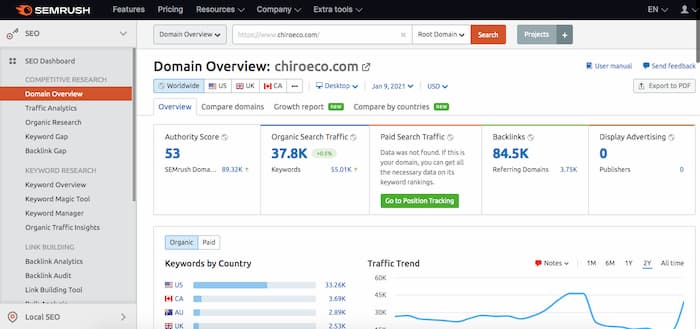
You can get ideas by running a competing URL through analytic software to see the both paid and organic traffic that is flowing through their site.

SEMRush software screenshot

If they’re executing an optimized PPC campaign, then paid traffic can speak volumes about what terms are making money for their company. Why else would they be paying for traffic if they weren’t making money from it?

The organic traffic that’s being driven is an indication of the content that’s being produced. If there are keywords they rank for that you don’t, take a closer look at the pages that rank to analyze the content and see if it’s a good fit for your audience.

If there’s business value in the search terms, you have new keywords and fresh content ideas to add to your keyword/content strategy.

A keyword strategy is a living entity

Think of your keyword strategy as something that is constantly evolving. Just as your rose bush needs priming and pruning, your keyword is also in need of fine-tuning to get the best results. Don’t stop adding keywords that work and taking some away those that don’t from your overall strategy. As your website develops over the years, re-evaluating your keyword strategy maintains relevant content and boosts traffic.

Build high-quality links

There’s no doubt that one of the advanced SEO strategies, high-quality backlinks increases the traffic to your website. Consider what makes a high-quality link and it’s a guaranteed fact that if you’re acquiring high-quality backlinks, you’re increasing search visibility.

If the link is on a highly relevant website that receives a lot of traffic, you’ll receive referral traffic with highly engaged visitors.

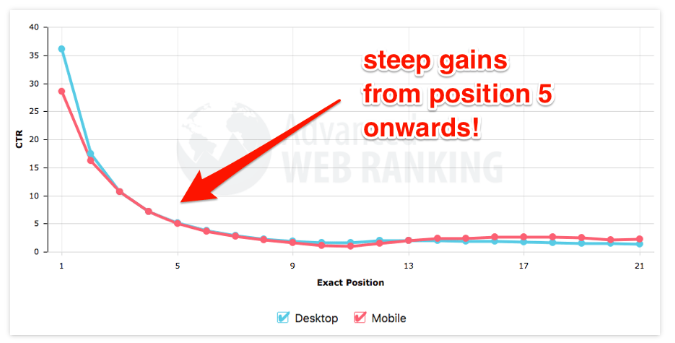
If the website has massive domain authority then that domain authority is transferred to your website, thereby raising your ranking ability. With improved rankings, the click-through rate from the SERP skyrockets.

IMage showing the CTR for SERP positions

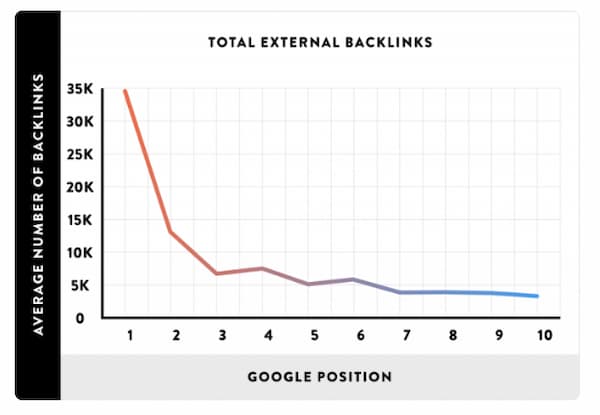
To be in the top 5 (top 3 positions are the bulk of the traffic) you need backlinks. The argument of what comes first, the chicken or the egg can be applied to this situation. Some debate that being in the top 3 ranked position leads to more backlinks, whereas others might say you need to acquire the backlinks to get to the top 3 positions.

Chart showing the relationship between backlinks and Google Ranking

Regardless of how you see it, it’s important to make high-quality link building a part of your routine for developing websites that rank at the top of the search results.

What’s the best way to build high-quality backlinks?

In an ideal world, the content on your website would naturally attract high-quality backlinks. Producing good content is a non-negotiable requirement to compete in the top 3 spots, but it’s not enough to acquire backlinks in a reasonable amount of time.

For a page to accumulate a high number of backlinks naturally, people have to know about it. It needs to be promoted through the proper channels and (ironically) have links built to it to get traffic flowing. Here are a few ways to build links to your pages to get your content in front of the right audience.

Outreach campaigns

This is one of the few methods reproducing natural link building at an accelerated rate. The concept of natural link building is people find your page, they like it so much that they link to it from their web properties.

In its simplest form, outreach campaigns are you reaching out to other website owners and telling them about your content and hope they like it enough to link to it. The major problem with this tactic is that it gets an abysmal conversion rate. Most simple outreach campaigns average an 8% conversion rate.

Here are a few themed outreach campaigns that boost your conversion rates to result in more links built to your page.

Broken link building

Broken link building is identifying broken links on your prospects page, contacting them to inform them of it and offering your link as a substitute for that link.

This tends to get a higher conversion rate because website owners care about the user experience of their pages. If there is a link that leads a user to a deleted page then it’s considered the link is contributing to a bad user experience.

By offering a page with content that is similar to what used to be there, you have more leverage by offering more value in linking to your website.

Read more on how to execute a broken link building campaign here.

Unlinked mentions

This form of outreach is themed to contacting website owners or authors who have mentioned your brand without linking to it. This receives a higher conversion rate on average because if your brand was worth mentioning, to begin with, most website owners won’t have a problem linking to your website.

Read more on how to execute an Unlinked Mentions link building campaign here.

Link reclamation

This type of campaign targets website owners that have linked to your website, but for some reason, your link was deleted. Links are deleted all the time, whether it by mistake, through updates or moved pages-it happens.

You can save a high percentage of lost links by simply reaching out to owners and asking them to replace your link.

Guest posting

This form of link building is probably among one of the top choices for business owners and SEO companies because it allows the opportunity for branding. Publishing an article on a popular website allows a company to demonstrate their expertise to an outside audience as well as a link back to their website.

Guest posting can land some high-quality backlinks when the websites you link from are highly relevant and have high domain authority.

Editorial links are also considered the crème de la crème of all the types of links you can get.

Read more on how to Guest Post here.

Update, merge, delete old blog posts

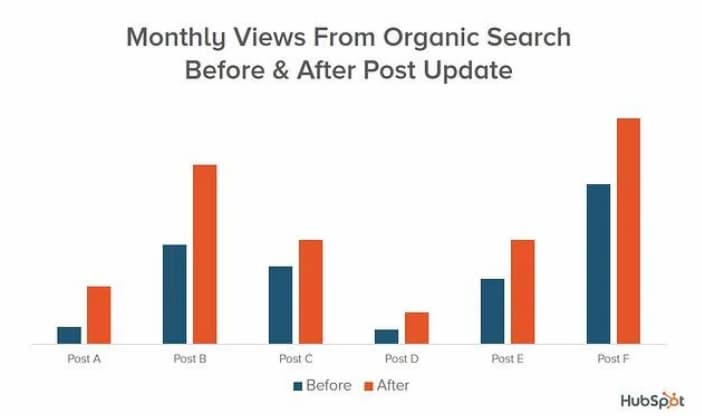
As a way to keep your blog content fresh, relevant and ranking highly, it’s important to update, merge and delete underperforming content. This is one of the advanced SEO strategies to add to a periodic routine for improved search visibility and high volumes of traffic.

Chart showing the impact of one of the advanced SEO strategies Hubspot used which was updating old blog posts

First off, Google prefers fresh content to stale content. There are some niches where fresh content is a ranking factor because of the continuous changes that can occur in the niche.

SEO is a prime example of a niche where things can change dramatically over a year. In many cases, there’s content that becomes irrelevant and out-dated making it completely obsolete.

Update old blog posts

Look for opportunities to update older blog posts that have slowly lost the traffic it once generated. The chances are that newer posts have been published that cover more information, cover new information, are more updated or just have more multimedia and value-added features.

Merge underwhelming blog posts

There are often situations where you’ve published blog posts that target similar keywords and answer similar search intent. If these blog posts are not ranking in the top 5 spots on the first page, you merge the two to create a monster blog post with more capability of ranking highly.

Combine the content of both pages to make your article a more comprehensive version. You will need to choose which page to keep and which one to delete based on the keywords within the URL and the backlinks that point to each page. It’s necessary to use a 301 redirect to tell search engines that content has moved from the deleted page to the merged page.

Google has made 301 redirects very clean in terms of transferring power from one URL to another, however, err on the cautious side and consider keeping the page that has more backlinks pointing to it. You can also use the volume of traffic and the keywords in the URL as part of choosing which page to delete.

Delete old posts with no traffic

It’s been proven that deleting pages that do not receive traffic can help increase your overall website rankings. Find pages that don’t rank well, or don’t drive traffic and delete the ones that aren’t contributing to your business.

The reasons to delete pages from your blog should match the following criteria:

  • The page has not received traffic within 90 days.
  • No backlinks are pointing to the page.
  • It’s a low-quality blog post.
  • There’s no business value associated with the post.

Use a 301 direct redirect to send users to new pages in case external links are pointing to those pages. You also want to save the link juice and send it to a similar page on your website.

Invest in video marketing

Video marketing boasts a slew of statistics that are pretty hard to ignore. One reason that stands out is that videos increase conversions by 80% when you add them to a landing page. This is backed by the fact that almost 90% of marketers are using video marketing in their digital marketing strategy.

Capitalize on social media traffic

Videos have been the preferred form of content for some time now by over 70% of people. The beauty of publishing a video is that once it’s on YouTube not only can you benefit from YouTube traffic but you can use it across multiple social media websites as well.

Facebook reports that video is the most shared form of content. Facebook stories, Insta stories are proving to be some of the most popular ways to get users’ attention.

Incorporate “Stories” for high engagement rates

The FOMO effect (Fear Of Missing Out) seems to be strong with most social media users. The idea of losing out on the opportunity to view a video (as such is the case with Stories) has proven effective for generating higher engagement rates.

Increase ranking on Google search

There’s evidence to support that incorporating video on your ranking pages can help push your ranking higher. Higher engagement statistics create a positive ranking signal and if you’re already ranking on the first page, it could be the added boost that pushes your website towards the first position.

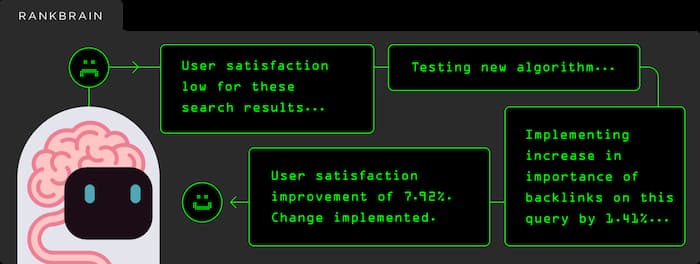
Rankbrain image of the AI assessing user engagement and assigning rank

Rankbrain factors in the user engagement statistics of a page to help determine what page satisfies search intent at the highest level. The most noticeable engagement statistic that increases is the average time spent on a page after adding a video. With more users spending more time on your page, the message is being sent that they are enjoying the content you’ve created, making your page more popular.

Increase traffic from Google SERP features

Your video can also appear in video carousels, the video tab on Google search, featured snippets, and the PAA box. As long as you have a link from your video to your web page, your video provides additional traffic to your website.

Optimize, optimize, optimize…

There’s always room to enhance optimization and get your page to generate more traffic. Optimization can occur in a few different areas both on-page content and building off-page.

Target featured snippets

Featured snippets are continuously appearing more frequently on Google, which is creating more opportunities for traffic and branding. Optimizing your content to appear in this feature is an absolute must when it receives the highest CTR. The fact that Google displays your website as the featured result contributes to the excellent branding of your company as industry leaders.

To learn more about optimizing for featured snippets click here.

Target PAA boxes

People Also Ask Boxes can also add a substantial number of visitors to your monthly volume of search traffic. If you rank for one of the questions in the PAA box, there’s a good chance you rank for several variations of that question.

You can optimize for the PAA box by answering popular questions that appear in the box. Tag your question using an h2 or h3 tag and use short, succinctly summarized answers directly after the question.

Optimize for search intent

Optimizing for search intent is a continual process. Make sure your content adequately covers the same topics as any of the competing pages in the top 10 results.

You can create a better page by expanding your topic coverage or improving your multimedia.

Optimize using anchor text links

The number of optimized anchor text links pointing to a page affects the page’s optimization. You can enhance the overall optimization of a page for a specific keyword by concentrating or diluting the anchor text ratio of the keyword you’re targeting.

(Read more on anchor text optimization here.)

Optimize for local traffic

Capitalize on high converting local traffic by optimizing your website with a local SEO strategy. Whether you have a brick and mortar business or not, it makes sense to pick up on searches being made within your area that can land you some extra business.

Creating a Google My Business profile is non-negotiable. It’s one of the easiest things to do-although optimizing your profile can be a little more involved.

Local SEO strategy includes Google My Business (image is the logo)

How to optimize your GMB profile

The first order of business is to fill out the basic information about your business. Make sure you enter data on every single field that’s available. The more information you provide to Google, the more searches your listing can appear for.

Small details count

Some businesses fail to enter their store hours. Let’s say that your store is open late yet if someone searches “X type of stores open late” you won’t appear because you didn’t enter store hours. Make the effort to include the small and simple details since they can land you more traffic.

Categories

Choose the categories that most applicable to your business. Search for important keywords you want your website to rank on the first page. Double-check what categories the companies listed in the local pack have declared. The difference between being a men’s tailor and a men’s clothing store can have an impact on how high your listing is ranked for specific keywords.

Add citations

To rank as a local business you need to have links from local websites and local directories. List your business in the top directories that are well known, such as Bing. You can transfer your GMB profile directly to a Bing account.

Use other websites like Yelp, Yellow Pages, Foursquare to get local traction in the search results. See more on the local link building here.

Increase traffic systematically using expert SEO tactics

The traffic generation ideas mentioned above are considered advanced SEO strategies and can be used to increase the volume of traffic your website receives regularly.

If you don’t have time to implement these SEO strategies yourself, feel free to send us a message for professional assistance. We’ll give you a full site analysis free of charge and let you know which of these tactics will help you generate the most traffic to your website.

Written by Christian Carere · Categorized: Content strategy, keyword research, Link building, Local SEO, On-page optimization, SEO strategy, Technical SEO

Jan 25 2021

6 Different Types Of SEO Techniques

SEO is a practice that consists of many different tactics, strategies and efforts. It’s an umbrella term that can cover a wide spectrum of different types of SEO techniques that will make your website more optimized for search engines.

Types of search engine optimization techniques

Some websites will need more than one type of SEO than others. Knowing which types of SEO techniques your website needs puts you in a position to improve your search visibility for target keywords.

The following are some of the major types of SEO techniques that you should be aware of. All SEO practices can be classified into one of three categories: White, Black and Grey hat SEO. 

Although it would be rare to find an SEO company that operates using black hat SEO, it’s important to know what it is and how it can affect your website.

#1-Black hat SEO

Black hat SEO has a very negative connotation attached because it consists of SEO practices that deliberately break the rules search engines try to enforce. Black SEO is any practice that is considered to “game the system” such as sneaky redirects, doorway entrances, automated link building, paid links and type of activity that provides an unfair advantage in the ranking.

Is blackhat SEO considered unethical?

Blackhat SEO is considered an unethical practice in the context of a client and SEO provider relationship unless the provider is being upfront with their practices and explains the risks. If not, the provider could be taking on high (and unnecessary) risks for a quick gain, jeopardizing the status of the clients’ website.

The penalties for violating Google’s SEO best practice guidelines and terms can range from a mild slap on the wrist (decrease in the ranking from an algorithmic filter) to a full-fledged de-indexation of your website (Google exile enforced by a manual penalty).

The only way to recover from a manual penalty is to reverse any wrongdoing and submit an appeal for re-evaluation. Even if your re-evaluation is approved, many violators have said their rankings are never the same and it’s more difficult to gain Google’s trust again.

For this reason, black hat SEO is not an option for most legitimate SEO companies.

An image of two types of SEO techniques: black and white hat seo

#2-White hat SEO

White hat SEO is all of the recommended practices for developing a website and improving its search visibility that fall within Google’s guidelines. White hat practices include publishing high-quality content, natural link building, on-page optimization, and off-page optimization.

White hat SEO is usually a longer process because it takes time to develop content and even longer to accumulate links naturally. The fact that pure white hat link building takes so long has influenced even SEO companies to dabble in grey hat link building.

#3-Grey hat SEO

Grey hat SEO is just as it sounds. It’s the in-between area or “grey area” that neither completely falls within the guidelines, but is not exactly punishable by definition.

Link building, for example, is an issue that many SEO companies struggle with at scale because it’s important to get results for clients in a relatively short amount of time.

Grey hat SEO are the types of SEO techniques that are in between white and black hat SEO

Google’s perspective on link building

According to Google, links should be acquired naturally, which means users not only have to find your website but like it so much that they link to it to share it with others. This is all good in theory but with 2 million blog posts being published every day what company wants to wait around hoping people are going to link to their website?

Outreach is a white hat SEO practice that is still heavily favoured by SEO companies because it’s reaching out to people asking them to link to your website. This can take an enormous amount of effort and time and at the end of the day,  you’re at the mercy of other website owners to give you a link.

Enter grey hat SEO.

The devious nature of PBN’s

Many SEO companies will build their websites and link to their client’s websites. There are already a few of your reading this, pointing your finger and screaming,

“Witch! Black Magic! That’s a PBN! Private blog networks websites are illegal” 

Fine. You may be right however, there is a grey area that this falls into when the website is built, developed and nurtured as a real, purposeful website. How can Google tell the difference between a PBN website and a normal website?

Example of how PBNs are set up to raise authority and ranking ability

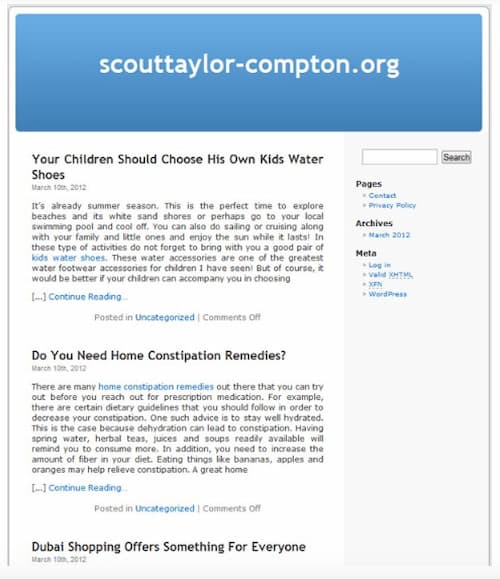
PBN’s were targeted a few years back when they were extremely effective and working to rank websites quickly. All you had to do was buy an expired domain, slap an article on the homepage and link to your website. 

Here is what a bad PBN website looks like that leads to a Google penalty.

Bad PBN website example

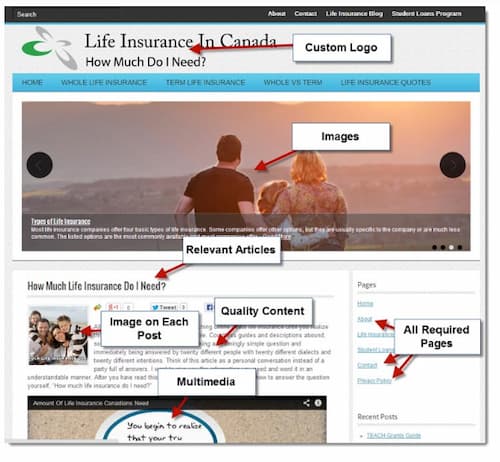
What about this website? Is it a PBN or a real website?

A good PBN website is one of the many types of SEO techniques that are used today

If a website is publishing articles regularly and has real traffic flowing through it, who’s to say it’s being used solely for link building?

That is an example of grey hat SEO link building-when white hat practices are bent to give more control over the links that a website acquires. It happens all the time and it works very well if you’re good at it.

#4-On-page SEO practices

The optimization of a web page can go into many different degrees of compliance. There’s the technical aspect of optimizing a page to account for what search engines reward as well as the overall user experience that it provides. After all, what’s good for users is good for search engines.

Keyword optimization

One of the more infamous forms of optimization is keyword targeting. To influence a stronger appearance in the search engines for a target keyword, the keyword should be placed in specific parts of a page to enhance on-page optimization. These areas include but are not limited to:

  • Title
  • URL
  • First 100 words (the first paragraph is even better)
  • Keyword synonyms in subtitles
  • Image alt tags
  • Meta Description

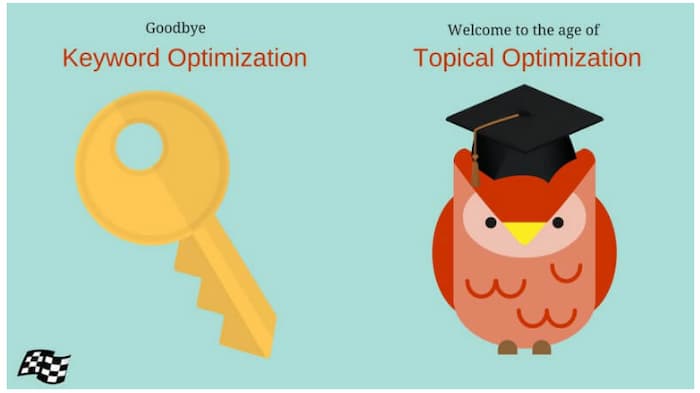
It’s important to note that this method of optimization is not as powerful as it used to be. The days of ranking pages according to keywords on-page is now over. Search engines will use the topical optimization of the page as a larger ranking factor.

keyword optimization has been replaced with topical optimization as one of the newer types of SEO techniques

Keyword topic optimization

It should be noted that search engines have evolved past the point of relying on keywords in the metadata to define what a page is about. The ability to provide information in a way that users engage with is a major aspect of how well your page ranks for specific search terms.

To improve the way your page performs in a search query it should have the ability to satisfy search intent by covering a keyword topic in its entirety (as it pertains to the search). This type of coverage creates a resource for users and makes the page relevant to related searches since it is likely covered within the content.

Search intent optimization

The true intent the user has for initiating a search is referred to as user intent and/or search intent. When a user can end their search on a page it is considered to have satisfied their need to search further and thereby satisfies search intent.

To enhance the ability of a page to satisfy search intent you can link to related content that enhances the user’s experience. The connection your page has to relevant resources improves the amount of information you’re providing to the user. This helps the user in their search and therefore contributes as a positive ranking signal for searches related to your keyword topic.

Search intent optimization image that shows the steps to solve and satisfy user intent

User experience optimization

One of the aspects of optimization means making your page more user-friendly by providing an enjoyable experience. This task can sometimes be fairly technical, while on the other hand there is a creative aspect to improving the user experience.

Technical improvements

Page experience can be accounted for systematically since Google provides the exact formula for performance. Your website needs to perform in the following categories to be compliant:

  • Core web vitals
  • HTTPS
  • Safe Browsing
  • Mobile-friendly
  • No interstitials

Creative improvements

On the creative side, the user experience improves according to your decisions regarding the uniqueness of your page. For instance, the type of multimedia you choose makes a difference to how the user interacts with your content.

Video content

If you have a video to explain your page, it provides an additional way for your content to be consumed. Since 0ver 70% of users prefer video as a means of learning about something, it means you’ve improved the user experience for at least 70% of your audience.

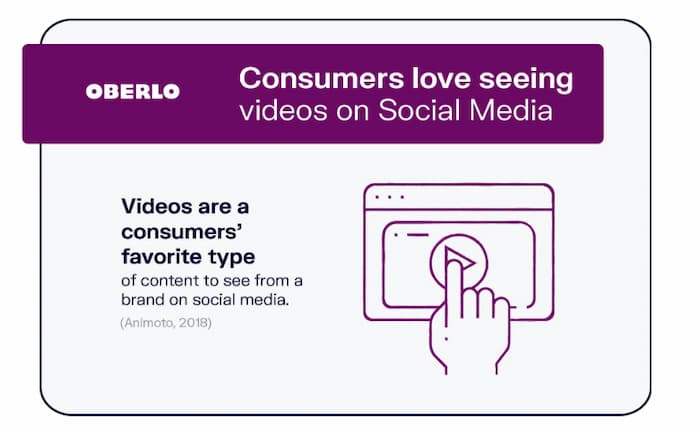
Videos are the most popular form of content to see from a brand on social media
Slideshows

In some cases, having a slideshow may work even better than a video. As an alternative form of content, you can create a unique experience for users and in effect, separate your page from the masses.

Audio files and podcasts

Podcasts have taken off over the last few years and more and more people are gravitating towards them as they’ve found a place for them in their everyday lives.

Adding multiple types of media can improve the quality of your content and therefore help to rank higher in the search results. One way of looking at is to ask yourself,

“Would the world miss my content (or website) if it were to suddenly fall off of the face of the universe?”

If it would leave a gaping hole in your niche, then you know you’ve done a great job in providing users value in your content. If your pages are easily replaced and are as similar as everyone else’s, you have room to improve the quality of your page and content.

#5-Off-page optimization

Optimizing your site off-page is one of the more well-known types of SEO techniques. Search engines, especially Google, consider off-page optimization to be a highly relevant ranking factor that can heavily influence where your website appears in keyword searches. PageRank is what Google uses as one of the major indicators for determining the order in which websites are displayed in the search results.

Establishing credibility and authority

PageRank refers to a page’s ability to rank based on a scoring system that is designed to reflect the popularity, credibility and trust of a website. PageRank is often misinterpreted as domain authority, which is also a term that alludes to ranking ability. 

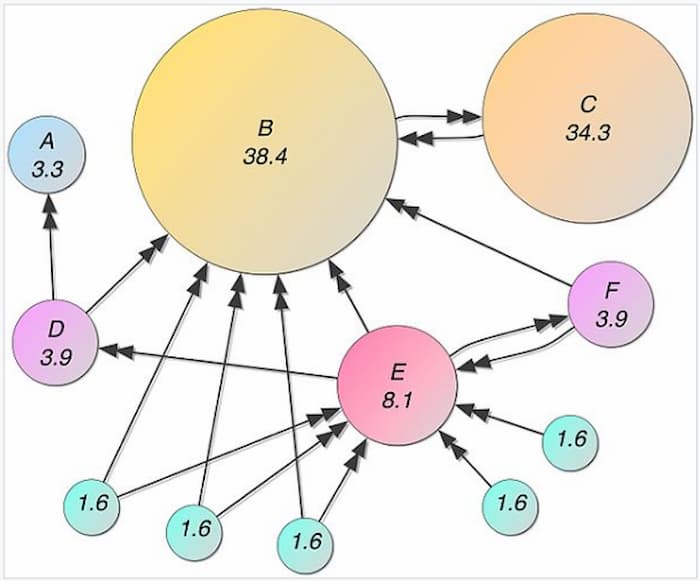
Example of PageRank visualized by a web of websites linking to one another

Domain authority is primarily based on backlinks, but rather than using Google’s proprietary formula, it is based on the quantity and quality of backlinks by third-party companies. These companies provide a metric for the authority of the domain as well as a page itself. It can be measured in a few different scales of measurement:

  • DA/PA (domain authority and page authority) was invented by Moz.
  • DR/UR (domain rating and URL rating) was invested by Ahrefs.
  • TF/CF (trust flow and citation flow) was invented by Majestic.

Why is domain authority important?

The ultimate goal of any search engine is to provide the most relevant and helpful results to a user when they type in a keyword. To do this the search engines not only need to assess the relevance of the content, but also the authority and credibility of the website that has published this content.

How to improve domain authority and credibility

Authority and credibility are measured by the overall number of websites that vouch for their content by linking to their pages. The quality of the linking websites plays a big role in the impact of the links that are acquired. 

To improve the authority your domain has in its niche you need to acquire backlinks from other quality websites that have authority and credibility in the same niche or a close vertical to it.

Link building is one of the most powerful types of SEO techniques to use for increasing search visibility.

Build citations

One of the first steps to building links is to acquire citations from popular directories and review sites. These types of sites are already trusted by search engines such as Yelp, Yellow Pages, Manta, Foursquare, etc. They provide the first layer of trust and can be considered a natural way of acquiring backlinks.

Build high-quality links

As the name “The web” infers, the internet is a web of linked websites. The PageRank theory precludes that the most credible and popular websites should have the most backlinks because they are being shared the most because of the quality of their content. 

The secret to a higher ranking is to therefore build high-quality links from websites that are relevant to yours.

HIgh quality link building means moe time spent on quality content

What is a high-quality link?

A high-quality link comes from a website in which its visitors would be interested in your content. That would prove the relevance between websites and therefore be good for both users and search engines.

The linking website will power up this type of link if it has a high volume of search traffic or a high number of quality links (from websites that would be a good fit to link to yours). 

The effects of a quality link should do one or both of the following;

Provide quality referral traffic: The visitors that arrive on your site via the link should be engaged with your content for the link to be effective. Engaged visitors eventually lead to a goal conversion-which can be anything from an opt-in to an email list, on-site purchase or a phone call.

Possess powerful authority: When a website’s authority metrics are powerful enough to lift your website’s authority metrics, it can be considered a good link. Higher authority means more ranking ability.

The off-page optimization is not only limited to external links. Internal links can also be a powerful form of optimizing a page for a keyword topic or specific search term.

Internal link building

You can optimize a page for a specific search term or topic by linking from other internal pages within your website. Internal links are a way of pointing users to relevant pages that relate to the content they’re currently consuming. 

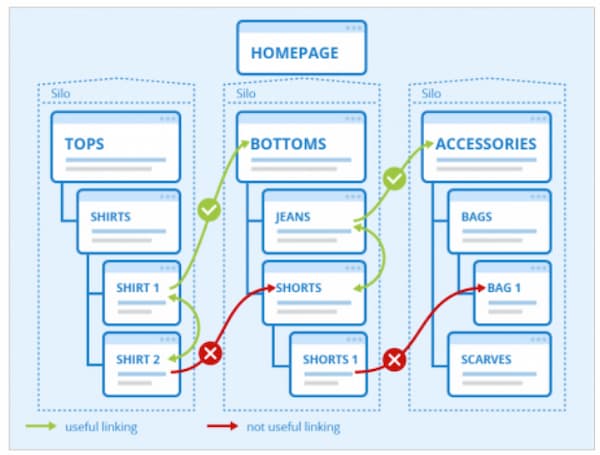
Internal link building is an SEO technique that leads to improved user engagement statistics
Image source

Make use of optimized anchor text

By linking with the keyword as anchor text you can enhance the optimization of a page. When search engines see that a specific term is being used to link to the page, it directly communicates the importance of the term. 

There is the possibility of over-optimization so the use of keyword synonyms is highly recommended.

Share link equity

Internal link building spreads link equity. A page that has a high number of links, and therefore a high page authority, will pass on authority when it links to another page on your website. 

Increase authority by sharing link equity via internal links.

Build topic clusters

Topic clusters are an effective way to create a content hub that links related content together. The structure of linked content will often point to one core page, known as the pillar page, which covers the topic in breadth. 

Example of a pillar page with cluster content which forms a topic cluster.

Linking to a pillar page within a topic cluster improves the authority of the page, which contributes to higher rankings.

Technical optimization

Not all off-page optimization comes in the form of content. There are also things you can do to improve the technical performance of your website and its pages.

Page speed

The time it takes your pages to load is a direct ranking factor. Off-page optimization tactics could include the implementation of a CDN, choosing the best hosting options and leveraging browser caching-all tactics to increase page speed.

Indexing issues

The issues that affect indexing can often be found off-page. For example, search engines use the robots.txt file as an instruction manual for which pages to index. If there’s a mistake in that file it could stop your pages from being indexed-which means no one will see them at all.  

#6-Negative SEO

Negative SEO is a way of attacking the credibility and authority of another website by linking it to unrelated websites. This unethical practice is one of the types. of SEO techniques that usually come in the form of automated link building where the victim site is targeted and the software will automatically build thousands of links to its pages.

Google has become fairly good at detecting malicious attacks and will for the most part ignore massive amounts of links when it’s obvious they aren’t aimed at manipulating ranking.

The more devious attacks can be successful when the attacker uses relevant anchor text repeatedly and links to sites that will negatively impact credibility.

The solution to negative SEO

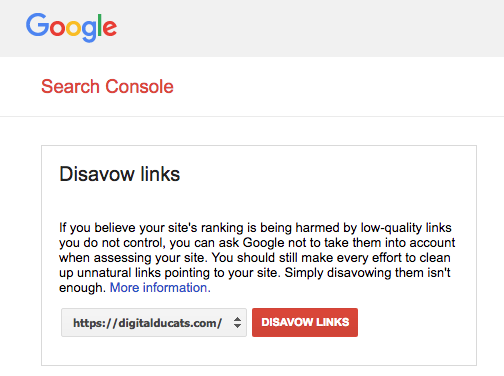
The solution to negative SEO attacks is to use the Disavow links tool. Google provides this tool to exclude links that are being built to your site which you can’t control.

Disavow tool is used to exclude links from being counted towards your backlink profile

Upload a disavow file to the tool and once it’s processed, the links will be discounted from your backlink profile.

This tool is a must if you’re issued a manual penalty for link building and can’t get the website owners to delete your links (as is commonly the case when links are automated).

Choose the types of SEO techniques that works best for your website

As you can see, there are many different types of SEO that are available to improve your search visibility as well as SEO practices to hurt your or other people’s websites. Not every website will require the same approach so it becomes necessary to prioritize a list of goals and assign the correct strategies and tactics to achieve them. 

If you have any questions about the SEO strategy your website should implement, feel free to call or send us a message for full website analysis. Our team will develop a custom strategy to include the exact types of SEO techniques that make your site rise in the SERPs and dominate the competition.

Written by Christian Carere · Categorized: Link building, On-page optimization, SEO strategy, Technical SEO, Web development

  • « Go to Previous Page
  • Go to page 1
  • Interim pages omitted …
  • Go to page 5
  • Go to page 6
  • Go to page 7
  • Go to page 8
  • Go to page 9
  • Interim pages omitted …
  • Go to page 32
  • Go to Next Page »

Footer

Need professional SEO advice?

Give us a call to learn more about how we can help your business

Call for a consultation Request a proposal

Request a free website analysis and proposal for your company by filling out the ” Request a Proposal” form.

  • Privacy Policy
  • Terms Of Service
  • Cities we’ve served

© 2026 · Digital Ducats Inc.