• Skip to main content
  • Skip to footer

Digital Ducats Inc.

SEO Consulting & Services

  • Home
  • About
    • SEO Consulting
  • Services
    • SEO
    • Local SEO
  • Contact
    • Pricing
    • Write For Us
  • Blog
You are here: Home / Blog

Jan 22 2021

11 Tactics To Increase Landing Page Conversions

Landing pages are an essential part of the marketing funnel. The sole purpose of a landing page is to achieve a specific goal conversion that moves visitors closer to purchasing from your company (deeper into your marketing funnel) or guides them to the purchase itself. When you are able to increase landing page conversions you directly increase the number of leads and revenue your website generates.

Before we go any further, let’s take care of the basics.

What is a landing page?

A landing page is a page that is specifically designed to explain an offer to visitors, demonstrate the benefits and guide them to a specific conversion. Landing pages are used for lead generation and increasing sales a company generates from its website.

Why are landing pages so valuable?

Ultimately, landing pages are used to increase revenue. The average conversion rate of landing pages (across industries) falls between 3-5.5% according to a recent study by Unbounce.
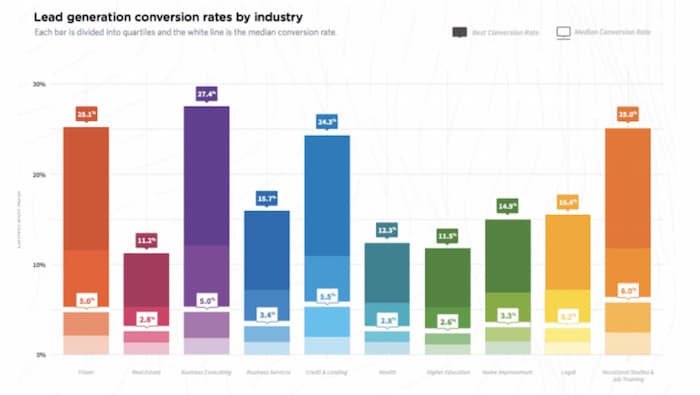
Bar chart showing the average conversion rates by industry on landing pages

Create multiple landing pages on your website to facilitate more conversions and ultimately increase the revenue your website generates. Here are a few tips and tactics to help you increase landing page conversions.

#1-Update your headline for higher CTRs

Your headline is the main attraction when a user is choosing between pages in a search result. Spend time crafting multiple headlines to get the most attention from your audience and increase click-through rates.
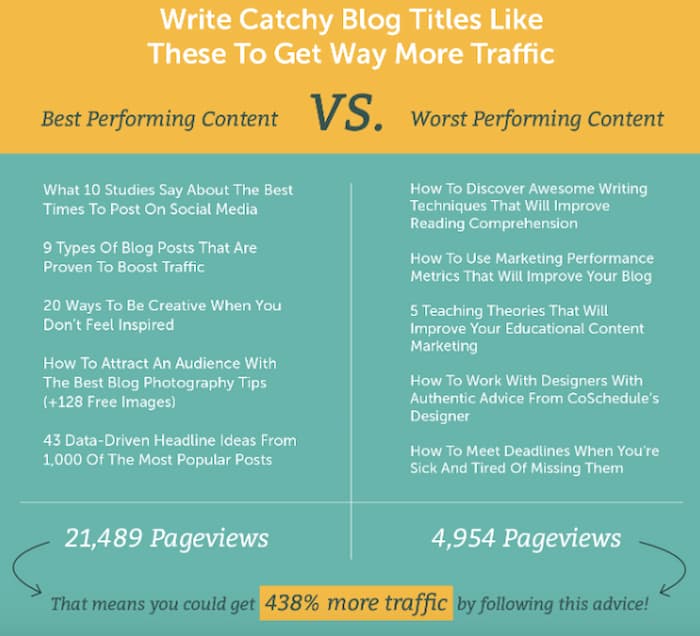
Infographic showing catchy headlines and how they improve click-through rate

Update your headline periodically to keep it fresh and relevant to users. When you find a headline that is working well you’ll need to split-test before making any final decisions.  

There are dozens of tools you can use (see AdEspresso below) that allow you to test the effectiveness of multiple headlines.

Adespresso example of a headline split-test to increase landing page conversions

#2-Use social proof within your copy to boost confidence

Did you know that 72% of people trust an online review just as much as a personal recommendation? Think of the impact reviews and testimonials can have on the credibility of your business. It’s imperative to include social proof of your product or service within the copy of your landing page.
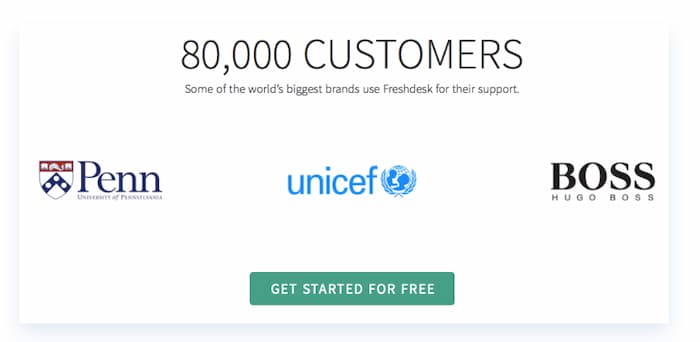
Freshdesk is an example of how to use social proof to increase landing page conversions by showing how many clients already use their service

If possible get a few clients to write a testimonial specifically speaking about what your product or service has done for their lives. Include a photo to give your testimonial the most credibility.
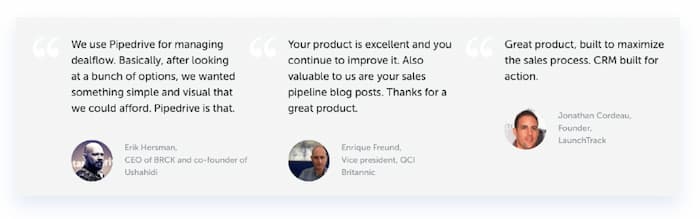
Increase landing page conversions by using the testimonials of clients and influencers

If you have a strong social media following or a large subscribership, that can also be used to provide social proof of the value of your content.

#3-Focus on one Call To Action

Choose a single CTA to limit your visitor’s options for what they can do on your landing page. With only one option, you increase the probability of your visitors completing the goal conversion since there are no other distractions to lead them away from making a decision.

If you give your audience more than one option it can confuse them as to what they need to do which in many cases results in no action. Constant prodding and guiding in the same direction is a recipe for success on a landing page.

Here is an example of a good single CTA by Digital Marketer. The only option is to fill out the contact form in order to receive the download. No confusion there.

Use a single CTA like Digital Marketer to avoid confusion and increase conversions on your landing page

#4-Use contrasting colours on your CTA buttons

It’s just common sense to make your CTA buttons stand out as much as possible. Use colours to make your CTA stand out and scream “Push me” to increase landing page conversions from more user interactions.

Example of how to make a CTA button stand out by using contrasting colour

The more the user is drawn to the button, the more likely they are to push it. Make your buttons noticeable and attention-grabbing for the best results.

#5-Split test everything

To maximize the conversion rates on a landing page you have to split test everything interchangeable. For example, it’s impossible to know whether a green CTA will be more effective than an orange CTA without getting the data from real user interactions.
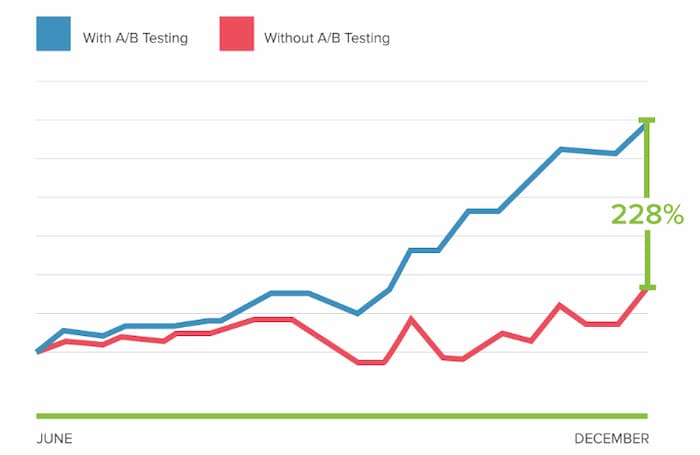
Test different headlines, length of opt-in forms, background colours, CTA buttons, images, videos and everything that can be tested. Split testing the things on your page that could affect the conversion rate will optimize your page and maximize your results.

Here are a few examples of the difference split-testing has made:

Three examples of companies that experienced growth in landing page conversions

#6-Make sure your headline matches the offer

One problem that site owners can encounter is a mismatch between the headline and the actual offer/content. Avoid sensational headlines to attract more visitors without actually backing the headline up with the content.

If a visitor doesn’t see what the headline promises, they’re going to leave the page immediately. A misleading headline leads to higher bounce rates and lower conversions.

#7-Use high-quality images

The use of images has been known to help users retain more information as well as make content easier to digest. Use high-quality images to help convey a stronger message and set the tone of your offer. It’s no secret that visual content is an essential part of creating high-quality content. As the list of multimedia continues to expand, users expect more than just text to consider a page worth reading.

#8-Embed a video

If a picture is worth a thousand words, you can only imagine what a video will do for your message. Videos have been known to increase conversions by as much as 80%.

Increase conversion rate of your landing page by 80% with a video

A video provides a more personalized touch and is the preferred method of consuming information by over 70% of users. Try using an explainer video to provide an additional method of getting through to your audience on topics that range from basic to advanced.

Vidyard created a landing page and split tested the results of using a video using Unbounce. 
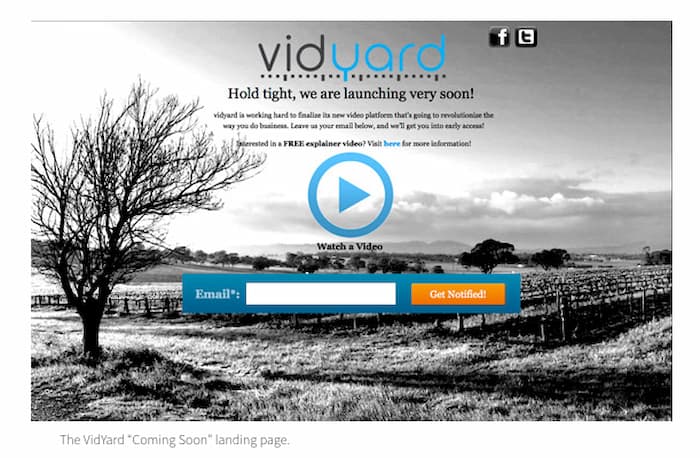
Vidyard landing page with video

The results were definitive.

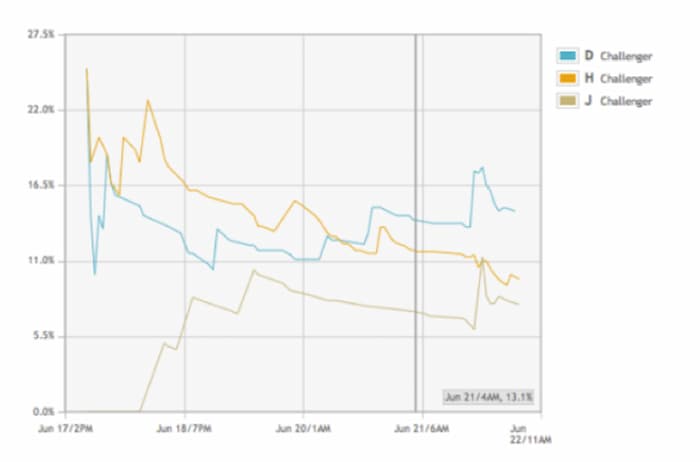
Video landing page results show increase in conversions
Vidyard landing page split test results

#9-Touch on a pain point

One of the most powerful reactions you can elicit from your audience is the avoidance of pain. People want to avoid pain at all costs. Touch the most common pain points associated with your product and then explain how your product provides the perfect solution.

The connection between your product as a way to eliminate the pain associated with a problem increases conversion rates. 

Here is an example of how this landing page plays on the frustration of low conversion statistics. 

Example of headline that addresses pain points to increase landing page conversions

#10-Touch on a pleasure point

Paint the picture of the most attractive benefits of using your product to elicit feelings of pleasure. By creating the scenery and most desired situation of what you’re offering you can show your audience the feelings that could be theirs should they decide to move forward in the buyer journey.

Here is an example of Fastrack using the idea of selling your home quick and painless as a way to increase landing page conversions.
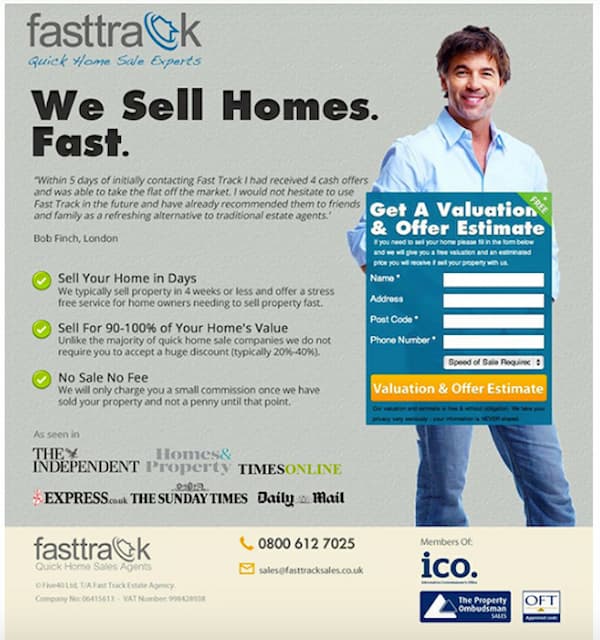
Example of Fastrack using pleasure points to increase conversions on their landing page

#11-Remove links and navigation

Landing pages are highly focused on achieving a single conversion goal, which means there is no need to lead your visitors to other pages. Remove all links and the navigation bar (if possible) to eliminate the distraction of clicking through to another page on or off-site.

Landing pages that only allow one action-the goal conversion, tend to convert at higher rates than those that allow users to leave without achieving the goal.

Here is an example of how Shopify corners users into one option on their landing page.
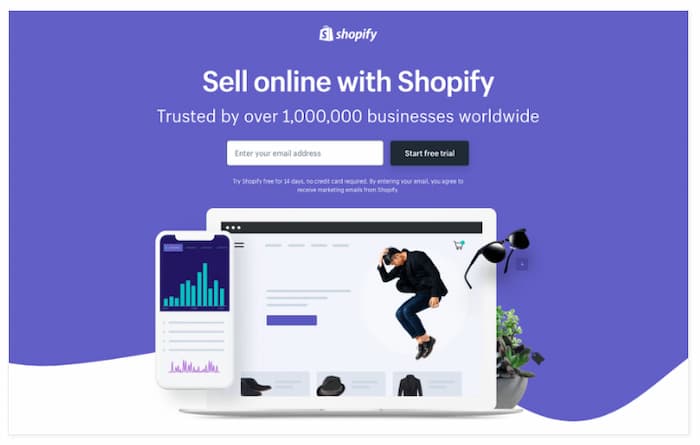
Shopify is a prime example of a website that removes navigation to increase landing page conversions

Watch landing page conversion rates rise dramatically

One of the most important things to remember when optimizing your landing pages is that there are no absolute rules that apply to every industry. To maximize conversions you have to monitor, track and split test results. This leads to a better understanding of your audience and how they react to various aspects of your page.

Most companies find that creating more landing pages raises the overall conversion rates of a website. Use landing pages for specific keywords and remember that the way your users are finding your page is important to how you optimize your page.

Mobile optimization will be different from email marketing or pay per click optimization. Either way, you choose, continue to discover the options that will increase landing page conversion rates to generate more revenue and new clients for your business.
Written by Christian Carere · Categorized: Content strategy, SEO strategy, Web development

Jan 18 2021

Page Experience: Core Web Vitals Are On Google’s Radar

It was in May 2020 that Google announced the introduction of Core Web Vitals in Google Search Console. There should be no surprise that Core Web Vitals are now going to be included as a ranking factor pending the Page Experience Update in May 2021.

There's a ton of information about them starting at https://t.co/LPlEXdVKxy – that's where I tend to go. LCP is similar to the page loading speeds you've probably looked at, but it tries to figure out when the primary elements are visible, which is what users care about.

— 🍌 John 🍌 (@JohnMu) May 28, 2020

If you’ve been reading about how search engines work, you may have come across the fact that they like when websites provide users with an enjoyable experience. If a user is satisfied with the results provided there’s no need to continue searching.

This is the underlying reason for the Page Experience Update. Google is adding core webs vitals as new ranking factors to consider when assessing the overall experience a page provides to the user.

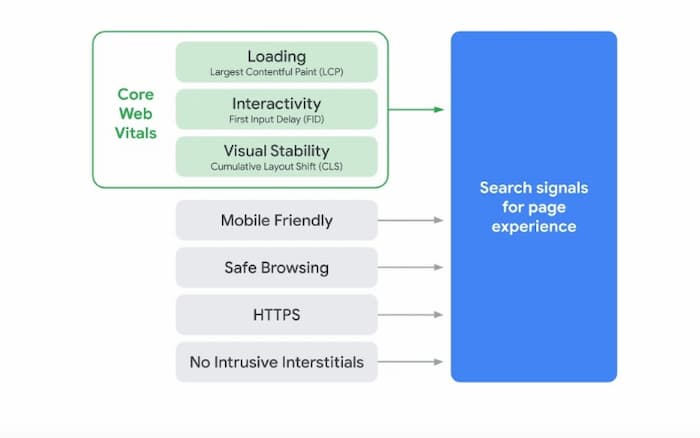
Core web vitals are being added to the page experience ranking factors

Page experience can be broken down into the following major categories:

  • Core Web Vitals
  • HTTPS
  • Safe browsing
  • No interstitials
  • Mobile-friendliness

Google already considers page experience as an influencing ranking factor with the exception of the new additions within the core web vitals. 

All truth be told, page speed is already a ranking factor but it is now being broken down into three metrics that make up core web vitals. The May 2021 update will mark the start of including those metrics in Google’s ranking algorithm.

Core Web Vitals

There are three components to measuring core web vitals. Each of the components has a direct impact on the user experience your website offers.

Largest Contentful Paint (LCP)

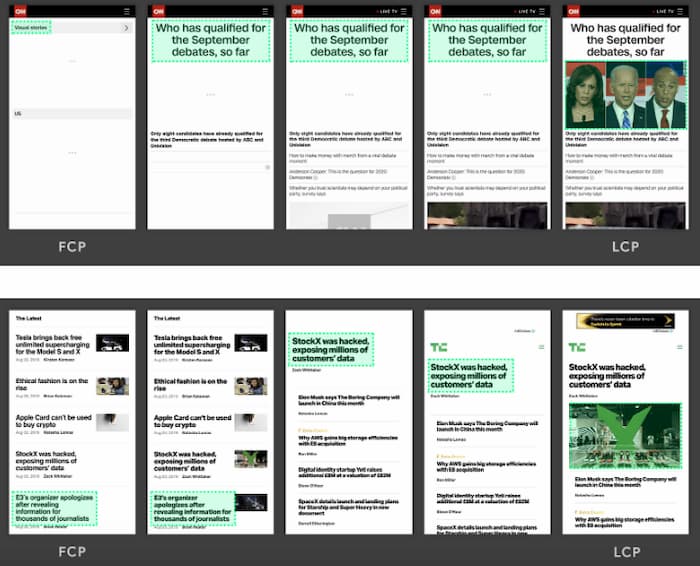
The LCP is considered the time it takes the main content on your page to load. Users need to see the major content of the page (text block, image or video) before feeling satisfied that the page is useful. According to Google, that moment is the LCP.

Here is an example of where the LCP loads later in the page poad time.

Example of LCP loading late which is considered a poor page experience

Here is an example of where the LCP loads closer to the beginning of the pages total load time.

Example of the LCP loading early contributing to a better page experience.

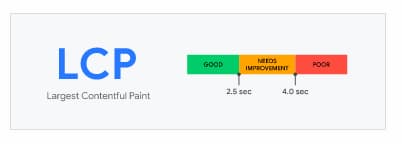
To provide a good user experience the LCP of your website should be at or under 2.5 seconds.

The scale for LCP that shows what's good, poor and needs attention

First Input Delay (FID)

The FID is a measure of the time it takes your website to be interactive. It measures the time it takes your website to respond to a command such as pressing a button, clicking on a link or interacting with an on-page feature.

The greater the delay in interactivity, the worse the user experience. If a user clicks on a button and there is no response they may click on it again or click on other buttons which can result in unintentional actions.

The FID should be maintained at a time no longer than 100 milliseconds.

Cumulative Layout Shift (CLS)

This aspect of UX is a big one because it deals with the stability of your website. The CLS measures the time it takes your website to stabilize (stop shifting completely).

Consider a situation where the user sees two very different options and attempts to select one but at the last second the layout changes causing an unintentional selection.

Below is the perfect example of how this can result in a detrimental user experience.

The CLS standard to maintain a good user experience is 0.1.

The scale for CLS that shows what's good, poor and needs attention

How will the Page Experience Update affect your business?

The answer to this, like most things  SEO-related, is it depends.  It’s hard to say exactly what this update means for your business specifically, but in the general sense, this update will affect everyone.

Content will always win over page speed

For those who aren’t competing for extremely difficult keywords, you may have some leeway when it comes to the technical side of page experience. If your content is the best solution to search intent you may not see any changes in your keyword positions and ranking.

Content trump’s most ranking factors. You may have a slow website, but if users love your content Google will surface your website over another that has fast page speed with weaker content.

We have to put it into perspective that although page experience is a ranking factor, it won’t be as influential as a page’s content and above all, its relevance to a search.

Brand searches would remain unaffected

Would it make sense that if a user types in Home Depot, that Home Hardware shows up first because their site is faster than Home Depots? Or if the site becomes interactive quicker than Home Depots, does it deserve to outrank it in a brand search?

Hopefully, you answered no.

At the end of the day, page experience is just a ranking factor that must be taken into the context of the search query. Relevance would mandate that brand searches will still return the pages from the actual brand itself.

Opportunity to gain a competitive edge

On the flip side, if Home Depot and Home Hardware are both competing for the keyword how to fix a leaky faucet then page speed may start to play a bigger role in the search.

Let’s assume both pages have similar content, similar links yet Home Depot’s page takes 10 seconds to load, while Home Hardware’s page loads under 2 seconds. Here are a few advantages that start to accumulate.

  • More users will stay on the Home Hardware page.
  • More users will leave the Home Depot Page before it loads.
  • More users will click through more pages of the Home Hardware website.
  • More users will reach conversion goals on the Home Hardware page.
  • More users will spend more time on the Home Hardware page.

Better engagement statistics mean a higher ranking.

All of these factors paint a picture of how users are interacting with both pages. In the case where page speed breaks ties, it will eventually mean the page that performs better, will rank higher. Higher rankings lead to higher click-through rates, increased traffic, leads and revenue.

Improved user experience leads to higher rates of conversion

Apart from a better ranking on Google, all companies should be considering their user engagement statistics seriously. Typically, what’s good for users is what’s good for search engines, so the Page Experience Update in May is just another hint at what will improve the quality of your website.

Page speed directly affects page performance

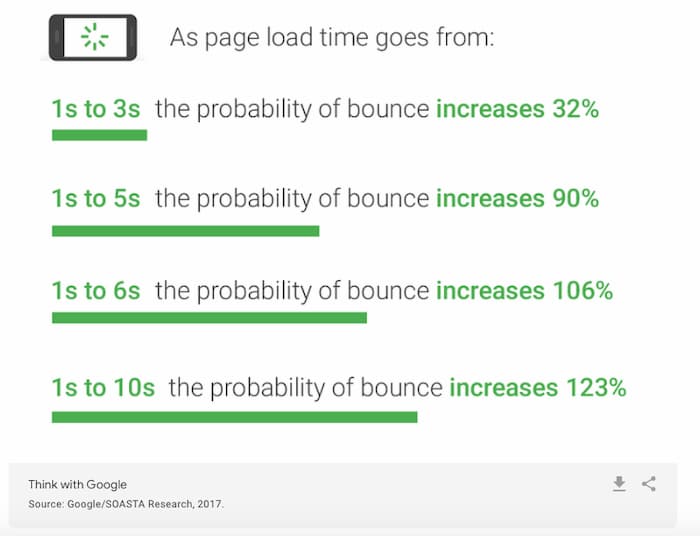
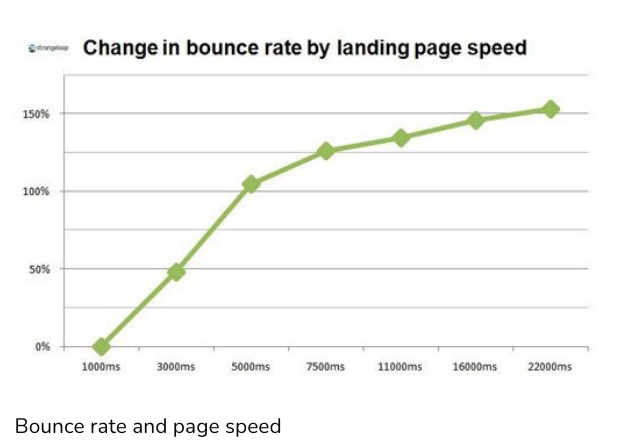
Google published some shocking stats a few years ago regarding the likelihood of a visitor to stay on your site with slow page speed. Here are the stats Google reported:

Google reports the bounce rate probability as page speed deceses

Page speed vs. bounce rate

The bounce rate is defined as when a user lands on your page and backs out without interacting with anything else on your site. A bounce is registered when there are no other pages visited, no links clicked.

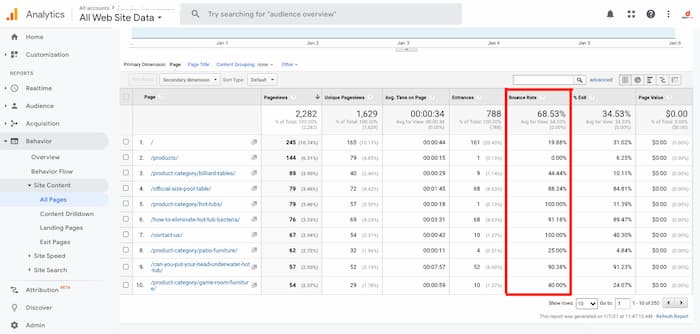
The bounce rate of the pages on your website can be found by visiting Google Analytics and running a report under Behavior, Site Content, All Pages.

Bounce rate in Analytics

The bounce rate is a measure of the percentage of visitors that land on your page and back off without any further interaction. High bounce rates become a concern when you want visitors to take a specific action on your page. You’re essentially losing traffic, which in many cases, can be traced to slow page speed.

A chart showing the relationship between page speed and the bounce rate of a website.

A real-world example of how page speed affects your business

Assume your website has the best content and ranks #1 for an important keyword. The problem is your page takes 10 seconds to load. According to Google, even though a user will most likely click on your page (it’s the #1 result) there is a 131% chance that they will leave if your page takes 10 seconds to load.

Let’s assume that they wait 10 seconds and even read your content. Do you think they are going to wait another 10 seconds to read another page? The chances of a user clicking through to other content have completely diminished because every click is a 10-second wait.

There’s a 131% chance they will back off your page and go to the #2 website.

Let’s assume that the #2 website loads in less than 2 seconds. Viewing multiple pages is easy and fast. The user can read more about the company and get a better idea of what they’re offering. 

There’s a much higher probability the user will fill out a contact form or complete a goal conversion when they spend more time and click through more pages on the site.

How do the page experience ranking factors affect my business?

And it’s not just page speed that is in question. There are now additional loading factors (CLS and FID) that Google is telling us can negatively affect the user experience. Keep in mind that the entire page experience encompasses four more of the aforementioned categories that currently influence ranking.

SSL / HTTPS

HTTPS refers to the secure socket layer that is installed on your website. Your SSL certificate is like your internet passport that proves your website is what it appears to be.

Without an SSL certificate, websites can hide malicious software, disguise their identity and attempt to give you a virus or potentially steal sensitive information from you. To reduce the number of harmful websites, Google made HTTPS the new standard for security.

This means your website encrypts data and guarantees a user that a website is exactly what it appears to be. If your website is not conforming to this standard you’re losing one of the ranking signals that Google has already confirmed affects your search visibility. 

When browsing on Chrome, a website without an SSL will show as insecure.

Not secure warning on Chrome if your site doesn't have an SSL certificate

Do you think you might lose visitors if this is what they see before they click on your website?

To get to your site you have to click on Advanced and then proceed which I think we all can agree is not an enjoyable user experience.

Mobile Friendliness

It should be no surprise that the mobile-friendliness of your website is a ranking factor. After all, more than 50% of total searches are made from mobile devices. Google rewards and penalizes sites (mildly) based on the mobile user experience.

Apart from adjusting the layout to make things more user friendly, there are also specific aspects of web design that could affect mobile usability. For instance, if the font is too small or buttons are too close together.

Although a developer may have made a website responsive, you may need to make minor adjustments to improve the page experience for your visitors.

Safe browsing

This best practice ensures that there is no malicious content on your website such as malware. This refers to unwanted software that is harmful to a computer, mobile device, or software. It can be downloaded from a website, without the user’s permission or knowledge by attaching itself to a downloadable file. 

Websites that contain this type of content will lose search visibility as it is deemed detrimental to the user experience.

No intrusive interstitials

How much do you love when you land on a page and a pop up completely blocks access to the page without any options given to exit the screen? This is an example of an intrusive interstitial.

Pop-ups, popovers, or annoying advertisements degrade the overall user experience by blocking access to the content the user intended to see in the first place. 

Google penalizes websites that utilize ads or sign up forms that don’t provide an easy exit button. Cornering your users into making a decision is considered against best practices and warrants a negative ranking signal.

Provide an enjoyable page experience

Just to be clear, the page experience ranking factors have been around for some time. It is the addition of Core Web Vitals that will take effect in the next Page Experience Update scheduled for May 2021.

Although the impact on ranking can be speculated to be somewhat minimal in most cases, it should be noted that every competitive edge you can add is worth the effort. Not only will this tip the scales in a head to head tiebreaker in competitive situations, but your conversions increase when you provide a better UX for your visitors.

Take the hint Google is offering, along with a plentiful heads up to prepare for yet another update intended to improve the overall quality of the user experience.

Written by Christian Carere · Categorized: Technical SEO, Web development

Jan 17 2021

Attract More Website Visitors On A Shoestring Budget

The situation is you’ve launched your new website and yet the damn thing cost you damn near every penny you own. It was a mistake not to consider SEO with your web design, however, you’re at the point where you need to attract more website visitors, but you’re not sure how.

If this is the case, you’re definitely reading the right article. This article provides a basic outline to attract more website visitors without all the expensive tags and tools. The truth is if you know your clients inside out you’ve already got half the battle won.

Although there is a lot of technical advice and work that needs to be integrated into your website, if you can nail down the following fundamental tasks, you can create a solid SEO foundation for your website and attract more website visitors from your efforts.

Create a buyer persona

Have you taken the time to sit down and think about who your clients actually are? Piece together details about your ideal client to create a buyer persona. This concept is invaluable since it serves as a guide for all of your marketing efforts.

Buyer persona example to attract more website visitors

A strong buyer persona surfaces many of the subtle details about the personality, traits, characteristics and tendencies of your ideal client. Using these details creates an advantage when it comes to creating content that resonates more deeply within your target audience.

We can even take it a step back from content creation and focus on the value a buyer persona has for keyword selection. Understanding the language, tone and major interests of your target audience gives you greater insights into the types of search phrases that are being used in searches.

Use this exercise as a powerful tool for focusing your entire SEO strategy. Identify who your buyers are, how they think, as well as their personal preferences to increase the impact of your efforts.

Choose the right keywords

Once you have a good understanding of who your audience is, you can create a list of keywords that would benefit your website the most. Keep in mind that just because your ideal client may use a keyword is a search doesn’t mean it’s the best fit for your website. You’ll need to consider the difficulty and value of the word to your business.

Avoid difficult keywords

If you’re a business owner doing your own SEO, you want to take the path with the least resistance. Sometimes you can tell when a keyword is highly competitive and sometimes it’s not as obvious.

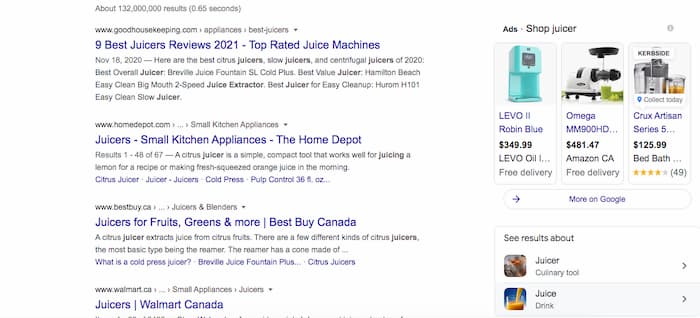
For example, if you’re in the retail industry and one of your potential keywords produces a search result with Walmart, Amazon, Ebay, and a number of retail giants, you may want to pass on that keyword. 

Search for juicer reveals tough competition between retail giants
Search for the keyword “juicer” results in big-box companies competing for spots on 1st page

Without an intimate knowledge of on-page optimization, link building or any experience in outranking websites, you’re not going to beat these websites.

Look for comparable websites to compete with

The solution is to look for keywords where the search results produce comparable websites on the first page. This is where you want to start. Choose keywords where you can compete by publishing better content than what is out there.

Structure your keyword strategy

You can’t always avoid the difficult keywords in your industry. Sometimes they are the best options for taking your business to the next level. A keyword strategy is what will prioritize the keywords you’re pursuing for short-term wins and long-term goals.

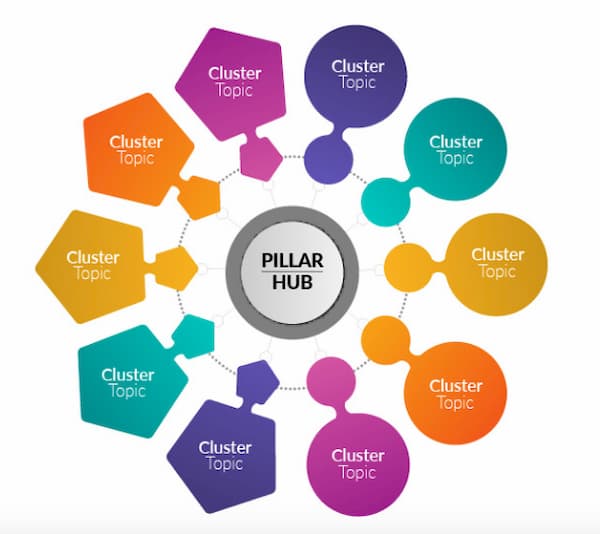
Use a topical structure to form your content schedule and prioritize the major keyword targets. Using pillar pages and cluster content is an excellent structure for developing a marketing funnel that moves your readers along the buyer journey.

Marketing funnel that matches the buyer journey to attract more website visitors

Publish answers to the questions people are asking

When you consider the fact that 80% of the total searches on Google are informational searches, it makes sense that being a resource puts your website in front of a larger audience. When you can be the best solution to a keyword search, your website surfaces more often on the first page of Google.

Blogging is a top method of traffic generation

This is a big reason why blogging has become one of the best ways to produce leads and build awareness of your brand. Your blog content should be based on providing answers to commonly asked questions and publishing solutions to commonly faced problems. When your content can help a visitor with an issue they’re facing, it builds trust and confidence in your expertise.

Publish long-form, in-depth content

There is much to be said about search intent since it is the primary ranking factor that search engines use to display the top 10 results, however, there are distinct advantages to publishing long-form, in-depth content. It’s not the length that provides the value, but the depth (which in most cases is the reason it ends up being long-form content).

“Ultimate guides” are more common

Publishing an “Ultimate Guide” has its advantages. When you can cover a topic in its entirety, it becomes a resource for those who are searching to learn more about the topic. There are multiple keywords that your content asset ranks for because it addresses multiple aspects of the keyword topic.

LInk on how to make an ultimate guide to attract more visitors to your website from additional keywords
Image source: Coschedule

Producing a content asset that becomes “the final destination” of a search will generate high volumes of traffic. Look for opportunities to create a content asset within your niche to create evergreen content that lives on indefinitely because of the value it provides.

Publish content as often as possible

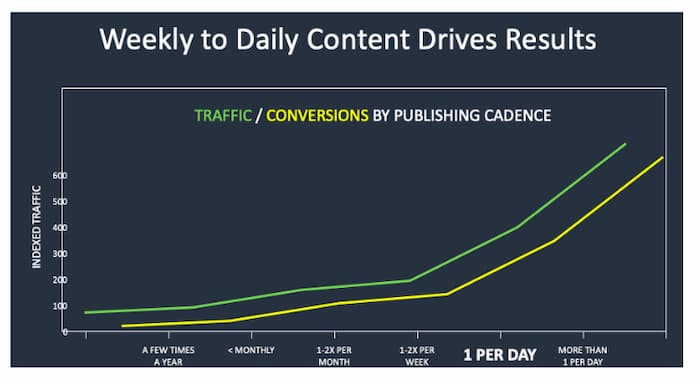
The more often you publish content, the more leads you generate for your business. In fact, a study revealed that small to medium-sized businesses that publish 11 times a month experience 3.5 times more leads than those that published twice a month.

Chart showing how a more blog content drives more traffic and conversions

Just to be clear, don’t publish content, just for the sake of publishing content. If your pages are subpar in quality and don’t drive traffic, your website could become bloated which will drag down your search visibility.

Publish content with the intent of being the best

Publish content with the intention of ranking in the number one position. Make it a mission to be the best solution to search intent. If you’re approach is to continuously produce content that outperforms your competition, you’ll see a difference in the number of keywords your website ranks for which will be reflected by increased traffic.

Target a new keyword with each page you publish

Every page on your website should target a specific and separate keyword. Avoid publishing pages that target the same keyword, phrase or have the same search intent. This is where your keyword strategy comes into play.

Stick to your keyword strategy

It’s best practice to map out the keywords your website will target. Create a content schedule based on the topic cluster you’ve outlined for your website. This way your website is organized topically and you can visualize the way your content covers a broad topic.

Topic clusters attract more website visitors from an organized approach

If you publish pages that target the same keyword, they are essentially competing with each other. This can spread the resources thin on the efforts you put into ranking that page to the top 10 search results. Rather than focusing on two pages, you can combine content and point backlinks to one page for a higher rank in the top ten.

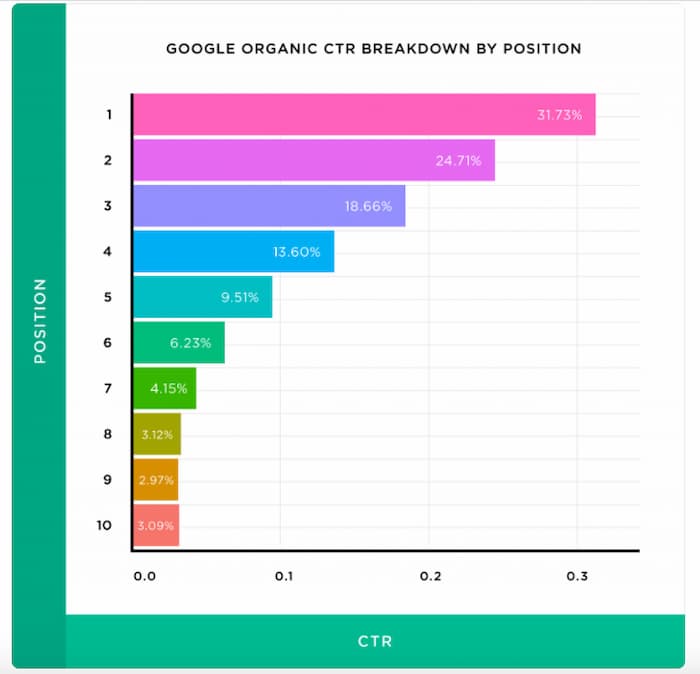
In most cases, it’s better to have one page that ranks in the top three results as opposed to two pages that rank outside the top three results. The reason is there’s a huge drop in the average click-through rate that a website receives from positions 1-3 to 4-10.

Average CTR based on the ranking position on the first page of search results

Be an expert where your expertise is needed

People are always looking for answers online. Google is becoming the go-to solution for providing the fastest results, but not all people search this way. There are still those that seek help on social media and niche forums. You can drive targeted traffic to your website by helping people with answers to their questions on these sites.

Social media

Every industry has a social media website or two that works well for generating leads. Make sure you’re on the website that is best suited to your business. You can’t really go wrong with Facebook since there’s a group for everything. After all, they have about 3 billion users that are on the site so it’s likely you can drum up some business using them as a source.

Be smart about it. Linkedin is excellent for big-ticket sales and for B2B marketing. Instagram and Pinterest convert extremely well for retail product sales.

Get some help with free software

You can use tools like Buzzsumo to find out what’s being talked about and shared the most in your niche. Join these groups and conversations to get involved with what people are saying and more importantly what questions they are asking.

Answer questions honestly and avoid being overly promotional. People appreciate transparency and they appreciate good advice even more. 

Drop a link or two to your website whenever it applies to give people a way to learn more about what you offer while sending them to an article that is relevant to the conversation.

Niche forums

You can accomplish the same task of answering questions on niche forums. In fact, it may be easier to get to a lot of questions since the main reason people are on forums is to ask and answer questions. 

Quroa

Quora is one of the largest Q & A websites where you can get a high volume of traffic to your site by answering the right questions.

Quora is ideal because they allow full HTML responses with links (nofollow only) which means you can take excerpts of your blog posts and paste them in as answers with a link to read more. You can literally help people while promoting the content you’ve already written.

The bonus to Quora is that many of the questions on Quora happen to surface on the first page of Google search results. If your answer is the most upvoted, you not only get the thousands of views from Quora but the search traffic from Google as well.

Monitor keyword mentions

Use software such as Mention or Brand Mentions to be alerted to conversations where your keywords are mentioned. If there are conversations on social media going on that you can contribute to, wouldn’t it make sense to be alerted so you can join in and give your two cents?

Attract more visitors to your website on a regular basis

This entire article has been dancing around the plain facts that if you have expertise to offer make it easy for people to find you by helping them. When you make helping people your first priority you improve your ability to target the things that mean the most to your ideal visitor. This approach makes your content more effective and builds more trust in your brand.

On one hand, search engine optimization is getting more complicated because there are so many things that go into an optimized website. 

On the other hand, the importance of providing an exceptional user experience has never waned and has remained THE most important factor that trumps all ranking factors.

Create your website for the benefit of users and use your expertise to help those in need. Put this concept into a keyword-targeted content schedule and you’ve created the best SEO foundation possible for attracting more website visitors.

Written by Christian Carere · Categorized: Content strategy, Web development

  • « Go to Previous Page
  • Go to page 1
  • Interim pages omitted …
  • Go to page 6
  • Go to page 7
  • Go to page 8
  • Go to page 9
  • Go to page 10
  • Interim pages omitted …
  • Go to page 32
  • Go to Next Page »

Footer

Need professional SEO advice?

Give us a call to learn more about how we can help your business

Call for a consultation Request a proposal

Request a free website analysis and proposal for your company by filling out the ” Request a Proposal” form.

  • Privacy Policy
  • Terms Of Service
  • Cities we’ve served

© 2026 · Digital Ducats Inc.